


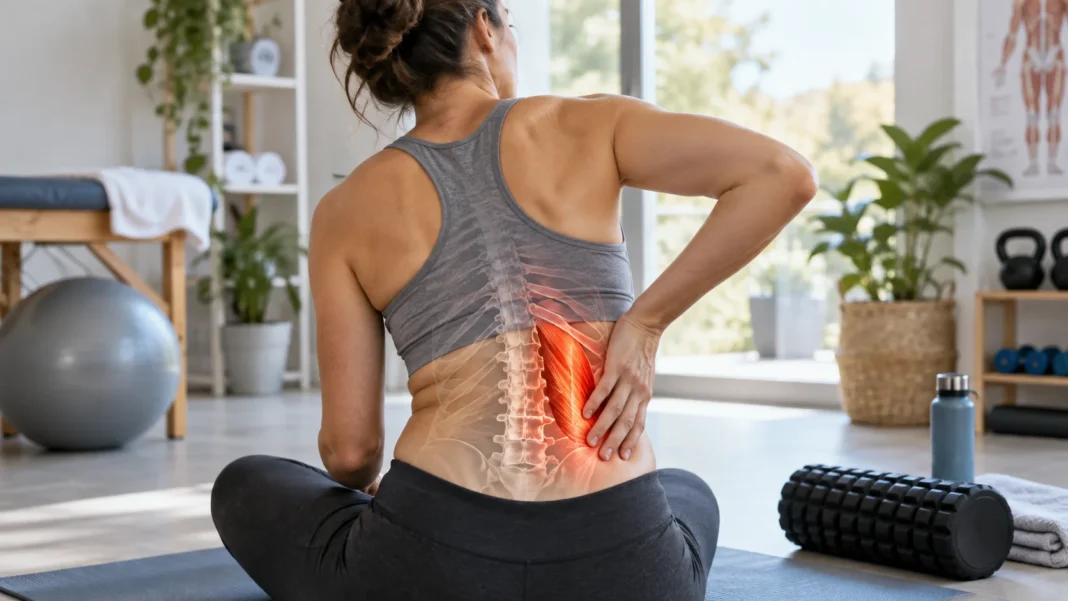
Quadratus lumborum pain can create a deep ache or tight feeling along one side of the lower back, sometimes extending toward the hip or upper pelvis. Because the quadratus lumborum, or QL, helps stabilize the spine and pelvis, discomfort in this muscle can become noticeable during sitting, standing, walking, bending, or lifting.
However, lower-back pain has many possible causes, and the QL is not always responsible even when discomfort appears in the same area. Muscle strain, prolonged posture, hip weakness, spinal joints, nerves, and other tissues can produce similar symptoms. Understanding the QL’s function, common causes of irritation, and practical relief strategies can help you manage symptoms more effectively.
What Is the Quadratus Lumborum?
The quadratus lumborum is a deep muscle located on each side of the lower back. It connects parts of the pelvis, lumbar spine, and lowest rib, giving it an important role in stabilizing the trunk. Although it is not as visible as larger back muscles, it contributes significantly to everyday movements involving the spine and pelvis.
The QL helps you bend your torso sideways and can assist with extending the lower back when both sides work together. It also helps stabilize the pelvis when you stand, walk, or carry weight on one side. During breathing, the muscle can help stabilize the lowest rib while the diaphragm moves.
Because it performs both movement and stabilization roles, the QL may become fatigued when it is repeatedly asked to control uneven loads. Carrying heavy objects on one side, standing with weight shifted to one leg, or repeatedly bending and twisting can increase demand. That does not automatically cause injury, but it may contribute to muscular discomfort.
What Does Quadratus Lumborum Pain Feel Like?
QL pain is often described as a deep ache, tightness, or soreness along one side of the lower back. The discomfort may sit between the bottom rib and the top of the pelvis rather than directly over the spine. Some people notice tenderness when pressing into the side of the lower back or when leaning away from the painful side.
Symptoms can become more noticeable when standing for long periods, getting out of a chair, rolling in bed, or carrying something heavy on one side. Side bending may also reproduce discomfort because the QL either shortens or lengthens during that movement. The exact pattern varies depending on whether the problem involves fatigue, strain, or another nearby structure.
Pain may sometimes be felt near the upper buttock or side of the hip because the QL attaches to the pelvis. However, pain spreading far down the leg, especially with numbness or tingling, may suggest nerve involvement rather than an isolated muscle issue. Persistent or unusual symptoms should therefore not be diagnosed by location alone.
Common Causes of Quadratus Lumborum Pain
One possible cause is muscular overuse. Repetitive lifting, bending, prolonged standing, or carrying bags and equipment on one side can place repeated demand on the QL. If the muscle does more work than it is accustomed to, it may become sore, tight, or fatigued, particularly after a sudden increase in physical activity.
Long periods of sitting can also contribute to discomfort, especially when the body remains in one position for hours. The QL may not necessarily be shortened or damaged, but prolonged stillness can reduce movement variety and leave the lower back feeling stiff. Frequent position changes and gentle walking can sometimes make this type of discomfort feel better.
A sudden awkward movement may cause a muscle strain. Lifting while twisted, slipping, or quickly reaching to one side can overload the muscle and surrounding tissues. Symptoms may develop immediately or become more noticeable later, depending on the severity of the strain and how much the area is used afterward.
How Posture Can Affect the QL
Posture is often blamed for lower-back pain, but the issue is usually more complex than simply sitting or standing “wrong.” The body can tolerate many positions when you change them regularly. Problems may become more noticeable when one position is maintained for too long or when your daily activities repeatedly load one side.
For example, standing with most of your weight on the same leg can create an uneven pelvic position. Similarly, sitting with one hip elevated or carrying a heavy bag on one shoulder may increase demand on certain trunk muscles. Over time, the QL may become tired from repeatedly helping stabilize these asymmetrical positions.
Instead of trying to maintain a rigid posture all day, focus on movement variety. Alternate sitting and standing, switch the side used for carrying objects, and take short walking breaks when possible. Comfortable posture is usually dynamic, meaning your body changes position regularly rather than staying perfectly still for several hours.
Can Weak Hips or Core Muscles Contribute?
The QL works together with the abdominal muscles, glutes, hip stabilizers, and other muscles around the spine. If some of these muscles are weak or poorly coordinated, the QL may need to contribute more during walking, lifting, and single-leg activities. This does not guarantee pain, but it can increase muscular demand.
Weak hip abductors may make it harder to keep the pelvis stable during walking or standing on one leg. The QL can help lift or stabilize one side of the pelvis, so it may become more active when hip control is limited. Strengthening the glutes and surrounding muscles can therefore be useful in some rehabilitation programs.
Core strength matters as well, but “core” does not mean simply doing large numbers of abdominal exercises. Effective trunk control involves coordinated activity between the abdominal wall, back muscles, diaphragm, and pelvic stabilizers. Exercises should build endurance and control rather than forcing the lower back into painful or excessively rigid positions.
Best Stretches for Quadratus Lumborum Tightness
A gentle side-bending stretch can sometimes help when the QL feels stiff. Stand or sit upright, reach one arm overhead, and lean slowly toward the opposite side. You should feel mild tension along the side of the torso and lower back without forcing your body into an extreme position.
Another option is a supported child’s pose with the hands walking slightly toward one side. This can create a gentle stretch through the side of the back and trunk. Breathe slowly while holding the position and stop if the stretch causes sharp pain, tingling, numbness, or symptoms traveling farther down the leg.
The QL also works alongside the abdominal and side-body muscles, so broader mobility can sometimes be helpful. Gentle oblique stretches may complement a mobility routine by addressing nearby tissues around the trunk. Stretching should remain comfortable and should not be treated as the only solution for recurring lower-back pain.
Exercises That May Help Quadratus Lumborum Pain
Strengthening exercises can help improve the capacity of the trunk and hips when weakness or reduced endurance contributes to discomfort. Bird dogs, bridges, side planks, and controlled carries are examples that may train spinal and pelvic stability. The best exercise depends on which movements you can perform comfortably without increasing symptoms.
Side planks can challenge the QL and surrounding core muscles in a controlled way. Beginners can start with the knees bent and progress toward a full side plank as strength improves. Focus on maintaining a steady position rather than holding the exercise until your body begins to shake or your lower back becomes painful.
Suitcase carries are another useful option when appropriate. Holding a weight in one hand while walking requires the trunk muscles to resist leaning toward the loaded side. Start with a light weight and short distance, then increase gradually as your control improves and the exercise remains comfortable.
How to Relieve QL Pain at Home
If symptoms are mild and there are no concerning warning signs, begin by reducing activities that clearly aggravate the area. You do not necessarily need complete bed rest because prolonged inactivity can create additional stiffness. Instead, stay gently active with short walks and comfortable movements while temporarily avoiding heavy lifting or repeated bending.
Heat may feel helpful when the lower back feels stiff or tight. Applying warmth for a short period can make movement feel more comfortable, although it does not repair an injury directly. Some people prefer cold after a recent strain, so using whichever option provides temporary relief is reasonable when applied safely.
Over-the-counter pain medication may be appropriate for some people, but medical history, allergies, and other medications matter. If you regularly rely on pain medicine or symptoms continue for more than a short period, speak with a healthcare professional. Ongoing pain deserves assessment rather than repeated self-treatment without understanding the cause.
Common Mistakes When Managing QL Pain
One common mistake is repeatedly stretching the painful area as aggressively as possible. A muscle can feel tight because it is fatigued, irritated, or working harder than surrounding muscles. Stretching may provide temporary relief, but forcing the area repeatedly can sometimes aggravate symptoms rather than solving the underlying problem.
Another mistake is avoiding all activity because movement feels uncomfortable. Extended bed rest can reduce strength and make returning to normal activity more difficult. Unless a healthcare professional advises otherwise, gentle movement within a manageable range is usually preferable to remaining completely inactive for long periods.
People may also assume every one-sided lower-back pain comes from the QL. Kidney problems, spinal joints, discs, hip conditions, nerves, and other tissues can cause discomfort in nearby areas. If pain persists, becomes severe, or comes with other unusual symptoms, professional evaluation is more useful than repeatedly treating one muscle.
When Should You Get Medical Help?
See a healthcare professional if lower-back pain persists for several weeks, frequently returns, or significantly limits work, sleep, walking, or normal daily activities. An examination can help determine whether symptoms are muscular or related to the spine, hip, nerves, or another condition. Persistent pain should not automatically be blamed on muscle tightness.
Seek more prompt care if pain begins after a significant fall, collision, or other injury. New weakness, numbness, tingling, or symptoms traveling down the leg also deserve assessment, particularly when they are worsening. These signs may indicate nerve involvement or another problem requiring a different treatment approach.
Urgent medical attention is important when back pain occurs with loss of bladder or bowel control, numbness around the groin or saddle region, severe rapidly developing weakness, fever, or unexplained major illness. These symptoms are uncommon but potentially serious. Severe side or back pain with urinary symptoms may also require evaluation for causes unrelated to muscles.
How to Prevent Recurring Quadratus Lumborum Pain
Building overall trunk and hip strength can help your body tolerate everyday demands more effectively. Rather than isolating the QL constantly, include exercises for the glutes, abdominal muscles, back, and hips. A balanced program allows several muscle groups to share the work during lifting, walking, and other activities.
Gradual progression is particularly important when returning to exercise after a period of inactivity. Suddenly increasing lifting volume, running distance, or physically demanding work can overload tissues that are not yet prepared for the new workload. Increasing activity step by step gives muscles time to adapt and can make soreness easier to manage.
Daily habits matter as well. Change sitting positions regularly, avoid always carrying heavy items on the same side, and take short movement breaks during long work sessions. There is no single perfect posture or exercise that guarantees pain prevention, but building strength and maintaining movement variety can support better long-term lower-back tolerance.
Conclusion
The quadratus lumborum is a deep lower-back muscle that helps stabilize the pelvis and spine while assisting with side bending and other movements. Pain in this area may develop from overuse, muscle strain, prolonged positioning, uneven loading, or reduced strength in surrounding muscles. Symptoms often feel like a deep ache or tightness on one side.
Gentle movement, temporary activity modification, appropriate stretching, and gradual strengthening may help uncomplicated muscular discomfort. Exercises that improve hip and core control can reduce how much work the QL needs to perform during everyday tasks. Aggressive stretching or complete inactivity is rarely the best long-term strategy for recurring symptoms.
Because many conditions can cause pain in the same area, persistent or unusual lower-back discomfort should be assessed rather than self-diagnosed indefinitely. Seek medical help sooner when symptoms include significant weakness, numbness, trauma, fever, or other warning signs. Identifying the true source of pain allows treatment to be matched more effectively to the problem.
FAQs
Where is quadratus lumborum pain usually felt?
QL pain is commonly felt on one side of the lower back between the lowest rib and upper pelvis. It may also be experienced near the upper buttock or side of the hip.
What causes a tight quadratus lumborum?
Possible causes include prolonged sitting, uneven loading, repetitive lifting, muscle fatigue, reduced hip strength, or sudden increases in activity. Feeling tight does not always mean the muscle simply needs more stretching.
Is walking good for quadratus lumborum pain?
Gentle walking can be helpful when symptoms are mild because it keeps the body moving without requiring heavy loading. Reduce distance or intensity if walking noticeably increases pain rather than gradually making movement easier.
How long does QL pain take to improve?
Mild muscular soreness may improve within several days, while a strain can take longer depending on severity. Pain that remains unchanged, repeatedly returns, or worsens should be assessed by a healthcare professional.
Can quadratus lumborum pain feel like hip pain?
Yes. Because the QL attaches to the pelvis, discomfort may be felt around the upper hip or back of the pelvis. However, hip joints, tendons, and nerves can produce similar symptoms.