


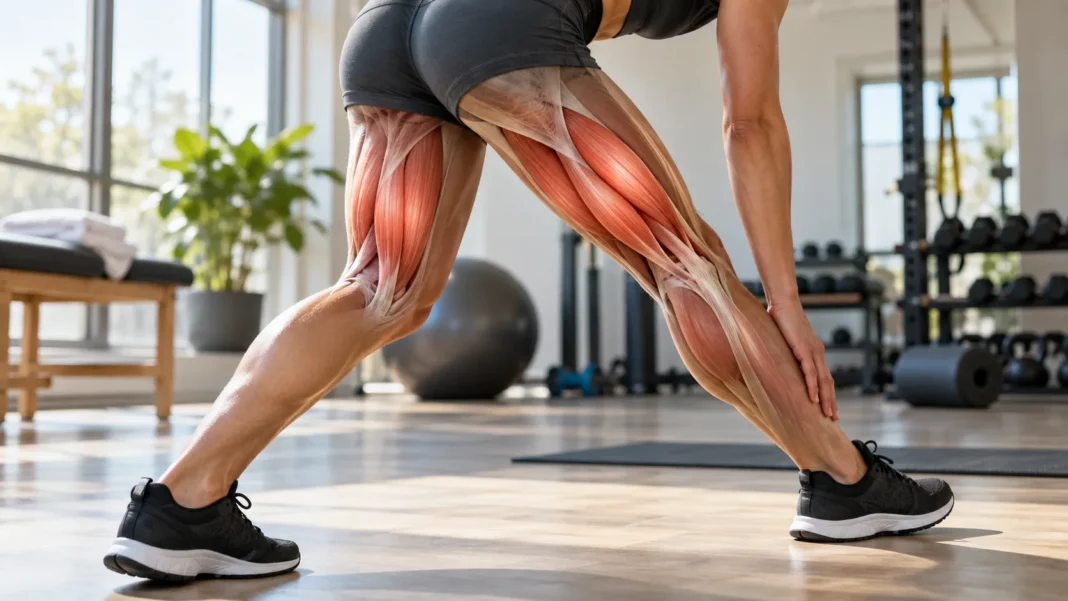
The hamstrings are a group of powerful muscles located along the back of the thigh. They help you bend your knee, extend your hip, control leg movement, and support many everyday activities such as walking, climbing stairs, running, and standing up. Because they cross both the hip and knee joints, the hamstrings play an important role in both mobility and lower-body stability.
Healthy hamstrings need a combination of strength, flexibility, coordination, and recovery. When these muscles become weak, overly tight, fatigued, or injured, movements involving the hips and knees may feel uncomfortable or less controlled. Understanding how the hamstrings are structured makes it easier to appreciate why they are so important for movement and athletic performance.
This guide explains hamstring anatomy, the individual muscles that make up the group, their major functions, common causes of tightness, injury patterns, strengthening exercises, stretching, and recovery. It also covers how the hamstrings work with the glutes, knees, pelvis, and surrounding muscles during daily movement.
What Are the Hamstrings?
The hamstrings are a group of muscles positioned along the back of each thigh. They connect the pelvis and upper leg to structures around the knee and lower leg, allowing them to influence movement at more than one joint. Their primary roles involve bending the knee and helping move the thigh backward at the hip.
Most descriptions of the hamstrings include three main muscles: the biceps femoris, semitendinosus, and semimembranosus. The biceps femoris contains two heads, often called the long head and short head. Although these muscles share similar functions, their exact attachments and mechanical roles differ slightly, which allows the group to control movement in several directions.
The hamstrings are active throughout the day, even when you are not deliberately exercising them. They help control your stride when walking, stabilize the knee when changing direction, and assist the glutes when extending the hip. Their ability to lengthen while producing force is especially important during faster movements such as running and sprinting.
Hamstring Anatomy Explained
The hamstrings originate around the pelvis and upper femur before traveling down the back of the thigh. Most of the group begins near the ischial tuberosity, commonly called the sit bone. From there, the muscles extend toward the knee and attach to different locations on the tibia or fibula, giving them leverage over both the hip and knee.
Because several hamstring muscles cross two joints, they are described as biarticular muscles. This means their length and tension change depending on both hip and knee position. For example, straightening the knee while bending forward at the hip places the hamstrings under greater stretch than performing either movement alone.
The hamstrings are supplied by branches of the sciatic nerve, although the short head of the biceps femoris has a slightly different nerve supply than the rest of the group. Blood vessels in the thigh provide oxygen and nutrients needed for muscular work. These anatomical relationships help explain why nerve irritation, muscle injury, and tendon problems can sometimes produce symptoms in similar areas.
The Three Main Hamstring Muscles
The biceps femoris runs along the outer portion of the back of the thigh. Its long head crosses both the hip and knee, while its short head begins on the femur and only crosses the knee. Together, these portions help bend the knee, extend the hip, and contribute to outward rotation of the lower leg when the knee is flexed.
The semitendinosus lies more toward the inner-back portion of the thigh. It has a long tendon near the lower part of the muscle and attaches along the inner side of the tibia. In addition to knee flexion and hip extension, it can assist with inward rotation of the lower leg when the knee is bent.
The semimembranosus sits deeper than the semitendinosus and also runs along the inner side of the posterior thigh. It contributes to many of the same movements, including knee flexion, hip extension, and internal rotation. Together, these three muscles create a coordinated system that supports powerful movement while also helping stabilize the lower body.
What Is the Main Function of the Hamstrings?
One of the primary functions of the hamstrings is knee flexion, which means bending the knee. This movement happens when you bring your heel toward the back of your thigh, step backward, or pull your lower leg underneath you while running. Hamstring strength therefore contributes directly to movements that require active control of the lower leg.
The hamstrings also assist with hip extension, especially when the hip begins in a flexed position. Hip extension occurs when you move your thigh backward or rise from a bent position. The hamstrings often work with the gluteus maximus during exercises such as deadlifts, bridges, step-ups, and other movements that involve driving the hips forward.
Another major function is controlling movement rather than simply creating it. During walking and running, the hamstrings help slow the leg as it swings forward before the foot contacts the ground. This eccentric control allows the muscles to absorb force and manage momentum, which is one reason high-speed running places substantial demand on the hamstrings.
How the Hamstrings Work During Walking and Running
During walking, the hamstrings become active as the leg moves forward and prepares to contact the ground. They help slow knee extension and hip flexion so the leg does not swing forward uncontrollably. After foot contact, they also contribute to hip stability and help move the body through the next portion of the walking cycle.
Running increases these demands because the legs move faster and generate greater forces. Near the end of the forward swing phase, the hamstrings lengthen while producing tension to decelerate the lower leg. This combination of high force and rapid lengthening is one reason hamstring strains commonly occur during sprinting and explosive sports.
As the foot leaves the ground, the hamstrings assist with pulling the leg backward and preparing it for another stride. Strong glutes, calves, quadriceps, and core muscles also contribute to efficient running mechanics. Training the entire lower body rather than focusing on one muscle group generally provides better support for coordinated movement.
Why Hamstrings Become Tight
Hamstring tightness can develop for many reasons, and it does not always mean the muscles are physically shortened. Long periods of sitting, reduced movement, fatigue, unfamiliar exercise, or limited hip mobility can all create a sensation of stiffness. Some people may also feel tightness because the muscles are working harder to compensate for weakness or poor control elsewhere.
Training volume can influence how the hamstrings feel as well. Activities involving running, cycling, deadlifting, or repeated bending can create temporary muscle fatigue and soreness. After a challenging workout, the hamstrings may feel stiff for a day or two as the muscles recover and adapt to the exercise stimulus.
Nerve sensitivity and lower-back issues can sometimes produce symptoms that resemble muscular tightness. If stretching repeatedly causes tingling, numbness, burning, or pain traveling down the leg, the sensation may involve more than the hamstring muscles alone. Persistent or unusual symptoms are worth discussing with an appropriate healthcare professional instead of simply stretching more aggressively.
How to Strengthen the Hamstrings
Hamstring strengthening can begin with basic exercises such as bridges. Lie on your back with your knees bent and feet planted, then lift your hips while keeping your trunk controlled. The glutes and hamstrings work together during this movement, making bridges useful for beginners who want to build posterior-chain strength without complicated equipment.
Hamstring curls provide a more direct way to train knee flexion. They can be performed using machines, resistance bands, sliders, or exercise balls depending on available equipment. Keeping the movement controlled during both the bending and straightening phases helps train the muscles through a wider portion of their range instead of relying on momentum.
Compound lower-body exercises can also involve the hamstrings as part of a larger movement pattern. Romanian deadlifts, hip hinges, step-ups, and wall squats can be combined within a balanced leg routine to train the hips, thighs, and supporting muscles. Choosing several movement patterns helps avoid relying on a single exercise for complete lower-body development.
Best Hamstring Exercises for Strength and Control
Romanian deadlifts are commonly used to strengthen the hamstrings through hip extension. Hold an appropriate weight, soften the knees, and push the hips backward while keeping the spine controlled. You should feel tension building along the back of the thighs before returning to a standing position by driving the hips forward.
Slider leg curls offer another useful option because they challenge the hamstrings while they lengthen and shorten. Lie on your back with your heels on sliders or a smooth surface, lift your hips, and slowly extend your legs outward. Pull the heels back toward you while maintaining as much hip control as your current strength allows.
Single-leg exercises add balance and coordination to hamstring training. Single-leg bridges, supported single-leg deadlifts, and controlled step movements can reveal differences between sides that may be less obvious during two-legged exercises. Start with manageable resistance and prioritize stability before increasing weight or range of motion.
How to Stretch the Hamstrings Safely
A basic hamstring stretch can be performed by placing one heel on a low surface while keeping the knee slightly soft. Hinge forward gently from the hips until you feel mild tension along the back of the thigh. Avoid aggressively rounding the back or forcing your knee completely straight simply to create a stronger stretch.
Another option is a lying hamstring stretch using a strap or towel. Lie on your back, place the strap around one foot, and gradually raise the leg while keeping the movement comfortable. The opposite leg can remain bent or straight depending on which position allows you to maintain a relaxed pelvis and lower back.
Stretching should create a manageable pulling sensation rather than sharp pain, numbness, or tingling. Holding a comfortable stretch for a short period and repeating it can be enough for many people. If your goal is improved movement, combining stretching with strengthening and regular activity may be more useful than relying on flexibility work alone.
Hamstring Strains and Common Injuries
A hamstring strain occurs when muscle fibers are overloaded beyond what they can tolerate. These injuries are common during sprinting, sudden acceleration, kicking, jumping, and rapid changes in direction. A strain may cause sudden pain in the back of the thigh, tenderness, weakness, swelling, or difficulty continuing the activity.
Hamstring injuries can vary considerably in severity. Mild strains may involve only a small number of irritated fibers, while more significant injuries can cause substantial tearing and functional loss. Pain location, bruising, strength loss, and difficulty walking can provide clues about severity, but proper assessment is often useful when symptoms are significant.
The hamstring tendons can also become irritated, particularly near their attachment at the sit bone or behind the knee. Tendon-related discomfort may develop gradually rather than occurring during one sudden movement. Persistent pain, repeated injuries, severe bruising, or difficulty putting weight through the leg should be evaluated rather than managed solely through home stretching.
How to Reduce the Risk of Hamstring Injury
Gradually increasing training demand is one of the most practical ways to reduce unnecessary strain on the hamstrings. Sudden increases in sprinting, running distance, resistance, or exercise intensity may expose the muscles to loads they are not prepared to handle. Progressive training gives muscles and tendons time to adapt to greater force.
Strengthening the hamstrings at longer muscle lengths can also improve their capacity to manage demanding movements. Exercises that emphasize controlled lowering, such as Romanian deadlifts and certain leg-curl variations, train eccentric strength. This type of strength is particularly relevant during running, when the hamstrings must slow the forward movement of the leg.
A proper warm-up can prepare the lower body before faster or heavier activity. Light movement, dynamic drills, gradual running progressions, and sport-specific practice can increase temperature and readiness before maximum effort. Adequate recovery, sleep, nutrition, and sensible workload management are also important parts of maintaining muscle performance.
How the Hamstrings Work With the Glutes and Quadriceps
The hamstrings and glutes often work together during hip extension. When you stand up from a bent position, climb stairs, sprint, or perform a hip hinge, both muscle groups can contribute to driving the thigh backward. Strong glutes may also help distribute workload so the hamstrings are not required to compensate excessively during every hip-dominant movement.
The quadriceps perform many actions that oppose the hamstrings, particularly around the knee. The quadriceps extend the knee, while the hamstrings help flex it and control extension. Rather than functioning as simple opponents, these muscle groups frequently contract in coordinated ways to stabilize the knee during walking, landing, running, and changing direction.
Balanced training should therefore include exercises for both the front and back of the thighs. Squats, lunges, hinges, bridges, curls, and step variations can develop complementary strength patterns. Training the lower body as an integrated system usually makes more sense than trying to isolate one muscle group while ignoring the others.
Conclusion
The hamstrings are a group of muscles along the back of the thigh that play essential roles in knee flexion, hip extension, leg control, and lower-body stability. The biceps femoris, semitendinosus, and semimembranosus work together during walking, running, climbing, lifting, and many other everyday movements.
Healthy hamstrings benefit from both strength and mobility. Exercises such as bridges, Romanian deadlifts, leg curls, and controlled single-leg movements can build capacity, while comfortable stretching may help maintain range of motion. Training the glutes, quadriceps, core, and surrounding muscles alongside the hamstrings creates a more balanced approach.
Hamstring soreness and mild tightness can occur after activity, but persistent pain, sudden weakness, severe bruising, or symptoms traveling down the leg deserve closer attention. Understanding hamstring anatomy and function can help you train these muscles more effectively while recognizing when discomfort may require professional assessment.
FAQs
What are the three main hamstring muscles?
The main hamstring muscles are the biceps femoris, semitendinosus, and semimembranosus. Together, they help bend the knee, extend the hip, and control movement of the thigh and lower leg.
What is the main function of the hamstrings?
The hamstrings primarily flex the knee and assist with hip extension. They also help slow the leg during walking and running and contribute to stability around the hips and knees.
Why do my hamstrings always feel tight?
Hamstrings can feel tight because of prolonged sitting, fatigue, limited mobility, muscle weakness, or recent exercise. Persistent tightness with numbness, tingling, or radiating pain may have another cause.
What exercises strengthen the hamstrings?
Useful exercises include bridges, hamstring curls, Romanian deadlifts, slider curls, and single-leg hip hinges. Begin with a manageable difficulty and gradually increase resistance as your strength and control improve.
Can weak hamstrings affect the knees?
Weak or poorly conditioned hamstrings may reduce support around the knee during movement. However, knee symptoms can have many causes, so persistent pain should not automatically be attributed to hamstring weakness.