


What Is a Wall Squat?
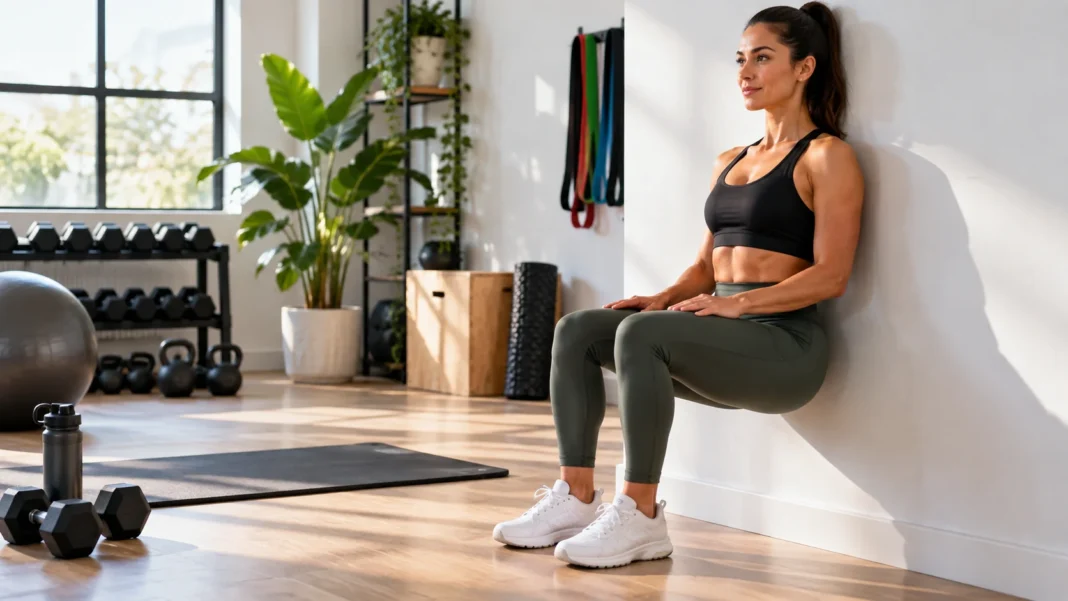
A wall squat is a lower-body exercise performed with your back supported against a wall while you lower your hips into a seated position. Unlike a traditional squat, your torso stays in contact with the wall, which can make the movement feel more controlled. It mainly challenges the quadriceps, glutes, hamstrings, and supporting muscles around the hips and knees.
Wall squats can be performed dynamically by moving up and down or held statically as a wall sit. Both versions strengthen the legs, but they place slightly different demands on the muscles. Dynamic repetitions emphasize movement and control, while static holds increase muscular endurance by keeping the lower body under continuous tension.
Because the wall provides support, this exercise is often easier to learn than unsupported squat variations. However, good positioning still matters for comfort and effectiveness. Keeping the knees aligned, maintaining steady foot pressure, and choosing an appropriate squat depth can help you train safely while building stronger and more stable lower-body muscles.
Muscles Worked During a Wall Squat
The quadriceps are the primary muscles working during most wall squat variations. These large muscles on the front of the thighs help extend the knees and support your body as you lower and rise. The deeper you squat, the more challenging the movement generally becomes, although depth should always remain within a comfortable and controlled range.
Your glutes also contribute significantly, especially when pushing through the feet to return to standing. The hamstrings and calf muscles help stabilize the legs, while the core muscles support your trunk and help maintain good posture. Together, these muscle groups create the stability needed to hold your body securely against the wall.
The hips also play an important role in controlling squat mechanics and lower-body alignment. Strong hip muscles can help improve stability during many everyday and exercise movements. If you are also working on hip strength, learning how to strengthen hip flexors can complement a balanced lower-body training routine.
Wall Squat Benefits for Lower-Body Strength
One of the main wall squat benefits is improved strength in the thighs and glutes. These muscles are involved in walking, climbing stairs, standing from a chair, and many athletic movements. Regularly strengthening them can make daily activities feel easier while giving your lower body a stronger foundation for more advanced resistance exercises.
Wall squats create resistance using your own body weight, so they can be performed without gym equipment. This makes them useful for home workouts, travel routines, or beginners who are not ready to use heavy weights. You can gradually increase difficulty by holding the position longer, performing more repetitions, or adding resistance once your form is consistent.
Stronger leg muscles may also improve your ability to control your knees and hips during movement. Strength does not come from one exercise alone, but wall squats can contribute to a comprehensive lower-body program. Combining them with hip hinges, bridges, calf raises, and other squat variations provides more balanced muscular development over time.
Wall Squats Can Improve Muscular Endurance
Wall squat holds are particularly effective for developing muscular endurance because the leg muscles remain contracted for an extended period. Instead of repeatedly shortening and lengthening the muscles, you hold one stable position. This creates a burning sensation in the quadriceps as they continue working to support your body against gravity.
Improved muscular endurance helps your muscles maintain effort for longer before becoming tired. This can be useful during activities involving prolonged standing, hiking, recreational sports, or repeated lower-body movements. Beginners may start with short holds of around 10 to 20 seconds and gradually increase the duration as their legs become more comfortable with the exercise.
Longer is not always better, especially when technique begins to break down. If your knees collapse inward, your hips shift unevenly, or you can no longer maintain steady foot pressure, the set should usually end. Consistent shorter holds with strong form are generally more useful than forcing a lengthy wall sit while your position deteriorates.
How to Do a Wall Squat With Proper Form
Begin by standing with your back against a solid wall and placing your feet slightly wider than hip-width apart. Step your feet forward far enough that your knees can bend comfortably without your heels lifting. Keep your head, upper back, and hips supported against the wall while maintaining a natural, relaxed posture.
Slowly slide your body downward by bending your knees and hips. Stop at a depth that feels challenging but controlled, keeping the knees tracking in the same general direction as your toes. Your feet should remain flat on the floor, and your body weight should feel evenly distributed rather than shifting excessively toward the toes.
To return to standing, press through your feet and straighten the knees while sliding your body upward along the wall. Move smoothly instead of pushing explosively or bouncing out of the bottom position. Repeat for your desired number of repetitions while maintaining consistent knee alignment, steady breathing, and a controlled range of motion.
How Deep Should You Go in a Wall Squat?
There is no single wall squat depth that is correct for everyone. Your ideal depth depends on your strength, mobility, comfort, training experience, and any existing joint limitations. Beginners often benefit from starting with a shallow squat and gradually lowering further as their leg strength and confidence improve.
Many people aim for a position where the thighs approach parallel to the floor, but reaching a perfect 90-degree knee angle is not necessary. The exercise can still be effective at a higher position. Forcing yourself lower than you can comfortably control may increase discomfort without providing meaningful additional benefit.
Use your movement quality as the main guide. You should be able to keep your feet planted, knees stable, and back comfortably supported against the wall. If you experience sharp pain or feel that your joints are taking more stress than your muscles, reduce the depth and reassess your positioning before continuing.
Common Wall Squat Mistakes to Avoid
Placing the feet too close to the wall is a common wall squat mistake. When your feet are directly beneath your hips, the knees may move farther forward and the position can feel cramped. Stepping the feet slightly forward usually creates more room for the hips and knees to bend while allowing the body to remain supported.
Another mistake is allowing the knees to collapse inward during the movement or hold. Aim to keep each knee generally aligned with the corresponding foot instead of squeezing them together. Your knees do not need to be forced outward aggressively, but maintaining controlled alignment can help distribute the workload more evenly across the lower body.
Holding your breath is also common when the exercise becomes difficult. Instead, breathe steadily throughout the movement, especially during longer wall sits. Avoid pressing your hands heavily into your thighs for assistance unless that is intentionally part of a modified version, because doing so reduces the amount of work performed by the legs.
Wall Squat vs Traditional Squat
Wall squats and traditional squats train many of the same major muscles, including the quadriceps, glutes, and hamstrings. The biggest difference is that a wall squat provides external support for the torso. A regular squat requires greater balance and more active control from the trunk because your body moves freely without leaning against a surface.
For beginners, wall support can make it easier to understand knee and hip movement without worrying as much about balance. It can also be useful when practicing controlled squat depth. Traditional squats, however, generally transfer more directly to everyday free-standing movements and can be progressed using dumbbells, barbells, kettlebells, and other forms of resistance.
You do not necessarily have to choose between the two exercises. Wall squats can be used as a starting point, warm-up movement, endurance exercise, or accessory exercise alongside traditional squats. Including different squat variations allows you to challenge the same muscles in different ways while preventing your routine from becoming overly repetitive.
Best Wall Squat Variations
The basic wall sit is one of the simplest variations. Slide down the wall, hold a comfortable squat position, and maintain steady tension in your legs for a set amount of time. Beginners can hold a higher position, while more experienced exercisers can gradually increase the duration or lower the squat depth for additional difficulty.
A dynamic wall squat involves repeatedly sliding down and returning to standing. This version develops strength through a range of motion rather than holding one position. You can make it harder by slowing the lowering phase, briefly pausing at the bottom, or performing more controlled repetitions while maintaining your posture and knee alignment.
Advanced exercisers may add a resistance band around the thighs, hold dumbbells, or perform certain single-leg wall squat variations. These progressions significantly increase difficulty and should only be introduced after the basic exercise feels comfortable. Progress gradually, because adding resistance before developing good control can make it harder to maintain proper alignment and technique.
How Long Should You Hold a Wall Squat?
Beginners often start wall squat holds between 10 and 30 seconds. The goal is not to reach an impressive time immediately but to maintain a stable position without losing form. Rest between sets and repeat two or three times depending on your fitness level, training program, and how challenging the exercise feels.
As your muscular endurance improves, you can gradually increase each hold by five to ten seconds. Someone who can comfortably maintain proper technique for 45 to 60 seconds may benefit from increasing resistance instead of endlessly extending the hold. A slightly harder variation can often provide a more efficient training stimulus than extremely long sets.
For dynamic wall squats, beginners might perform around 8 to 12 controlled repetitions per set. More experienced exercisers may use higher repetitions or additional resistance depending on their goals. Regardless of the method, prioritize consistency and movement quality instead of chasing a specific repetition count or wall sit duration at the expense of proper form.
How to Add Wall Squats to Your Workout
Wall squats can fit into lower-body workouts, full-body routines, rehabilitation-style exercise programs, or short home workouts. You can perform them early in a session as a controlled activation exercise or later as a finishing movement. Their simplicity makes them especially convenient when you want to challenge the legs without setting up equipment.
If your goal is strength, perform dynamic wall squats with a challenging but manageable resistance and adequate rest between sets. For muscular endurance, static wall sits or higher-repetition sets may be more suitable. Training two or three times per week can be enough for many beginners, provided the muscles have adequate time to recover.
Wall squats should ideally be combined with movements that train the lower body from different angles. Glute bridges, lunges, step-ups, hip hinges, calf raises, and suitable mobility exercises can help create a more complete routine. A varied program generally develops strength, coordination, and joint control more effectively than repeatedly relying on one exercise.
Wall Squat Best Practices for Safe Progress
Start with a version you can perform comfortably and progress gradually. Adding too much resistance, dropping too deep, or dramatically increasing hold times may cause unnecessary soreness and reduce movement quality. Small increases in repetitions, time, resistance, or squat depth allow your muscles and connective tissues to adapt more steadily.
Choose a stable wall and a non-slip floor whenever you perform the exercise. Shoes with good traction can help keep your feet secure, particularly during longer holds. Avoid placing your feet on rugs or slippery surfaces that could move unexpectedly, because losing your footing while leaning against a wall can disrupt your position quickly.
Pay attention to how your body responds during and after training. Muscle fatigue and temporary burning in the thighs are common during wall sits, but sharp, sudden, or worsening joint pain should not be ignored. If you have an injury, significant knee or hip problems, or ongoing pain, personalized guidance from a qualified healthcare professional may be appropriate.
Conclusion
The wall squat is a simple but effective lower-body exercise that strengthens the quadriceps, glutes, hamstrings, and supporting muscles around the hips and knees. Because the wall provides support, the exercise is accessible to many beginners while still offering enough flexibility to challenge experienced exercisers through longer holds, slower repetitions, and added resistance.
Good wall squat form depends on comfortable foot placement, controlled knee alignment, steady breathing, and an appropriate range of motion. You do not need to reach a specific squat depth or wall sit time to benefit. Consistent technique and gradual progression are more important than forcing your body into a difficult position before it is ready.
Whether you use dynamic repetitions or static wall sits, wall squats can fit easily into home workouts and structured training programs. Combining them with other leg, hip, and core exercises creates a more balanced routine. With regular practice and sensible progression, they can support stronger legs, better muscular endurance, and improved lower-body control.
FAQs
Are wall squats good for beginners?
Yes, wall squats are beginner-friendly because the wall provides additional support and reduces the balance demands of a traditional squat. Start with a shallow range and gradually increase depth as your strength improves.
What muscles do wall squats work the most?
Wall squats mainly target the quadriceps and glutes while also involving the hamstrings, calves, hips, and core. Static wall sits place particularly strong endurance demands on the muscles at the front of the thighs.
How many wall squats should I do?
Beginners can start with 8–12 controlled dynamic repetitions for two or three sets. For wall sits, begin with manageable 10–30 second holds and gradually increase the duration as your endurance develops.
Are wall squats good for your knees?
Wall squats can strengthen muscles that support the knee when performed with comfortable depth and good alignment. However, people with existing knee pain or injuries should avoid painful ranges and seek individualized advice when needed.
Can I do wall squats every day?
Some people can tolerate light wall squats daily, but harder training requires recovery time. For strength-focused sessions, two or three weekly workouts may be more appropriate while allowing the leg muscles to recover between sessions.