


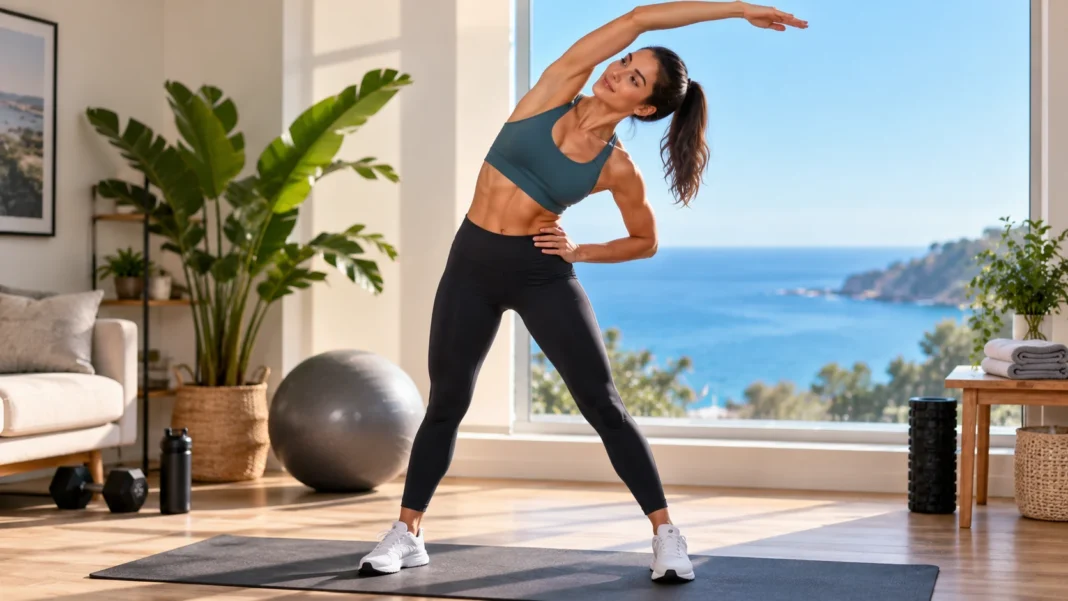
What Are Oblique Stretches?
Oblique stretches are movements designed to lengthen the muscles along the sides of your abdomen and torso. These muscles include the internal and external obliques, which help you rotate, bend sideways, and stabilize your core during everyday movement. Gentle stretching can reduce feelings of tightness and help your trunk move more comfortably through different directions.
The oblique muscles work during activities such as walking, running, lifting, twisting, and reaching. They also help control your rib cage and pelvis when you change direction or carry weight on one side. Because these muscles are involved in so many movements, they can sometimes feel stiff after strength training, prolonged sitting, sports, or repetitive twisting activities.
Oblique stretching does not need to be complicated or aggressive. Simple side bends, kneeling reaches, seated rotations, and standing stretches can all target the side body when performed with control. The goal is usually to create a mild pulling sensation through the ribs and waist rather than forcing the torso into an extreme range of motion.
What Muscles Do Oblique Stretches Target?
The external obliques are large muscles positioned along the outer sides of the abdomen. They help rotate the torso, bend the body sideways, and support abdominal pressure during lifting and movement. When you stretch one side of your body by reaching in the opposite direction, the external oblique on the lengthened side often experiences a noticeable stretch.
The internal obliques sit underneath the external obliques and contribute to similar movements. They work with other core muscles to rotate and stabilize the trunk while maintaining control between the rib cage and pelvis. Because both layers work together, most side-body stretches affect several muscles rather than isolating only one part of the abdominal wall.
Other nearby tissues may also stretch depending on your position. The latissimus dorsi, quadratus lumborum, intercostal muscles, hip flexors, and muscles around the lower back can all contribute to the sensation. This is why an oblique stretch may feel slightly different depending on whether you perform it standing, seated, kneeling, or lying down.
Benefits of Stretching Your Obliques
Regular oblique stretching can help maintain comfortable movement through side bending and rotation. These motions are important for many daily activities, including reaching for objects, getting in and out of a car, turning while walking, and performing household tasks. Maintaining mobility through the torso may make these actions feel smoother and less restricted.
Stretching can also feel helpful after workouts that heavily involve the core. Exercises such as side planks, Russian twists, cable rotations, carries, and rotational sports can leave the obliques feeling tight or fatigued. Gentle stretching after training may help you relax the area and restore a comfortable range of movement once the muscles have cooled down slightly.
Another benefit is improved body awareness. Slow stretching encourages you to notice differences between the left and right sides of your torso and recognize where you feel tension. This awareness can help you adjust your posture or exercise technique, although stretching alone will not automatically correct strength imbalances, injuries, or movement problems.
How to Do a Standing Oblique Stretch
Stand with your feet about shoulder-width apart and keep your knees relaxed rather than locked. Raise your right arm overhead while keeping your shoulders away from your ears. Slowly lean your torso toward the left until you feel a gentle stretch along the right side of your waist and rib cage without twisting forward.
Keep both feet firmly on the floor and avoid allowing your hips to shift dramatically in the opposite direction. Your chest should stay relatively open while your torso moves sideways in one smooth line. Hold the position for about 15 to 30 seconds while breathing normally, then slowly return to the center and repeat on the other side.
You can adjust the intensity by changing how far you reach rather than forcing a deeper bend. Beginners may only need a small movement to feel the stretch, while more flexible people may comfortably reach farther. The sensation should remain mild and controlled, without sharp pain, pinching, numbness, or discomfort in your lower back.
How to Do a Kneeling Oblique Stretch
Begin in a tall kneeling position with your knees comfortably spaced and your torso upright. Place one foot forward if you prefer a half-kneeling position for additional balance. Raise one arm overhead and gently reach it across your body while leaning away from the side you want to stretch.
Keep your pelvis relatively stable instead of allowing your lower back to arch excessively. Think about creating length from your hip through your ribs and into your fingertips. This helps direct the movement through the side of your torso rather than simply bending through the lower back or collapsing your upper body forward.
Hold the stretch for approximately 15 to 30 seconds while taking slow breaths. As you exhale, you may notice the side body relaxing slightly, but do not use breathing as a reason to force more range. Return to the starting position slowly, switch sides, and repeat for one or two rounds depending on your mobility routine.
How to Do a Seated Oblique Stretch
Sit upright on a chair, bench, or floor with your spine comfortably tall. Place one hand beside you for support and reach the opposite arm overhead. Slowly lean toward the supporting side while keeping both sides of your pelvis grounded as evenly as possible, creating a stretch through the opposite waist and rib area.
Avoid rounding your shoulders or turning the movement into a forward fold. Imagine lifting upward through the crown of your head before moving sideways. This small adjustment creates more space through your torso and can help you feel the stretch through the obliques rather than placing unnecessary pressure on the lower back.
A seated variation is useful for people who prefer more stability than standing stretches provide. It can also fit easily into desk breaks, cooldown routines, or gentle mobility sessions. Hold each side for about 20 seconds and repeat as needed, always staying within a range that feels comfortable and easy to control.
Common Mistakes When Stretching the Obliques
One common mistake is bending too far in an attempt to create a stronger stretch. More range does not necessarily mean better results, particularly if your lower back begins to pinch or your hips shift significantly. Stop at the point where you feel gentle tension along the side of your torso while still being able to breathe normally.
Another mistake is rotating forward while performing a side bend. This changes which tissues are being stretched and may reduce the emphasis on the oblique muscles. Keep your chest relatively open and imagine moving between two panes of glass, especially during standing or seated variations, so your torso travels sideways instead of collapsing forward.
Holding your breath can also make stretching feel unnecessarily tense. Slow, relaxed breathing helps you maintain control and prevents you from rushing through the movement. Avoid bouncing or using momentum because quick movements make it harder to judge your range and may irritate muscles that are already sore or sensitive from recent training.
When Is the Best Time to Stretch Your Obliques?
Oblique stretches can be performed after exercise when your body is already warm and you want to cool down gradually. After strength training or sports, gentle static stretching can help you transition from harder activity into a more relaxed state. Keep the stretch comfortable, particularly if your core muscles are already fatigued from the workout.
Before exercise, dynamic movements are often more appropriate than long static holds. Controlled torso rotations, standing side reaches, and gentle trunk movements can prepare your body for activity without spending too much time in one position. If your workout involves throwing, running, lifting, or rotational movements, gradually increasing movement intensity may be more useful than forcing deep stretches.
You can also stretch during the day if prolonged sitting leaves your torso feeling stiff. A few standing side bends or gentle reaches may help break up long periods of inactivity. Consistency matters more than choosing one perfect time, so include short mobility sessions when they fit naturally into your schedule and feel helpful.
How Oblique Stretching Fits Into Full-Body Mobility
Oblique stretching works best as one part of a broader mobility routine rather than the only movement you perform. Your hips, spine, shoulders, and legs all influence how comfortably your torso moves. Combining side-body stretches with gentle hip mobility, thoracic rotation, shoulder movement, and lower-body exercises can create a more balanced routine.
Pay attention to discomfort elsewhere in your body because pain can change the way you stand, walk, and stretch. For example, persistent pain behind the knee may cause you to shift weight or avoid certain positions during standing stretches. Modifying your stance or choosing seated alternatives can help you avoid compensating unnecessarily.
Mobility routines do not need to be long to be useful. Five to ten minutes of controlled movement can be enough to work through several major areas when performed consistently. Choose exercises that match your needs, avoid forcing painful positions, and focus on smooth movement quality rather than trying to achieve extreme flexibility.
How Often Should You Stretch Your Obliques?
Many people can perform gentle oblique stretches several times per week without difficulty. You might include them after workouts, during mobility sessions, or when your torso feels stiff after sitting. One or two sets per side, held for roughly 15 to 30 seconds, can be enough for a simple flexibility routine.
Your ideal frequency depends on your activity level, current flexibility, and how your body responds. Someone who frequently performs rotational sports may enjoy stretching more often than a person whose training rarely challenges the obliques. More stretching is not automatically better, especially if the area is already irritated, strained, or unusually sore.
Consistency is usually more useful than occasional intense stretching. Gentle sessions performed regularly allow you to explore your available range without forcing the muscles. If one side consistently feels much tighter or painful compared with the other, consider whether your posture, training habits, or an underlying issue may be contributing instead of simply stretching harder.
Tips for Getting More From Oblique Stretches
Start with a comfortable position and move slowly enough to notice where the stretch begins. You should feel gentle tension through the side of your waist, ribs, or upper hip without sharp discomfort. Keeping your movements controlled makes it easier to distinguish a productive stretch from a position that places stress on joints or sensitive tissues.
Focus on breathing into the side of your rib cage while holding each position. Deep, relaxed breathing can make it easier to stay calm and avoid unnecessary muscular tension. Instead of trying to force farther into the stretch with every breath, think about maintaining length through your torso while allowing the position to feel progressively more comfortable.
Combine flexibility work with strength training for the best overall approach to core function. Your obliques need both the ability to move and the strength to control movement under load. Exercises such as side planks, carries, controlled rotations, and anti-rotation movements can complement stretching and help build a strong, stable torso for daily activities and exercise.
When Should You Avoid Oblique Stretches?
Avoid aggressive oblique stretching if you have a recent abdominal strain, rib injury, severe lower-back pain, or unexplained pain through your side. Stretching injured tissue too strongly can aggravate symptoms rather than improve them. Choose comfortable movement only if it feels appropriate, and stop immediately if the stretch produces sharp or worsening pain.
You should also be cautious if twisting or side bending causes numbness, tingling, weakness, dizziness, or pain traveling into another area. These symptoms are different from normal muscle tension during stretching. A healthcare professional can help determine what is causing persistent symptoms and whether specific exercises or stretches are suitable for your situation.
Pregnancy, recent surgery, and certain musculoskeletal conditions may also require modifications. Individual recommendations can vary considerably depending on your health history and stage of recovery. If you are unsure whether oblique stretches are appropriate, getting personalized guidance is safer than copying an intense stretching routine that was designed for someone with different needs.
Conclusion
Oblique stretches are simple movements that can help maintain flexibility through the sides of your torso and support comfortable rotation and side bending. Standing, seated, and kneeling variations make it easy to choose a position that matches your mobility and balance. The key is creating gentle length through the side body without forcing your spine into an uncomfortable position.
Good form matters more than how far you can bend. Keep your movements slow, your breathing relaxed, and your hips and torso controlled throughout each stretch. A mild pulling sensation is normal, but sharp pain, pinching, numbness, or worsening discomfort means you should stop and reconsider the position.
For the best results, combine oblique stretching with full-body mobility and appropriate core strengthening. Regular movement, rather than extreme flexibility, should be the goal for most people. A few controlled stretches several times per week can fit easily into warm-down routines, desk breaks, or dedicated mobility sessions.
FAQs
What is the best stretch for the obliques?
A standing side bend is one of the simplest oblique stretches. Raise one arm overhead, lean gently toward the opposite side, and keep your hips stable while breathing comfortably.
How long should I hold an oblique stretch?
Hold a comfortable static stretch for about 15 to 30 seconds. One or two rounds per side are usually enough for a basic mobility routine without forcing excessive range.
Can tight obliques cause lower-back discomfort?
Tight or overworked trunk muscles may contribute to feelings of stiffness, but lower-back pain can have many causes. Persistent or severe pain should be evaluated rather than assuming the obliques are solely responsible.
Should I stretch my obliques before working out?
Before exercise, gentle dynamic side bends and rotations are often more suitable than long static holds. Longer oblique stretches can be saved for cooldowns or separate mobility sessions.
Can I stretch my obliques every day?
Gentle daily stretching may be comfortable for some people if it does not cause pain or excessive soreness. Keep the intensity mild and allow irritated or strained muscles adequate time to recover.