


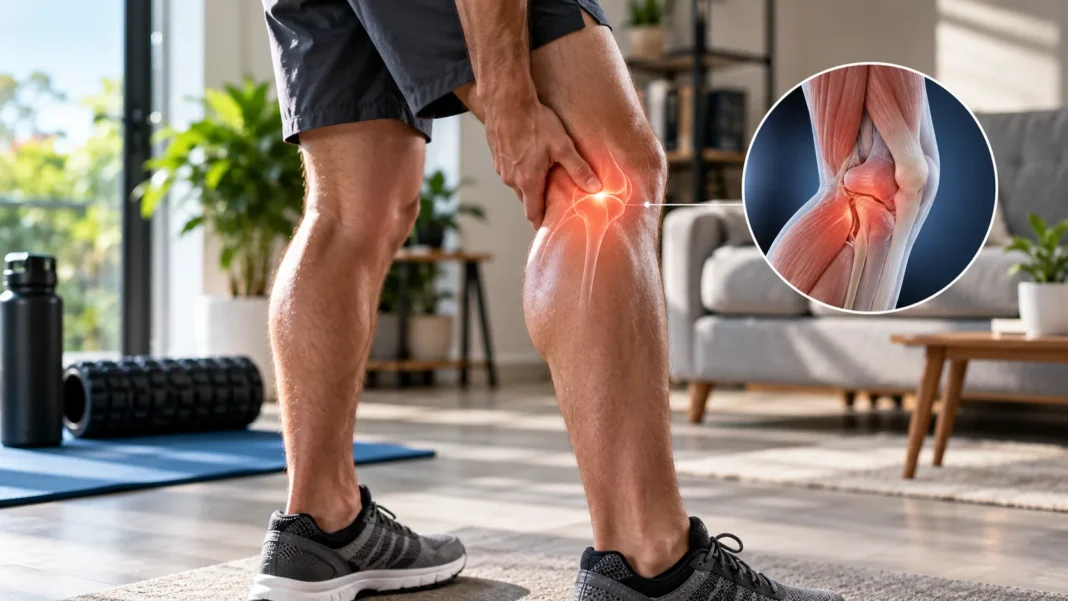
Pain in the back of the knee can appear suddenly after exercise or develop gradually without an obvious injury. The discomfort may feel like tightness, aching, pressure, swelling, or a sharp sensation when bending or straightening the leg. Because several muscles, tendons, joints, nerves, and blood vessels pass through this area, posterior knee pain can have many possible causes.
For some people, the problem comes from overworked hamstrings or calf muscles after running, walking, lifting, or sports. Others may experience pain behind the knee because of joint irritation, a Baker’s cyst, arthritis, or an injury inside the knee. Understanding when the symptoms started and which movements make them worse can provide useful clues about what may be happening.
Many mild cases improve with reduced activity, gentle movement, and gradual strengthening. However, severe swelling, redness, warmth, sudden calf pain, or difficulty breathing should never be ignored because certain medical conditions require urgent assessment. Learning the common causes and appropriate relief options can help you decide what steps to take next.
Why Does the Back of My Knee Hurt?
The back of the knee contains several structures that help control movement and stability. Hamstring tendons attach near the area, while the gastrocnemius calf muscle crosses behind the knee joint. Ligaments, nerves, blood vessels, cartilage, and fluid-filled structures are also located nearby, which means irritation in different tissues can produce similar symptoms.
Pain may occur after suddenly increasing running distance, performing repetitive squats, standing for long periods, or participating in activities involving frequent bending and straightening. Muscle fatigue and tendon irritation are common explanations when discomfort develops gradually after physical activity. Symptoms may become more noticeable while climbing stairs, walking uphill, running, or fully extending the knee.
However, pain behind the knee is not always related to muscles or exercise. Joint problems, cartilage injuries, arthritis, cysts, and circulation-related conditions may cause discomfort in the same area. Paying attention to swelling, stiffness, clicking, locking, redness, warmth, and calf symptoms can help determine whether simple self-care or medical evaluation is more appropriate.
Hamstring Tendon Strain or Irritation
The hamstrings run along the back of the thigh and help bend the knee and extend the hip. Tendons from these muscles attach near the knee, where they can become irritated from sprinting, sudden acceleration, repetitive training, or increasing exercise intensity too quickly. The pain may be felt just above or toward either side of the back of the knee.
A mild hamstring strain may produce tightness, tenderness, and discomfort when stretching the leg or contracting the muscle. More significant injuries can cause sudden sharp pain, bruising, weakness, or difficulty walking normally. Athletes involved in running, football, jumping, or other explosive movements may be particularly likely to experience this type of posterior knee discomfort.
Restoring activity gradually is important because repeatedly loading an irritated tendon before it has settled may prolong symptoms. Gentle mobility and progressive strengthening can sometimes help once normal movement becomes comfortable. If there was a sudden popping sensation, significant bruising, major weakness, or an inability to bear weight, professional assessment is recommended.
Calf Muscle Strain and Tightness
The gastrocnemius is a major calf muscle that crosses the knee joint before attaching lower in the leg. Because of this connection, calf tightness or strain can sometimes feel like pain located directly behind the knee. This is especially common after running, jumping, sudden changes of direction, or physical activities that repeatedly push the foot against the ground.
People with a calf strain may notice tenderness when walking quickly, climbing stairs, standing on their toes, or stretching the calf. Mild muscle soreness usually develops after activity and improves gradually, while a more significant strain may create sharper pain and noticeable weakness. Swelling or bruising can occasionally develop when muscle fibers have been injured more substantially.
Gentle movement may be more comfortable than complete inactivity once the initial irritation begins improving. Avoid aggressive stretching if it causes sharp pain, and return to demanding exercise gradually rather than immediately testing the muscle at full intensity. Sudden unexplained calf swelling, warmth, or redness requires medical attention because these symptoms can have causes other than a muscle strain.
Baker’s Cyst and Swelling Behind the Knee
A Baker’s cyst is a fluid-filled swelling that develops behind the knee. It often occurs when extra joint fluid collects because of irritation inside the knee, sometimes in association with arthritis, cartilage problems, or other joint conditions. Some people notice a visible or palpable lump, while others mainly experience pressure, tightness, or discomfort when bending the knee.
Symptoms can vary depending on the size of the cyst and the underlying knee problem. The area may feel stiff after sitting, walking for long periods, or performing repeated knee movements. A larger cyst can make full bending or straightening uncomfortable, although some Baker’s cysts cause very little pain and are discovered unexpectedly.
Treatment often focuses on understanding why excess fluid is developing rather than simply addressing the lump itself. Reducing aggravating activity may help, but persistent swelling should be assessed when it limits movement or repeatedly returns. A ruptured cyst can sometimes cause sudden calf pain and swelling, which can resemble more serious circulation problems and should be professionally evaluated.
Meniscus Injuries and Pain Behind the Knee
The menisci are pieces of cartilage inside the knee that help distribute load and support smooth joint movement. A meniscus injury can happen during twisting sports, deep squatting, sudden changes of direction, or gradually through age-related wear. Depending on the injured area, discomfort may be felt along the joint line or toward the back of the knee.
Meniscus-related symptoms may include stiffness, swelling, clicking, catching, or pain during deep knee bending. Some people feel as though the knee temporarily locks or cannot move through its usual range. Symptoms may become particularly noticeable when turning while the foot remains planted or when repeatedly getting into and out of a low position.
Not every meniscus problem requires the same treatment, and symptoms can range from mild irritation to significant mechanical limitations. Avoid repeatedly forcing movements that create sharp pain, locking, or catching while the knee is irritated. Persistent swelling, inability to fully straighten the knee, or recurrent locking should be evaluated by a qualified healthcare professional.
Arthritis and Joint-Related Posterior Knee Pain
Arthritis can cause aching, stiffness, and reduced mobility throughout the knee, including discomfort around the back of the joint. Osteoarthritis develops as joint tissues change over time and may become more noticeable with age, previous injuries, or repeated loading. Symptoms can fluctuate, with some days feeling relatively comfortable and others involving more stiffness or soreness.
People with knee arthritis often report discomfort after prolonged sitting, extended walking, stair climbing, or demanding physical activity. Morning stiffness may occur but often improves after gentle movement. Swelling inside the joint can occasionally contribute to pressure behind the knee and may also increase the likelihood of developing a Baker’s cyst.
Regular movement can remain valuable because completely avoiding activity may contribute to weakness and reduced mobility. Low-impact exercise, gradual strengthening, and an appropriate balance between activity and recovery can support everyday function. Persistent joint swelling or worsening pain should be discussed with a healthcare professional, particularly when symptoms are affecting walking, sleep, or normal daily activities.
Could Pain Behind the Knee Be a Blood Clot?
A blood clot in a deep vein, known as deep vein thrombosis or DVT, can sometimes cause pain in the calf or behind the knee. It is less common than muscle or joint-related causes but is important because it can become medically serious. Symptoms may include one-sided swelling, warmth, tenderness, skin discoloration, or unexplained pain that does not clearly relate to exercise.
Certain situations may increase the likelihood of blood clots, including prolonged immobility, recent surgery, long journeys, pregnancy, certain medications, or some medical conditions. However, symptoms alone cannot reliably confirm or exclude DVT. Trying to massage or aggressively exercise a suddenly swollen and painful leg is not an appropriate substitute for medical assessment.
Seek urgent medical attention for unexplained one-sided leg swelling, significant warmth or redness, or sudden pain when a blood clot could be possible. Emergency help is particularly important if leg symptoms occur with chest pain, difficulty breathing, coughing blood, faintness, or an unusually rapid heartbeat. These symptoms require prompt professional evaluation rather than home treatment.
How to Relieve Pain in the Back of the Knee at Home
For mild discomfort related to recent exercise or overuse, temporarily reducing activities that provoke pain can give irritated tissues time to settle. This does not always mean staying completely still; comfortable walking and gentle everyday movement may be appropriate. Avoid repeatedly testing painful movements because frequent irritation can delay recovery rather than showing whether the knee is improving.
Cold packs may help with discomfort or swelling after a recent minor injury, while some people find gentle warmth more comfortable for muscle tightness. Always protect the skin rather than applying extreme temperatures directly. Elevating the leg may also feel helpful when mild swelling is present, particularly after spending extended periods standing or walking.
Over-the-counter pain medicines may be appropriate for some people, but they are not suitable for everyone because of medical conditions, allergies, pregnancy, or interactions with other medicines. Follow product instructions and seek professional guidance when unsure. Home care should not replace evaluation when pain is severe, unexplained, progressively worsening, or accompanied by concerning symptoms.
Exercises and Stretches for Supporting the Knee
Once acute pain has settled, gentle strengthening can help improve how the muscles surrounding the knee share physical load. Exercises targeting the glutes, hamstrings, quadriceps, and calves may support lower-body movement when performed with appropriate technique. Begin with comfortable resistance and avoid assuming that stronger or more difficult exercise automatically produces faster recovery.
Glute strength is particularly useful for controlling hip and knee alignment during walking, running, and other lower-body movements. Exercises such as bridges, controlled side steps, and the monster walk exercise can strengthen the hips when they can be performed without worsening knee symptoms. These exercises should be introduced progressively rather than attempted aggressively during an acute painful episode.
Gentle calf and hamstring mobility can also be useful when stiffness is contributing to discomfort. Stretch only until mild tension is felt rather than forcing the knee into painful positions. If exercise repeatedly causes swelling, sharp pain, locking, or worsening symptoms afterward, stop and consider professional guidance before continuing the same routine.
How to Prevent Pain Behind the Knee During Exercise
One of the simplest ways to reduce overuse problems is to increase training gradually. Sudden jumps in running mileage, workout intensity, hill training, or lower-body exercise volume can place unfamiliar stress on muscles and tendons. Allowing the body time to adapt is usually more sustainable than alternating between very little exercise and unusually demanding sessions.
A balanced strength program can also help distribute physical stress across the hips, thighs, knees, and calves. Squats, bridges, calf raises, hamstring exercises, and controlled lateral movements may all have a place depending on individual ability. Technique, recovery, appropriate resistance, and consistency usually matter more than performing a large number of different exercises.
Footwear and training surfaces can also influence comfort, particularly for runners and people who spend many hours walking. Replace worn footwear when support or cushioning has noticeably deteriorated and vary training when repetitive impact causes irritation. Rest days, sufficient sleep, hydration, and gradual progression can support recovery between demanding workouts and reduce repeated overload.
When Should You See a Doctor for Pain Behind the Knee?
Mild muscle soreness that clearly develops after exercise and steadily improves may not require immediate medical assessment. However, pain that persists for several weeks, repeatedly returns, or interferes with normal walking deserves closer attention. A healthcare professional can assess movement, swelling, strength, injury history, and other symptoms to help identify the likely source.
Seek earlier assessment when the knee becomes significantly swollen, unstable, locked, or difficult to straighten. Medical evaluation is also appropriate after a major fall, collision, twisting injury, or sudden popping sensation followed by weakness. Inability to bear weight, obvious deformity, severe pain, fever, or a hot and very swollen joint should not be managed only through online advice.
Sudden swelling and pain in one calf or behind one knee should be taken particularly seriously when no clear muscle injury explains it. Chest pain, shortness of breath, faintness, or coughing blood alongside leg symptoms requires emergency medical attention. When symptoms are unusual or worsening, getting evaluated is safer than repeatedly trying exercises or stretches without knowing the cause.
Conclusion
Pain in the back of the knee can result from several different problems, ranging from temporary muscle tightness to injuries or joint conditions. Hamstring irritation, calf strains, Baker’s cysts, meniscus problems, and arthritis are among the possibilities. The location of pain alone is rarely enough to determine exactly which structure is responsible.
For mild exercise-related discomfort, reducing aggravating activity, maintaining comfortable movement, and gradually restoring flexibility and strength may help recovery. Exercises should feel controlled rather than sharply painful, and progress should happen gradually. Persistent symptoms deserve professional assessment instead of repeatedly pushing through discomfort in the hope that the knee will eventually adjust.
Pay particular attention to symptoms that do not fit a typical minor strain. Significant swelling, redness, warmth, locking, inability to bear weight, or sudden calf symptoms can require prompt evaluation. Understanding the warning signs while taking a gradual approach to exercise can help you protect your knee and return to normal activity more confidently.
FAQs
What causes pain at the back of the knee?
Common causes include hamstring or calf strains, tendon irritation, Baker’s cysts, meniscus injuries, and arthritis. Less commonly, unexplained pain and swelling may be associated with a circulation problem such as DVT.
Is walking good for pain behind the knee?
Gentle walking may be appropriate when symptoms are mild and movement does not increase pain or swelling. Reduce distance or intensity if walking causes sharp discomfort, limping, or worsening symptoms afterward.
How do you relieve pain behind the knee?
Temporarily reducing aggravating activities, using cold or comfortable warmth, and maintaining gentle movement may help mild exercise-related pain. Persistent, severe, swollen, or unexplained knee pain should be professionally assessed.
Can tight hamstrings cause pain behind the knee?
Yes. The hamstring tendons attach near the knee, so muscle tightness or tendon irritation can create discomfort around the back of the joint, particularly during stretching, running, bending, or resisted knee movement.
When is back-of-knee pain serious?
Seek prompt medical attention for severe swelling, redness, warmth, inability to bear weight, significant injury, or sudden unexplained calf pain. Emergency care is important if leg symptoms occur with chest pain or difficulty breathing.