


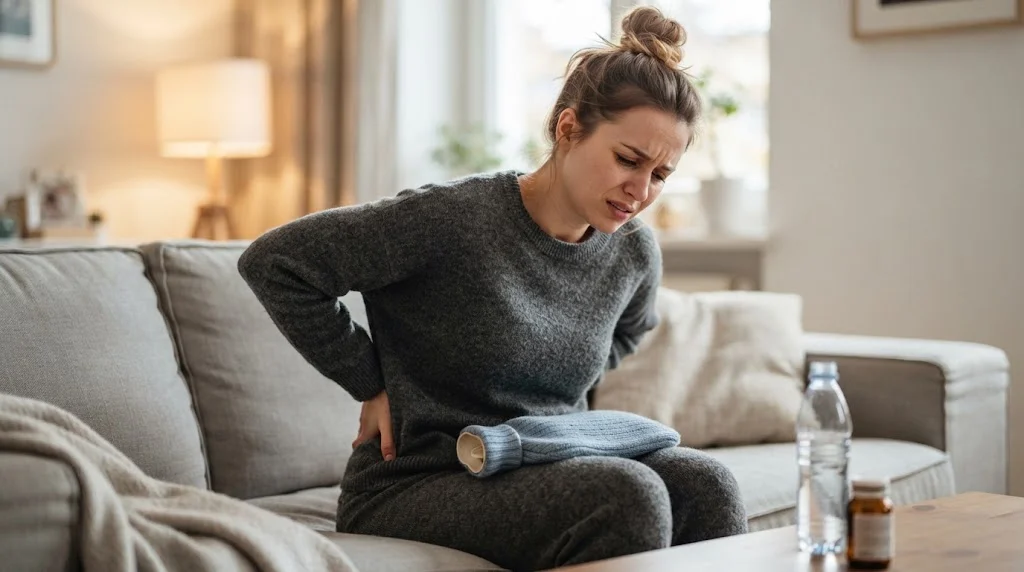
Back pain during your period is common and often appears as a dull ache, pressure, cramping, or tightness in the lower back. For some people, the discomfort begins before bleeding starts and continues through the first few days of menstruation. Hormonal changes and uterine contractions are often responsible, although other pelvic or musculoskeletal conditions can also contribute.
The pain may stay in the lower back or spread into the hips, buttocks, abdomen, or upper thighs. Some people notice only mild soreness, while others find that sitting, sleeping, working, or exercising becomes more difficult. The pattern, intensity, and additional symptoms can help indicate whether the pain is likely menstrual or deserves further medical evaluation.
This guide explains common causes of back pain during a period, safe relief options, gentle movement strategies, and warning signs to watch for. It also covers when conditions such as endometriosis, fibroids, pelvic floor tension, or other problems may be involved.
Why Does Back Pain Happen During Your Period?
The uterus contracts during menstruation to help shed its lining. These contractions can create pain that is felt not only in the lower abdomen but also in the lower back because the pelvic region and spine share nearby nerve pathways.
Hormone-like substances called prostaglandins help trigger uterine contractions. Higher prostaglandin levels are often associated with stronger cramps, more inflammation, and greater pain sensitivity. This can make the lower back feel achy or tight during the first few days of a period.
The muscles around the pelvis may also tense in response to cramping. When the lower back, hips, and pelvic floor remain tight for several hours, muscular soreness can develop in addition to the original menstrual discomfort.
What Does Period-Related Back Pain Feel Like?
Period back pain often feels like a dull, heavy ache across the lower back. Some people describe a pulling sensation, pressure, or cramping that seems to move between the abdomen and back.
The discomfort can also radiate into the hips, buttocks, or thighs. This referred pain happens because the same general region contains interconnected nerves and muscles that respond to uterine contractions and pelvic tension.
Sharp, severe, or distinctly one-sided pain is less typical of ordinary period discomfort. If pain suddenly feels different from your usual cycle or becomes progressively worse, professional evaluation is a good idea.
Prostaglandins and Menstrual Back Pain
Prostaglandins are chemical messengers that influence inflammation and uterine muscle contractions. Their levels rise around menstruation, helping the uterus shed its lining.
When prostaglandin activity is high, cramps may become more intense. The stronger the uterine contractions, the more likely nearby areas such as the lower back and pelvis may also feel uncomfortable.
Prostaglandin levels are often highest near the beginning of a period. This helps explain why cramps and back pain commonly peak during the first day or two before gradually improving.
Primary Dysmenorrhea and Lower Back Pain
Primary dysmenorrhea refers to menstrual pain that occurs without another underlying pelvic condition. It commonly begins in adolescence and can continue through the reproductive years.
Symptoms can include abdominal cramps, lower back pain, nausea, headaches, fatigue, and loose stools. The discomfort usually follows a predictable cycle and improves as menstruation progresses.
Mild to moderate symptoms can often be managed with heat, movement, rest, and other self-care strategies. If pain regularly disrupts work, school, sleep, or normal activities, medical advice is appropriate.
Endometriosis and Back Pain During Periods
Endometriosis occurs when tissue similar to the uterine lining grows outside the uterus. It can cause significant menstrual pain, deep pelvic discomfort, painful intercourse, and lower back pain.
Back pain associated with endometriosis may be more intense than typical menstrual aching. It can also start before bleeding begins and continue after the period ends.
Because symptoms vary widely, endometriosis cannot be diagnosed from pain alone. If your periods are consistently very painful or accompanied by other pelvic symptoms, speak with a healthcare professional.
Adenomyosis and Period-Related Back Pain
Adenomyosis occurs when tissue similar to the uterine lining grows into the muscular wall of the uterus. This can make periods more painful and contribute to a feeling of heaviness or pressure.
People with adenomyosis may experience strong cramps, heavy bleeding, pelvic discomfort, and lower back pain. Symptoms can become more noticeable over time.
Medical assessment is important because adenomyosis can resemble other menstrual conditions. Persistent heavy bleeding or worsening pain should not be assumed to be normal simply because it happens during your period.
Fibroids and Menstrual Back Pain
Fibroids are noncancerous growths that develop in or around the uterus. Some cause no symptoms, while others contribute to heavy periods, pelvic pressure, or back discomfort.
Larger fibroids may press on nearby structures and create a sense of fullness or heaviness. During menstruation, these symptoms can become more noticeable because the uterus is already contracting.
If you have very heavy bleeding, prolonged periods, frequent urination, pelvic pressure, or worsening back pain, a healthcare professional can assess whether fibroids or another condition may be involved.
Pelvic Floor Tension and Back Pain
The pelvic floor supports the bladder, bowel, uterus, and surrounding pelvic structures. These muscles can tighten in response to pain, stress, or repeated cramping.
Excess tension may contribute to discomfort in the lower back, hips, pelvis, or rectal area. Some people also experience pain during bowel movements or a feeling of pelvic pressure around menstruation.
If your pain involves sudden rectal spasms or similar symptoms, this guide on proctalgia fugax explains another condition that can cause brief but intense discomfort in the pelvic and rectal region.
Can Bloating Make Back Pain Worse?
Bloating is common around menstruation because hormonal changes can influence fluid retention and digestion. A swollen or uncomfortable abdomen can change posture and increase pressure through the pelvis.
Some people respond to bloating by leaning backward, slouching, or moving less. These changes can increase tension through the lower back and make soreness more noticeable.
Gentle walking, comfortable clothing, and regular movement can sometimes reduce the sensation of stiffness. Severe or persistent abdominal bloating with unusual pain should be medically assessed.
Can Sitting Make Period Back Pain Worse?
Prolonged sitting can increase stiffness through the hips and lower back. When menstrual cramps are already present, staying in one position for hours may make surrounding muscles feel even tighter.
Slouching or leaning to one side can also create uneven loading through the pelvis. Small changes in position throughout the day are usually more useful than trying to hold one perfect posture.
Stand, stretch, or walk briefly every 30 to 60 minutes when possible. Frequent movement can reduce stiffness and may help your back feel more comfortable during your period.
Is Exercise Safe During Period Back Pain?
Light exercise is generally comfortable for many people during menstruation. Walking, gentle cycling, stretching, yoga, or low-impact movement may reduce stiffness and support better circulation.
You do not need to force intense workouts if you feel tired or uncomfortable. Choose movements that feel manageable and reduce intensity when needed.
Exercise should not cause sharp pain, dizziness, severe weakness, or unusually heavy bleeding. Stop and seek medical advice if activity makes symptoms dramatically worse.
Gentle Stretches for Period Back Pain
A knee-to-chest stretch can help reduce tension around the lower back. Lie comfortably, bring one knee toward your chest, and hold gently before switching sides.
Child’s pose may also feel soothing for some people. Sit the hips toward the heels, reach forward, and breathe slowly while allowing the lower back to relax.
Stretching should feel mild rather than painful. Avoid forcing deep positions, especially if they create sharp pelvic pain or make symptoms spread into another area.
Walking for Menstrual Back Pain
Walking is one of the simplest forms of movement during a period. It keeps the hips and lower back moving without requiring intense effort.
A short walk may reduce stiffness and help you feel less cramped after prolonged sitting. Start slowly and adjust the duration according to how you feel.
If walking significantly increases pain or causes dizziness, weakness, or unusual symptoms, stop. Rest and seek medical advice if the change is severe or unexpected.
Using Heat for Safe Relief
Heat is one of the most common ways to manage menstrual back pain. A warm shower, heating pad, or hot water bottle can help relax tight muscles and reduce the sensation of cramping.
Use a comfortable temperature rather than very high heat. Place a layer of fabric between the heat source and your skin to reduce the risk of irritation or burns.
Heat can provide temporary comfort but does not treat underlying conditions such as endometriosis or fibroids. Persistent severe pain still requires proper evaluation.
Pain Relief Medications
Over-the-counter pain relievers may help some people manage menstrual pain. Nonsteroidal anti-inflammatory drugs are commonly used because they can reduce prostaglandin activity as well as pain.
However, not every medication is suitable for everyone. Certain health conditions, medications, allergies, pregnancy concerns, or stomach problems may affect what is safe to take.
Follow package directions and ask a healthcare professional if you are unsure which option is appropriate. Avoid taking more than recommended simply because the pain is strong.
Sleep Positions for Period Back Pain
Sleeping on your side with a pillow between your knees can reduce twisting through the pelvis and lower back. Some people find this position more comfortable during menstruation.
Back sleepers can try placing a pillow beneath the knees. This may reduce tension through the lower back and help the pelvis rest in a more comfortable position.
The best sleep position is ultimately the one that lets you rest without increasing pain. Use additional pillows for support if needed and avoid forcing a position that feels unnatural.
Hydration and Menstrual Discomfort
Staying normally hydrated supports overall muscle and digestive function. Dehydration may make headaches, fatigue, or general discomfort feel worse during menstruation.
You do not need to force excessive amounts of water. Drink regularly according to thirst and increase fluids if you are exercising, sweating heavily, or in hot weather.
Hydration alone will not eliminate significant period pain. Think of it as one part of general self-care rather than a treatment for severe menstrual symptoms.
Stress and Period Back Pain
Stress can increase muscle tension and pain sensitivity. If you are already experiencing cramps, additional tension through the lower back and pelvic area can make discomfort feel stronger.
Gentle breathing, walking, stretching, or other calming activities may help reduce unnecessary muscular tension. Better sleep can also improve how the body responds to pain.
Stress reduction does not mean period pain is psychological. It simply addresses one factor that can influence how intense physical symptoms feel.
When Period Back Pain Is Not Typical
Mild to moderate lower back pain that follows a predictable cycle is common. Severe pain that repeatedly prevents normal activities is not something you should automatically accept as normal.
Watch for very heavy bleeding, fainting, fever, severe pelvic pressure, pain during sex, or symptoms that continue outside your period. These patterns can point to another condition.
Pain that suddenly changes from your usual pattern also deserves attention. New symptoms should be evaluated if they are intense, persistent, or difficult to explain.
When to See a Doctor
Make an appointment if back pain becomes progressively worse, lasts well beyond your period, or frequently interferes with sleep, work, exercise, or daily life.
Seek medical advice if pain occurs with very heavy bleeding, bleeding between periods, significant pelvic pressure, painful intercourse, or unusual bowel or bladder symptoms.
Urgent care may be needed for severe sudden pain, fainting, high fever, or very heavy bleeding with weakness or dizziness. These symptoms should not be managed only with heat and home remedies.
Conclusion
Back pain during a period is often caused by uterine contractions, prostaglandins, hormonal changes, and muscle tension. The discomfort may stay in the lower back or spread into the hips, pelvis, buttocks, or thighs.
Safe relief options can include heat, gentle walking, stretching, rest, position changes, and appropriate over-the-counter pain relief when suitable. Avoid forcing exercise or stretches if they make symptoms sharper or more intense.
If your pain is severe, worsening, or accompanied by heavy bleeding, fever, fainting, pelvic pressure, or other unusual symptoms, seek medical advice. Conditions such as endometriosis, adenomyosis, fibroids, or pelvic floor problems may require professional evaluation and treatment.
FAQs
Is back pain during a period normal?
Mild to moderate lower back pain is common during menstruation because uterine contractions and prostaglandins can create referred pain. Severe or disabling pain should be medically evaluated.
Why does my back hurt before my period starts?
Hormonal changes, prostaglandins, bloating, and pelvic muscle tension can begin before bleeding starts. These changes may cause back discomfort during the days leading up to menstruation.
Does heat help with period back pain?
Yes. Heat can relax tight muscles and reduce the sensation of cramps for some people. A heating pad, warm shower, or hot water bottle may provide temporary relief.
Can endometriosis cause lower back pain during periods?
Yes. Endometriosis can cause significant pelvic and lower back pain around menstruation. It may also cause painful intercourse, bowel symptoms, or pain that lasts beyond the period.
When should I worry about back pain during my period?
Seek medical advice if pain is severe, worsening, or accompanied by heavy bleeding, fever, fainting, pain during sex, or symptoms that significantly interfere with daily activities.