


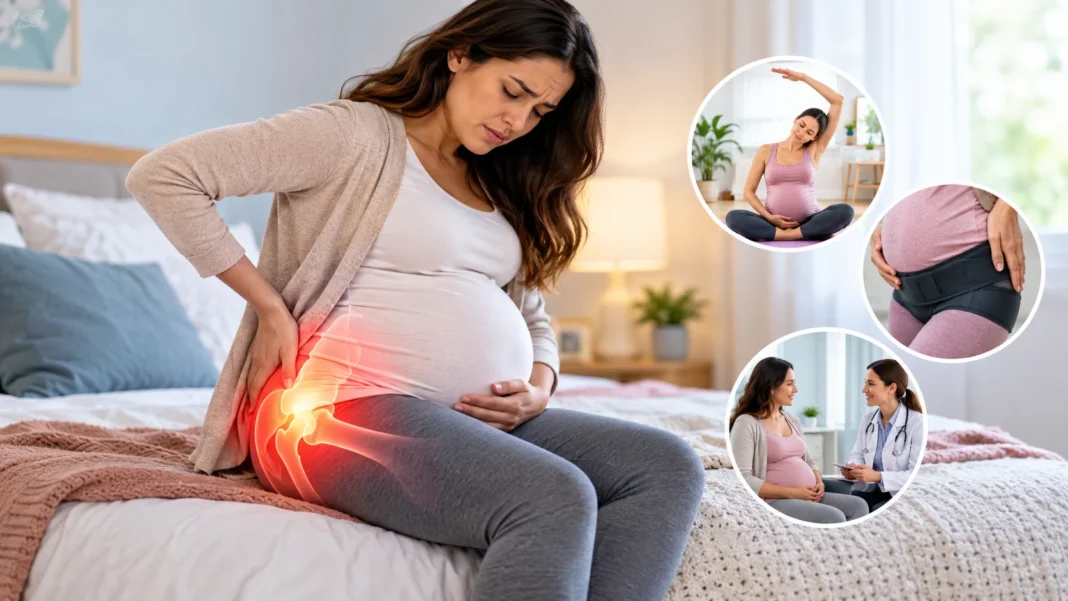
Hip pain during pregnancy is common, especially as the body changes to support a growing baby. Increased body weight, hormonal changes, altered posture, and extra pressure around the pelvis can make the hips feel sore, stiff, or uncomfortable. Some people notice mild aching, while others experience sharper pain that affects walking, sleeping, climbing stairs, or changing positions.
Pregnancy-related hip discomfort can appear at different stages and may affect one or both sides. The good news is that many cases improve with gentle movement, positioning changes, supportive sleep habits, and appropriate exercises. However, severe pain, sudden symptoms, or pain accompanied by other concerning signs should be evaluated by a healthcare professional.
Why Is Hip Pain Common During Pregnancy?
Pregnancy changes the way your body carries and distributes weight. As your abdomen grows, your center of gravity gradually shifts forward, which can influence posture and place additional demand on the hips, pelvis, lower back, and surrounding muscles. These changes may become more noticeable during the second and third trimesters as pregnancy progresses.
Hormonal changes can also affect the joints and supporting tissues around the pelvis. Pregnancy hormones help prepare the body for childbirth by allowing certain ligaments to become more flexible. While this is a normal process, increased joint movement may sometimes contribute to feelings of instability, soreness, or pressure around the hips and pelvic region.
Daily activities can become more physically demanding as well. Walking, standing for extended periods, getting out of bed, and climbing stairs may require more effort than before pregnancy. When muscles around the hips and core are working harder to maintain stability, fatigue and discomfort can become more noticeable toward the end of the day.
What Does Hip Pain During Pregnancy Feel Like?
Pregnancy hip pain can feel different from person to person. Some experience a deep ache along the outer hip, while others notice discomfort in the buttocks, groin, or around the pelvic joints. The pain may be mild and occasional or persistent enough to interfere with comfortable movement, rest, and everyday activities.
Outer hip tenderness is particularly noticeable for some pregnant people when lying on one side. The pressure of body weight against the hip can make the area feel sore during the night, especially after remaining in one position for a long time. Changing sides or adding supportive pillows may reduce some of this pressure.
Other people experience pain when walking, standing on one leg, getting dressed, turning in bed, or getting in and out of a car. These movements require the pelvis and hips to stabilize the body. When surrounding tissues are irritated or fatigued, seemingly simple movements may become surprisingly uncomfortable.
Common Causes of Hip Pain During Pregnancy
One major cause is the gradual increase in weight carried by the hips and pelvis. The muscles surrounding these areas must work harder as pregnancy progresses, particularly during walking and prolonged standing. If those muscles become fatigued or overloaded, aching and tightness can develop around the outer hips, glutes, lower back, and pelvic region.
Postural changes may contribute as the abdomen expands. Some people naturally increase the curve in the lower back or shift their upper body backward to maintain balance. These compensations can change how force passes through the hips and may cause certain muscles to become overworked while others contribute less effectively.
Pelvic girdle pain can also contribute to discomfort around the hips. This term describes pain involving joints and tissues around the pelvis and may include discomfort near the sacroiliac joints, pubic region, hips, or thighs. Symptoms can become more noticeable during uneven movements such as walking upstairs, standing on one leg, or rolling over in bed.
Can Pregnancy Hormones Cause Hip Pain?
Pregnancy hormones can influence the flexibility of ligaments and connective tissues. Relaxin is often discussed because it contributes to changes that allow the pelvis and surrounding structures to adapt during pregnancy and childbirth. These changes are normal, but increased movement around joints may affect how stable or comfortable the hips feel during certain activities.
Hormonal changes do not mean the joints simply become dangerously loose. Instead, they are one piece of a larger picture that includes changing body weight, muscle demands, posture, activity level, and previous injuries. Some people remain comfortable throughout pregnancy, while others develop hip or pelvic discomfort despite having similar hormonal changes.
Strength and movement control can help the body adapt to these changes. Supporting muscles around the hips, pelvis, and trunk can improve how forces are managed during walking, lifting, and daily activity. This is why pregnancy exercise programs often include gentle strengthening rather than relying only on stretching or complete rest.
Hip Pain While Sleeping During Pregnancy
Nighttime hip pain is common because side sleeping places prolonged pressure on one hip. As pregnancy advances, side sleeping often becomes the most comfortable position, but staying on the same side for hours may irritate sensitive tissues around the outer hip. A mattress that is particularly firm can sometimes make this pressure feel more noticeable.
Using pillows strategically may improve comfort. A pillow between the knees can help keep the hips and pelvis in a more neutral position instead of allowing the upper leg to pull downward. Some people also benefit from placing a small pillow under the abdomen or behind the back to reduce strain and provide additional support.
Changing sides during the night may reduce continuous pressure on one hip. When turning in bed, try keeping the knees relatively close together and moving the shoulders and pelvis as a unit if separating the legs is uncomfortable. A pregnancy pillow can also make repositioning easier by supporting several areas of the body at once.
Hip Pain When Walking or Standing
Walking changes throughout pregnancy as the body adapts to a growing abdomen and shifting center of gravity. Some people develop a wider stance or altered stride, which can place different demands on the hip muscles. Long walks or standing for extended periods may therefore trigger soreness even when those activities were comfortable before pregnancy.
Supportive footwear can make a meaningful difference during daily activity. Shoes that fit properly and provide stable cushioning may reduce unnecessary stress traveling through the feet, knees, hips, and lower back. Very unsupportive footwear or sudden changes in activity levels can sometimes contribute to additional fatigue and discomfort.
Breaking activity into shorter periods may also help. Instead of completing one long walk, several shorter walks with rest between them may be more manageable. If pain consistently increases with walking or causes limping, consider discussing it with your healthcare provider or a physical therapist for individualized guidance.
Gentle Exercises for Hip Pain During Pregnancy
Gentle strengthening can help support the muscles that stabilize the hips and pelvis. Exercises such as supported squats, side-lying leg movements, glute bridges, and controlled standing hip exercises may be appropriate for many people. The goal should be smooth, comfortable movement rather than pushing through significant pain or trying to train at maximum intensity.
Core control can also influence how the hips and pelvis handle movement. Pregnancy changes abdominal function considerably, particularly as the abdominal wall expands. Learning safe diastasis recti exercises may help you better understand gentle core control, breathing, and pressure management when returning to exercise during or after pregnancy.
Pelvic tilts and gentle mobility movements can sometimes reduce stiffness around the lower back and hips. These can be performed in different positions depending on your comfort and stage of pregnancy. If any movement causes dizziness, significant pressure, increased pain, contractions, bleeding, or other concerning symptoms, stop and contact your healthcare provider.
Stretches That May Help Pregnancy Hip Pain
Gentle hip stretching can be useful when muscles feel tight after sitting, walking, or sleeping. A mild seated glute stretch or supported hip stretch may provide temporary relief without requiring aggressive flexibility. The stretch should feel comfortable and controlled rather than painful, especially because pregnancy can already increase joint mobility.
Hip flexor tightness can also contribute to discomfort around the front of the hips and lower back. A gentle supported lunge stretch may help some people, provided balance feels secure. Holding onto a wall, chair, or stable surface can reduce the risk of losing balance as your center of gravity changes.
Stretching alone may not address every cause of pregnancy hip pain. If symptoms relate to muscle weakness, pelvic instability, or repeated overload, strengthening and activity adjustments may be equally important. A balanced approach usually works better than repeatedly stretching the same painful area without understanding why discomfort keeps returning.
At-Home Ways to Relieve Hip Pain
Reducing prolonged positions is one of the simplest ways to manage pregnancy-related hip discomfort. If you sit for long periods, change position regularly and take brief movement breaks. If standing aggravates your symptoms, alternate standing tasks with seated activities so the hip muscles have opportunities to recover.
Gentle warmth may help relax tight muscles around the hips and lower back. A warm shower or comfortably warm compress can feel soothing, although excessive heat should be avoided during pregnancy. Always follow your healthcare provider’s advice about safe temperature exposure and avoid placing extremely hot heating devices directly against the body.
Rest can be useful when symptoms flare, but complete inactivity is not always necessary. Comfortable walking, light mobility, and gentle strengthening may help maintain circulation and muscle function. The right balance depends on how your body responds, so adjust activities that clearly worsen symptoms rather than assuming all movement should be avoided.
How Physical Therapy Can Help
A physical therapist can assess how your hips, pelvis, back, and core are working together during pregnancy. They may look at walking patterns, muscle strength, balance, joint movement, posture, and activities that trigger symptoms. This helps identify which movements need support rather than using the same treatment approach for every person.
Treatment may include individualized strengthening, mobility work, movement modifications, and strategies for daily activities. A therapist may also show you easier ways to get out of bed, climb stairs, lift objects, or move in and out of a car. These practical adjustments can make a meaningful difference when pain is linked to repeated everyday movements.
Pelvic health physical therapists may be especially useful when hip pain occurs alongside pelvic girdle pain, pelvic floor symptoms, or significant abdominal weakness. Their goal is not simply to remove pain temporarily but to help improve strength and movement confidence. They can also modify exercises as pregnancy progresses and physical demands change.
How to Prevent Hip Pain From Getting Worse
Avoid suddenly increasing your exercise volume or intensity during pregnancy without appropriate progression. Even if you were active before pregnancy, the same workout may feel different as your body changes. Reducing resistance, shortening workout duration, or adding additional recovery can help prevent muscles around the hips from becoming unnecessarily overloaded.
Pay attention to movements that repeatedly trigger discomfort. Standing on one leg while dressing, taking stairs quickly, or carrying heavy objects on one side may aggravate pelvic and hip symptoms. Using both hands for loads, sitting down to get dressed, and moving more deliberately can reduce uneven stress through the pelvis.
Regular strengthening and comfortable movement may help maintain hip function throughout pregnancy. Focus on consistency rather than intensity, and adapt exercises according to how you feel on a particular day. Pregnancy symptoms can fluctuate, so a movement that feels comfortable one week may need modification later as your body continues changing.
When Hip Pain May Need Medical Attention
Most pregnancy-related hip pain is musculoskeletal and manageable, but persistent or worsening symptoms deserve discussion with your healthcare provider. Pain that significantly limits walking, prevents sleep, or interferes with basic daily activities should be evaluated. Early assessment may make it easier to identify contributing factors and introduce appropriate treatment or physical therapy.
Seek prompt medical guidance for sudden severe pain, significant swelling, redness, warmth, or pain following a fall or injury. Leg swelling, calf pain, difficulty breathing, chest pain, or other unusual symptoms require urgent medical attention because they may indicate something more serious than ordinary pregnancy-related muscle or joint discomfort.
Contact your maternity care provider if hip or pelvic pain occurs with vaginal bleeding, fluid leakage, regular painful contractions, fever, or significant abdominal pain. These symptoms should not simply be attributed to musculoskeletal discomfort. Your healthcare team can determine whether pregnancy-related evaluation or additional medical assessment is necessary.
Does Hip Pain Go Away After Pregnancy?
Many people notice that pregnancy-related hip discomfort improves gradually after delivery as body weight distribution and hormone levels change. However, recovery does not happen immediately for everyone. Muscles and connective tissues need time to adapt again, especially after months of altered posture, reduced activity, or significant pelvic discomfort.
Postpartum activities can continue challenging the hips. Feeding positions, carrying a baby, lifting car seats, and spending long periods sitting can place repetitive stress on the body. Maintaining comfortable posture, alternating sides when carrying, and gradually rebuilding strength may help reduce ongoing hip and lower-back discomfort.
Persistent postpartum hip pain deserves evaluation, particularly if it limits walking, exercise, sleep, or childcare activities. A physical therapist can assess whether muscle weakness, pelvic floor dysfunction, joint irritation, or movement habits are contributing. Recovery plans can then be adjusted around the practical demands of caring for a newborn.
Can Hip Pain Affect Daily Activities During Pregnancy?
Hip pain can make simple activities feel harder than expected. Walking through a store, getting dressed, climbing stairs, or standing while cooking may become uncomfortable because these tasks repeatedly load the hips and pelvis. Planning short breaks and changing positions can reduce the amount of continuous stress placed on sensitive tissues.
Household tasks may also require modification. Carrying heavy laundry baskets, vacuuming for long periods, or repeatedly bending and twisting can increase discomfort. Dividing larger tasks into smaller sections and keeping frequently used objects within easier reach can make daily routines more manageable without requiring complete inactivity.
Listen to patterns in your symptoms rather than judging yourself by what you could do earlier in pregnancy. Adjusting an activity is not the same as giving up movement. The goal is to remain comfortably active while avoiding repeated flare-ups that make it harder to move and recover afterward.
Conclusion
Hip pain during pregnancy is common because the body experiences major changes in weight distribution, posture, joint mobility, and muscular demand. Discomfort may affect the outer hip, pelvis, buttocks, or groin and can become more noticeable when walking, sleeping, climbing stairs, or changing positions. Symptoms vary significantly between individuals and throughout pregnancy.
Gentle strengthening, supportive sleep positions, regular movement, sensible stretching, and activity modifications can help many people manage pregnancy-related hip pain. Paying attention to breathing, core support, footwear, and recovery may also reduce unnecessary stress. Exercises should remain comfortable and should be adapted as your body changes.
Persistent, severe, or sudden hip pain should not automatically be considered a normal part of pregnancy. Contact your healthcare provider when pain significantly affects mobility or occurs alongside swelling, bleeding, contractions, fever, breathing difficulties, or other concerning symptoms. Appropriate assessment can help determine the safest and most effective next steps.
FAQs
Is hip pain normal during pregnancy?
Hip pain is common during pregnancy because posture, body weight, muscle demands, and pelvic mobility change. However, severe, sudden, or persistent pain should be discussed with your healthcare provider.
When does hip pain usually start in pregnancy?
Hip pain can occur at any stage, but it often becomes more noticeable during the second or third trimester as the abdomen grows and physical demands on the pelvis increase.
How should I sleep with pregnancy hip pain?
Try sleeping on your side with a pillow between your knees and additional support beneath your abdomen or behind your back. Changing sides may also reduce prolonged pressure on one hip.
Can walking make pregnancy hip pain worse?
Long periods of walking may increase pain when hip muscles are fatigued or pelvic tissues are irritated. Shorter walks, supportive footwear, and regular rest periods may make activity more comfortable.
When should I worry about hip pain during pregnancy?
Seek medical advice for severe pain, difficulty walking, swelling, redness, injury-related pain, or symptoms accompanied by bleeding, contractions, fever, breathing difficulty, chest pain, or significant leg swelling.