


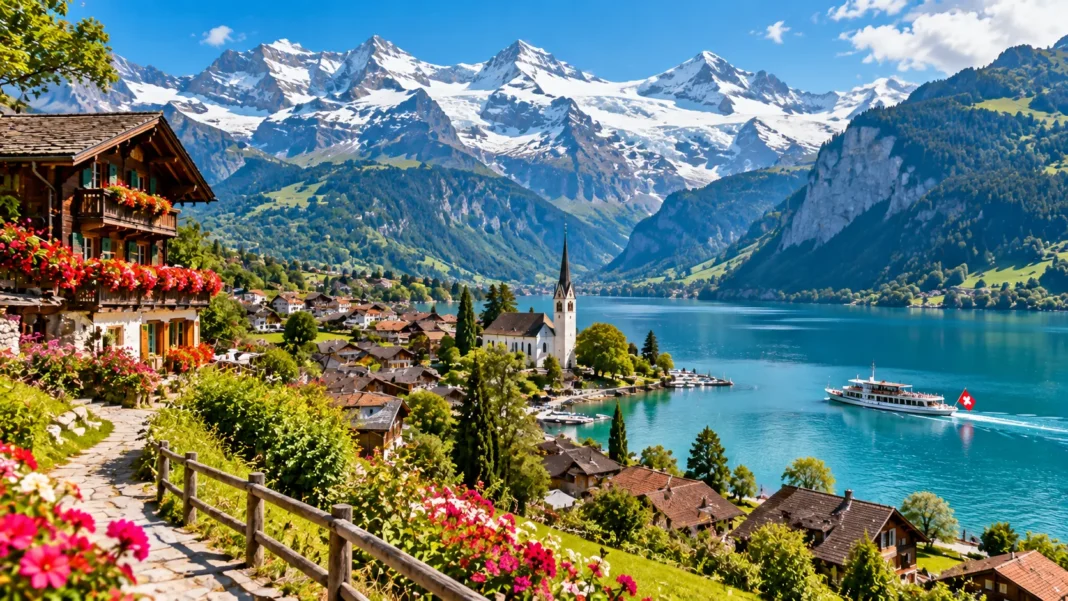
Switzerland is one of Europe’s most visually impressive destinations, known for snow-covered mountains, turquoise lakes, charming old towns, scenic railways, and peaceful Alpine villages. Although relatively compact, the country offers remarkable variety. Travelers can spend the morning exploring a historic city and the afternoon surrounded by mountains, waterfalls, vineyards, or dramatic glacial landscapes.
What makes Switzerland especially attractive is how easily many destinations can be combined. An efficient railway network connects major cities with mountain regions, lakeside towns, and smaller communities, making multi-destination trips practical without renting a car. Whether you enjoy hiking, photography, architecture, food, winter sports, or relaxed sightseeing, there are places to match almost every travel style.
Choosing where to go depends largely on your interests and available time. First-time visitors often focus on Lucerne, Interlaken, Zermatt, Zurich, and the Jungfrau region, while longer trips allow space for Bern, Lake Geneva, Lugano, and scenic train journeys. The following destinations highlight some of the best places to visit in Switzerland and the attractions worth adding to your itinerary.
Explore the Historic Streets of Zurich
Zurich is Switzerland’s largest city and an excellent introduction to the country, combining historic architecture, museums, shopping, restaurants, and beautiful waterfront scenery. The old town stretches along both sides of the Limmat River, where narrow streets reveal churches, colorful buildings, cafés, and traditional shops. Walking is one of the easiest ways to experience the central area.
Lake Zurich adds a natural element to the city and provides opportunities for relaxed waterfront walks, boat trips, and scenic viewpoints. Travelers can spend time around the promenade before returning to museums, galleries, or lively shopping streets. The contrast between modern urban life and peaceful lake scenery makes Zurich much more than simply a transportation gateway.
Zurich is also well positioned for travelers beginning a wider journey through Switzerland. Rail connections make destinations such as Lucerne, Bern, and several mountain regions relatively straightforward to reach. Consider spending at least one or two days in the city to explore beyond the railway station and experience its combination of culture, history, food, and lakeside relaxation.
Discover Beautiful Lucerne and Lake Lucerne
Lucerne is one of Switzerland’s most picturesque cities, with a beautiful lake, mountain views, historic buildings, and a compact old town that is easy to explore on foot. The famous Chapel Bridge stretches across the Reuss River and creates one of the city’s most recognizable scenes. Colorful buildings and waterfront cafés add to Lucerne’s relaxed atmosphere.
Lake Lucerne is a major part of the experience and can be explored through boat journeys that provide impressive views of surrounding mountains and shoreline communities. Walking beside the water is equally enjoyable for visitors who prefer slower sightseeing. Clear days can reveal dramatic Alpine peaks rising behind the city, creating excellent opportunities for photography throughout the waterfront area.
Lucerne also provides convenient access to famous mountain excursions such as Pilatus, Rigi, and Titlis. This makes the city an excellent base for travelers who want urban comfort without sacrificing outdoor scenery. Spending several nights allows enough time to explore the historic center, enjoy the lake, and dedicate at least one day to the surrounding mountains.
Experience Interlaken and the Bernese Oberland
Interlaken sits between Lake Thun and Lake Brienz and is surrounded by some of Switzerland’s most impressive Alpine scenery. Its central location makes it particularly popular with travelers interested in hiking, mountain excursions, paragliding, boat rides, and nearby villages. The town itself offers accommodation, restaurants, shopping, and convenient transportation connections throughout the wider region.
Rather than viewing Interlaken only as a sightseeing destination, many travelers use it as a practical base for exploring the Bernese Oberland. Trains and other transport connections provide access to Lauterbrunnen, Grindelwald, Wengen, and the Jungfrau region. Staying here can simplify an itinerary when you want to experience multiple mountain destinations without constantly changing accommodation.
Outdoor activities vary considerably by season, giving Interlaken appeal throughout much of the year. Summer attracts hikers and adventure travelers, while colder months bring access to snow-covered mountain landscapes and winter sports areas. Even visitors who prefer gentle sightseeing can enjoy lakeside excursions, scenic train rides, cafés, viewpoints, and relaxing walks surrounded by beautiful mountain scenery.
Travel Up to Jungfraujoch
Jungfraujoch is one of Switzerland’s most famous mountain excursions and offers visitors the chance to experience high-Alpine scenery without undertaking a demanding climb. The journey itself forms a major part of the attraction, passing through dramatic mountain landscapes. Once at the top, travelers can enjoy views of glaciers, snowy peaks, and the vast surrounding Alpine environment.
Clear weather can make the experience especially memorable because elevated viewpoints reveal the scale of the mountains and glaciers around the Jungfrau region. Indoor attractions also provide places to explore when conditions outside are cold or windy. Because temperatures at high altitude can be very different from those in the valleys, warm layers remain useful even during warmer months.
The excursion is commonly approached through Grindelwald or Wengen, making it easy to combine with other attractions in the region. Weather conditions can strongly affect visibility, so checking the forecast before committing to a specific day is worthwhile. Travelers sensitive to altitude should also move slowly, stay hydrated, and avoid overexertion after reaching the higher elevation.
Walk Through Lauterbrunnen Valley
Lauterbrunnen is one of the most recognizable Alpine destinations in Switzerland, surrounded by steep cliffs, waterfalls, green meadows, and towering mountains. The village sits within a dramatic valley that feels almost designed for scenic walking and photography. Traditional houses, nearby farms, and mountain views give the area a peaceful character despite its popularity with visitors.
Waterfalls are among Lauterbrunnen’s major attractions, with several impressive cascades appearing throughout the valley. Staubbach Falls provides an iconic backdrop close to the village, while other waterfalls can be discovered around the surrounding landscape. Walking through the valley allows travelers to appreciate how dramatically water, cliffs, and mountain scenery combine within a relatively compact area.
Lauterbrunnen also serves as a gateway to mountain communities such as Wengen and Mürren. These destinations provide additional viewpoints, hiking routes, restaurants, and access to higher elevations. Staying overnight can be especially rewarding because mornings and evenings are generally calmer, allowing visitors to enjoy the valley atmosphere after many daytime travelers have continued elsewhere.
See the Matterhorn in Zermatt
Zermatt is one of Switzerland’s best-known mountain destinations and is closely associated with the distinctive pyramid-shaped Matterhorn. The village has a strong Alpine character, with traditional buildings, mountain hotels, restaurants, and numerous outdoor activities. Its dramatic surroundings attract hikers during warmer months and skiers when winter conditions transform the mountains into a major snow-sports destination.
One of the best experiences in Zermatt is simply finding viewpoints where the Matterhorn dominates the skyline. Mountain railways and cable transport provide access to higher locations offering broader panoramas of surrounding peaks and glaciers. Hiking routes also range from relatively relaxed walks to demanding mountain adventures, allowing visitors to choose activities according to their fitness and experience.
Zermatt’s car-free center contributes to its quieter mountain atmosphere, although local electric transport helps visitors move around. Spending at least two nights increases the chance of seeing the Matterhorn clearly if clouds temporarily hide the summit. Early mornings can be particularly beautiful, when softer light reaches the mountain and the village streets remain relatively peaceful.
Explore the Medieval Old City of Bern
Bern, Switzerland’s capital, offers a different experience from the country’s mountain destinations. Its historic center features sandstone buildings, covered arcades, fountains, towers, and streets that retain a strong medieval character. The compact layout makes Bern particularly enjoyable to explore on foot, with many important landmarks positioned within comfortable walking distance of each other.
The city’s famous clock tower is one of the most recognizable sights in the old town, while elevated areas provide attractive views across rooftops and the surrounding landscape. The Aare River curves dramatically around the historic center, adding natural beauty to Bern’s architectural character. Cafés and local shops encourage travelers to slow down instead of rushing between individual attractions.
Bern works well as either a day trip or an overnight destination, particularly for travelers moving between western and central Switzerland. Staying longer allows time to explore museums, riverside areas, markets, and quieter streets beyond the main tourist route. The city provides a refreshing cultural contrast after several days focused primarily on mountains and outdoor activities.
Visit Montreux and Château de Chillon
Montreux sits beside Lake Geneva and combines waterfront scenery, surrounding vineyards, elegant architecture, and impressive mountain views. Its lakeside promenade is one of the most enjoyable areas for a relaxed walk, particularly when the weather is clear. Flower-filled sections, public artwork, cafés, and views across the water contribute to the town’s distinctive resort atmosphere.
Nearby Château de Chillon is one of Switzerland’s most recognizable castles, positioned directly beside the lake. Its stone towers, historic rooms, courtyards, and waterside setting make it especially attractive for travelers interested in history and photography. The combination of medieval architecture and dramatic lake scenery creates one of the most memorable cultural attractions in western Switzerland.
Montreux can also serve as a base for exploring other communities around Lake Geneva. Lausanne and Geneva offer larger urban experiences, while surrounding vineyards and smaller lakeside towns provide quieter alternatives. Spending several days in the region creates time for boat trips, scenic walks, cultural attractions, and relaxed meals overlooking one of Europe’s most beautiful lakes.
Experience the Power of Rhine Falls
Rhine Falls is one of Switzerland’s most impressive natural attractions and a worthwhile destination for travelers exploring the northern part of the country. The broad waterfall creates a powerful display as enormous volumes of water move across the rocky river landscape. Several viewpoints allow visitors to observe the falls from different angles and appreciate their scale.
Paths around the area provide opportunities for walking and photography, while seasonal boat experiences may offer additional perspectives when conditions and operations permit. The sound and movement of the water create a much more dramatic experience in person than photographs can capture. Visitors should expect some spray near closer viewpoints, particularly when water levels are stronger.
Rhine Falls can be incorporated into an itinerary from Zurich or combined with additional sightseeing in northern Switzerland. Allow enough time to explore several viewpoints rather than stopping only for a quick photograph. Visiting outside the busiest middle portion of the day can also create a more relaxed atmosphere, especially during popular travel periods.
Discover Lugano and Italian-Speaking Switzerland
Lugano offers a noticeably different side of Switzerland, blending Alpine scenery with Italian-speaking culture, Mediterranean-style vegetation, elegant waterfront spaces, and relaxed cafés. Located beside Lake Lugano, the city feels warmer and more southern than many destinations north of the Alps. Its combination of mountains and lakes makes it especially attractive during spring and summer.
The waterfront promenade is a natural starting point for exploring the city, while nearby streets contain restaurants, shops, and inviting public squares. Travelers can take boat trips, visit surrounding communities, or head toward elevated viewpoints for broader panoramas across the lake. The slower atmosphere makes Lugano appealing after a busy itinerary filled with mountain excursions.
The wider Ticino region also rewards travelers interested in picturesque villages, valleys, local food, and architectural influences that differ from German-speaking Switzerland. Spending two or three days allows enough time to experience Lugano beyond a brief stop. It is an excellent destination for travelers who want Swiss scenery combined with a stronger Italian cultural influence.
Take a Scenic Swiss Train Journey
Scenic rail travel is one of the most memorable ways to experience Switzerland because train routes cross mountains, valleys, lakes, bridges, and small Alpine communities. Famous journeys such as the Glacier Express and Bernina Express transform transportation into a major sightseeing experience. Large windows and carefully chosen routes allow travelers to enjoy landscapes without needing to drive mountain roads.
The Bernina route is particularly known for dramatic Alpine scenery and impressive engineering, while the Glacier Express connects famous mountain regions across a long panoramic journey. Other regional trains also provide beautiful views without requiring a premium panoramic service. In Switzerland, even ordinary rail journeys can become memorable when tracks pass beside lakes or climb into high mountain landscapes.
Include scenic train travel strategically rather than spending every vacation day sitting inside transportation. One major panoramic journey can add variety between hiking, cities, and lakeside destinations. Reservations and schedules may differ by service and season, so travelers should check current arrangements while building their itinerary and allow enough time for comfortable connections.
Conclusion
Switzerland offers an extraordinary mix of mountains, lakes, historic cities, waterfalls, castles, picturesque villages, and scenic transportation. Travelers can experience the urban culture of Zurich and Bern, relax beside Lake Lucerne or Lake Geneva, and then continue toward spectacular mountain destinations such as Zermatt, Lauterbrunnen, Interlaken, and the Jungfrau region.
The best Switzerland itinerary depends on your available time and preferred travel style. First-time visitors can focus on a few major regions rather than trying to cross the entire country every day. Spending two or three nights in strategic bases often creates more time for mountain excursions, relaxed walks, photography, local food, and unexpected discoveries.
Whether you are planning a romantic holiday, family vacation, outdoor adventure, or scenic European rail trip, Switzerland offers experiences for almost every type of traveler. Plan around weather, avoid making your schedule unnecessarily crowded, and leave time to enjoy the journeys between destinations. In Switzerland, the landscapes seen along the way are often as memorable as the attractions themselves.
FAQs
What are the best places to visit in Switzerland for first-time travelers?
Lucerne, Interlaken, Lauterbrunnen, Zermatt, Zurich, and Bern provide an excellent introduction. They combine mountain scenery, lakes, historic architecture, transportation connections, and some of Switzerland’s most recognizable attractions.
How many days do you need in Switzerland?
Seven to ten days works well for several major destinations, while two weeks allows a more relaxed trip. Longer stays provide additional time for mountain excursions, hiking, scenic trains, and smaller towns.
What is the most beautiful mountain destination in Switzerland?
Zermatt, Lauterbrunnen, Grindelwald, and the wider Jungfrau region all offer spectacular Alpine scenery. The best choice depends on whether you prefer Matterhorn views, waterfalls, hiking trails, skiing, or high-mountain excursions.
What is the best way to travel around Switzerland?
Trains are convenient for connecting major cities, lakeside destinations, and many mountain regions. Local buses, boats, cable cars, and mountain railways extend the network to smaller communities and elevated attractions.
When is the best time to visit Switzerland?
Summer is popular for hiking and mountain sightseeing, while winter attracts skiers and snow lovers. Spring and autumn can provide quieter travel experiences, although conditions and mountain transport availability may vary.