


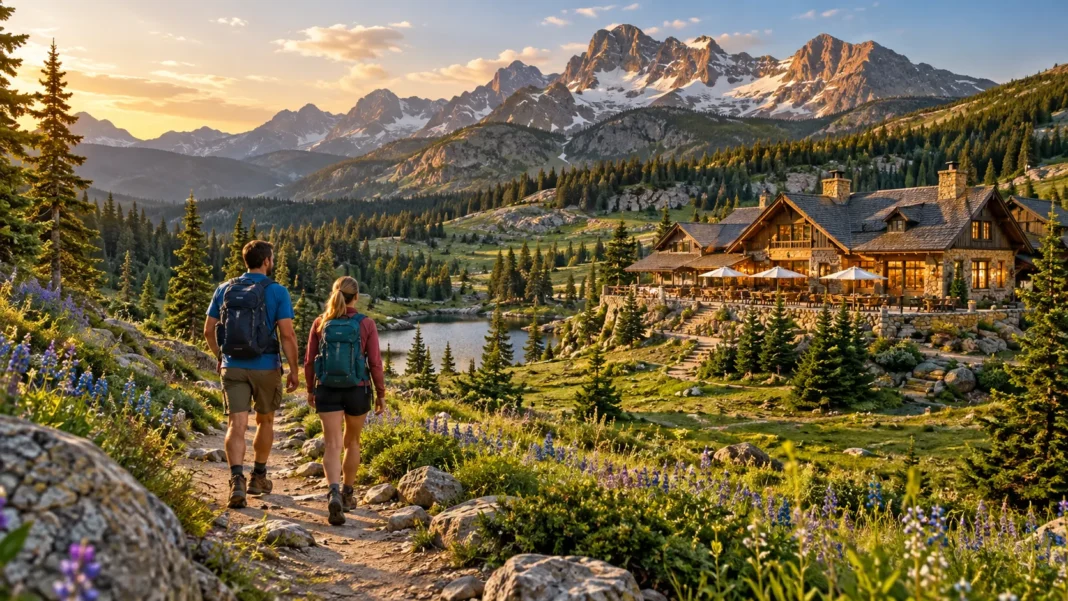
What Is Inn-to-Inn Hiking?
Inn-to-inn hiking combines multi-day walking with comfortable lodging at the end of each stage. Instead of carrying a tent, sleeping bag, cooking equipment, and several days of food, hikers usually travel with a lighter daypack. Depending on the route, overnight stays may include country inns, mountain lodges, cabins, huts, or historic park accommodations.
This style of hiking is especially appealing to travelers who want a long-distance adventure without traditional backpacking. After several hours on the trail, you can enjoy a proper meal, shower, comfortable bed, and often breakfast before continuing. Some organized routes also transfer luggage between accommodations, making the hiking experience considerably lighter and more relaxed.
The United States has fewer traditional door-to-door walking routes than Europe, but several outstanding regions offer similar experiences. New England, the Appalachian Mountains, Oregon, Colorado, Yosemite, and the Grand Canyon all provide possibilities. Some are genuine inn-to-inn walks, while others are better described as lodge-to-lodge or hut-to-hut adventures using established trails.
Walk Between Country Inns in Vermont
Vermont is one of the best places in the USA for a classic European-style inn-to-inn walking vacation. Rural roads, forest paths, rolling hills, streams, historic buildings, and traditional New England inns create an ideal atmosphere for slow travel. Southern and central Vermont are particularly attractive for travelers who prefer countryside scenery over demanding alpine terrain.
Daily walks can pass through forests, farmland, quiet country roads, and small communities before ending at comfortable inns. Some organized itineraries move your larger luggage ahead while you hike with water, snacks, rain gear, and personal essentials. This makes Vermont an excellent introduction to multi-day walking for people who do not want to carry backpacking equipment.
Autumn is the most visually famous season because the forests turn brilliant shades of red, orange, and yellow. Late spring and summer can also be beautiful, with green landscapes and longer daylight hours. Vermont is hilly, however, so walkers should prepare for repeated climbs rather than assuming peaceful country roads automatically mean completely easy terrain.
Hike Lodge-to-Lodge in Shenandoah National Park
Shenandoah National Park offers one of the most convenient lodge-supported hiking experiences on the Appalachian Trail. The route follows the Blue Ridge Mountains through forests, meadows, rocky viewpoints, streams, and wildlife habitat. Because several accommodations sit near the trail and Skyline Drive, hikers can build a multi-day journey without carrying camping equipment.
A typical itinerary links central park accommodations while using sections of the Appalachian Trail and optional side trails. Daily walks can include mountain viewpoints, waterfalls, wildflowers, and forested ridges. The terrain includes steady climbing and descending, but hikers can adjust distances by choosing different trail combinations and using road access strategically when necessary.
Spring brings wildflowers and fresh green forests, while autumn delivers colorful foliage and cooler hiking temperatures. Summer can be lush but more humid, making early starts helpful. Shenandoah is particularly attractive for travelers who want a wilderness feeling while still ending their day with meals, lodging, and easier access than more remote backcountry routes.
Explore the Berkshires and Mount Greylock
The Berkshires of western Massachusetts combine Appalachian Trail hiking with charming towns, historic accommodation, forests, and rolling mountain scenery. A multi-day journey can link communities near the trail with Mount Greylock, the highest point in Massachusetts. The landscape feels distinctly New England, especially when hardwood forests begin changing color during autumn.
One rewarding approach begins around Dalton or Cheshire before climbing toward Mount Greylock. The mountain offers broad regional views, historic structures, and a satisfying sense of reaching a genuine summit during an inn-supported journey. Hikers can then descend toward North Adams, where additional accommodation, restaurants, and transportation connections make finishing the route more convenient.
This route suits walkers who want stronger hiking than a purely rural inn-to-inn tour without committing to a remote wilderness expedition. Expect sustained climbs and descents, particularly around Mount Greylock. Trekking poles can help on downhill sections, and training on hills beforehand will make consecutive walking days significantly more enjoyable.
Hike Between Wilderness Lodges on the Rogue River
Southern Oregon’s Rogue River Trail provides one of the most distinctive lodge-to-lodge adventures in the United States. The trail follows the Wild and Scenic Rogue River through rugged canyon scenery, forests, rocky slopes, and remote wilderness. Several backcountry lodges make it possible to complete a multi-day journey without camping each night.
The route is more demanding than a relaxed country walk. Hikers cover substantial daily distances on narrow, uneven trails while encountering elevation changes, exposed areas, heat, and isolated terrain. The reward is an unusual combination of genuine wilderness hiking and comfortable evenings where meals, beds, and riverfront surroundings replace tents and camp cooking.
Some guided trips combine hiking with river-based luggage transportation, meaning hikers can travel with relatively light packs. Spring and autumn are often attractive because summer temperatures can become intense in exposed canyon sections. Anyone considering the Rogue River should arrive with solid hiking fitness and footwear already tested on long, uneven trails.
Experience the White Mountains Hut System
New Hampshire’s White Mountains provide a legendary hut-to-hut alternative to traditional inn-to-inn hiking. Mountain huts are positioned along or near major trails, allowing hikers to travel across rugged terrain without carrying tents and full cooking systems. The experience feels more communal and rustic than staying at private inns, but the mountain scenery is exceptional.
Routes can include exposed ridges, granite boulders, waterfalls, alpine vegetation, and sweeping views across northern New England. Distances between huts may appear moderate on a map, yet the terrain can make each mile significantly harder than lowland walking. Elevation gain, rocky footing, rapidly changing weather, and steep sections demand careful preparation.
The White Mountains are best suited to hikers who want a physically challenging trip while still enjoying overnight shelter and prepared meals. Summer through early autumn provides the broadest hiking window, although mountain weather can change suddenly in any season. Carry proper layers, navigation tools, rain protection, and enough emergency essentials even when sleeping indoors.
Cross the Grand Canyon Rim to Rim
A Grand Canyon rim-to-rim hike is one of America’s most dramatic lodge-supported adventures. The route descends thousands of feet from one rim into the canyon, crosses the inner gorge, and climbs toward the opposite side. Rather than moving continuously through similar landscapes, hikers experience major changes in elevation, geology, vegetation, and temperature.
Phantom Ranch at the bottom of the canyon provides the key overnight lodging experience for hikers fortunate enough to secure space. Lodges around the rims can complete the journey with comfortable accommodation before and after the demanding trail sections. Reservations can be difficult, so this is a trip that often requires substantial advance planning.
The greatest challenge is not simply distance but elevation and heat. Descending can punish knees, while the climb out requires sustained effort for several hours. Hikers should train seriously, carry sufficient water and electrolytes, understand seasonal temperature extremes, and avoid attempting the crossing as though it were an ordinary long day hike.
Try Lodge-Based Hiking in Colorado’s Rockies
Northern Colorado provides excellent opportunities to build an inn-to-inn-style hiking vacation around mountain lodges and accommodations near Rocky Mountain National Park. Trails lead through pine forests, alpine meadows, lakes, waterfalls, and high mountain terrain. Estes Park provides a particularly useful base because numerous trails and accommodation options sit within reach of the national park.
Some multi-day walking itineraries combine different trailheads with lodge stays and luggage transfers rather than connecting every hotel directly by foot. This creates a flexible version of inn-to-inn hiking where you still complete substantial daily walks but avoid carrying your full travel baggage. It also allows routes to be adjusted according to weather and fitness.
Altitude is the biggest factor that distinguishes Colorado from many eastern routes. Even strong walkers can feel more fatigued when hiking several thousand feet above sea level. Allow time to acclimatize, drink regularly, and begin with moderate routes before attempting longer alpine days where elevation gain, exposure, and quickly changing weather increase the difficulty.
Experience Yosemite’s High Sierra Camps
Yosemite’s High Sierra creates a remarkable multi-day walking experience through granite landscapes, alpine lakes, meadows, forests, and high mountain passes. Seasonal backcountry camps have traditionally allowed hikers to travel between established overnight locations without carrying full camping systems. The experience sits somewhere between hut-to-hut hiking and a supported wilderness trek.
Routes through the High Sierra can cover significant distances at elevations far above Yosemite Valley. Hikers should expect rocky paths, prolonged climbs, strong sunlight, cool evenings, and the physical effects of altitude. The scenery can be extraordinary, with distant granite peaks and open alpine landscapes replacing the crowded viewpoints found around the park’s most accessible attractions.
Availability can be limited and arrangements may vary by season, so Yosemite requires particularly careful advance planning. Hikers should never assume lodging eliminates the need for backcountry preparation. Weather protection, navigation, water, food for the trail, emergency supplies, and appropriate footwear remain important whenever traveling for several days through high mountain terrain.
Choose the Right Inn-to-Inn Route
Start by matching the route to your real hiking ability rather than choosing solely from photographs. Vermont may suit walkers comfortable with long rolling days, while the Rogue River, White Mountains, Grand Canyon, and High Sierra require significantly greater endurance. Daily mileage tells only part of the story because elevation, altitude, heat, and trail surfaces strongly affect difficulty.
Think about the level of comfort you expect each evening as well. Traditional inns may offer private rooms and restaurant meals, while mountain huts can involve shared sleeping areas and simpler facilities. Remote lodges provide comfort relative to backpacking but may not offer the same amenities as hotels located near roads or towns.
Luggage support is another major consideration. Some trips transport your main bag each day, allowing you to walk with a light pack, while remote routes require you to carry several personal essentials between lodges. Understanding the exact arrangement before departure prevents unpleasant surprises and helps you choose the right backpack, clothing, and daily equipment.
Best Seasons for Inn-to-Inn Hiking in the USA
Spring can be excellent for lower-elevation routes, particularly in the southern Appalachians and Oregon, where wildflowers and fresh vegetation add color to the landscape. Higher mountain routes may still hold snow, making early-season conditions more complicated. Always consider elevation rather than assuming warm weather in nearby cities means mountain trails are ready.
Summer provides the main hiking season for high-elevation destinations such as Colorado, Yosemite, and New Hampshire’s White Mountains. Longer daylight gives hikers more flexibility, but heat can become dangerous on exposed routes such as the Grand Canyon and Rogue River. Early starts are particularly valuable when temperatures rise rapidly during the middle of the day.
Autumn may be the most beautiful season for Vermont, the Berkshires, and Shenandoah because changing leaves transform entire mountain slopes. Cooler temperatures can also make long walking days more comfortable. Lodging can fill quickly during peak foliage periods, so hikers planning a classic New England inn-to-inn trip should arrange accommodation well ahead of their preferred dates.
Conclusion
The best inn-to-inn hiking in the USA ranges from peaceful Vermont countryside to challenging mountain and canyon adventures. Shenandoah, the Berkshires, the Rogue River, the White Mountains, Grand Canyon, Colorado Rockies, and Yosemite each offer a different version of supported multi-day hiking. The shared advantage is finishing demanding walking days without needing to pitch a tent.
Choosing the right route depends on your fitness, preferred scenery, comfort expectations, and tolerance for elevation or difficult terrain. Some trips resemble relaxed walking vacations with luggage transfers, while others are serious wilderness journeys that happen to include lodging. Understanding that distinction is essential before making reservations or beginning training.
With appropriate planning, inn-to-inn hiking combines many of the best parts of backpacking and comfortable travel. You can spend your days immersed in mountains, forests, rivers, and canyons while enjoying proper meals and shelter each evening. For travelers who love long-distance walking but prefer lighter packs, these routes provide memorable ways to explore America on foot.
FAQs
What is inn-to-inn hiking?
Inn-to-inn hiking is a multi-day walking trip where travelers stay in inns, lodges, cabins, or huts instead of camping. Some routes also transport luggage, allowing hikers to carry only a daypack.
What is the easiest inn-to-inn hiking region in the USA?
Vermont is a good starting point for many walkers because organized routes can combine comfortable country inns with rural walking. However, the landscape is still hilly, so reasonable fitness and preparation are important.
Which inn-to-inn hike is best for experienced hikers?
The Grand Canyon, Rogue River Trail, White Mountains, and Yosemite High Sierra offer more demanding experiences. These routes involve combinations of substantial mileage, elevation change, rugged terrain, altitude, or challenging weather conditions.
Do I need to carry all my luggage?
Not always. Some guided and self-guided trips transfer larger bags between accommodations, while remote lodge or hut routes require hikers to carry more equipment. Check the exact luggage arrangement before booking.
How should I train for an inn-to-inn hike?
Build up gradually with consecutive walking days, hills, stairs, and hikes carrying the daypack you plan to use. Training on terrain similar to your chosen route is particularly useful for preparing your legs and endurance.