


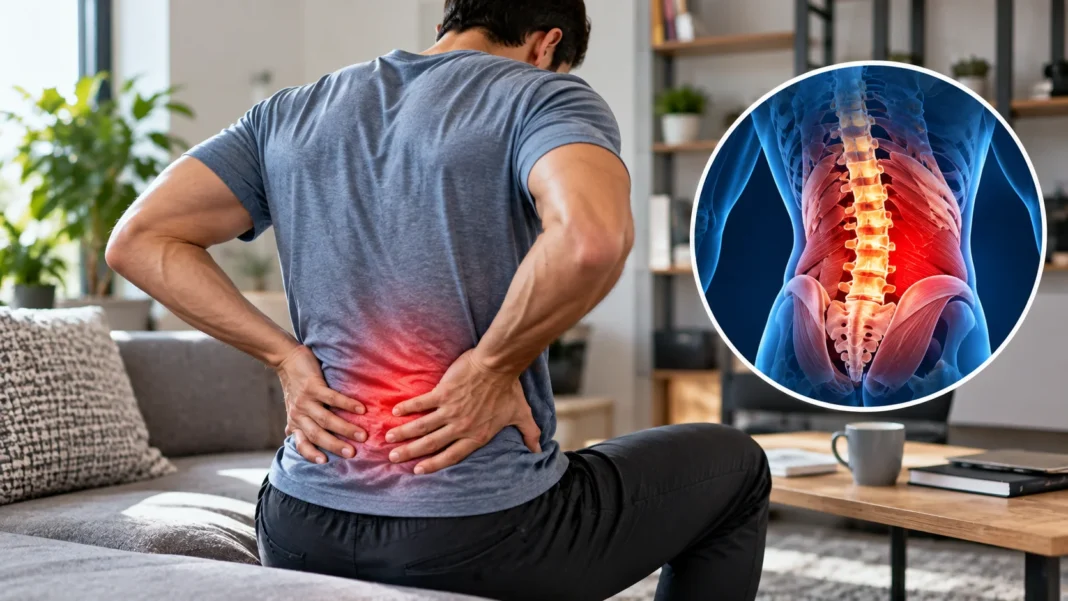
Lower back muscle spasms can appear suddenly and make even simple movements feel difficult. The muscles may tighten, twitch, or contract without warning, sometimes causing sharp pain that makes standing, bending, or walking uncomfortable. Although many spasms are temporary, the experience can be alarming when you do not know what triggered them.
Understanding why lower back spasms happen can help you respond more safely. Muscle strain, fatigue, prolonged sitting, awkward lifting, dehydration, and certain medical conditions can all contribute. Knowing which symptoms can be managed at home and which ones need professional attention is especially important when pain is severe, recurring, or accompanied by neurological changes.
What Are Lower Back Muscle Spasms?
A lower back muscle spasm is an involuntary contraction or tightening of one or more muscles in the lumbar region. The muscle may suddenly become hard, painful, or difficult to relax. Some spasms last only a few seconds, while others come and go repeatedly for several minutes or longer.
Spasms can feel different from ordinary muscle soreness. Instead of a dull ache, you may notice sudden tightening, cramping, twitching, or a feeling that your back has “locked up.” The pain can remain localized or make nearby muscles tense as your body tries to protect the irritated area.
In many cases, the spasm itself is a response rather than the original problem. A strained muscle, irritated joint, awkward movement, or excessive workload can trigger protective tightening. This is why understanding the underlying cause is often more useful than focusing only on making the contraction stop.
Common Causes of Lower Back Muscle Spasms
Muscle strain is one of the most common causes of lower back spasms. Lifting something heavy, twisting suddenly, performing unfamiliar exercise, or repeating the same movement can overstretch or irritate muscle tissue. The surrounding muscles may tighten automatically afterward as the body attempts to limit further movement.
Poor posture and prolonged sitting can also contribute. Remaining in one position for hours may fatigue the muscles that support the spine and pelvis. When those muscles become tired or stiff, a sudden movement such as standing quickly, bending, or reaching may provoke a painful contraction.
Other possible contributors include insufficient recovery, dehydration, electrolyte imbalance, stress, or reduced physical conditioning. Less commonly, spasms can occur alongside spinal, nerve, kidney, or other medical problems. Persistent or unexplained episodes deserve more attention than an isolated spasm after an obvious physical strain.
Can Overuse and Exercise Cause Back Spasms?
Exercise can trigger muscle spasms when the workload exceeds what your back is prepared to handle. Heavy lifting, high-volume training, repeated bending, or suddenly returning to exercise after a long break can fatigue the lumbar muscles. Poor technique can increase the demand further and make irritation more likely.
The problem is not always that exercise itself is harmful. Often, the issue is doing too much too quickly or using a movement pattern that your body cannot yet control comfortably. Increasing weight, repetitions, running distance, or training frequency without enough recovery can create the conditions for a spasm.
Warm-ups, gradual progression, and appropriate rest can reduce unnecessary strain. Pay attention to fatigue and technique rather than pushing through every set simply because it is planned. If a specific exercise repeatedly causes spasms, stop and review your form or choose a less provocative movement until the cause is clearer.
Can Sitting and Poor Posture Trigger Spasms?
Long periods of sitting can contribute to lower back discomfort because the same muscles remain in relatively fixed positions. Your hips may become stiff, your trunk muscles may fatigue, and your posture can gradually change as the day continues. None of this guarantees a spasm, but it can make sudden movement feel more demanding.
Poor posture is also more complex than simply sitting “wrong.” Staying in any single position for too long can become uncomfortable, even if the posture looks technically good. Regularly changing position, standing, walking, and moving your hips and spine can often be more useful than trying to hold one perfect posture for hours.
If you work at a desk, short movement breaks can help. Stand up, walk briefly, and gently move through comfortable ranges before returning to work. Adjusting your chair, screen height, and desk setup may also reduce unnecessary strain, especially if you regularly finish the day with tightness or fatigue around the lower back.
What Do Lower Back Muscle Spasms Feel Like?
A lower back spasm may feel like a sudden knot, cramp, or tightening deep in the muscles beside the spine. Some people describe a sharp grabbing sensation that appears when they bend, stand, roll over in bed, or change position. The affected area may feel hard or tender when touched.
You may also notice that your movement becomes limited because your body instinctively avoids positions that increase pain. Standing fully upright may feel difficult, or you may lean slightly to one side. These protective changes are common during acute discomfort but should gradually improve as the irritation settles.
Pain intensity does not always reveal how serious the underlying problem is. A simple muscle spasm can be extremely painful, while some more significant conditions may begin with milder symptoms. Pay attention to associated signs such as weakness, numbness, fever, urinary changes, or loss of bladder or bowel control.
How to Get Relief From Lower Back Muscle Spasms
During the first stage of a spasm, avoid movements that sharply increase pain, but complete bed rest is rarely helpful for uncomplicated muscular back pain. Gentle walking and comfortable position changes can prevent excessive stiffness. Move slowly and use support when standing if sudden contractions make you feel unstable.
Heat may help some people relax tight muscles and feel more comfortable. A warm shower, heating pad, or warm compress can be used for short periods while protecting the skin from excessive heat. Others prefer cold packs after a recent strain, so choose the option that feels better rather than assuming one method works for everyone.
Over-the-counter pain medicines may help some adults, but they are not appropriate for everyone. Health conditions, other medications, pregnancy, allergies, and stomach or kidney problems can affect what is safe. If you are unsure which option is appropriate, ask a healthcare professional or pharmacist before using medication.
Gentle Movement and Stretching for Back Spasms
Gentle movement can often be more useful than forcing an intense stretch. Short walks, slow pelvic movements, and comfortable changes in position may reduce stiffness without irritating the back further. The goal is to restore movement gradually rather than trying to immediately stretch the painful area as far as possible.
Stretching should feel mild and controlled. If a movement creates sharp pain, tingling, numbness, or a stronger spasm, reduce the range or stop. Your body may tolerate more movement as symptoms improve, so there is no need to force flexibility during the most painful stage.
A balanced routine may eventually include hip mobility, core control, and lower-body strengthening in addition to back movement. People exploring pelvic floor training may also come across tools such as Kegel weights, but strengthening should match your needs. Back spasms or pelvic tension are good reasons to avoid adding resistance blindly.
How Core and Hip Strength Affect the Lower Back
Your lower back does not work alone during daily movement. Muscles around the abdomen, hips, pelvis, and glutes all help control the trunk and transfer force between the upper and lower body. When these areas are weak, fatigued, or poorly coordinated, the lumbar muscles may take on more work.
Strengthening does not mean doing endless sit-ups or heavy lifting. Exercises such as bridges, bird dogs, controlled carries, side planks, and appropriately scaled lower-body movements can build useful stability. The best choices depend on your current symptoms, fitness level, and whether certain positions trigger pain.
Progress gradually once the acute spasm has settled. Start with movements you can control comfortably and increase resistance only when your technique remains consistent. If strengthening repeatedly triggers spasms, the exercise selection, load, recovery, or underlying condition may need to be reviewed by a qualified professional.
How Long Do Lower Back Spasms Usually Last?
A mild muscle spasm caused by overuse or a small strain may improve within hours or several days. Tenderness and stiffness can sometimes remain after the strongest contractions stop. Recovery varies according to the cause, your general health, activity level, and whether the irritated tissue continues to be stressed.
Repeated spasms that continue for weeks should not automatically be dismissed as normal muscle tightness. Recurring episodes may indicate that a movement pattern, workload, joint issue, nerve irritation, or other condition needs attention. Keeping track of triggers can help you explain the pattern more clearly during an assessment.
Improvement should generally move in the right direction over time, even if symptoms fluctuate from day to day. If pain becomes progressively worse, returns frequently, or begins affecting sleep and normal activities, seek professional advice. A clearer diagnosis can prevent you from repeatedly treating symptoms without addressing the cause.
When Should You Worry About Lower Back Spasms?
Seek urgent medical attention if lower back pain or spasms occur with new loss of bladder or bowel control, numbness around the groin or saddle area, or significant weakness in the legs. These symptoms can indicate serious nerve compression and should not be managed only with stretching or home remedies.
Medical evaluation is also important when back pain follows a major fall, collision, or other significant trauma. Fever, unexplained weight loss, severe night pain, a history of cancer, or symptoms that occur alongside serious illness also deserve prompt assessment. The exact urgency depends on the full clinical situation.
You should also consider professional care when symptoms do not improve, repeatedly return, or prevent normal movement for an extended period. A clinician can assess your history, strength, sensation, mobility, and other signs to identify whether the problem is muscular or related to another structure.
How to Prevent Lower Back Muscle Spasms
Regular movement is one of the most practical prevention strategies. Walking, strength training, mobility exercises, and changing positions throughout the day can help your body tolerate everyday physical demands. A body that is gradually exposed to movement is often better prepared than one that alternates between prolonged inactivity and sudden intense effort.
Use sensible lifting technique when handling heavy or awkward objects. Keep the load close to your body, avoid sudden twisting under heavy resistance, and ask for help when an object is difficult to control. Building strength gradually also improves your ability to handle lifting demands without relying entirely on the lower back.
Recovery habits matter as well. Adequate sleep, hydration, balanced nutrition, and appropriate rest between demanding workouts help muscles recover from stress. You do not need a perfect routine, but consistently ignoring fatigue and repeatedly training through pain can increase the chance of recurring irritation.
Lower Back Spasms at Night
Nighttime spasms can make it difficult to fall asleep or change positions comfortably. Some people notice symptoms when rolling over, getting out of bed, or lying in one posture for too long. Supporting the body with pillows may reduce strain and make position changes easier during a painful episode.
Side sleepers may feel more comfortable with a pillow between the knees, while back sleepers sometimes prefer support beneath the knees. There is no single sleeping position that works for everyone. Choose a position that reduces discomfort and allows your muscles to relax rather than forcing yourself into a posture that increases pain.
Persistent night pain deserves more attention, especially when it does not change with position or is accompanied by other concerning symptoms. Ordinary muscle discomfort often varies with movement and gradually improves. Pain that repeatedly wakes you, worsens over time, or appears without a clear mechanical trigger should be discussed with a healthcare professional.
Conclusion
Lower back muscle spasms are involuntary contractions that can range from a brief tightening sensation to intense pain that limits movement. Muscle strain, overuse, prolonged sitting, sudden movements, and fatigue are common triggers. Many uncomplicated episodes improve with time, gentle movement, and sensible self-care.
Relief usually involves avoiding sharply painful movements while staying reasonably active, using heat or cold based on comfort, and gradually returning to normal activity. Stretching and strengthening can help once symptoms allow, but aggressive exercise during an acute spasm can make the area more irritable.
Pay attention to symptoms beyond the muscle contraction itself. New weakness, numbness, bladder or bowel changes, fever, serious trauma, or persistent worsening pain should not be ignored. When spasms keep returning, identifying the underlying cause is more useful than repeatedly trying to relax the muscle temporarily.
FAQs
What causes sudden lower back muscle spasms?
Sudden spasms can result from muscle strain, overuse, awkward movement, prolonged sitting, fatigue, or heavy lifting. In some cases, spinal, nerve, or other medical problems may contribute.
How do you quickly calm a lower back spasm?
Move gently, avoid sharp or forceful motions, and try a comfortable heat or cold application. Short walks and supported positions may also help while the muscle gradually relaxes.
Should I stretch during a lower back spasm?
Gentle movement may be appropriate, but avoid aggressive stretching that increases pain. Stop if a stretch causes sharp discomfort, numbness, tingling, or stronger muscle contractions.
How long can lower back muscle spasms last?
Mild spasms may improve within hours or a few days, although soreness can last longer. Recurring, severe, or persistent spasms should be assessed to identify the underlying cause.
When is a lower back spasm an emergency?
Seek urgent care if spasms occur with severe leg weakness, loss of bladder or bowel control, numbness around the groin, significant trauma, or other serious neurological symptoms.