


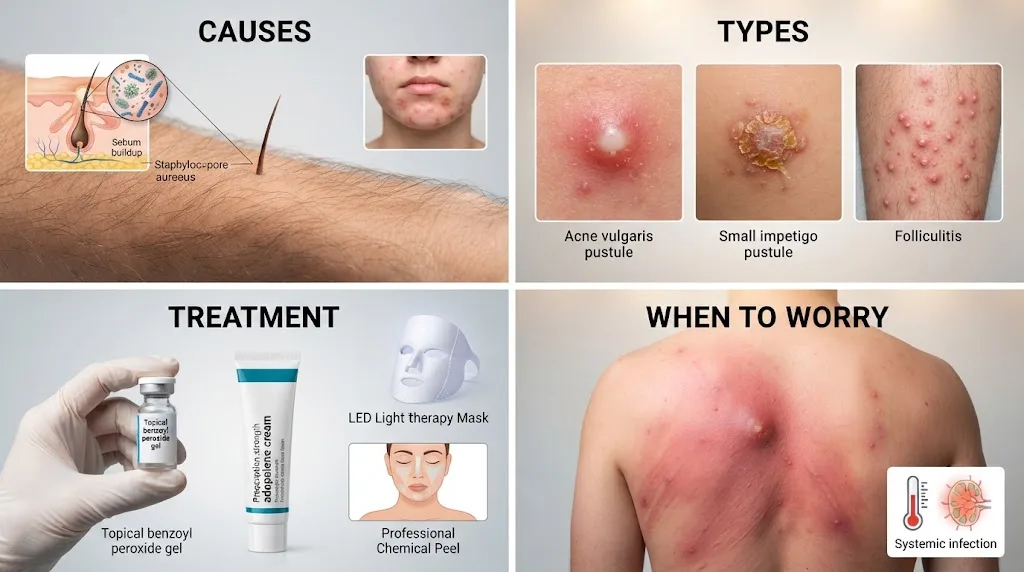
Pustule: Causes, Types, Treatment & When to Worry
A pustule is a small, raised bump on the skin that contains pus and is often surrounded by redness or inflammation. Pustules are commonly associated with acne, but they can also develop from bacterial infections, irritated hair follicles, inflammatory skin conditions, and certain medication reactions. They may appear on the face, chest, back, scalp, arms, legs, or almost anywhere hair follicles and oil glands are present. Some pustules are mildly uncomfortable and disappear with simple skin care, while others become painful, spread, or repeatedly return. Understanding why a pustule developed is important because treatment depends on the underlying cause. Squeezing every pus-filled bump is not recommended because manipulation can worsen inflammation, infection, and scarring.
Most isolated pustules are not dangerous, especially when they are small and associated with ordinary acne or minor follicle irritation. However, a rapidly spreading rash, severe pain, fever, extensive redness, or pustules affecting the eyes, mouth, or other sensitive areas can require prompt medical assessment. Large or recurrent pus-filled lesions may also indicate a deeper infection or a chronic skin disorder rather than a simple pimple. This guide explains the causes of pustules, different types, treatment options, home care, prevention, and warning signs that deserve professional attention. The goal is to help you understand what the bump may represent without encouraging self-diagnosis. Skin conditions can look similar, so persistent or unusual lesions should be evaluated when the cause remains uncertain.
What Is a Pustule?
A pustule is a superficial skin lesion containing a visible collection of pus. The fluid may appear white, yellow, cream-colored, or occasionally slightly greenish depending on the underlying inflammation and contents. Pus is made up of immune cells, cellular debris, microorganisms in some cases, and inflammatory material produced as the body responds to irritation or infection. Many pustules have a red or pink base because nearby blood vessels expand during inflammation. Some are extremely small, while others become several millimeters across and feel tender to touch. The appearance alone does not reveal the exact cause because acne, folliculitis, infections, and inflammatory diseases can all produce pustular lesions.
People often use the words pustule, pimple, whitehead, boil, and blister interchangeably, but these terms describe different skin changes. A typical acne pustule is an inflamed pimple with a visible pus-filled center, while a whitehead is a closed comedone caused mainly by blocked pores rather than a prominent collection of pus. A blister usually contains clear or blood-tinged fluid instead of pus and may result from friction, burns, or certain skin disorders. A boil is a deeper infection involving a hair follicle and surrounding tissue and tends to be larger and more painful than an ordinary pustule. Correctly describing the lesion can help clinicians determine what kind of treatment is most appropriate.
The skin develops pus when the immune system sends white blood cells to an area of irritation, infection, or inflammation. This response is meant to protect the body, but it also creates swelling, tenderness, and visible fluid within the lesion. In acne, inflammation can develop when oil, dead skin cells, and bacteria become trapped within a blocked follicle. In folliculitis, the inflammatory process begins around individual hair follicles. Other pustular conditions may result from immune-system activity without a typical bacterial infection being present. This is why antibiotics are not automatically appropriate for every pustule. Treating the appearance without understanding the mechanism can sometimes make the problem worse or delay the correct diagnosis.
Pustules can appear individually or in clusters. A single pustule after shaving may come from an irritated or infected hair follicle, while many similar bumps across the chest or back could be associated with acne, folliculitis, heat, or another inflammatory process. Distribution matters because clinicians often consider where the lesions occur when narrowing the possibilities. Pustules around the mouth may have different causes from pustules on the scalp, hands, or soles of the feet. Whether lesions itch, hurt, burn, crust, spread, or recur also provides useful information. Photographs taken over several days can sometimes help document how a rash changes before a medical appointment.
A pustule should also be distinguished from an abscess, which is a larger and usually deeper collection of pus within tissue. Abscesses can produce significant pain, warmth, swelling, and tenderness and may require drainage by a healthcare professional. Trying to puncture or drain a deep lesion at home can introduce additional bacteria and cause infection to spread. Smaller superficial pustules often resolve without invasive treatment, depending on their cause. If a lesion becomes larger, increasingly painful, hot, or surrounded by expanding redness, it may no longer behave like a routine superficial pustule. Those changes are reasons to consider professional evaluation rather than continuing home treatment.
Common Causes of Pustules
Acne vulgaris is one of the most common causes of pustules. Acne develops when hair follicles become clogged with oil and dead skin cells, creating an environment where inflammation can occur. Some lesions remain as blackheads or whiteheads, while others become inflamed papules or pus-filled pustules. Hormonal changes, genetics, certain skin-care products, medications, stress, and friction can influence acne severity. Pustular acne frequently affects the face, chest, shoulders, and back because these areas contain many sebaceous glands. Treatment usually focuses on preventing clogged follicles and reducing inflammation rather than simply drying individual pimples. Repeated squeezing can increase the risk of post-inflammatory marks and permanent scarring.
Folliculitis occurs when hair follicles become inflamed and often appears as groups of small red or pus-filled bumps centered around hairs. Bacteria can cause folliculitis, but yeast, friction, occlusion, shaving, sweating, and hot-water exposure can also contribute. The bumps may itch, burn, or feel mildly tender, particularly in areas covered by tight clothing or exposed to repeated rubbing. Common sites include the beard area, scalp, buttocks, thighs, chest, and back. Mild folliculitis may improve with gentle skin care and avoiding the trigger, while more persistent cases can require targeted treatment. Determining whether bacteria, yeast, or irritation is involved matters because the treatments are not interchangeable.
Bacterial skin infections can produce pustules when organisms enter through small cuts, scratches, insect bites, or damaged hair follicles. Staphylococcal bacteria are frequent causes of superficial and deeper skin infections, although other organisms may also be involved. Infection may begin with a small pustule and then become increasingly red, warm, swollen, or painful. Some lesions form crusts or enlarge into boils or abscesses. Certain resistant bacteria can make recurrent infections more difficult to treat, which is why persistent or spreading lesions sometimes need laboratory testing. Antibiotics should be used only when medically appropriate because unnecessary treatment can cause side effects and encourage antibiotic resistance.
Inflammatory skin disorders can also cause pustular rashes without a straightforward bacterial infection. Certain forms of psoriasis, rosacea, and other inflammatory conditions may produce pus-filled lesions because immune activity attracts white blood cells into the skin. These conditions often have characteristic patterns, associated redness, scaling, or recurrence that distinguish them from ordinary acne. For example, rosacea-related pustules commonly occur on the central face and may be accompanied by flushing or visible blood vessels. Pustular psoriasis can sometimes affect limited areas such as the palms and soles or become much more widespread. Because treatment differs substantially from infection treatment, persistent pustular eruptions should not automatically be treated with over-the-counter antibacterial products.
Medications and environmental triggers can occasionally contribute to pustular eruptions as well. Certain prescription drugs can produce acne-like or widespread pustular rashes in susceptible individuals, while oily products, heavy cosmetics, sweating, and occlusive clothing can worsen follicular inflammation. Contact with irritating chemicals may damage the skin barrier and make bumps more likely to develop. Heat and humidity can also contribute indirectly by increasing sweating and friction. If pustules begin soon after starting a new medication, supplement, topical product, or workplace exposure, mention the timing to a healthcare professional. Do not stop an essential prescription medication without medical advice unless emergency symptoms require immediate help.
Types of Pustules and What They Can Look Like
Acne pustules usually begin as inflamed red bumps that develop a visible white or yellow center. They often occur alongside blackheads, whiteheads, papules, nodules, or cystic acne lesions, making the overall pattern easier to recognize. Mild acne may involve only a few pustules at a time, while moderate or severe disease can produce numerous inflamed lesions across the face or trunk. Acne pustules may feel tender but are usually smaller and more superficial than boils. New lesions can continue appearing as older ones heal, particularly when underlying pore blockage remains untreated. Effective acne treatment therefore focuses on preventing future breakouts rather than simply spot-treating each visible pustule.
Follicular pustules tend to form directly around individual hairs and may look remarkably uniform across an affected area. This pattern is common with bacterial folliculitis, shaving-related irritation, or yeast-associated folliculitis. The skin may itch more than it hurts, although symptoms vary depending on the cause and severity. Shaving can make the problem worse by creating tiny injuries or causing hairs to grow inward, especially in curly hair. Tight clothing and sweat can also trap heat and moisture around follicles. When many small bumps appear suddenly after hot-tub use, shaving, exercise, or prolonged occlusion, folliculitis becomes one possible explanation that a clinician may consider.
Pustular rosacea commonly produces small inflamed bumps on the cheeks, nose, forehead, or chin against a background of facial redness. Unlike typical acne, rosacea usually does not produce large numbers of blackheads and may be associated with flushing, burning, sensitivity, or visible facial blood vessels. Heat, sunlight, alcohol, spicy foods, emotional stress, and certain skin products can trigger symptoms for some people. Rosacea can vary greatly between individuals, so the same trigger does not affect everyone. Using harsh acne products on rosacea-prone skin can worsen irritation. Recurrent central facial pustules with persistent redness are worth discussing with a healthcare professional or dermatologist because several effective prescription treatments are available.
Some pustular conditions affect the hands and feet, where ordinary acne does not typically occur. Pustules on the palms or soles may be associated with certain inflammatory skin diseases, infections, or reactions and deserve careful evaluation when they persist. Because these areas are involved in walking, gripping, and daily work, even small lesions can become painful and disruptive. Thick skin on the palms and soles can also change how pustules look compared with facial lesions. Extensive scaling, cracks, or repeated crops of pustules may suggest an inflammatory condition rather than a single infected pore. A dermatologist may need to examine the pattern closely and occasionally perform additional testing to determine the cause.
Widespread pustules represent a different situation from one or two isolated pimples. A sudden eruption involving large areas of the body can occur with certain infections, inflammatory disorders, or medication reactions. The person may also develop fever, malaise, skin tenderness, redness, or peeling depending on the condition. Widespread pustular eruptions can occasionally become medically serious because they may involve extensive inflammation and fluid loss through damaged skin. Any rapidly developing generalized pustular rash, especially after starting a new medication or when accompanied by fever, should receive prompt medical assessment. Trying to identify a severe widespread rash solely from photographs online can delay care when professional evaluation is more appropriate.
How Are Pustules Diagnosed?
Most ordinary acne pustules can be identified through a straightforward skin examination and medical history. A clinician may ask when the lesions began, where they occur, what skin products you use, whether acne runs in the family, and what treatments you have already tried. They may also look for blackheads, whiteheads, deeper nodules, scars, or post-inflammatory pigmentation that support an acne diagnosis. In teenagers and adults, hormonal patterns may also be considered when breakouts cluster around certain areas or times. Laboratory testing is not usually necessary for uncomplicated acne. The diagnosis becomes more complicated when pustules are unusual in distribution, appear suddenly, or fail to respond to typical treatment.
When folliculitis is suspected, clinicians often examine whether each pustule appears centered around a hair follicle. They may ask about shaving, swimming, hot tubs, exercise, clothing, sweating, recent antibiotic use, and exposure to oily products. Mild cases can sometimes be diagnosed clinically, while persistent or recurrent lesions may require a sample for bacterial or fungal testing. This becomes particularly useful when ordinary treatment has failed or antibiotic-resistant infection is possible. Determining the organism can help avoid unnecessary broad treatment. In recurrent cases, clinicians may also look for underlying factors such as chronic friction, skin barrier problems, or household transmission of certain bacteria.
A bacterial culture may be recommended when a pustule, boil, or draining lesion appears infected and treatment selection is uncertain. A swab or small sample of pus can be sent to a laboratory to identify the organism and determine which antibiotics are likely to work. Culture is not necessary for every minor skin lesion, but it can be valuable in recurrent infections, severe infections, treatment failures, or suspected resistant bacteria. If several family members develop similar infections, the clinician may ask about shared towels, sports equipment, or close contact. The results can guide a more targeted plan. Taking leftover antibiotics before testing can make interpretation more difficult and should generally be avoided.
Dermatologists sometimes perform a skin scraping, biopsy, or other specialized test when pustules may be caused by yeast, mites, psoriasis, autoimmune disease, or another less obvious condition. A skin biopsy removes a very small sample that can be examined under a microscope for characteristic inflammatory changes. These tests are not routine for common acne but become useful when the appearance does not fit familiar patterns. Blood tests may also be considered in severe widespread inflammatory conditions or when systemic illness is suspected. Diagnosis depends on combining the skin pattern with symptoms, medical history, medications, and test results. This prevents a visually similar rash from receiving the wrong treatment.
Photographs can be surprisingly helpful when pustules come and go before a medical appointment. Take clear images in good lighting and, if possible, document the same area over several days without manipulating the lesions. Note associated symptoms such as itching, pain, fever, drainage, scaling, or rapid spread. Also record recent medications, skin products, shaving habits, travel, swimming, or other exposures that may be relevant. This information can help a clinician identify patterns that are no longer visible during the visit. However, photographs cannot replace in-person evaluation when lesions are rapidly worsening, very painful, widespread, or associated with symptoms of serious infection.
How Are Pustules Treated?
Treatment depends on what caused the pustule. For mild acne, topical ingredients such as benzoyl peroxide, salicylic acid, or topical retinoids are commonly used within appropriate skin-care routines. Benzoyl peroxide can reduce acne-associated bacteria and inflammation, while salicylic acid helps keep pores from becoming clogged. Retinoids help normalize how skin cells shed inside follicles and can prevent new acne lesions over time. These products may cause dryness or irritation at first, so gradual introduction can improve tolerance. Acne usually requires consistent treatment for several weeks before substantial improvement becomes visible. Applying medication only to individual pimples may be less effective than treating the acne-prone area where new lesions are likely to develop.
Moderate or severe acne may require prescription treatment when over-the-counter products are not enough. Dermatologists may recommend stronger topical medications, oral antibiotics for limited periods, hormonal treatments for appropriate patients, or isotretinoin for certain severe or scarring forms of acne. Treatment is individualized according to age, pregnancy potential, acne severity, previous therapies, and other health considerations. Long-term antibiotic use is generally avoided when possible because resistance can develop. Some prescription treatments require monitoring and strict pregnancy-prevention precautions. Seeking treatment early is useful when acne is leaving scars because preventing future deep inflammation is generally easier than treating established scars later.
Bacterial folliculitis may improve with gentle cleansing and removal of triggers, but more significant infections can require topical or oral antibiotics depending on severity. Treatment should be chosen according to the suspected organism and local resistance patterns rather than selected randomly. If an abscess forms, antibiotics alone may not be sufficient because the trapped pus sometimes needs professional drainage. Never attempt to cut open a boil or abscess yourself. Improper drainage can worsen infection, damage tissue, and spread bacteria deeper into the skin. Warm compresses may provide comfort for some superficial lesions, but increasing pain, swelling, fever, or expanding redness should prompt medical assessment rather than repeated home manipulation.
Yeast-related folliculitis requires a different approach because ordinary antibacterial medications do not address the underlying yeast. Antifungal treatments may be recommended after the diagnosis is established, particularly when itchy, uniform pustules occur on the chest, back, shoulders, or forehead. This is one reason persistent “acne” that does not behave like ordinary acne sometimes deserves reassessment. Similarly, rosacea pustules may respond to prescription anti-inflammatory or antimicrobial therapies designed specifically for rosacea rather than aggressive acne regimens. Pustular psoriasis requires yet another treatment strategy that may involve topical, systemic, or biologic medications. Correct diagnosis is therefore the foundation of successful pustule treatment.
Supportive skin care matters regardless of the specific treatment. Use a mild cleanser, avoid harsh scrubs, and limit products that sting or excessively dry the skin unless they are part of a deliberate treatment plan. Noncomedogenic moisturizers can help maintain the skin barrier when acne medication causes dryness. Sunscreen is particularly useful because inflammation and some treatments can make discoloration or sun sensitivity more noticeable. Give each treatment enough time to work unless significant irritation or an allergic reaction develops. Constantly switching between strong products can damage the skin barrier and make pustules appear more inflamed. When a treatment plan is not working after a reasonable trial, professional reassessment is more useful than simply adding more products.
Home Care for a Pustule
The safest first step for a small isolated pustule is usually to leave it alone rather than squeeze, pierce, or pick it. Pressing on a pustule can force inflammatory material deeper into surrounding tissue and increase swelling. Picking also damages the surface of the skin, creating another entry point for bacteria and making post-inflammatory marks or scars more likely. It can be difficult to resist manipulating a visible pimple, especially on the face, but hands frequently carry oils and microorganisms that can worsen irritation. Covering a lesion temporarily with an appropriate acne patch may help some people avoid touching it. The main goal is to allow the skin barrier to heal while addressing the underlying condition.
Gentle cleansing once or twice daily is generally preferable to repeatedly washing or scrubbing the area. Excessive cleansing does not remove acne from inside follicles and can instead damage the protective skin barrier. Use lukewarm rather than extremely hot water, and pat the skin dry rather than rubbing vigorously. If sweating heavily after exercise, changing out of damp clothing and showering can reduce prolonged moisture and friction around hair follicles. Avoid sharing razors, towels, or personal grooming tools when infection is suspected. Keeping pillowcases, makeup applicators, and equipment that touches the skin reasonably clean can also reduce unnecessary irritation and contamination.
A warm compress can sometimes soothe a tender superficial pustule or inflamed follicle. Apply a clean warm, not scalding, cloth for several minutes and replace it if it becomes dirty. Warmth may encourage natural drainage in some small lesions, but it should not be used as an excuse to squeeze afterward. Stop if the compress increases pain or irritation. Deep boils or abscesses often require medical evaluation even if warmth temporarily reduces discomfort. If drainage occurs naturally, gently clean the area and cover it with a clean dressing when needed. Wash your hands afterward, particularly if the lesion may be infectious.
Over-the-counter acne products can be useful when pustules clearly occur as part of acne, but more is not always better. Applying benzoyl peroxide, salicylic acid, a retinoid, an exfoliating acid, and a harsh cleanser all at once can lead to redness and barrier damage that mimics worsening acne. Introduce new products gradually and follow label directions. Benzoyl peroxide can bleach towels, clothing, and pillowcases, which is useful to know before applying it. Retinoids can cause irritation and may not be appropriate during pregnancy without professional guidance. People with very sensitive skin, eczema, or rosacea may need a gentler approach than standard acne routines suggest.
Home treatment should have clear limits. If the pustule repeatedly returns in the same location, becomes much larger, or fails to improve, a clinician can determine whether it represents acne, folliculitis, an infected cyst, or something else. Recurrent boils may require investigation for bacterial colonization or underlying risk factors. Extensive pustules should not be treated by applying stronger products over larger areas without knowing the cause. Painful lesions around the nose, eyes, or lips also deserve extra caution because infection in certain facial areas can have more serious complications. When a lesion behaves differently from your usual acne, professional evaluation is often safer than assuming it will respond to the same routine.
When Should You Worry About a Pustule?
A small acne pustule does not usually require urgent care, but signs of spreading infection deserve more attention. Watch for rapidly expanding redness, increasing warmth, significant swelling, worsening pain, or red streaks extending away from the lesion. Fever, chills, weakness, or feeling generally ill can indicate that the problem is no longer limited to the skin surface. A painful area that becomes soft or fluctuant in the center may represent an abscess containing a deeper pocket of pus. These changes should be evaluated because treatment may require drainage or antibiotics. Delaying care while repeatedly squeezing an infected lesion can allow surrounding tissue inflammation to become more extensive.
Pustules near the eyes require caution, especially when the eyelid becomes significantly swollen, painful, or red. Infection in tissues surrounding the eye can potentially become serious and should not be treated casually with ordinary acne products. Seek prompt medical assessment for eye pain, changes in vision, difficulty moving the eye, fever, or rapidly increasing swelling around the face. Similarly, lesions inside the nose or very close to the nostrils should not be aggressively squeezed. Most facial pustules remain minor, but location affects risk. If swelling begins spreading across the face or symptoms become severe, urgent evaluation is more appropriate than waiting for an ordinary dermatology appointment.
A sudden widespread pustular rash should also raise concern, particularly when accompanied by fever, skin tenderness, peeling, or recent medication changes. Certain severe drug reactions and inflammatory disorders can cause dozens or hundreds of pustules to appear over a short period. These conditions cannot be safely diagnosed from appearance alone and may require blood tests, skin examination, and hospital-level care in severe cases. Contact a healthcare professional promptly if a widespread eruption begins after starting a new prescription or other medication. Do not assume that hundreds of pustules represent ordinary acne simply because each individual bump looks small. The speed and distribution of the rash are important warning signs.
People with weakened immune systems, poorly controlled diabetes, serious chronic illness, or medications that suppress immunity should seek earlier medical advice for suspected skin infections. Their bodies may have more difficulty containing infection, and symptoms can progress differently from those in otherwise healthy individuals. Infants and older adults may also need closer observation depending on the situation. Recurrent boils or pustules in someone with underlying health problems can signal a need for more comprehensive evaluation. Medical professionals may recommend cultures, blood sugar testing, or other investigations depending on the pattern. Early assessment can prevent a minor-looking lesion from progressing into a more serious infection.
Persistent pustules also deserve attention even when they are not emergencies. Acne that is causing scars, painful nodules, or emotional distress can benefit significantly from professional treatment. Recurrent folliculitis, scalp pustules, lesions in the groin or armpits, or bumps that repeatedly drain may represent conditions requiring a different approach. A lesion that does not heal, repeatedly bleeds, or looks unusual compared with surrounding bumps should also be examined. Not every persistent skin lesion is a pustule despite appearing pus-filled at first glance. Dermatologists are trained to distinguish acne and infections from inflammatory conditions and other skin growths that may require different testing or treatment.
How to Prevent Pustules and Recurrent Breakouts
Preventing pustules begins with understanding the cause rather than trying to eliminate every normal skin bacterium. For acne-prone skin, consistency matters more than aggressive cleansing. Use a gentle cleanser, appropriate acne treatment, moisturizer, and sunscreen instead of repeatedly stripping oil from the face. Heavy or highly occlusive products may worsen breakouts in some people, so products labeled noncomedogenic can be useful when choosing cosmetics and moisturizers. Remove makeup before sleeping and clean brushes or applicators regularly. Avoid touching or picking existing lesions because inflammation and scars often worsen through manipulation. A simple routine followed consistently is usually easier for the skin to tolerate than constantly changing products.
Shaving habits can influence folliculitis and ingrown hairs. Use clean, sharp equipment and avoid repeatedly passing over the same area when irritation is common. Shaving in the direction of hair growth may reduce trauma for some people, although technique should be adjusted according to hair type and skin sensitivity. Electric trimmers can sometimes be less irritating than very close shaving. Do not share razors because they can spread microorganisms and blood-borne infections. After shaving, avoid applying strongly fragranced or irritating products to already sensitive skin. If pustules repeatedly follow shaving despite careful technique, a dermatologist can help determine whether folliculitis, ingrown hairs, or another condition is responsible.
Sweat and friction are common contributors to body pustules. Tight athletic clothing, helmets, backpacks, shoulder pads, and equipment can trap heat and rub against skin for extended periods. Showering after heavy sweating and changing into dry clothing can reduce this prolonged exposure. Wash sports gear that repeatedly touches the skin according to manufacturer instructions and avoid leaving damp clothing against the body unnecessarily. Breathable fabrics may improve comfort in warm conditions. Acne caused or aggravated by friction is sometimes called acne mechanica and can occur where straps, protective equipment, or tight garments repeatedly contact the skin. Adjusting the physical trigger can be as important as applying medication.
Recurrent bacterial skin infections may require additional prevention measures under medical guidance. A clinician may recommend specific hygiene strategies or decolonization treatments in selected cases, especially when the same organism repeatedly causes boils or pustules. These treatments should not be started casually because inappropriate antibacterial use can irritate the skin and encourage resistance. Household members may occasionally need evaluation when infections repeatedly spread between close contacts. Keeping wounds covered, washing hands after changing dressings, and not sharing personal items can reduce transmission. Regular household cleaning should be reasonable rather than extreme. Most bacteria live naturally on human skin, so the objective is infection control rather than creating a completely sterile environment.
Healthy general habits can support the skin barrier and immune system, although no specific diet or lifestyle choice guarantees that pustules will disappear. Adequate sleep, balanced nutrition, stress management, and management of underlying medical conditions can contribute to overall skin health. Some people notice that certain foods or cosmetics seem to worsen acne, but responses vary widely and overly restrictive diets are rarely necessary without a clear reason. If breakouts follow a consistent pattern, keeping a short diary can help identify realistic triggers. Avoid expensive “detox” claims or harsh home remedies that promise to pull pus from the skin. Evidence-based treatment, gentle care, and patience are generally more reliable approaches.
Frequently Asked Questions About Pustules
What is a pustule in simple terms?
A pustule is a small raised skin bump filled with pus. It usually forms because of inflammation and may occur with acne, folliculitis, infection, or certain inflammatory skin conditions.
Should you pop a pustule?
It is usually better not to squeeze or pop a pustule because doing so can push inflammation deeper, introduce bacteria, and increase the risk of scarring or dark marks. Allowing it to heal naturally or using appropriate treatment is generally safer.
What is the difference between a pustule and a pimple?
Pimple is a general everyday term that can refer to several types of acne lesions. A pustule specifically describes a raised lesion containing visible pus, although pustules commonly occur as one type of acne pimple.
What causes pus inside a pustule?
Pus contains immune cells, inflammatory debris, and sometimes microorganisms. It forms when the immune system responds to irritation, blocked follicles, infection, or inflammatory disease.
How long does a pustule take to heal?
A small uncomplicated acne pustule may improve over several days, while deeper or infected lesions can take longer. Repeated squeezing or picking can delay healing and increase the risk of marks or scars.
Are pustules always caused by bacteria?
No. Bacteria can contribute to acne, folliculitis, and skin infections, but yeast, inflammatory skin diseases, medication reactions, and noninfectious immune processes can also produce pustules.
Can stress cause pustules?
Stress can worsen acne or inflammatory skin conditions in some people, which may indirectly lead to more pustules. Stress is usually one contributing factor rather than the sole cause of pus-filled lesions.
Can a pustule turn into a boil?
A superficial follicular infection can sometimes become deeper and develop into a boil or abscess. Increasing pain, swelling, warmth, and enlargement are signs that the lesion may need medical evaluation.
When should I see a doctor for pustules?
Seek medical advice if pustules are widespread, recurrent, very painful, rapidly spreading, leaving significant scars, or accompanied by fever or expanding redness. Prompt care is especially important for severe facial swelling, eye involvement, or signs of a deeper infection.
What is the best treatment for pustules?
The best treatment depends on the cause. Acne may respond to benzoyl peroxide, salicylic acid, retinoids, or prescription therapy, while bacterial, fungal, rosacea-related, and inflammatory pustules require different treatments.