


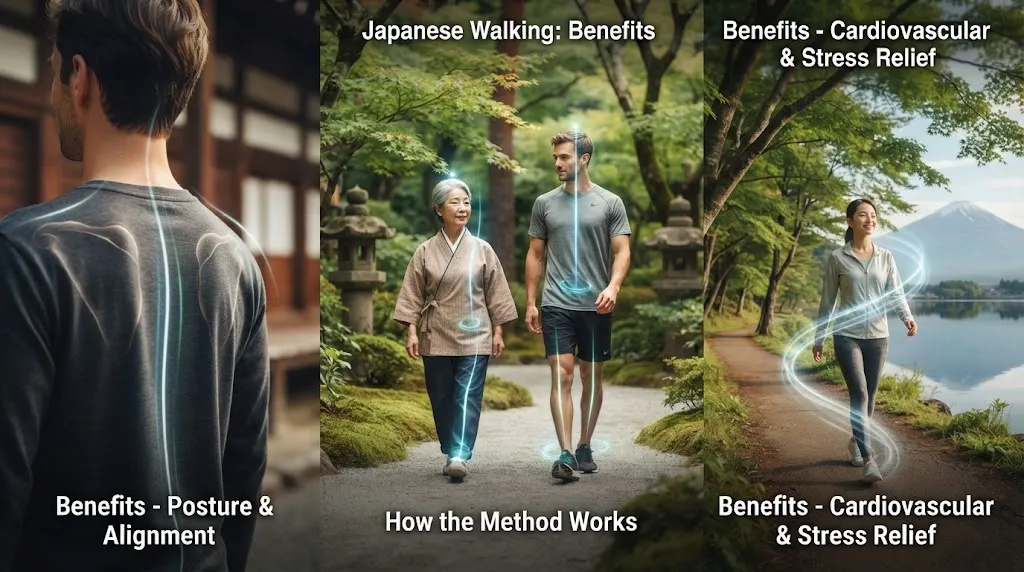
Japanese Walking: Benefits & How the Method Works
Japanese walking has become a popular fitness method because it makes an ordinary walk feel more structured without requiring running, gym equipment, or complicated workouts. The approach is better known scientifically as interval walking training, and it was developed and studied by researchers in Japan before gaining wider attention online. The basic routine alternates three minutes of faster walking with three minutes of slower recovery walking. That pattern is commonly repeated five times, creating a workout of about 30 minutes. The faster sections should feel challenging enough to raise your breathing rate while remaining a walk rather than a run. For people who find steady walking repetitive, these changing speeds can make exercise more engaging and purposeful.
Interest in the Japanese walking method has grown because it offers a simple way to introduce higher-intensity exercise into a familiar activity. Walking faster for short periods places a greater demand on the cardiovascular system and leg muscles than strolling at one comfortable pace. Slower intervals then provide enough recovery to repeat the effort without needing to maintain a demanding speed continuously. Research on interval walking has mainly involved middle-aged and older adults, with studies examining aerobic fitness, leg strength, blood pressure, and several markers associated with cardiometabolic health. Results are promising, but the method should not be described as a miracle workout. Its benefits ultimately depend on intensity, consistency, health status, total activity, and other lifestyle factors.
Japanese walking is also appealing because it can be adapted to different fitness levels. One person’s fast interval may be a brisk walk up a slight hill, while another person may reach the appropriate effort simply by increasing pace on flat ground. The slower period should feel genuinely easier and allow breathing to recover before the next fast section. Beginners do not necessarily need to complete five full cycles immediately, especially if they have been inactive for a long time. Building up gradually can make the routine more sustainable and reduce excessive fatigue. This guide explains how Japanese interval walking works, its potential benefits, how it compares with regular walking, and how to begin safely.
What Is Japanese Walking?
Japanese walking is the popular name now commonly used for a form of interval walking training, often abbreviated as IWT. The method was developed by researchers in Japan as a practical exercise approach for middle-aged and older adults who needed a way to improve fitness outside a gym. Instead of walking continuously at one moderate pace, participants alternate periods of relatively high-intensity walking with slower recovery walking. The best-known protocol uses three minutes of fast walking followed by three minutes of slow walking. Completing five cycles produces approximately 30 minutes of total walking. This makes the method easy to remember because the workout requires only a timer, suitable footwear, and enough space to walk safely.
The original research version was more precise than many social media descriptions suggest. Participants were instructed to walk quickly at roughly 70 percent or more of their individual peak aerobic capacity during the harder intervals. Their slower intervals were performed at roughly 40 percent of peak walking capacity. In everyday practice, most people do not have laboratory measurements showing exactly what 70 percent means for them. A practical alternative is using perceived effort or the talk test to estimate intensity. During the fast intervals, breathing should become noticeably heavier and long conversations should become difficult. During the slow periods, breathing should settle enough that talking becomes easier again.
The method is sometimes described online as an ancient Japanese walking technique, but that description can be misleading. The interval program being discussed today comes from modern exercise research rather than an old traditional walking ritual. Its Japanese connection comes from the researchers who developed and tested the structured training approach. This distinction matters because viral wellness trends often become mixed with unsupported stories that make a simple exercise method sound more mysterious than it really is. There is no special step pattern, breathing ritual, or posture required to receive the basic training effect. The central feature is simply alternating higher-intensity walking with easier recovery periods in a repeatable pattern.
Japanese walking can be performed outdoors, on a treadmill, on an indoor walking track, or in another environment where pace can be changed safely. Outdoor routes with traffic lights, uneven pavement, or crowded sidewalks may interrupt intervals, so some people prefer parks or walking paths. A treadmill makes pace easier to control but is not necessary. Hills can increase intensity without requiring an extremely fast speed, although they also place additional demands on the legs. People with limited mobility can modify the pace difference between intervals according to their abilities. The goal is not to match another person’s walking speed but to create a noticeable difference between challenging and recovery efforts.
The simplicity of the workout is one reason it has attracted so much attention. Traditional interval training is sometimes associated with sprinting, cycling, or intense gym workouts, which can feel intimidating to beginners. Japanese interval walking introduces the same broad idea of alternating effort and recovery through an activity most people already understand. That does not make it identical to high-intensity interval training performed at near-maximal effort. Instead, it provides a more approachable form of interval exercise for many adults. Because walking is generally lower impact than running, the method may also appeal to people who want greater cardiovascular challenge without immediately progressing to jogging or more vigorous exercise.
How Does the Japanese Walking Method Work?
A standard Japanese walking session begins with a few minutes of comfortable movement before the first demanding interval. Once your body feels warm, increase your pace until the walk becomes distinctly challenging for three minutes. You should still maintain good posture and control rather than rushing so aggressively that your walking form breaks down. After three minutes, reduce your pace significantly and walk easily for another three minutes. That slower period allows your heart rate and breathing to come down before the next effort. Repeating the six-minute cycle five times creates the familiar 30-minute Japanese walking routine that is widely discussed today.
During each fast interval, think of walking with purpose rather than simply taking slightly quicker steps. Swing your arms naturally, maintain an upright torso, and allow your stride to become efficient without deliberately overstriding. A useful effort target is a pace where you can speak a few words but would prefer not to deliver a long uninterrupted sentence. If you can chat comfortably through the entire three minutes, the interval may be too easy for the intended training stimulus. On the other hand, if you feel dizzy, develop chest discomfort, or cannot control your breathing, the intensity is too high. The workout should feel challenging, not alarming.
The recovery interval is just as important as the faster portion. Many people make the mistake of remaining relatively brisk during recovery because slowing down feels unproductive. However, the easier three minutes are what allow you to perform the next fast interval with greater quality. Recovery walking should feel comfortable enough that your breathing noticeably settles and your legs feel ready for another effort. You do not need to stop unless health or symptoms require it. Continuous gentle movement helps maintain circulation while reducing exercise intensity. The alternating rhythm between challenge and recovery is what separates interval walking from an ordinary continuous brisk walk.
The research protocol has often involved completing interval walking on at least four days each week over several months. However, beginners do not need to begin with that exact frequency. Someone who is currently sedentary might start with two or three sessions per week or perform only two or three fast-and-slow cycles at first. Additional cycles can be added as endurance improves. People who already walk regularly may find the complete five-cycle session manageable immediately. Exercise adaptation occurs through repeated exposure, so long-term consistency matters more than forcing an ambitious routine during the first week and then becoming too sore or discouraged to continue.
A timer or fitness watch can make the routine extremely easy to follow. Set repeating three-minute alerts so you do not need to constantly check the clock while walking. Music playlists can also be organized into intervals, although song lengths rarely match the timing precisely. Some walkers use perceived exertion rather than speed because terrain naturally changes how difficult a pace feels. Walking quickly uphill may require a slower actual speed than walking quickly on level pavement. The method should therefore be based on relative effort rather than chasing a specific number of miles per hour. Your fast pace should challenge you personally while your recovery pace allows you to regain control.
What Are the Benefits of Japanese Walking?
One of the strongest potential benefits of Japanese walking is improved aerobic fitness. During the fast intervals, the heart and lungs must deliver more oxygen to working muscles than they do during an easy stroll. Repeating those efforts over time can encourage cardiovascular adaptations that make walking and other daily activities feel easier. Research on interval walking programs has reported improvements in estimated peak aerobic capacity among middle-aged and older participants. Greater aerobic fitness is useful beyond structured exercise because it can support activities such as climbing stairs, carrying groceries, and walking longer distances. The amount of improvement varies, so individual results should not be treated as guaranteed percentages.
Leg strength may also improve because brisk walking places greater demand on the muscles of the hips and thighs. Earlier interval-walking research reported improvements in measures of knee extension and flexion strength among participants performing the higher-intensity program. Faster walking generally requires stronger push-off, greater stabilization, and more active movement than a slow stroll. Hills can increase that demand further when they are appropriate for the individual. However, walking does not replace every benefit of dedicated resistance training. Adults who can safely perform strength exercise should still consider exercises targeting major muscle groups rather than relying on walking as their only form of muscular conditioning.
Cardiometabolic health is another area researchers have studied. Some interval-walking programs have been associated with improvements in blood pressure, body composition, blood glucose, and other markers in certain populations. However, findings are not identical across every study. For example, later research in older adults did not find significantly greater blood-pressure improvements for the intervention group overall, although people completing more fast walking sometimes showed better changes. That nuance is important because exercise studies can produce different outcomes depending on participant health, intensity, duration, and adherence. Japanese walking should therefore be viewed as a potentially beneficial form of physical activity rather than a treatment guaranteed to normalize blood pressure or blood sugar.
The interval structure may also make exercise psychologically easier for people who dislike maintaining a demanding pace for long periods. Knowing that a recovery break arrives after three minutes can make the faster section feel more manageable. Instead of thinking about completing thirty minutes of hard walking, you only need to concentrate on one short effort at a time. The changing pace can also reduce boredom by giving the walk a clear rhythm and objective. Some people enjoy seeing whether their fast pace gradually improves over several weeks. Enjoyment matters because the most physiologically perfect workout provides little benefit if someone dislikes it so much that they rarely perform it.
Walking itself can contribute to broader health benefits associated with regular physical activity, including better cardiovascular conditioning, improved mobility, and support for mental well-being. Japanese walking adds periods of greater effort but should not be marketed as fundamentally replacing every other form of movement. People still benefit from accumulating activity throughout the day, reducing prolonged sitting, performing resistance exercise, and maintaining flexibility and balance as appropriate. A 30-minute interval session does not make the remaining twenty-three and a half hours irrelevant. The method works best as one component of an active lifestyle. Its greatest strength may be making meaningful exercise simple enough that more people can perform it consistently.
Japanese Walking vs Regular Walking and 10,000 Steps
Regular walking remains excellent exercise, and Japanese walking should not be interpreted as proof that comfortable walking is useless. Steady walks can increase daily activity, support cardiovascular health, improve mood, and provide movement without requiring intense effort. They are also easier to sustain for longer periods and may be more suitable for recovery days or people with certain health limitations. Japanese interval walking changes the training stimulus by inserting repeated periods of higher intensity. That means a shorter interval session can feel substantially more demanding than the same amount of time spent strolling. The two styles can complement one another rather than competing for a single “best” form of walking.
Claims that Japanese walking is automatically better than taking 10,000 steps should be treated cautiously. The 10,000-step target is itself a convenient benchmark rather than a biological requirement that every adult must meet. Research on daily steps suggests meaningful health benefits can occur below 10,000 steps, and the relationship between steps and health depends on age and other factors. Interval walking studies generally evaluate structured exercise intensity and health outcomes rather than proving that one 30-minute session completely replaces the effects of all daily movement. A person who performs Japanese walking but remains sedentary for most of the day has a different activity pattern from someone who accumulates thousands of additional steps.
Intensity and volume describe different dimensions of exercise. Japanese walking increases intensity during short periods, while a long steady walk can provide greater total movement volume. Both can contribute to fitness in different ways. Someone preparing for a long hiking trip, for example, may still need longer walks to develop endurance despite completing interval sessions. A person with limited time may find that brisk intervals provide an efficient cardiovascular challenge within thirty minutes. Rather than asking whether intervals or steps universally win, it is more useful to consider your goals, health, schedule, and current fitness. Most people can benefit from combining purposeful exercise with routine movement throughout the day.
Japanese walking may produce greater improvements in certain fitness measures than moderate continuous walking when the higher-intensity portions create a stronger training stimulus. The original Japanese randomized study found stronger improvements in aerobic capacity and thigh strength with interval walking than with the moderate continuous program used for comparison. However, that does not mean every ordinary walker needs to switch completely to intervals. Someone who currently performs almost no exercise may benefit substantially from simply walking more often. As fitness improves, intervals can be introduced to increase challenge. Exercise progression should build on what you are already capable of doing rather than treating a viral protocol as a mandatory starting point.
A practical weekly routine can include both methods. You might perform Japanese interval walking three or four days per week while keeping other walks comfortable and conversational. Those easier walks can support daily movement without placing the same training demand on your body. Strength training can then be added on separate days or alongside walking depending on your schedule. This mixed approach also provides flexibility when sleep, stress, weather, or joint discomfort makes a demanding interval session less appealing. There is no fitness prize for performing every walk at maximum intensity. Sustainable activity usually involves a combination of harder sessions, easier movement, and adequate recovery.
Can Japanese Walking Help With Weight Loss?
Japanese walking can contribute to weight management because brisk intervals increase energy expenditure compared with being sedentary and may burn more energy per minute than walking very slowly. However, no walking routine can guarantee weight loss independently of overall energy balance. Body weight changes when energy intake and energy expenditure interact over time, and food intake often has a major influence on that equation. A 30-minute walking session can support a calorie deficit, but it can also be offset if someone consistently consumes more energy afterward. This is why claims promising dramatic fat loss from one specific walking method should be viewed skeptically. Exercise is valuable even when weight changes slowly or not at all.
The faster intervals may make Japanese walking appealing to people trying to increase the amount of exercise they can fit into a busy schedule. A structured half-hour workout can be easier to plan than an undefined goal to “walk more.” As aerobic fitness improves, participants may also become capable of walking faster or covering more distance during the same amount of time. That can gradually increase energy expenditure and make other forms of activity feel easier. However, fitness improvements should not be judged entirely by the number on a scale. Lower resting heart rate, easier stair climbing, greater walking speed, improved endurance, and better energy can all represent meaningful progress.
People hoping to lose weight should also pay attention to muscle-preserving activity. Walking helps keep the body active, but resistance training provides a stronger stimulus for maintaining or building muscle. Combining interval walking with appropriate strength training can therefore create a more complete fitness plan during weight loss. Adequate protein and overall dietary quality also matter, especially for older adults who are vulnerable to losing muscle during calorie restriction. Extreme dieting combined with excessive cardio can undermine strength and sustainability. A moderate approach that includes movement, balanced nutrition, sleep, and realistic calorie control is generally easier to maintain over the long term.
Wearable devices often display calorie estimates after a walk, but these numbers should not be treated as exact. Watches and fitness apps use algorithms based on factors such as body size, heart rate, speed, and movement, and the resulting estimates can differ considerably from actual energy expenditure. Avoid automatically “eating back” every calorie your device claims you burned. Instead, watch longer-term trends in body weight, waist measurements, appetite, and performance if weight loss is one of your goals. Adjustments can then be made gradually. Exercise should support the overall strategy rather than becoming a transaction where every walk earns a precise amount of extra food.
Japanese walking may be especially useful for weight management when it helps someone become consistent with physical activity. A routine that is simple, inexpensive, and accessible removes several common barriers to exercise. There is no commute to a gym, no membership fee, and little equipment beyond supportive shoes and perhaps a timer. People can also vary routes and scenery, which may improve adherence compared with repetitive indoor exercise. The important question is whether you can continue the habit for months rather than whether one session burns slightly more calories than another workout. Sustainable exercise patterns usually create far greater long-term value than short bursts of enthusiasm around a new trend.
How to Start Japanese Walking Safely
Begin with footwear that feels comfortable and provides appropriate support for your feet and walking environment. You do not necessarily need specialized performance shoes, but worn-out footwear that causes pain can make faster walking uncomfortable. Choose a route with predictable surfaces, good visibility, and minimal traffic interruptions while learning the routine. Starting on flat ground makes it easier to control intensity before adding hills. Spend several minutes walking comfortably at the beginning so your muscles and joints transition gradually into higher effort. A warm-up is particularly useful in cold weather, early in the morning, or when you have been sitting for a long period beforehand.
For your first fast interval, increase pace gradually rather than suddenly racing forward. The goal is brisk walking, not sprinting or forcing yourself to stay below a running threshold at all costs. Your breathing should increase and conversation should become harder, but you should still feel in control. After three minutes, reduce speed enough that recovery is obvious. If three minutes feels too difficult, start with one or two minutes of faster walking and extend the interval as fitness improves. Exercise programs do not need to match a research protocol perfectly on day one to become useful habits. Progression is often safer and more sustainable than immediate maximal effort.
Pay attention to pain rather than assuming discomfort must be ignored because the method is “only walking.” Fast walking can increase stress on the feet, ankles, knees, hips, and lower back compared with a gentle stroll. Muscle fatigue and increased breathing are expected during challenging exercise, but sharp joint pain, chest pain, severe shortness of breath, dizziness, or faintness are warning signs. Stop exercising if concerning symptoms occur and seek appropriate medical attention when necessary. People with known cardiovascular disease, significant balance problems, serious joint conditions, or other exercise-limiting health issues should discuss new higher-intensity exercise with a healthcare professional before beginning.
Hydration and environmental conditions also matter. Walking briskly in high heat or humidity can raise cardiovascular strain considerably, especially for older adults and people taking medications that affect temperature regulation or fluid balance. Choose cooler times of day when necessary and carry water for longer sessions. During winter, icy paths can turn a beneficial workout into a fall risk, so move indoors when surfaces are unsafe. Air pollution may also make outdoor exercise inappropriate on certain days. A treadmill, shopping mall, or indoor corridor can provide a practical alternative when weather conditions are unsuitable for fast outdoor walking.
Finish the workout with several minutes of easy walking rather than stopping abruptly after the final fast interval. This gives breathing and heart rate time to settle gradually. You can perform gentle mobility work afterward if it feels comfortable, although complicated stretching routines are not required. Track how you feel later that day and the following morning, especially when beginning. Mild muscle fatigue can be normal, while persistent pain or unusual exhaustion suggests that the workload may need to be reduced. The ideal starting routine leaves you capable of exercising again rather than requiring several days to recover from an unnecessarily aggressive first session.
Who Should Modify or Avoid Japanese Interval Walking?
People who have been inactive for a long time may need to build a basic walking habit before attempting repeated high-intensity intervals. Starting with ten to twenty minutes of comfortable walking can help joints, muscles, and cardiovascular systems adjust to regular movement. Short faster sections can then be added gradually. There is no requirement to complete all five cycles immediately just because the popular routine lasts thirty minutes. Even one or two controlled intervals can introduce the concept. Progress may occur over several weeks rather than several days, particularly for older adults or people returning to exercise after illness, surgery, or a long sedentary period.
Individuals with heart or circulation conditions should be more cautious about increasing exercise intensity without guidance. A history of heart attack, unstable chest symptoms, uncontrolled blood pressure, serious rhythm disorders, or unexplained shortness of breath may require medical evaluation before interval exercise. Some people may already have individualized recommendations from a cardiologist or rehabilitation program that should take priority over a general online routine. Medications can also change heart-rate responses, making standard target-heart-rate calculations less useful. In those cases, perceived exertion or professionally supervised exercise testing may provide better guidance. The safe intensity is determined by the individual, not by what looks impressive on social media.
Joint and mobility problems can also require modification. Someone with significant knee arthritis may tolerate flat walking but develop pain when trying to increase stride length or speed. Others may find that shorter steps and a slightly faster cadence feel more comfortable than aggressively lengthening each stride. Hills can increase cardiovascular intensity while reducing the need for extreme speed, but they may also increase joint demand for some people. A physical therapist can help identify appropriate walking mechanics when pain or previous injury makes exercise difficult. The purpose of the routine is improving health, not proving that you can tolerate a standardized pace despite worsening symptoms.
People with diabetes should consider blood-glucose management when changing exercise intensity, particularly if they use insulin or medications that can cause hypoglycemia. Exercise can affect glucose during and after activity, so monitoring and individualized planning may be needed. Foot health is also important because neuropathy can reduce awareness of blisters, pressure injuries, or poorly fitting shoes. Similar caution applies to people with conditions affecting balance or sensation. Japanese walking can potentially be modified for many health situations, but adjustments should be based on actual medical needs. General fitness advice cannot replace individualized recommendations when exercise interacts with a diagnosed condition.
Pregnant people who were already active may often continue walking as part of their routine, but intensity and comfort can change throughout pregnancy. Anyone with pregnancy complications or specific exercise restrictions should follow advice from their maternity care professional. The same principle applies after childbirth, surgery, or major illness, when returning to higher-intensity movement should be gradual. Age alone is not a reason to avoid interval walking because much of the original research involved older adults. Health status, mobility, and conditioning matter far more than a birthday number. The safest version of Japanese walking is the version appropriately matched to the person performing it.
Common Japanese Walking Mistakes to Avoid
One common mistake is making the fast interval too easy. If your pace changes only slightly and breathing remains completely relaxed, the session may resemble ordinary walking more than interval training. The research method intentionally used a meaningful difference between high- and low-intensity periods. You do not need sophisticated equipment to approximate that contrast, but you should be able to feel it. During the fast section, your effort should increase noticeably. During recovery, the effort should fall. If both intervals feel nearly identical, adjust speed, terrain, or arm movement until the difference becomes more obvious while still remaining safe.
The opposite mistake is treating the fast interval like an all-out sprint. Japanese walking is not designed around maximal effort, and pushing until you are gasping or losing control can make the workout unnecessarily stressful. An interval should feel demanding enough to challenge aerobic fitness while still allowing you to complete repeated cycles. If your first fast section leaves you unable to perform the second, the pace was probably too aggressive. Think of the workout as controlled intensity rather than a competition. Consistent repeatable effort usually creates a better training session than one heroic opening interval followed by progressively slower and more miserable attempts.
Another mistake is skipping recovery or turning slow intervals into moderately hard walking. People sometimes believe more intensity always means more benefit, but interval training depends on deliberate changes in workload. Proper recovery makes it possible to maintain quality during the next challenging segment. It can also make the session more approachable for beginners and older walkers. Slowing down is therefore part of the method rather than wasted time. If recovery feels almost embarrassingly easy, that may actually mean you are allowing yourself enough room to increase effort again during the fast interval. Exercise quality is determined by the complete pattern, not by maximizing every minute.
Relying exclusively on Japanese walking while ignoring strength, balance, mobility, and ordinary daily movement is another limitation. Interval walking can be valuable cardiovascular exercise, but it does not train every aspect of physical fitness equally. Adults generally benefit from strengthening major muscle groups and avoiding long periods of inactivity as well. Older adults may particularly benefit from exercises that challenge balance and maintain muscle. If you enjoy Japanese walking, use that enthusiasm as a foundation for a broader active lifestyle rather than assuming one viral method covers every physical need. Variety can also reduce boredom and repetitive overuse.
Finally, avoid treating short-term scale changes or wearable statistics as proof that the routine is succeeding or failing. Fitness adaptations develop over weeks and months, and improvements may first appear as easier breathing, faster walking, better endurance, or greater confidence with activity. Body weight can fluctuate daily because of hydration, food intake, hormones, and other factors. Smartwatches can estimate heart rate, distance, and calories but are not perfect laboratory instruments. Evaluate the routine based on consistent performance and how your body responds over time. A sustainable workout you continue for a year is far more meaningful than an impressive first week followed by abandonment.
Frequently Asked Questions About Japanese Walking
What is the Japanese walking method?
Japanese walking is a popular name for interval walking training. The common routine alternates three minutes of brisk, challenging walking with three minutes of slow recovery walking for about 30 minutes.
How many times do you repeat Japanese walking intervals?
The classic research protocol commonly uses at least five sets of three minutes fast and three minutes slow. That creates a session of approximately 30 minutes.
How fast should you walk during Japanese walking?
The fast interval should feel challenging enough to noticeably increase breathing and make long conversations difficult. Your exact speed depends on fitness, age, terrain, and individual walking ability.
How slow should the recovery interval be?
Walk slowly enough that breathing begins to settle and you feel prepared for the next fast section. Recovery should feel clearly easier than the high-intensity interval.
How often should you do Japanese walking?
Research protocols have commonly used interval walking on four or more days per week. Beginners may start with fewer sessions and build gradually according to fitness and recovery.
Is Japanese walking better than regular walking?
Interval walking can provide a stronger cardiovascular stimulus than easy continuous walking and has produced promising fitness improvements in research. Regular walking still provides valuable health benefits and can complement interval sessions.
Does Japanese walking replace 10,000 steps?
Not necessarily. Research does not establish that one 30-minute Japanese walking session universally replaces all benefits associated with higher daily movement or step counts.
Can Japanese walking help you lose weight?
It can increase physical activity and energy expenditure, which may support weight loss when combined with an appropriate overall calorie balance. The routine itself does not guarantee weight loss.
Is Japanese walking suitable for beginners?
It can be adapted for beginners by reducing the number of intervals, shortening the fast sections, or using a less dramatic pace difference. People who have been sedentary may benefit from building basic walking tolerance first.
Can older adults do Japanese walking?
Yes, much of the research on interval walking has actually involved middle-aged and older adults. Individual health, balance, mobility, and cardiovascular status should still determine the appropriate intensity.
Do I need a smartwatch for Japanese walking?
No. A basic timer and perceived effort are enough for most people because the key requirement is alternating three minutes of challenging walking with three minutes of easier walking.
When should I stop a Japanese walking workout?
Stop if you develop chest pain, severe shortness of breath, dizziness, faintness, or significant joint pain. Concerning or persistent symptoms should be evaluated by an appropriate healthcare professional.