


10 Best Cornstarch Substitutes for Cooking & Baking
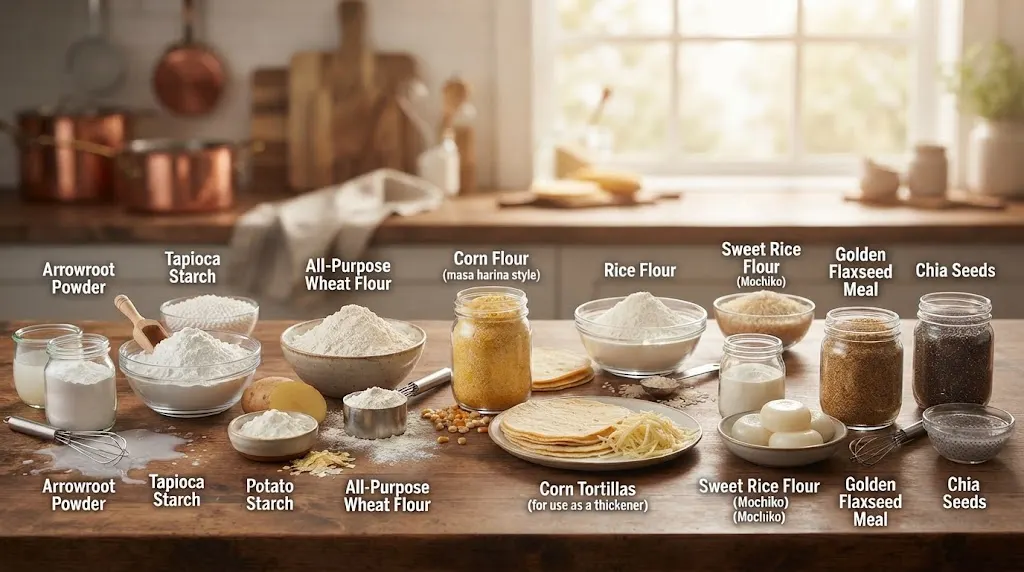
Cornstarch is one of the most useful ingredients in the kitchen because it can thicken sauces, give gravies a smooth texture, stabilize pie fillings, tenderize baked goods, and create crisp coatings for fried foods. The problem is that it is easy to run out of cornstarch just when a recipe depends on it. Some people also need an alternative because of dietary preferences, corn allergies, or a desire to use ingredients already available in the pantry. Fortunately, several cornstarch substitutes can work surprisingly well when you choose them for the right purpose. All-purpose flour, arrowroot powder, potato starch, tapioca flour, rice flour, and several other ingredients can provide similar results. The best replacement depends on whether you are thickening, baking, frying, or making a clear sauce.
Substituting cornstarch is not always as simple as swapping one tablespoon for another because different starches absorb liquid and react to heat in different ways. Some alternatives create glossy sauces, while others produce a more opaque and creamy finish. Certain starches tolerate freezing well, whereas others become thin after prolonged boiling. Flour-based alternatives may require more product than cornstarch, and gums need only tiny quantities. Understanding these differences prevents common problems such as gummy gravy, watery pie filling, or a heavy fried coating. This guide explains 10 of the best cornstarch substitutes, how much to use, and which option works best for sauces, soups, desserts, baking, and crispy frying.
What Cornstarch Does in Cooking and Baking
Cornstarch is a fine powder made primarily from the starch portion of corn kernels, and its strongest culinary function is thickening liquid. When cornstarch is mixed with cool liquid and then heated, its starch granules absorb water and swell. This process creates viscosity, transforming thin liquids into sauces, gravies, puddings, and fillings with a smoother consistency. Cornstarch thickens more efficiently than ordinary wheat flour, which is why relatively small quantities are usually needed. It also has a neutral flavor, so it can thicken food without noticeably changing the taste. These properties make cornstarch a convenient ingredient in both savory and sweet recipes where texture matters.
In sauces and gravies, cornstarch usually works best when it is first mixed with cold water to create a slurry. Adding dry cornstarch directly to hot liquid can create stubborn lumps because the outside of the powder thickens before the inside becomes evenly hydrated. A smooth slurry distributes the starch throughout the liquid before heat activates its thickening power. Once added, the mixture is generally heated until it reaches the desired consistency. Extended aggressive boiling can eventually weaken some starch-thickened sauces, so cooking longer is not always better. Understanding this basic technique is useful because several cornstarch alternatives, including potato starch and arrowroot, benefit from similar preparation.
Cornstarch also plays an important role in baking because it can soften the structure created by wheat flour. Bakers sometimes combine cornstarch with all-purpose flour to imitate the lower protein content of cake flour, producing cakes and cookies with a more delicate texture. It can also help absorb moisture in fruit fillings, preventing pies and pastries from becoming excessively watery. In custards and puddings, cornstarch provides enough structure for the dessert to hold its shape while remaining creamy. However, every substitute behaves slightly differently in these applications. A starch that performs beautifully in a fruit pie may not create the same tenderness when added to cookie dough, so the intended function matters.
For fried foods, cornstarch helps create a thin, dry, crisp coating because it contains no gluten. It can be used alone or mixed with flour for chicken, vegetables, tofu, fish, and other foods. The starch absorbs surface moisture and becomes crisp when exposed to hot oil, often creating a lighter shell than wheat flour alone. This is one reason cornstarch is common in many Asian-style frying techniques. Potato starch and rice flour can provide similarly crisp results and sometimes become even crunchier. When replacing cornstarch for frying, texture and browning matter more than thickening power, so substitution ratios are less rigid than they are in sauces.
The best cornstarch replacement therefore depends on the job the ingredient is performing. All-purpose flour is practical for gravy but less ideal when you want a transparent fruit glaze. Arrowroot creates a glossy finish but can behave poorly when cooked too long or combined with certain dairy-heavy dishes. Potato starch is excellent for crisp coatings and quick thickening, while tapioca works particularly well in fruit fillings and foods that will be frozen. Rice flour offers a versatile gluten-free option for both thickening and frying. Instead of searching for one universal substitute, match the replacement to the texture, temperature, and appearance your recipe requires.
Best Cornstarch Substitutes: Options 1–5
All-purpose flour is the easiest cornstarch substitute for many home cooks because it is inexpensive and commonly available. As a general starting point, use about two tablespoons of all-purpose flour for every one tablespoon of cornstarch called for in a thickened sauce or gravy. Flour does not thicken quite as strongly, so a larger quantity is necessary to achieve a similar consistency. It also produces a more opaque result and can add a subtle floury taste if it is not cooked thoroughly. Mix it with cool liquid before adding it to soups or sauces, or cook it with fat to make a roux. All-purpose flour is particularly suitable for gravy, creamy sauces, stews, and savory dishes where transparency is unimportant.
Arrowroot powder is one of the closest alternatives when you want a smooth, glossy sauce without using corn. It is naturally gluten-free and works particularly well in fruit sauces, glazes, clear gravies, and acidic recipes. You can generally begin with an equal amount of arrowroot in place of cornstarch, although final thickness may vary by recipe. Like cornstarch, arrowroot should usually be blended with cool water before being stirred into hot liquid. Avoid prolonged boiling because excessive heat can weaken its thickening effect and change the texture. Arrowroot is also not always the best option for dairy-heavy sauces because the combination can sometimes produce a less appealing consistency.
Potato starch is another excellent cornstarch replacement and is especially useful when you need fast thickening or a very crisp fried coating. It has strong water-binding ability and can usually replace cornstarch in roughly equal amounts as a starting point. Potato starch works well in soups, sauces, gravies, gluten-free baking, fried chicken, and crispy tofu. It should generally be added toward the end of cooking because prolonged high heat can cause the thickened mixture to lose some structure. Do not confuse potato starch with potato flour, which contains more of the whole potato and behaves differently. For frying, potato starch produces a light, brittle crunch that makes it one of the most effective cornstarch alternatives.
Tapioca flour, also called tapioca starch, comes from cassava and is especially useful in pies, puddings, fruit fillings, and gluten-free baking. It creates a glossy, slightly elastic texture and performs well in foods that may later be chilled or frozen. As a rough starting point, you may need about two tablespoons of tapioca flour for every tablespoon of cornstarch, although recipes vary considerably. Tapioca should be used carefully because too much can make sauces stretchy or gummy rather than simply thick. It works particularly well with fruit because it tolerates acidic ingredients and produces an attractive clear finish. Fine tapioca flour is generally easier to use than larger instant tapioca granules when substituting directly.
Rice flour is a versatile gluten-free thickener made from finely milled rice. About two tablespoons of rice flour can often replace one tablespoon of cornstarch in sauces or gravies, although adjustments may be necessary depending on the brand and recipe. It creates a relatively smooth consistency but is usually less glossy than cornstarch or arrowroot. Rice flour is particularly useful in soups, roux-style sauces, and gluten-free recipes where wheat flour is unsuitable. It also performs extremely well as a coating for fried foods because it creates a dry, crisp exterior. White rice flour is generally neutral in flavor, making it easier to use across both sweet and savory dishes than stronger-tasting alternative flours.
Best Cornstarch Substitutes: Options 6–10
Cassava flour is produced from the whole cassava root and can work as a cornstarch alternative in selected sauces, soups, baking recipes, and coatings. Unlike tapioca starch, which consists mostly of extracted starch, cassava flour contains more of the root’s natural components and therefore behaves more like a flour. It absorbs liquid strongly, so substitution is best done gradually rather than assuming a perfect one-to-one ratio. Start with a small amount mixed into cool liquid and increase until the desired thickness develops. Cassava flour is naturally gluten-free and has a relatively mild flavor. It works particularly well when you need a grain-free thickener, although the finished sauce may be more opaque than one thickened with cornstarch.
Xanthan gum is a powerful thickening and stabilizing ingredient commonly used in gluten-free baking, sauces, dressings, and commercial food production. It is dramatically stronger than cornstarch, so it should never be substituted tablespoon for tablespoon. For a cup of liquid, a small pinch or roughly one-eighth teaspoon may be enough to begin thickening, depending on the recipe. Sprinkle it gradually while whisking or blending because too much can create a slippery or gummy texture very quickly. Xanthan gum works without requiring the same degree of heat activation as starches, making it useful for cold sauces as well. It is best for experienced cooks willing to measure carefully rather than for recipes requiring a simple direct swap.
Guar gum is another strong gluten-free thickener that can replace cornstarch in certain soups, sauces, frozen desserts, and baked goods. Like xanthan gum, it works in very small quantities, so the correct approach is to add only a pinch at first and increase cautiously. Guar gum hydrates readily in liquid and can create considerable viscosity without extended cooking. It is often used commercially to stabilize products and improve texture, especially in gluten-free foods. However, excessive amounts can make a dish unpleasantly thick or slimy and may cause digestive discomfort for some people. Guar gum is therefore most useful when you specifically need a concentrated thickener rather than an easy pantry substitute.
Ground flaxseed can provide thickening in selected recipes when the goal is body rather than a perfectly smooth, glossy sauce. When flaxseed is mixed with liquid, its soluble fiber absorbs moisture and creates a gel-like consistency. This makes it useful in soups, smoothies, baked goods, vegan recipes, and some sauces, but it does not behave exactly like cornstarch. Ground flax adds visible specks, fiber, and a mild nutty flavor, meaning it is unsuitable for clear gravies or delicate puddings. It is also commonly mixed with water as an egg substitute in vegan baking, where its binding power is more important than traditional starch thickening. Use flaxseed when rustic texture fits the recipe rather than when a transparent finish is essential.
Instant potato flakes can serve as a practical emergency thickener for soups, stews, chowders, and savory sauces. Instead of measuring them as a direct replacement for cornstarch, sprinkle a small amount into the hot dish, stir, and allow the flakes to absorb liquid before adding more. They work especially well in potato soup, creamy vegetable dishes, meat stews, and gravies where a slightly hearty texture is acceptable. Potato flakes are not suitable for clear sauces, fruit pies, glossy glazes, or delicate desserts because they alter both appearance and flavor. Their advantage is convenience because many households already keep them in the pantry. For savory cooking, they can rescue an overly thin dish without requiring another starch slurry.
How to Choose the Right Cornstarch Replacement
The first question to ask is whether you are trying to thicken, bake, bind, or create crispness. If the recipe is a gravy or creamy soup, all-purpose flour may be the easiest choice because opacity is not a major problem. For a clear fruit sauce or glaze, arrowroot or tapioca produces a cleaner appearance. Potato starch is excellent when you need fast thickening without much flavor, while rice flour works well when gluten-free cooking is important. Fried foods benefit from dry starches that create crisp coatings rather than gums or fiber-based thickeners. Matching the substitute to the job produces far better results than selecting an alternative solely because it happens to be in the cupboard.
Temperature is another important factor because starches respond differently to prolonged heat. Cornstarch handles normal sauce preparation well, but even it can lose some thickening power after excessive boiling. Potato starch and arrowroot should generally be added later in the cooking process because extended high heat can weaken their texture. Wheat flour is more forgiving during long cooking and often benefits from extra time because cooking removes its raw flour flavor. Tapioca tolerates many cooked fruit preparations but can become sticky if used excessively. When preparing a slow-cooked stew, flour may therefore be easier than a delicate starch that performs best near the end.
The appearance of the finished food should also guide your choice. Cornstarch can produce a relatively glossy finish, which is desirable in stir-fry sauces, fruit glazes, and many desserts. Arrowroot and tapioca can produce similarly attractive translucency, making them strong options when presentation matters. Wheat flour creates a more opaque, cloudy sauce that looks appropriate in gravy, béchamel-style preparations, and creamy soups but less attractive in a clear glaze. Rice flour falls somewhere in between depending on how much is used. If the recipe relies on visual clarity, avoid replacing cornstarch with a flour that will significantly change the appearance.
Dietary requirements can narrow your choices quickly. People avoiding gluten should not use ordinary all-purpose flour unless the dish is specifically made with a certified gluten-free alternative. Arrowroot, potato starch, tapioca starch, rice flour, cassava flour, xanthan gum, and guar gum are naturally gluten-free ingredients, although cross-contamination remains possible during processing. Those avoiding grains entirely may prefer arrowroot, cassava, tapioca, or potato starch. People with corn allergies should also read packaged ingredient labels rather than assuming every commercial thickener is completely corn-free. Dietary restrictions make ingredient sourcing just as important as the substitution ratio.
Flavor and texture expectations should be considered before committing to a substitute. Arrowroot, potato starch, tapioca, and rice flour are relatively mild, while ground flaxseed has a noticeable nutty quality. Instant potato flakes can slightly alter the flavor of a dish even when they work successfully as a thickener. Xanthan and guar gums have little flavor but can create an unnatural texture when too much is used. All-purpose flour tastes neutral once properly cooked but can seem raw if the sauce is rushed. The best replacement is therefore the one that achieves the necessary thickness while changing the original recipe as little as possible.
Best Cornstarch Substitutes for Sauces, Soups and Gravies
For gravy, all-purpose flour is often the most practical substitute because gravy is naturally expected to be opaque and rich. Use approximately twice as much flour as the cornstarch specified in the original recipe, then adjust according to the desired thickness. You can mix flour with cool water to form a slurry, but cooking flour with butter or pan drippings to make a roux often produces a smoother flavor. Allow the roux to cook briefly before gradually adding broth or other liquid. This removes the raw flour taste and creates a stable sauce. Flour-thickened gravy tends to feel slightly heavier than cornstarch gravy, but many traditional recipes actually benefit from that fuller body.
Arrowroot is especially useful for lighter sauces where clarity and shine are important. Prepare a slurry with cool water, then stir it into the sauce near the end of cooking. It thickens quickly, so watch the consistency instead of continuing to cook simply because a recipe originally specified a longer cornstarch simmer. Arrowroot works well with acidic ingredients such as citrus or fruit, making it useful for sweet-and-sour sauces and glazes. Avoid prolonged boiling once the sauce has thickened. For dairy-rich sauces, another starch may provide a more predictable texture because arrowroot can sometimes create an unusual consistency when combined with large amounts of milk or cream.
Potato starch is an excellent option for soups and sauces when you want strong thickening with minimal flavor. Mix it with cool liquid before adding it to hot food so that it distributes evenly and does not form lumps. Stir it in near the end of cooking and remove the pan from intense heat once the desired thickness develops. Potato starch works particularly well for gluten-free gravies and savory sauces. Because it has strong thickening power, begin with an amount similar to the cornstarch quantity in the original recipe and adjust gradually. Adding too much at once can turn a smooth sauce into a heavy gel faster than expected.
Tapioca starch is useful in sauces that need to remain stable after refrigeration or freezing. It also tolerates acidic ingredients better than some other thickeners, making it suitable for fruit sauces and certain sweet-savory glazes. The texture can become slightly stretchy when too much tapioca is used, so restraint is important. Start with a modest slurry and allow it to thicken before deciding whether more is necessary. Fine tapioca flour disappears more smoothly into sauces than larger tapioca granules. When freezing meal-prep dishes, tapioca can sometimes provide better texture after reheating than starches that separate or release liquid during the freeze-thaw cycle.
For rustic soups and stews, instant potato flakes can be the simplest solution because no slurry is required. Sprinkle in a small amount, stir thoroughly, and wait briefly before adding more. The flakes absorb broth and naturally increase body while blending particularly well with potato, vegetable, chicken, and meat-based soups. They are less suitable when you want a glossy restaurant-style sauce or a delicate broth that should remain visually clear. Rice flour is another good option for creamy soups when you want a more traditional flour-like thickening method without gluten. Both alternatives demonstrate that the best thickener depends on the style of food rather than on copying cornstarch exactly.
Best Cornstarch Substitutes for Baking, Pies and Desserts
In baking, potato starch is one of the most versatile substitutes when cornstarch is being used to create tenderness rather than simply thicken liquid. It can help soften the crumb of cakes, cookies, and gluten-free baked goods because it contributes starch without gluten-forming proteins. When the original recipe uses only a small amount of cornstarch, potato starch can often be substituted in roughly equal quantity as a starting point. Results may differ depending on the amount of wheat flour, fat, eggs, and liquid in the recipe. Potato starch absorbs moisture strongly, so large substitutions deserve more caution. For delicate baking, test the recipe before preparing it for an important event or large batch.
Arrowroot powder can also replace small amounts of cornstarch in cookies, cakes, and puddings. Its neutral flavor makes it suitable for sweet recipes where stronger flour flavors would be distracting. In fruit fillings, arrowroot produces an appealing gloss and performs especially well with acidic fruits. The main drawback is that prolonged baking or reheating can change the thickening behavior, so it is not always ideal for every custard or dairy-based dessert. If the original recipe relies heavily on cornstarch for structure, follow a recipe developed specifically for arrowroot rather than assuming an unlimited one-to-one substitution. Small replacements are generally easier than replacing a large quantity.
Tapioca flour is one of the best alternatives for fruit pies because it thickens juices without making the filling excessively cloudy. It works especially well with berries, cherries, peaches, apples, and other fruits that release substantial liquid while baking. Tapioca also performs well when pies or fillings will be frozen before or after baking because it tends to tolerate freezing better than some starches. Fine tapioca starch produces a smoother filling than larger granules, which may remain visible if they do not fully hydrate. Allowing the fruit mixture to rest briefly before baking can help distribute moisture. Avoid excessive tapioca because too much can create a filling that feels gummy or overly elastic.
Rice flour is useful in puddings, custards, cookies, and gluten-free baking when a mild, neutral starch is required. It has a long history in desserts where a soft but structured texture is desirable. Compared with cornstarch, rice flour usually requires a greater quantity to achieve the same thickening power, so direct substitutions should be adjusted carefully. Very fine rice flour produces smoother results than coarse flour, which can make a pudding feel slightly gritty. In cookies, rice flour can contribute crispness and a delicate bite. It is especially useful when a recipe already contains other gluten-free flours because it blends easily into many homemade baking mixes.
All-purpose flour can replace cornstarch in pie fillings and puddings when no better starch is available, but the final result will be more opaque. Use roughly twice as much flour as cornstarch as an initial guideline and make sure the filling cooks long enough for the flour to lose its raw taste. Flour-thickened fruit fillings often have a more traditional, home-style appearance rather than the clear gloss created by starch. In cake recipes where cornstarch is used to imitate cake flour, simply replacing it with more all-purpose flour will increase protein content and may produce a firmer texture. For that specific purpose, another pure starch such as potato starch is usually a closer substitute.
Best Cornstarch Substitutes for Frying and Crispy Coatings
Potato starch may be the strongest overall substitute for cornstarch when the goal is crispy fried food. It creates a dry coating that becomes light, brittle, and crunchy when exposed to hot oil. Chicken wings, fried chicken, tofu, fish, and vegetables can all benefit from potato starch, and it can generally replace cornstarch in similar coating quantities. Shake off excess starch before frying so the crust remains thin rather than becoming powdery. Keep the oil at an appropriate frying temperature because oil that is too cool encourages the coating to absorb excess fat. Potato starch is particularly good when you want an audible crunch without the heavier breading associated with flour-based coatings.
Rice flour is another excellent choice for frying because it creates a crisp exterior while remaining relatively light. It can be used alone or blended with another starch or wheat flour for more structure. Rice flour works especially well for vegetables, seafood, tempura-style batters, chicken, and gluten-free frying. Because it contains no wheat gluten, it is less likely to create a chewy coating when mixed gently. Fine rice flour adheres more evenly than coarse varieties and produces a cleaner crust. If a recipe calls for cornstarch in a flour mixture, replacing the cornstarch portion with rice flour often works without major adjustment.
Tapioca starch can produce a crisp coating but tends to have a slightly chewier character than potato starch or rice flour. This can be appealing in certain fried foods where a delicate crunch with some elasticity is desirable. Use it in thin layers because excessive tapioca may create patches that become hard or gummy rather than evenly crisp. It can also be blended with rice flour or potato starch to balance texture. Tapioca is naturally gluten-free and works well for cooks who cannot use wheat-based coatings. As with all starch frying, make sure the food surface is not excessively wet before applying the coating unless the recipe specifically uses a wet batter.
All-purpose flour can replace cornstarch for frying, but the result will usually be different. Wheat flour contains gluten-forming proteins that can produce a thicker and more bread-like crust, particularly when liquid is involved. This is not necessarily a disadvantage because many classic fried foods rely on flour for exactly that reason. If you want a texture closer to cornstarch, use a relatively thin flour coating and avoid overworking any batter. Mixing flour with rice flour or potato starch can create a useful compromise between structure and crispness. Flour is therefore a good emergency substitute but not the closest option when very light crunch is the main goal.
For maximum crispness, technique matters almost as much as the starch you choose. Pat meat, tofu, or vegetables dry when the recipe calls for a dry coating because excess moisture can make starch clump unevenly. Apply the coating shortly before frying so it does not absorb too much surface liquid while sitting. Maintain a stable oil temperature and avoid overcrowding the pan, which can cause the temperature to drop sharply. Drain fried food on a rack when possible so steam can escape rather than softening the bottom crust. Potato starch and rice flour perform exceptionally well, but even the best cornstarch substitute will turn soggy if frying technique traps moisture.
Common Mistakes When Replacing Cornstarch
The most common substitution mistake is assuming every thickener can replace cornstarch in equal volume. Flour is weaker than cornstarch and generally requires more, while xanthan and guar gums are so concentrated that only tiny amounts are needed. Using a tablespoon of xanthan gum in place of a tablespoon of cornstarch could make an entire sauce unusably gummy. Conversely, replacing cornstarch with the same amount of flour may leave the dish too thin. Ratios should be treated as starting points rather than universal laws because liquid quantity, acidity, sugar, fat, and cooking time all influence final thickness. Add gradually whenever the substitute behaves very differently from cornstarch.
Another mistake is adding dry starch directly into a pot of hot liquid. Many starches form lumps when their outer surfaces gelatinize before the powder can disperse evenly. Mixing cornstarch alternatives such as potato starch, arrowroot, or tapioca flour with a small amount of cool water creates a slurry that blends more smoothly. Stir the slurry immediately before pouring because starch can settle to the bottom while standing. Add it gradually while stirring the hot liquid. Flour can also be mixed into a slurry, although cooking it with fat as a roux may provide better flavor and texture in savory sauces.
Overcooking is a particular problem with arrowroot and potato starch. Once these thickeners have created the desired consistency, continuing to boil aggressively can weaken their structure and make the sauce thinner again. This leads some cooks to add even more starch, creating an unpredictable texture. Add heat-sensitive starches later in the recipe and remove or reduce the heat once thickening occurs. Wheat flour behaves differently because it often benefits from several minutes of cooking to remove raw flavor. Knowing whether your substitute prefers short or extended cooking makes a significant difference in the final result.
Using the wrong substitute for the desired appearance is another common issue. All-purpose flour may thicken a berry glaze successfully, but it can turn the once-clear liquid cloudy and dull. Ground flaxseed thickens some mixtures but leaves visible particles, while instant potato flakes change both color and texture. Arrowroot or tapioca is generally a better choice when transparency and gloss matter. For thick beef stew, those visual differences may be irrelevant and flour or potato flakes can work perfectly. Always think about how the finished dish should look as well as how thick it needs to become.
Finally, avoid making several major substitutions at the same time when baking. Replacing cornstarch, flour, eggs, sugar, and fat simultaneously makes it difficult to predict how the recipe will behave because each ingredient influences structure differently. Baking is less forgiving than thickening a soup, where adjustments can often be made while cooking. If cornstarch performs an important structural role in a cake, cookie, or custard, select the closest substitute and change as little else as possible. Small test batches are particularly useful for gluten-free baking. Once you know that a substitution works, you can adjust sweetness, flavor, or other ingredients with much greater confidence.
Frequently Asked Questions About Cornstarch Substitutes
What is the best substitute for cornstarch?
The best overall substitute depends on the recipe. Arrowroot and potato starch are among the closest options for thickening, while rice flour and potato starch are especially good for frying and tapioca works well in fruit fillings.
Can I use flour instead of cornstarch?
Yes. A common starting point is about two tablespoons of all-purpose flour for every tablespoon of cornstarch, although you may need to adjust the amount depending on the recipe.
What is the best gluten-free substitute for cornstarch?
Arrowroot powder, potato starch, tapioca starch, rice flour, and cassava flour are all naturally gluten-free options. Check packaging for cross-contamination information if you need strict gluten-free ingredients.
Can I substitute potato starch for cornstarch?
Yes. Potato starch can often replace cornstarch in approximately equal quantities for sauces and gravies, and it is also excellent for crispy frying. Avoid prolonged boiling after it has thickened.
Can I use arrowroot instead of cornstarch?
Yes. Arrowroot can generally be used in roughly equal amounts as an initial substitute and works especially well in clear or acidic sauces. Add it near the end of cooking and avoid excessive boiling.
Is tapioca starch a good cornstarch substitute?
Yes. Tapioca starch works particularly well in fruit pies, puddings, sauces, and foods that will be frozen. You may need more tapioca than cornstarch, and using too much can create a gummy texture.
What can I use instead of cornstarch for frying?
Potato starch and rice flour are two of the best alternatives because both can create light, crisp coatings. All-purpose flour also works but generally produces a thicker and less delicate crust.
What can I use instead of cornstarch in gravy?
All-purpose flour, potato starch, arrowroot, or rice flour can all thicken gravy. Flour is especially convenient for traditional opaque gravy, while potato starch works well for gluten-free versions.
Can baking powder replace cornstarch?
No. Baking powder is a leavening agent designed to create gas and help baked goods rise, so it does not perform the same thickening function as cornstarch.
Can I make a cornstarch substitute at home?
If you simply need a thickener, common pantry ingredients such as all-purpose flour, rice flour, or instant potato flakes may work depending on the dish. Choose the replacement based on whether you need thickening, baking structure, or crispness rather than trying to create an exact homemade version of cornstarch.