


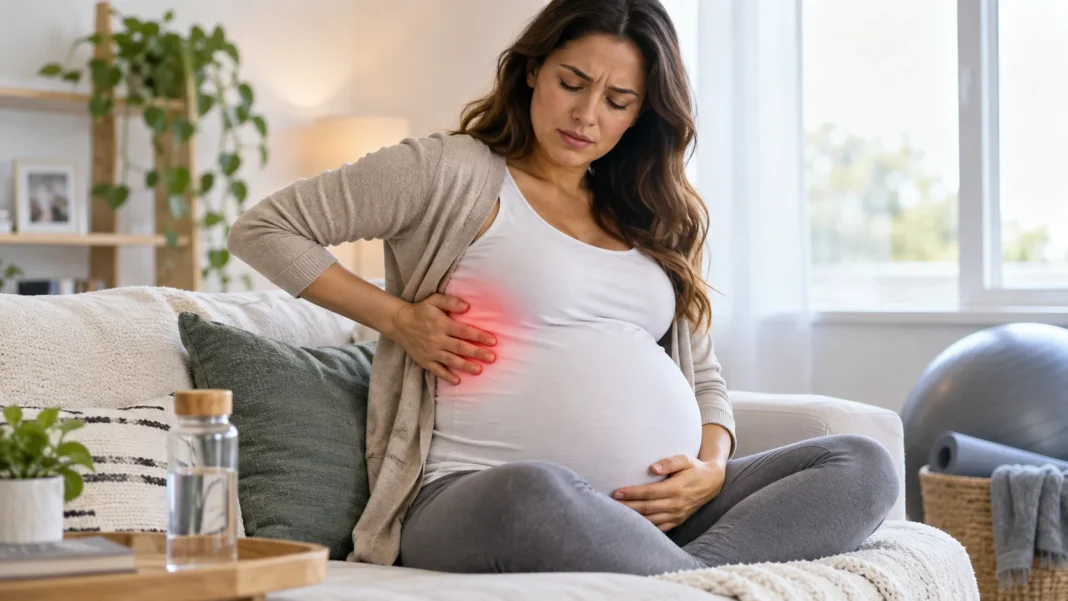
Rib pain during pregnancy is common, especially as the uterus grows and the baby begins taking up more space under the rib cage. The discomfort may feel like pressure, aching, burning, tenderness, or sharp pain along one side of the ribs. For many people, symptoms become more noticeable during the second or third trimester.
Most pregnancy-related rib pain comes from normal body changes, posture, muscle tension, or pressure from the baby. However, pain under the ribs can occasionally be linked to conditions that need medical attention. Understanding common causes, safe relief strategies, and warning signs can help you manage discomfort while knowing when to contact your healthcare provider.
Why Rib Pain Happens During Pregnancy
As pregnancy progresses, the uterus expands upward and changes the amount of space available inside the abdomen. This can place pressure on the diaphragm, ribs, abdominal muscles, and surrounding tissues. The growing baby may also push directly against the lower ribs, creating a sore or bruised feeling even when there has been no injury.
Hormonal changes also affect the body. Pregnancy hormones can increase flexibility in ligaments and joints, allowing the rib cage and surrounding structures to adapt as the body changes. This increased movement can sometimes make muscles around the chest, upper back, and ribs work harder to maintain comfortable posture.
Changes in body weight and balance can add another layer of strain. As the abdomen moves forward, the upper body may compensate by leaning backward or rounding the shoulders. These adjustments can increase muscular tension around the rib cage and make discomfort more noticeable during standing, sitting, or sleeping.
Baby Position Can Create Rib Pressure
A baby’s position can have a major effect on rib discomfort, particularly later in pregnancy. Feet, knees, or another part of the baby may press upward toward the ribs. Some people notice a very localized sore spot that becomes stronger when the baby moves or stretches.
The pain may be more noticeable on one side depending on how the baby is positioned. Changing your posture or moving from sitting to standing can sometimes reduce the pressure temporarily. In other cases, the baby may simply return to the same position and symptoms may come and go throughout the day.
Gentle movement may encourage the baby to shift slightly, but avoid forceful positions intended to move the baby yourself. Walking, changing sitting positions, or lying on the opposite side may sometimes provide relief. Persistent or severe pain should still be discussed with your maternity care provider.
Rib Cage Expansion and Muscle Stretching
The rib cage can expand during pregnancy to help accommodate changes in breathing and abdominal size. Muscles between the ribs, known as intercostal muscles, may become stretched or fatigued as this happens. The result can feel like tightness, tenderness, or aching along the sides of the chest.
The abdominal muscles also stretch considerably as the uterus grows. Because these muscles connect near the ribs and pelvis, changes in abdominal tension can affect how the lower rib cage feels. Activities such as reaching, twisting, coughing, or getting out of bed may temporarily increase the discomfort.
This type of pain is usually mechanical, meaning it changes with posture or movement. Gentle mobility, comfortable positioning, and reducing activities that clearly aggravate symptoms may help. Sharp pain that does not change with movement or continues worsening should be evaluated rather than automatically blamed on stretching muscles.
Posture Can Make Rib Pain Worse
Pregnancy changes your center of gravity, which can affect how you sit, stand, and walk. Some people lean backward through the upper body to balance the growing abdomen, while others round the shoulders forward. Either pattern can increase stress around the ribs, upper back, and chest muscles.
Long periods of sitting may make symptoms especially noticeable. A chair that provides poor support can encourage slumping or excessive arching, both of which may increase pressure through the rib cage. Using a supportive backrest and changing position regularly can reduce the amount of time one area remains under continuous strain.
Upper-back strength and shoulder control can also influence comfort. Gentle posture-focused movements and resources on lower trap exercises may be useful when your healthcare provider has cleared exercise during pregnancy. Any strengthening routine should be modified for comfort, balance, and your stage of pregnancy.
Can Heartburn Feel Like Rib Pain?
Heartburn and acid reflux are common during pregnancy and can sometimes be mistaken for rib or chest discomfort. Hormonal changes can relax the valve between the stomach and esophagus, while the growing uterus may place additional pressure on the stomach. This can cause burning or discomfort behind the breastbone or upper abdomen.
Symptoms often become worse after larger meals, spicy foods, lying down soon after eating, or bending forward. Unlike muscle pain, reflux may be accompanied by a sour taste, belching, or burning that rises toward the throat. Paying attention to these patterns can help distinguish digestive discomfort from musculoskeletal pain.
Eating smaller meals and remaining upright after eating may help reduce symptoms. Avoid taking medications for heartburn without checking that they are appropriate during pregnancy. Your healthcare provider can recommend pregnancy-safe options when lifestyle changes are not enough to control frequent reflux.
Gas and Bloating May Add to Discomfort
Pregnancy hormones can slow digestion, which may increase gas and bloating. Pressure from trapped gas in the upper abdomen can sometimes create discomfort near the lower ribs. This sensation may feel like fullness, cramping, or pressure rather than a tender muscle.
The expanding uterus can also change how the intestines sit inside the abdomen. Some people notice that bloating feels higher or more uncomfortable as pregnancy progresses. Symptoms may improve after passing gas, having a bowel movement, or changing position, which can suggest digestion is contributing.
Gentle walking, adequate hydration, and smaller meals may help support digestion. Increase fiber gradually rather than suddenly because too much fiber without enough fluid can worsen bloating. Persistent abdominal pain, vomiting, fever, or severe digestive symptoms should be discussed with a healthcare professional.
Safe Ways to Relieve Pregnancy Rib Pain
Changing position is one of the simplest ways to reduce pressure on the ribs. If sitting makes symptoms worse, stand and walk for a few minutes or adjust your chair. If one side feels compressed, gently lengthen that side by sitting taller rather than forcing a deep stretch.
A warm compress may help relax tight muscles around the ribs and upper back. Use comfortable warmth rather than high heat, and avoid heating the abdomen for prolonged periods. Warm showers can also provide temporary relief when muscular tension contributes to the soreness.
Supportive clothing can make a difference for some people. A well-fitting bra and pregnancy support garment may reduce strain through the chest and upper body. Avoid anything that feels overly tight around the ribs, especially if it makes breathing uncomfortable or increases pressure.
Gentle Stretches That May Help
A side-body stretch can help when rib discomfort feels muscular. Sit or stand comfortably, raise one arm overhead, and lean gently away from the painful side. Keep the movement small and stop before the stretch creates pulling, dizziness, or abdominal discomfort.
Gentle upper-back mobility can also reduce stiffness. Sitting tall and slowly opening the chest or performing controlled shoulder rolls may help relieve tension around the ribs. Avoid deep twisting movements if they feel uncomfortable, particularly later in pregnancy when balance and abdominal space are more limited.
Stretching should always feel easy and controlled. Pregnancy is not the time to force flexibility simply because the body feels tight. If a stretch causes uterine tightening, pelvic pressure, shortness of breath, dizziness, or increasing pain, stop and discuss exercise with your healthcare provider.
Sleeping Positions for Rib Pain
Sleep can become difficult when rib discomfort increases at night. Side sleeping with pillows supporting the abdomen, back, and legs can reduce strain and help you find a more comfortable position. Many people also benefit from placing a small pillow under the upper arm to prevent the shoulder and chest from collapsing forward.
If one side of the ribs feels painful, sleeping on the opposite side may reduce direct pressure. However, comfort and medical guidance should determine the best position for you. Pregnancy pillows can make repositioning easier by supporting several areas at once without requiring multiple loose pillows.
Raise your upper body slightly if reflux or shortness of breath contributes to nighttime discomfort. A wedge pillow can sometimes be more stable than stacking several pillows. Persistent pain that prevents sleep for several nights should be mentioned during prenatal care, especially if symptoms are worsening.
When Rib Pain May Need Medical Attention
Not all pain under the ribs is caused by normal pregnancy changes. Severe or persistent pain, particularly on the upper right side, should be discussed promptly with a healthcare professional. Some pregnancy-related conditions can cause upper abdominal or rib-area pain and require medical assessment.
Seek urgent care if rib pain occurs with severe headache, vision changes, sudden swelling, high blood pressure, shortness of breath, chest pain, fever, or feeling very unwell. These symptoms should not be managed only with stretching, heat, or changes in posture because they may indicate something more serious.
Pain after a fall, direct impact, or accident also deserves evaluation. A rib injury can be difficult to distinguish from ordinary pregnancy discomfort based on symptoms alone. Significant breathing difficulty or sudden severe chest pain requires urgent medical care regardless of pregnancy stage.
What to Avoid When Your Ribs Hurt
Avoid repeatedly pressing hard on a tender rib area. Deep massage or aggressive self-treatment can irritate sore muscles and may be uncomfortable around the growing abdomen. Gentle pressure is more appropriate when muscular tension is suspected and your healthcare provider has not advised against it.
Do not force deep side bends or twisting stretches in an attempt to create more room for the ribs. Pregnancy already changes joint mobility and balance, so aggressive stretching may create unnecessary strain. Small comfortable movements are usually enough to reduce stiffness without placing extra stress on the body.
Avoid taking pain relievers without confirming that they are safe during pregnancy. Some medications commonly used outside pregnancy may not be appropriate at certain stages. Ask your maternity care provider or pharmacist which options are suitable for you based on your health and pregnancy.
How Long Does Pregnancy Rib Pain Last?
The duration of rib pain varies widely. Some people experience occasional discomfort for a few minutes when the baby changes position, while others have recurring soreness for several weeks. Symptoms often become more noticeable during the later stages of pregnancy as space under the ribs becomes increasingly limited.
Pain caused by posture or muscular tension may improve more quickly when you change positions and use gentle movement. Baby-related pressure may fluctuate throughout the day and can sometimes improve when the baby shifts lower later in pregnancy. Every pregnancy is different, so symptom patterns can change from week to week.
Pain should not steadily become more severe without explanation. If discomfort is intense, constant, or accompanied by new symptoms, contact your healthcare provider. The fact that rib pain is common during pregnancy does not mean every case should automatically be considered normal.
Conclusion
Rib pain during pregnancy is often caused by the growing uterus, baby position, rib cage expansion, posture changes, muscle tension, reflux, or digestive pressure. These changes are especially common during the second and third trimesters. Mild discomfort often improves with position changes, gentle movement, supportive clothing, and comfortable warmth.
Safe relief should focus on comfort rather than aggressive stretching or heavy exercise. Use gentle side stretches, support your body while sleeping, take regular movement breaks, and avoid activities that repeatedly increase pain. Always modify exercise according to your pregnancy stage and the advice of your maternity care provider.
Severe or persistent rib pain deserves medical attention, especially when it occurs with headache, vision changes, swelling, fever, chest pain, breathing difficulty, or feeling significantly unwell. Pregnancy creates many normal aches, but warning signs should never be ignored. When in doubt, contacting your healthcare team is the safest approach.
FAQs
Is rib pain normal during pregnancy?
Yes, mild rib discomfort is common as the uterus expands and the baby grows. Posture changes, muscle stretching, and baby position can all contribute, particularly later in pregnancy.
Why does my right rib hurt during pregnancy?
Right-sided rib pain can come from baby pressure or muscle strain, but persistent or severe upper-right pain should be assessed because some pregnancy complications can cause discomfort in that area.
How can I relieve rib pain while pregnant?
Try changing positions, gentle side stretches, supportive pillows, comfortable warmth, and regular movement breaks. Avoid forceful stretching or medication unless your healthcare provider confirms it is safe during pregnancy.
Can the baby cause pain under my ribs?
Yes. A baby’s feet, knees, or body position can press against the lower ribs and cause localized soreness or pressure. Symptoms may change as the baby moves or your position changes.
When should pregnancy rib pain be checked urgently?
Seek prompt care for severe rib pain with headache, vision changes, sudden swelling, fever, chest pain, breathing difficulty, or feeling very unwell. These symptoms require medical assessment rather than home treatment.