


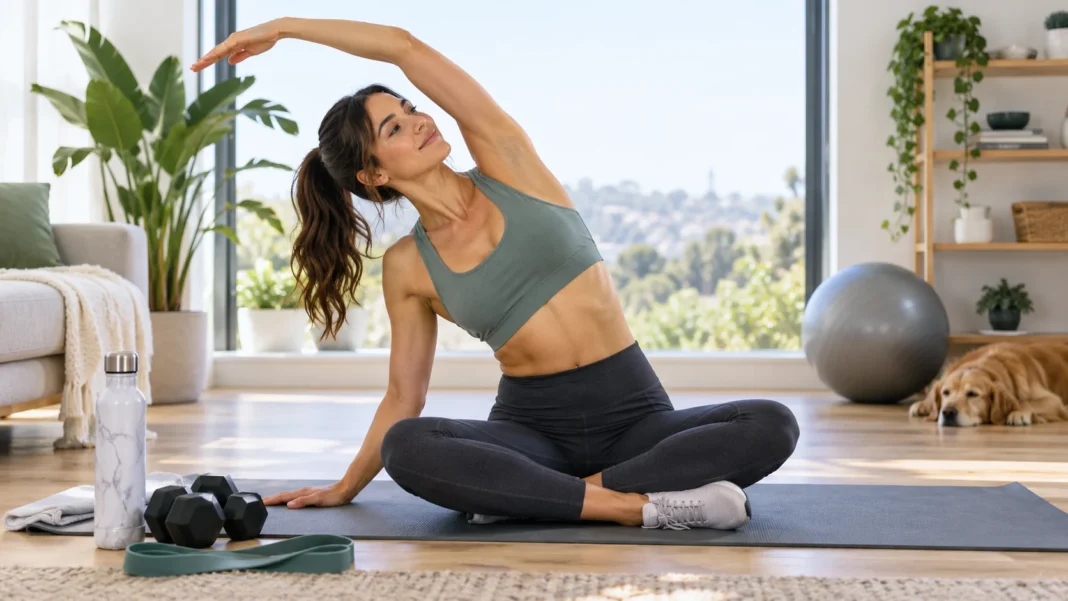
Core stretches can help reduce stiffness through the abdomen, sides, lower back, and hips, especially after long periods of sitting or demanding workouts. The core is not just the abdominal muscles; it includes several muscles that stabilize the trunk and connect the upper and lower body during everyday movement.
A good core stretching routine should feel controlled rather than intense. Gentle extension, rotation, and side-bending movements can improve comfortable mobility without forcing the spine into painful positions. Combining these stretches with regular core strengthening can support better movement, posture awareness, and overall flexibility.
What Are Core Stretches?
Core stretches are movements designed to lengthen muscles around the abdomen, sides of the torso, lower back, and nearby hip region. These muscles help stabilize the spine and pelvis while you walk, lift, bend, rotate, and exercise. Stretching can help restore comfortable movement when these areas feel tight after activity or prolonged sitting.
The core includes the rectus abdominis, obliques, transverse abdominis, spinal muscles, and muscles that connect with the pelvis and rib cage. Because these structures work together, effective stretching usually involves several directions of movement rather than one single position. Extension, rotation, and side bending can each target different areas.
Core stretches are commonly used after workouts, during mobility sessions, or as part of a general flexibility routine. They can also be useful for people who spend many hours at desks. The goal is not to force extreme range but to improve how comfortably your torso moves.
Cobra Stretch for the Abdominal Muscles
The cobra stretch is a common movement for lengthening the front of the torso. Lie on your stomach and place your hands beneath or slightly ahead of your shoulders. Gently press into the floor and lift your chest while keeping your hips and lower body relaxed against the surface.
You do not need to straighten your elbows completely. Stop when you feel a comfortable stretch through the abdominal area without pinching or sharp discomfort in the lower back. Keep your shoulders relaxed away from your ears and avoid throwing your head backward to increase the range.
Hold the stretch for around 15 to 30 seconds, then lower yourself slowly. Repeat one to three times if it feels comfortable. People with lower-back pain should use a smaller range or choose another stretch if extension clearly worsens their symptoms.
Standing Side Stretch for the Obliques
A standing side stretch targets the oblique muscles and tissues along the sides of the torso. Stand with your feet about hip-width apart, raise one arm overhead, and gently lean toward the opposite side. Keep your chest facing mostly forward instead of rotating as you move.
You should feel a gentle stretch along the side of your ribs, waist, and abdomen. Avoid pushing your hips excessively in the opposite direction or collapsing through the lower back. A small controlled movement often creates enough tension without placing unnecessary stress on the spine.
Hold the stretch for about 15 to 30 seconds and then repeat on the other side. This movement can be especially useful after sitting for long periods. It also works well as part of a short morning or post-workout mobility routine.
Seated Torso Rotation Stretch
A seated torso rotation can improve comfortable rotational movement through the trunk. Sit upright on a chair with both feet flat on the floor. Place one hand on the opposite thigh and gently rotate your upper body while keeping your hips facing forward.
The movement should come gradually through the upper and middle spine rather than being forced with your arms. Keep your shoulders relaxed and stop when you feel a mild stretch around the side of the trunk or upper back. Avoid twisting aggressively to chase a larger range.
Hold for around 15 to 20 seconds, return to the center, and repeat on the opposite side. Slow breathing can help you remain relaxed during the stretch. If rotation causes sharp back pain or symptoms traveling into the leg, stop and seek appropriate guidance.
Child’s Pose for Core and Back Mobility
Child’s pose can stretch the back, sides of the torso, shoulders, and hips at the same time. Start on your hands and knees, then move your hips backward toward your heels while reaching your arms forward. Lower your chest only as far as feels comfortable.
You can widen your knees slightly if this creates more room for your torso. Keep your breathing slow and allow the rib cage to expand naturally with each breath. The position should feel restful rather than like a deep stretch you have to tolerate.
Hold for around 20 to 40 seconds before returning slowly to the starting position. If kneeling is uncomfortable, place your hands on a table and move your hips backward instead. This supported version can provide a similar stretch through the trunk and shoulders.
Cat-Cow for Spinal and Core Mobility
Cat-cow is a gentle dynamic exercise that moves the spine through flexion and extension. Begin on your hands and knees with your hands beneath the shoulders and knees beneath the hips. Slowly round the back upward, then reverse the movement by gently lifting the chest and allowing the abdomen to lengthen.
Move slowly between the two positions rather than forcing the spine into its maximum range. The exercise should feel smooth and comfortable, with the movement distributed throughout the back. Five to ten controlled repetitions are enough for many people during a warm-up or mobility session.
Breathing can make the movement feel more natural. Exhale as you round the spine and inhale as you gently extend it. Stop if the exercise causes sharp pain, dizziness, or radiating symptoms rather than ordinary stretching and mobility sensations.
Hip Flexor Stretch for Better Core Positioning
The hip flexors connect the lower body with the pelvis and can influence how the trunk feels during standing and exercise. A half-kneeling hip flexor stretch can help when the front of the hips feels tight after sitting. Place one knee down and the opposite foot in front.
Keep your torso upright and gently move the pelvis forward until you feel a stretch at the front of the hip on the kneeling side. Avoid arching the lower back excessively to create more range. Lightly tightening the glute on the stretched side can help maintain better pelvic control.
Hold for around 20 to 30 seconds and switch sides. If kneeling is uncomfortable, perform the stretch in a standing split stance. Improving hip mobility can complement core stretching because the pelvis and trunk work together during most daily movements.
Key Benefits of Core Stretching
Core stretching can improve comfortable range of motion through the torso. Everyday movements such as reaching, turning, standing up, and bending all require the spine and surrounding muscles to move efficiently. Gentle stretching may reduce the feeling of stiffness after inactivity or repetitive exercise.
Another benefit is better body awareness. Stretching helps you notice when certain areas feel unusually tight or when one side moves differently from the other. This awareness can make it easier to adjust training, posture, or daily movement habits before discomfort becomes more noticeable.
Core stretching can also complement strength training. Strong muscles need enough mobility to move through useful ranges, while flexible muscles still need strength and control. Combining both approaches generally provides a more balanced result than focusing only on stretching or only on abdominal exercises.
Core Stretches After Workouts
After strength training, running, or sports, the torso may feel tight because the core has been working to stabilize the body. Gentle stretching can provide a comfortable cooldown. Start with small movements rather than immediately forcing the abdomen or lower back into deep extension.
Cobra stretches, side bends, child’s pose, and gentle rotations can all be useful depending on which areas feel tight. Hold each stretch comfortably and breathe normally. Post-workout stretching should help the body relax rather than create another intense training challenge.
Stretching will not instantly remove all muscle soreness, and it does not replace recovery. Sleep, nutrition, hydration, and sensible training volume are also important. Use stretching as one part of your recovery routine rather than expecting it to fix every ache after exercise.
Core Stretching During Pregnancy
Pregnancy changes the way the abdomen, ribs, pelvis, and back move, so core stretches may need to be modified. Deep abdominal extension or strong twisting may become uncomfortable as pregnancy progresses. Gentle side stretches, supported mobility, and slow breathing are often more practical than aggressive flexibility work.
Rib and upper-body discomfort can also affect which movements feel comfortable. If you are dealing with pregnancy rib pain, choose stretches that do not increase pressure around the ribs or abdomen. Your maternity care provider can advise which movements are suitable for your stage of pregnancy.
Stop if stretching causes dizziness, uterine tightening, bleeding, pelvic pressure, significant pain, or unusual shortness of breath. Pregnancy is not the time to force mobility gains. Comfort, stability, and medical guidance should take priority over reaching a particular stretching position.
Common Core Stretching Mistakes
One common mistake is pushing into pain because the stretch feels more effective when it is intense. Sharp pain is not required for flexibility benefits. A mild pulling sensation is enough, and forcing the range can irritate the lower back, abdominal muscles, or nearby joints.
Another mistake is holding your breath. Breath-holding increases tension and can make stretching feel more difficult than necessary. Use slow, comfortable breathing and reduce the intensity if you cannot stay relaxed during the position.
People may also focus only on the front of the abdomen while ignoring the sides, hips, and back. The core functions as a complete system. Including extension, side bending, rotation, and hip mobility gives you a more balanced routine than repeatedly performing one abdominal stretch.
How Often Should You Stretch Your Core?
Many people can perform gentle core stretches several times per week or even daily when the movements feel comfortable. Frequency depends on your activity level, flexibility goals, and how your body responds. There is no need to stretch intensely every day to improve mobility.
A simple routine might include four to six movements held for 15 to 30 seconds each. Dynamic movements such as cat-cow can be repeated several times instead of held. The entire session can take less than ten minutes and still provide useful movement variety.
Consistency matters more than long sessions. A short routine performed regularly is usually easier to maintain than occasional stretching sessions lasting 30 minutes or more. Stop or modify any movement that repeatedly increases pain rather than improving comfort.
When Core Stretches May Not Be Appropriate
Avoid aggressive core stretching after a recent abdominal, spinal, rib, or hip injury unless you have been cleared to do so. Healing tissues may not tolerate deep extension or rotation. Rehabilitation should follow the specific needs of the injury rather than a general flexibility routine.
Persistent back pain, numbness, tingling, weakness, or pain traveling into the legs should also be treated cautiously. These symptoms may involve nerves or other structures rather than simple muscle tightness. Stretching the area repeatedly may not address the actual cause.
People recovering from surgery should follow the movement restrictions given by their healthcare team. Some procedures require temporary limits on twisting, bending, or abdominal tension. If you are unsure whether core stretching is safe, professional guidance is more appropriate than experimenting with deep stretches.
Conclusion
Core stretches can improve comfortable movement through the abdomen, sides, back, hips, and surrounding muscles. Cobra stretches, standing side bends, seated rotations, child’s pose, cat-cow, and hip flexor stretches can all be useful when performed with controlled technique.
The main goal should be mobility rather than extreme flexibility. Use gentle tension, breathe normally, and avoid forcing painful positions. Stretching works best when combined with core strengthening, regular movement, and good recovery habits.
Modify or avoid core stretches when you are dealing with recent injury, surgery, pregnancy-related limitations, or nerve-like symptoms. If pain is sharp, persistent, or worsening, seek professional guidance. For most healthy adults, a short and consistent routine can be a practical way to maintain trunk mobility.
FAQs
What are the best stretches for the core?
Cobra stretches, side bends, torso rotations, child’s pose, cat-cow, and hip flexor stretches are useful options. A balanced routine should move the torso in several different directions.
How long should I hold a core stretch?
Most static core stretches can be held for about 15 to 30 seconds. Keep the intensity mild enough that you can breathe comfortably and maintain good control throughout the position.
Can core stretching help lower-back stiffness?
It may help when stiffness is related to muscle tightness or prolonged sitting. Persistent or radiating back pain should be evaluated rather than repeatedly treated with stretching alone.
Should I stretch my core every day?
Gentle daily stretching can be appropriate for many people. However, intense stretching is not necessary every day, and any movement that repeatedly causes pain should be modified or stopped.
Is core stretching good after ab workouts?
Yes. Gentle stretching can help the abdomen and surrounding muscles feel less tight after training. Avoid forcing deep extension immediately if the muscles feel extremely sore or irritated.