


How to Get Rid of a Stye: Safe Treatment Tips
A stye can appear suddenly as a tender, red bump along the edge of the eyelid and quickly make blinking, touching the eyelid, or simply looking in the mirror uncomfortable. Medically known as a hordeolum, a stye usually develops when an oil gland or eyelash follicle becomes blocked and infected, commonly involving Staphylococcus bacteria. Most styes are minor and begin improving on their own without complicated treatment. The safest approach is usually to encourage natural drainage with warmth while keeping the eyelid clean and avoiding anything that could spread infection. Understanding how to get rid of a stye safely can help you manage discomfort without making the problem worse.
It can be tempting to treat a stye like a pimple, especially when a yellow or white point becomes visible. Squeezing, puncturing, cutting, or attempting to drain it yourself is not recommended because pressure can push bacteria into surrounding eyelid tissue and increase irritation or infection. The NHS specifically advises people not to burst a stye themselves because doing so can spread infection. Instead, warm compresses, careful eyelid hygiene, temporary avoidance of contact lenses and eye makeup, and patience are usually the safest home-care measures. Many styes begin improving within several days, although complete healing can sometimes take longer.
Not every eyelid bump is actually a stye, and certain symptoms require professional assessment instead of continued home remedies. A painless, firm lump may be a chalazion, while rapidly spreading redness, significant swelling, vision changes, or severe pain can signal a problem requiring medical attention. Mayo Clinic advises contacting a healthcare professional when a stye does not begin improving after about 48 hours or when redness and swelling spread through the eyelid or face. This guide explains stye treatment at home, what not to do, how to distinguish a stye from similar eyelid conditions, and when an eye doctor should become involved.
What Is a Stye and Why Does It Form?
A stye is a localized inflammatory lump that develops on or within the eyelid, usually after a small gland or eyelash follicle becomes infected. Mayo Clinic describes it as a painful bump near the eyelid edge that can resemble a boil or pimple and may contain pus. External styes form closer to an eyelash follicle and are often easier to see, while internal styes develop deeper inside the eyelid. Both can cause tenderness, redness, swelling, and watering of the affected eye. Unlike many serious eye conditions, a typical stye usually affects the eyelid rather than the eyeball itself and should not normally cause significant vision loss.
The bacteria most commonly involved are species of Staphylococcus that normally live harmlessly on human skin. Problems can develop when bacteria enter an irritated or blocked eyelash follicle or oil-producing gland around the eyelid. Touching or rubbing the eyes with unwashed hands can increase opportunities for bacteria and debris to reach these structures. Poorly cleaned contact lenses, old eye cosmetics, and leaving makeup on overnight can create additional risk. Mayo Clinic also identifies chronic blepharitis and rosacea as factors associated with recurring styes. Having a stye therefore does not necessarily mean someone has poor hygiene, but eyelid hygiene can influence recurrence.
An external stye commonly begins as a small area of tenderness along the lash line before becoming more obviously swollen and red. A small yellow center may eventually appear as pus collects, and the stye may drain naturally after several days. Internal styes can be less visible because the blocked or infected gland sits on the inner side of the eyelid. Moorfields Eye Hospital notes that internal styes can be more painful and may require more medical attention than uncomplicated external styes. If the eyelid feels extremely painful despite only a small visible bump, professional evaluation can help determine whether the inflammation lies deeper than it appears.
A stye is generally not considered highly contagious in the way viral conjunctivitis can be, but bacteria can still be transferred through hands, towels, cosmetics, or contaminated contact-lens equipment. This is one reason handwashing is important while the eyelid is inflamed. Avoid sharing towels, washcloths, pillowcase-like personal items, or eye cosmetics while you have an active stye. The NHS specifically recommends not sharing towels or flannels with someone who has a stye and avoiding rubbing the eyes with unwashed hands. These precautions are simple but particularly useful when several people in a household share bathrooms or cosmetic products.
Most uncomplicated styes are self-limited, meaning the immune system and normal gland drainage eventually resolve them without surgery or strong medication. Mayo Clinic notes that styes commonly begin disappearing on their own within a few days, although individual healing times differ. Home treatment aims to make that natural process more comfortable and encourage the blocked material to drain rather than trying to force the lump open. If swelling becomes extensive, symptoms persist, or the condition repeatedly returns, the diagnosis deserves another look. Knowing what causes a stye helps explain why gentle warmth and hygiene are more useful than squeezing, scraping, or applying harsh substances around a sensitive eye.
Use a Warm Compress as the First-Line Home Treatment
A warm compress is the most consistently recommended home treatment for a stye. Heat helps soften thickened oil and other material inside the blocked gland, which may encourage the stye to open and drain naturally. Mayo Clinic recommends placing a warm washcloth over the closed eyelid for about 5 to 10 minutes and repeating the process two to three times daily. NHS guidance similarly recommends 5 to 10 minutes of warmth two to four times per day. The exact number of applications matters less than using gentle, comfortable warmth consistently without overheating or irritating the skin.
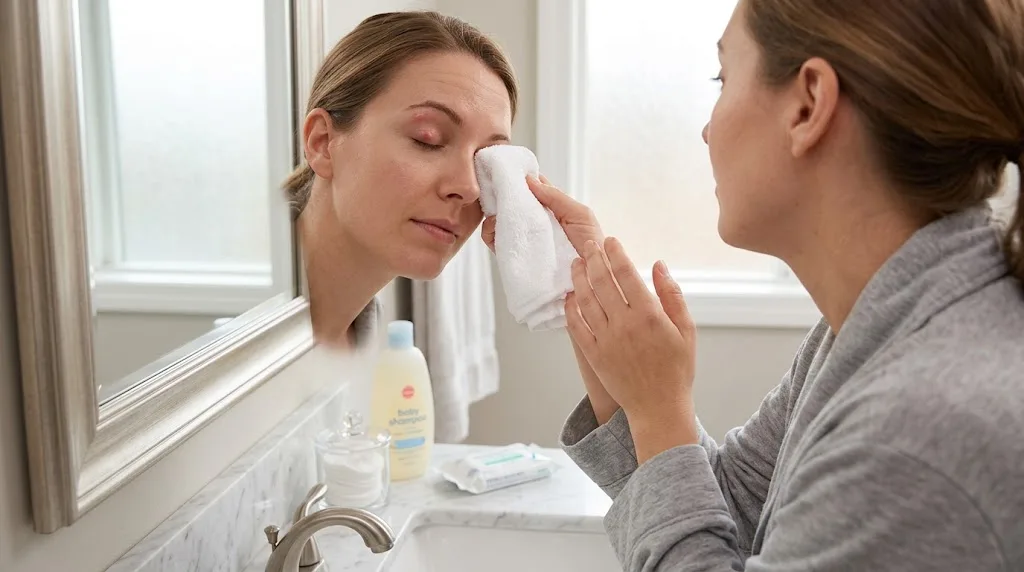
To make a compress, begin by washing your hands and choosing a clean, soft washcloth. Wet the cloth with comfortably warm water, wring out excess water, and place it over the closed eyelid without pressing forcefully. When the cloth cools, warm it again so the eyelid receives steady warmth during the treatment period. The water should feel pleasantly warm rather than hot because eyelid skin is thin and can be burned more easily than skin on many other parts of the body. A warm compress for a stye works through sustained gentle heat, not through using the hottest temperature you can tolerate.
Keeping the compress clean is important because placing a dirty cloth repeatedly against an infected eyelid defeats the purpose of careful hygiene. Use a freshly cleaned cloth for each treatment session when practical and avoid sharing it with other household members. Wash your hands again after touching the affected eyelid, particularly if the stye has started draining. If discharge collects around the lashes, remove it gently rather than scrubbing the eyelid. Aggressive friction can irritate already inflamed tissue and may push material toward the eye, so the goal should always be soft cleaning followed by allowing the area to settle.
Some medical guidance recommends very gentle eyelid massage after warmth because softened gland material may drain more easily. Mayo Clinic suggests gently massaging the eyelid following a warm compress as part of self-care. This does not mean squeezing the bump between your fingers or pressing directly on a visible pocket of pus. If you massage at all, use a clean fingertip and extremely light pressure around the eyelid rather than forcing material from the lesion. Stop if the technique increases pain. An internal or unusually painful stye is better assessed by an eye professional than repeatedly manipulated at home.
Consistency generally matters more than trying numerous online remedies simultaneously. A person who performs appropriate warm compresses several times per day and otherwise leaves the eyelid alone is often doing more useful treatment than someone alternating between heat, oils, herbal products, harsh cleansers, and attempts to drain the bump. The eyelid needs an opportunity to heal without repeated irritation. Moorfields Eye Hospital likewise recommends clean warm compresses for 5 to 10 minutes multiple times daily and warns against trying to burst the stye. When asking how to make a stye go away faster, reliable warmth and patience remain safer than aggressive intervention.
Keep the Eyelid Clean While It Heals
Gentle eyelid hygiene can reduce additional irritation and prevent makeup, skin oils, or debris from accumulating around an already blocked gland. Before cleaning the eye area, wash your hands thoroughly with soap and water. Mayo Clinic recommends gently washing the affected eyelid with mild soap and water as part of stye self-care. Avoid scrubbing directly over the lump or allowing heavily fragranced facial cleansers to enter the eye. If the eyelid is very sensitive, a clean damp cloth may be sufficient to remove obvious discharge until you can obtain guidance from an eye-care professional about an appropriate eyelid-cleaning routine.
People who have blepharitis may need more consistent eyelid care because chronic inflammation around the eyelashes can contribute to repeated gland blockage. Mayo Clinic identifies longstanding blepharitis as a risk factor for styes and recommends following an eye professional’s eyelid-care instructions when the condition is present. Some people with recurrent eyelid problems are advised to use regular warm compresses and specifically formulated eyelid-cleaning products. However, someone who has never been diagnosed with blepharitis should not assume every stye means they have it. Persistent crusting, burning, irritation, or frequent eyelid bumps are good reasons to discuss longer-term eyelid care with an optometrist or ophthalmologist.
Wash your hands before and after touching the eye area, even when you are only applying a warm compress. Fingertips repeatedly contact phones, keyboards, door handles, countertops, and many other surfaces that can carry microorganisms. Rubbing irritated eyes can also create tiny skin injuries and move bacteria toward eyelash follicles. The NHS advises keeping eyes clean and avoiding rubbing them with unwashed hands as part of stye prevention. Good stye hygiene therefore consists mostly of ordinary habits performed consistently rather than specialized disinfectants. Strong alcohol solutions, household antiseptics, hydrogen peroxide, or other harsh chemicals should never be applied around the eye unless specifically directed for that purpose by a qualified professional.
Pillowcases and towels do not necessarily need extreme sterilization, but keeping commonly contacted fabrics clean is sensible while the eyelid is inflamed. Avoid sharing face towels or washcloths, particularly when the stye is draining. If you use a reusable eye mask or warm-compress device, clean it according to the manufacturer’s instructions before applying it again. Disposable tissues used to wipe drainage should be discarded promptly, followed by handwashing. These measures reduce the chance of moving bacteria from the affected eye to the opposite eyelid or another person. They also create a cleaner environment for the natural healing process without requiring antibacterial products around the eye.
Do not repeatedly inspect the stye by pulling, twisting, or flipping the eyelid with unwashed fingers. Constant touching can make inflammation appear worse and increase the temptation to squeeze once the bump develops a visible head. Take a photograph once daily if you genuinely need to track improvement, then leave the area alone between compresses and cleaning. A stye may look slightly different as it drains and resolves, and some residual swelling can remain after tenderness decreases. Keeping a stye clean should support healing rather than turning into repeated manipulation. If the bump changes in a concerning way or does not improve, professional examination is safer than increasingly aggressive home care.
Avoid Popping the Stye, Makeup, and Contact Lenses
Trying to pop a stye is one of the most important mistakes to avoid. Even when the bump resembles a small pimple, eyelid tissue is delicate and sits immediately beside the eye. Squeezing can increase inflammation, cause bleeding, push infected material deeper into tissue, or contribute to spreading infection. Mayo Clinic advises leaving a stye alone rather than squeezing pus from it, while NHS guidance similarly warns not to burst it yourself. If drainage is medically necessary, an eye professional can use sterile instruments and an appropriate technique instead of relying on uncontrolled pressure from fingernails or household tools.
Needles, tweezers, safety pins, lancets, and other sharp objects should never be used to puncture an eyelid bump at home. Videos showing self-drainage can create the impression that the procedure is simple, but the eyelid contains important structures and sits directly against the ocular surface. A clinician can distinguish between a stye, chalazion, cyst, or another lesion before deciding whether drainage is appropriate. Mayo Clinic notes that a healthcare professional may make a small incision to drain a persistent stye when necessary. That professional treatment is fundamentally different from attempting stye drainage at home, where sterility, diagnosis, bleeding control, and eye protection are much harder to ensure.
Eye makeup should usually be paused until the stye has healed. Mascara, eyeliner, eye shadow, brushes, and applicators can irritate the eyelid and potentially become contaminated with bacteria from the affected area. Both Mayo Clinic and the NHS recommend avoiding eye makeup while a stye is active. Once the eyelid has healed, consider replacing old or potentially contaminated eye cosmetics, particularly mascara and liquid eyeliner that repeatedly contact the lash line. Never share eye makeup with other people. Makeup brushes and reusable applicators should also be cleaned appropriately before returning them to regular use.
Contact lenses should also be avoided while the stye is inflamed. Mayo Clinic explains that contact lenses can become contaminated with bacteria associated with a stye and recommends wearing glasses until the condition resolves. Contact-lens wearers should follow their eye professional’s cleaning and replacement instructions before returning to lenses. Disposable lenses worn around the time the stye developed may need replacement rather than reuse, depending on the lens type and professional advice. If the eye itself becomes painful, intensely red, light-sensitive, or produces changes in vision while you wear contacts, seek prompt eye-care advice because contact lens complications can involve the cornea and may require urgent treatment.
Avoid unproven substances around the eye as well. Essential oils, undiluted apple cider vinegar, garlic, toothpaste, rubbing alcohol, and concentrated herbal extracts can irritate or injure the eyelid and ocular surface. Tea bags are frequently recommended online, but a clean warm washcloth provides the important heat effect without introducing plant particles, fragrances, or another potential source of contamination. Likewise, do not use leftover antibiotic or steroid eye drops from an old prescription. Eye medications are selected according to a specific diagnosis, and steroid-containing products can create significant problems when used inappropriately. Safe home remedies for a stye should remain simple: warmth, cleanliness, temporary avoidance of irritants, and observation.
Stye vs Chalazion: Know What You Are Treating
A stye and chalazion can look similar because both cause localized eyelid lumps, but the underlying processes are different. A stye is generally an acute, painful infection or inflammation involving an eyelash follicle or eyelid gland. A chalazion develops when an oil gland becomes blocked and its contents trigger inflammation, usually without the same active bacterial infection. Mayo Clinic describes a chalazion as typically less painful than a stye and often more prominent on the inner portion of the eyelid. Distinguishing between them matters because a persistent painless lump may not benefit from being treated as though it contains pus that needs to burst.
Early in its development, a stye commonly feels tender before the lump becomes obvious. The surrounding eyelid can be red or swollen, the eye may water, and blinking can hurt because the inflamed area is close to the lash line. A chalazion often develops more gradually and can remain as a firm, relatively painless nodule after the initial inflammation settles. Occasionally a stye can evolve into or leave behind a chalazion when the infection resolves but gland material remains blocked. Both conditions may initially be treated with warm compresses, which help liquefy trapped oil and encourage natural drainage without force.
Location can provide clues but does not always establish the diagnosis. External styes usually develop at the eyelash margin and can develop a visible yellow or pus-filled center. Internal styes form deeper inside the eyelid and may cause more widespread tenderness without an obvious surface bump. Chalazia generally involve the meibomian oil glands farther within the eyelid and can feel like a bead beneath the skin. Because these patterns overlap, self-diagnosis is not always reliable. An ophthalmologist or other eye-care professional can examine the eyelid using magnification and determine whether a persistent eyelid bump is a stye, chalazion, or something else.
Chalazia often take longer to resolve than ordinary styes. The American Academy of Ophthalmology recommends warm compresses for both conditions and notes that persistent chalazia may sometimes be treated with steroid injection or incision and drainage by an ophthalmologist. These procedures should not be attempted at home. A lump that has become painless but remains for several weeks may simply need additional time, but an eye professional should evaluate persistent or recurrent lesions. This is particularly important when the bump repeatedly develops in exactly the same location, looks unusual, causes loss of eyelashes, or fails to respond as expected to conservative treatment.
Other eye conditions can also be mistaken for a stye. Allergic eyelid swelling, conjunctivitis, blepharitis, cysts, skin infections, blocked tear structures, and several less common eyelid disorders can produce redness or swelling. Severe pain originating inside the eye rather than the eyelid is especially important because conditions such as corneal disease, uveitis, or glaucoma require completely different treatment. A classic stye usually produces a localized tender eyelid bump rather than profound eyeball pain. Understanding the difference between a stye and chalazion is useful, but symptoms outside the typical pattern should prompt professional assessment rather than trying a longer list of home remedies.
When Antibiotics or Medical Treatment May Be Needed
Most uncomplicated styes do not require antibiotics because warmth and time allow them to resolve naturally. Mayo Clinic states that most styes do not need specific medical treatment, although antibiotics may be prescribed when an infection persists or spreads. This is important because people often assume any red eyelid bump requires antibiotic eye drops. Antibiotics do not mechanically open a clogged gland, and unnecessary use can expose people to side effects while contributing to antimicrobial resistance. Whether an antibiotic is appropriate depends on what the eye-care professional sees during examination rather than simply how large or uncomfortable the bump looks.
When medication is considered necessary, a clinician may prescribe an antibiotic ointment or drops depending on the location and surrounding infection. If infection spreads beyond the localized eyelid gland, oral antibiotics may occasionally be necessary. Mayo Clinic specifically notes that tablet or pill antibiotics can be used when eyelid infection persists or spreads beyond the eyelid area. Do not take leftover antibiotics from another illness or borrow someone else’s eye medication because the drug, strength, duration, or diagnosis may be wrong. Appropriate antibiotics for a stye should be selected by someone who has assessed whether bacterial infection actually requires treatment.
Persistent styes can sometimes require drainage by a healthcare professional. After examining the eyelid, the clinician may decide that accumulated material is unlikely to clear adequately with conservative care. Mayo Clinic describes making a small incision to relieve pressure and drain pus when a stye does not clear. Professional drainage is performed using techniques intended to protect the eyelid and eye while controlling infection and bleeding. Even if you can clearly see a point of pus at home, that does not make self-incision safe. Waiting for appropriate evaluation is safer than turning a minor eyelid infection into a larger wound.
Persistent chalazia may receive somewhat different treatment because they are primarily blocked and inflamed glands rather than active styes. The American Academy of Ophthalmology notes that an ophthalmologist may consider a steroid injection for a swollen chalazion or perform surgical drainage when conservative treatment fails. Steroid injection around the eyelid has potential complications and is not a casual cosmetic procedure. This distinction reinforces why accurate diagnosis matters before medication is prescribed. Someone repeatedly searching for a stronger stye medicine may actually have a chalazion that requires a different management approach rather than progressively stronger antibiotics.
If you have recurrent styes, medical care should look beyond simply treating each bump individually. Blepharitis, rosacea, meibomian gland dysfunction, makeup habits, contact-lens hygiene, and other eyelid conditions can increase recurrence. Mayo Clinic specifically recognizes blepharitis and rosacea as risk factors for styes. An eye professional may recommend an ongoing lid-hygiene routine, treatment for underlying inflammation, or adjustments to contact-lens and cosmetic practices. Recurrent eye styes are therefore a reason to investigate why glands keep becoming blocked or infected instead of repeatedly waiting for each individual episode to disappear.
Know When a Stye Needs Professional Attention
Contact a healthcare professional when a stye is not beginning to improve after approximately 48 hours, particularly when pain or swelling is increasing rather than stabilizing. Mayo Clinic gives this two-day threshold as a reason to seek medical advice and also recommends care when redness or swelling involves the entire eyelid or extends toward the cheek or face. Other authorities allow somewhat longer for uncomplicated styes to resolve, so the exact timing depends on severity and progression. A small bump that is clearly becoming less painful is different from an eyelid that becomes progressively more swollen each morning despite appropriate warm compresses.
Vision changes are another important warning sign. The NHS advises urgent medical assessment if a stye affects vision, becomes very painful or swollen, produces significant pus, or appears to spread through the eye or eyelid. A large eyelid lump can occasionally blur vision temporarily by pressing against the eye, but new persistent visual disturbance still deserves examination. Eye pain with substantial light sensitivity, severe headache, or other unusual symptoms can also indicate a condition other than an ordinary stye. Do not assume every new eye symptom comes from the small bump you can see on the eyelid.
Spreading infection requires particular attention because the tissues around the eye can develop preseptal or orbital cellulitis, conditions that are more serious than a localized stye. Warning signs can include rapidly expanding redness or swelling, fever, worsening pain, swelling extending into the face, difficulty opening the eye, or feeling generally unwell. Eye movement pain, reduced vision, or a bulging eye requires urgent medical assessment. A stye does not commonly progress this way, but attempting to squeeze infected material could theoretically contribute to spread. When inflammation is no longer confined to a small eyelid area, continuing ordinary home care alone is not appropriate.
People with weakened immune systems or certain medical conditions may need earlier assessment. Diabetes, immune-suppressing medications, cancer treatment, or other conditions that affect infection response can change how seemingly minor infections behave. Contact-lens wearers should also be more cautious when symptoms involve the eyeball itself because contact lenses increase the significance of some corneal infections. If you are uncertain whether redness comes from the eyelid or the surface of the eye, remove the lenses and seek professional guidance rather than continuing to wear them. Individual risk factors can make stye treatment advice different from general self-care recommendations written for otherwise healthy adults.
A persistent or repeatedly recurring lump in the same location should eventually be examined even when it is not painful. Most cases prove to be benign conditions such as chalazia, but an eye professional can determine whether the appearance is typical and whether drainage, biopsy, or another treatment deserves consideration. Do not spend months repeatedly applying compresses to an unchanged eyelid lesion simply because it originally resembled a stye. Good self-care includes recognizing its limits. A straightforward stye usually follows a pattern of localized tenderness followed by gradual improvement, whereas symptoms that remain unchanged, repeatedly recur, or develop unusual features deserve a proper diagnosis.
Prevent Styes From Coming Back
Hand hygiene is one of the easiest ways to reduce future eyelid infections. Wash your hands before touching your eyes, inserting contact lenses, removing lenses, or applying eye-area products. Try to break the habit of rubbing your eyes absentmindedly, particularly when your hands have been touching a phone or other frequently handled surfaces. Mayo Clinic recommends regular handwashing and keeping hands away from the eyes as basic stye-prevention measures. These habits cannot prevent every stye because gland blockage can occur for several reasons, but they reduce unnecessary opportunities for bacteria and debris to reach sensitive eyelid structures.
Eye makeup hygiene deserves equal attention if you use mascara, eyeliner, shadow, or cosmetic brushes regularly. Remove eye makeup before sleeping and avoid continuing to use products that have become old, dried out, or potentially contaminated. Mayo Clinic advises disposing of old cosmetics, avoiding shared cosmetics, and not sleeping in eye makeup to reduce recurrent eye infections. Do not add water or saliva to dried mascara in an attempt to extend its lifespan. Sharing eye products with friends or family can also transfer microorganisms between users. Clean reusable brushes and tools according to manufacturer instructions and keep them stored somewhere dry and clean.
Contact-lens care is another important part of stye prevention. Wash and dry your hands before handling lenses and follow the cleaning, replacement, and storage schedule recommended for your specific lens system. Do not sleep in lenses unless they were specifically prescribed for overnight wear, and never use tap water as a substitute for approved contact-lens solution. Replace dirty or damaged cases according to professional recommendations. Although a stye primarily affects the eyelid rather than the cornea, poor lens hygiene can introduce bacteria around the entire eye area. Maintaining good habits also protects against potentially serious contact-lens-related corneal infections that are much more urgent than an ordinary stye.
People prone to recurring styes may benefit from discussing preventive warm compresses and eyelid hygiene with an eye-care professional. Mayo Clinic notes that regular warm compresses may help reduce recurrence in people who have previously experienced styes. Warmth can help keep meibomian oil more fluid, particularly when gland dysfunction contributes to blockage. If you also have blepharitis, treating the underlying eyelid inflammation can be more useful than responding only when another painful bump appears. A clinician may recommend specific lid cleansers, compress devices, or other strategies depending on the condition of the eyelid glands.
Finally, avoid blaming every recurrence on cleanliness alone. Rosacea, chronic blepharitis, meibomian gland dysfunction, skin conditions, and individual eyelid anatomy can make some people more susceptible even when their hygiene is excellent. Frequent styes are a reason to identify underlying contributors rather than simply washing the eyelids more aggressively, which can itself create irritation. Keep track of how often bumps appear, whether they occur on the same eyelid, and whether symptoms such as dry eye, crusting, facial flushing, or burning are also present. Preventing recurrent styes works best when everyday hygiene is combined with proper management of any chronic eyelid or skin condition contributing to blocked glands.
Frequently Asked Questions
How can I get rid of a stye quickly?
Use a clean warm compress over the closed eyelid for about 5 to 10 minutes several times per day and keep the area clean. Do not squeeze or puncture the stye, because natural drainage is safer than attempting to force it open.
How long does a stye usually last?
Many styes begin improving within a few days and resolve without specific medical treatment, although some can take longer. Contact a healthcare professional if the stye is worsening, is not beginning to improve after about 48 hours, or remains for an unusually long period.
Can I pop a stye when it develops a white head?
No. Both the NHS and Mayo Clinic advise against bursting or squeezing a stye because doing so can spread infection or worsen inflammation. Allow it to drain naturally or have a healthcare professional evaluate it when drainage appears necessary.
Can I wear contact lenses or makeup with a stye?
It is better to avoid contact lenses and eye makeup until the stye has healed because lenses and cosmetic products can become contaminated and further irritate the eyelid. Wear glasses temporarily and consider replacing eye cosmetics that may have been contaminated.
When should I see a doctor for a stye?
Seek medical advice if the stye is very painful or swollen, affects your vision, does not begin improving, or if redness and swelling spread through the eyelid or face. Rapidly worsening swelling, fever, severe eye pain, difficulty moving the eye, or significant vision changes warrant more urgent assessment.