


Deer Fly Bite: Symptoms, Treatment & Prevention
A deer fly bite can be surprisingly painful for such a small insect because deer flies do not feed in the same gentle way as mosquitoes. Female deer flies use cutting mouthparts to break the skin and create a small pool of blood, which they then feed from. The bite may cause immediate sharp pain, followed by redness, swelling, itching, tenderness, or a raised welt around the affected area. Most deer fly bites are uncomfortable but improve with basic home care over the following days. However, significant allergic reactions, secondary skin infections, and certain insect-borne illnesses can occasionally make medical attention necessary.
Deer flies belong primarily to the genus Chrysops and are closely related to horse flies within the Tabanidae family. They are commonly found around damp woodland, ponds, marshes, streams, and other environments where their immature stages can develop in moist habitats. Only females take blood meals, while males generally feed on pollen or nectar. University of Maine Cooperative Extension notes that deer fly bites can be quite painful and that reactions to the fly’s saliva may cause itching and pain around the bite. Understanding the insect’s feeding behavior helps explain why a deer fly bite reaction may initially feel more like a small cut than a typical mosquito bite.
Most people can treat an uncomplicated bite by washing the area, applying a cold compress, avoiding scratching, and using appropriate over-the-counter products when necessary. The important part is monitoring how the bite changes rather than assuming every red or swollen area represents a serious infection. Deer flies can transmit tularemia in parts of the United States, although this is uncommon, and most bites do not result in the disease. The CDC specifically identifies infected deer fly bites as one possible route of transmission for Francisella tularensis, the bacterium responsible for tularemia. This guide explains deer fly bite symptoms, treatment, healing, possible complications, and prevention so you can respond appropriately.
What Is a Deer Fly Bite?
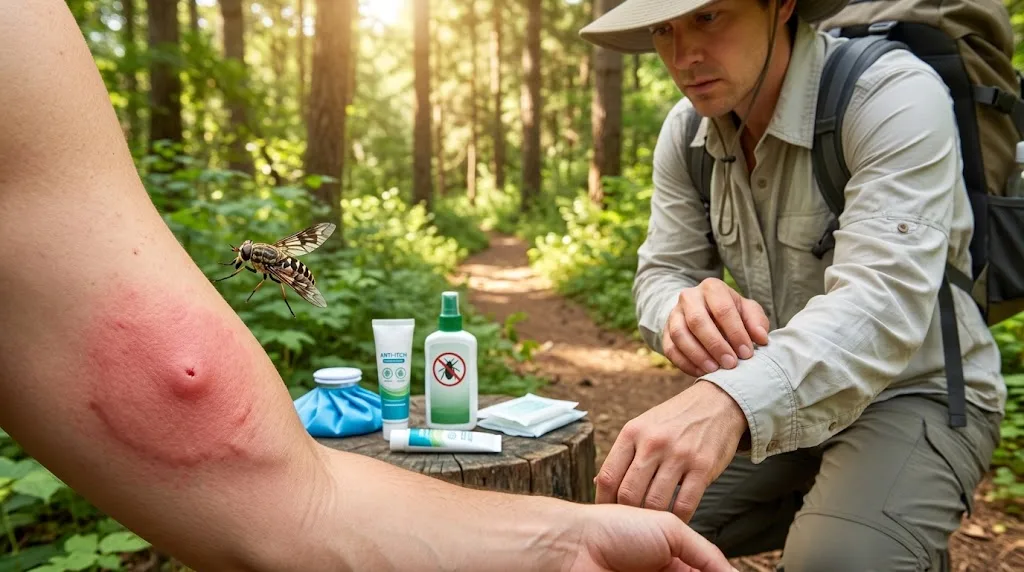
A deer fly bite occurs when a female deer fly lands on a person or animal and cuts through the skin to obtain blood. Unlike a mosquito, which uses specialized mouthparts to pierce the skin, deer flies have blade-like structures that physically lacerate tissue and allow blood to pool. University of Florida entomology guidance explains that their mandibles and maxillae penetrate the skin through a scissor-like action, creating a deeper wound that produces flowing blood. This feeding method is one reason the bite can produce immediate pain rather than remaining unnoticed until itching begins later. The small skin wound may also remain tender after the fly has moved away.
Only female deer flies bite because they require blood for reproductive development, whereas males primarily feed on pollen and nectar. Deer flies often rely heavily on visual cues when searching for hosts and may repeatedly circle or pursue people, animals, or moving objects before landing. Dark colors, movement, body warmth, carbon dioxide, and other signals can help these insects locate possible blood meals. University of Maryland Extension describes deer flies as strong fliers that commonly follow moving objects and notes that females inflict painful bites. This persistent behavior can make outdoor activities particularly frustrating when deer fly populations are high around trails, wetlands, wooded areas, or livestock environments.
Deer flies are usually smaller than their close relatives, horse flies, although both groups can deliver painful bites. Many deer flies are approximately one-quarter to one-half inch long and may have brownish or dark bodies, patterned wings, and distinctive large eyes. University of Maine Cooperative Extension describes their eyes as often patterned with gold or green and their wings as commonly showing dark bands. Identification can be useful when a painful bite happens outdoors, but you do not need to capture the insect before providing basic first aid. Treat the skin reaction first and consider the likely exposure environment when deciding whether additional monitoring is needed.
The bite itself is not a sting, meaning the deer fly does not leave a stinger behind in the skin. Instead, it feeds directly from the wound created by its cutting mouthparts and introduces saliva that helps maintain blood flow during feeding. The immune system may react to components within that saliva, producing redness, warmth, itching, swelling, or a raised area afterward. Some people develop only a small temporary reaction, while others experience larger local welts that remain uncomfortable for several days. Individual immune responses vary considerably, so two people bitten at the same location can develop very different-looking skin reactions even when exposed to the same species.
A deer fly bite is therefore best understood as a small traumatic skin wound combined with an inflammatory reaction to insect saliva. That combination explains why it may initially bleed, sting sharply, and then become itchy or swollen later. Most bites are self-limited, but scratching or repeatedly touching the damaged skin can introduce bacteria and increase the chance of a secondary infection. Deer flies also have a limited role in transmitting tularemia in certain geographic regions, which gives them additional medical importance compared with many ordinary nuisance flies. Recognizing these possibilities allows you to monitor the bite appropriately without assuming that every painful reaction is dangerous.
Deer Fly Bite Symptoms and What the Bite Looks Like
The most characteristic symptom is often sudden sharp pain at the exact moment the deer fly bites. Because its mouthparts cut rather than delicately puncture the skin, people frequently notice the insect immediately and may swat it away before it finishes feeding. A small amount of bleeding can occur, particularly if the fly successfully creates the blood pool it needs. Within minutes, the skin may become red or discolored, slightly swollen, tender, or warm around the bite. University of Kentucky entomology information notes that deer fly bites can be very painful and may trigger allergic reactions to salivary secretions released during feeding.
As the immediate pain settles, itching and localized swelling can become more noticeable. The bite may develop into a raised bump, welt, or broader swollen patch depending on how strongly your immune system responds. Cleveland Clinic notes that common insect-bite reactions can include a raised bump, itching, burning, mild swelling, and pain or discomfort around the affected area. Deer fly bites may feel especially tender because there is an actual superficial wound beneath the inflammation. Some people notice a small central mark or crust where the skin was cut, particularly if the bite bled before beginning to close.
Skin reactions do not always look bright red, especially across different skin tones. On lighter skin, inflammation may appear pink, red, or visibly flushed, whereas on darker skin the affected area may look darker, purplish, grayish, or simply more swollen than the surrounding skin. Changes in warmth, tenderness, texture, and size can therefore be just as useful as color when monitoring the bite. A photograph taken soon after the bite can help you determine whether swelling or discoloration is expanding over the next day. Monitoring change is more informative than trying to match your skin exactly to a photograph found online.
A larger local reaction can sometimes produce substantial swelling around the bite without representing an infection or dangerous allergic reaction. For example, a bite on the hand, ankle, or arm may become puffy and uncomfortable as inflammatory fluid accumulates in the surrounding tissues. Cleveland Clinic advises seeking medical evaluation when swelling becomes severe, continues expanding over a larger area, or appears together with symptoms such as trouble breathing or swallowing. Mild localized swelling that gradually improves is much more reassuring. The direction of change matters: a bite becoming less painful and less swollen over time is generally different from one becoming increasingly hot, painful, or widespread.
Systemic symptoms are not expected from an ordinary uncomplicated deer fly bite. Fever, chills, marked fatigue, swollen lymph nodes, persistent headache, breathing difficulty, widespread hives, vomiting, or feeling seriously unwell deserve more attention than a small itchy welt. In particular, fever combined with a persistent ulcer or noticeably enlarged lymph nodes after a deer fly exposure can raise concern for tularemia in areas where transmission occurs. The CDC describes ulceroglandular tularemia as involving a skin ulcer accompanied by swelling of nearby lymph glands, often after a tick or deer fly bite. These findings do not mean every unusual-looking bite is tularemia, but they justify medical evaluation.
Why Deer Fly Bites Hurt More Than Many Other Bug Bites
The painful nature of a deer fly bite comes largely from the insect’s cutting-and-feeding strategy. Instead of slipping a narrow feeding tube into the skin, female deer flies use specialized blade-like mouthparts to cut tissue and create a pool of blood. University of Florida entomology guidance describes the mandibles and maxillae as operating in a scissor-like action that produces relatively deep wounds. The fly then uses other mouthparts to take up blood from the wound. Because small nerve endings are mechanically irritated during this cutting action, pain commonly begins immediately rather than developing several minutes after the insect leaves.
The insect’s saliva adds another component to the reaction. Blood naturally begins clotting after tissue is damaged, which would make feeding difficult for an insect trying to drink from an exposed blood pool. Deer fly saliva contains substances that help maintain the feeding conditions needed by the fly, and the human immune system can react to these foreign proteins. That response contributes to itching, swelling, warmth, and inflammation around the bite after the initial cutting pain has passed. University of Colorado Extension notes that deer fly feeding introduces salivary chemicals that prevent coagulation and help maintain blood flow. The same saliva can contribute to welts or allergic reactions in susceptible individuals.
A mosquito bite usually feels different because mosquito mouthparts are adapted to pierce the skin and locate blood vessels rather than openly cutting a larger superficial wound. Many mosquito bites initially go unnoticed, with itching and swelling developing after the immune system responds to mosquito saliva. Deer flies, by comparison, commonly produce an obvious sharp sensation while they are feeding. Their bites may bleed more visibly and remain sore when touched. This difference can help explain why someone outdoors may instantly identify a deer fly attack even before seeing the insect, whereas mosquito exposure may not become obvious until itchy bumps appear later.
Horse fly and deer fly bites are much more similar because the insects belong to the same family and use related feeding strategies. Horse flies are generally larger, while deer flies tend to be smaller and frequently show dark patterns on their wings. University of Maryland Extension notes that horse flies commonly range from approximately three-eighths to over one inch in length, while deer flies are generally around one-quarter to one-half inch. Both can cause painful bleeding bites, so identifying the exact insect from the skin reaction alone may be difficult. Fortunately, basic first aid for an uncomplicated bite is generally similar regardless of which tabanid fly caused it.
The wound can also remain uncomfortable because the insect has physically broken the skin rather than causing only a superficial inflammatory bump. Movement, clothing friction, sweat, repeated touching, and scratching may continue irritating the area after the bite. If a bite occurs near an ankle, hand, scalp, or another sensitive location, even modest swelling can feel disproportionally uncomfortable. Keeping the area clean and reducing inflammation often helps more than repeatedly applying numerous home remedies. The distinctive pain of a deer fly bite is therefore explainable through anatomy and immune response rather than evidence that the insect has injected a dangerous venom into every person it bites.
How to Treat a Deer Fly Bite at Home
Begin deer fly bite treatment by moving away from the area if flies are continuing to attack, then wash the bite gently with soap and clean water. Cleaning is important because the fly has created a break in the skin that can provide an entry point for ordinary bacteria. Pat the area dry rather than aggressively rubbing it, especially if it is still bleeding or tender. If there is minor bleeding, gentle direct pressure with a clean cloth or gauze can usually help it stop. Unlike a bee sting, there is normally no stinger to remove because deer flies feed using cutting mouthparts and then fly away.
Once the skin is clean, use a cold compress to reduce pain and swelling. Wrap an ice pack or ice in a cloth instead of placing frozen material directly against the skin, which can cause additional tissue injury. Mayo Clinic recommends applying a cold damp cloth or wrapped ice for approximately 10 to 20 minutes when treating mild insect-bite or sting reactions. If the bite is on an arm or leg, elevating the area may also help limit swelling. Cold treatment can be repeated periodically during the first several hours according to comfort, provided the skin is protected from excessive cold exposure.
Itching can often be managed with an appropriate anti-itch treatment. Mayo Clinic lists options for mild insect reactions that can include calamine lotion, low-strength hydrocortisone cream, and oral antihistamines such as cetirizine, fexofenadine, or loratadine when they are appropriate for the individual. Follow package directions and ask a pharmacist or healthcare professional when choosing medication for a child, during pregnancy, or if you have medical conditions or take other medicines. Avoid applying creams deep inside an open or actively bleeding wound unless the product is specifically intended for that type of use.
Pain usually improves as the local inflammation decreases, but an over-the-counter pain reliever may be useful for some people. Medication choice depends on age, allergies, pregnancy status, existing health conditions, and other medicines being taken, so package instructions and professional advice should guide use. More medication is not necessarily better, and combining products without checking their ingredients can lead to accidental duplication. A deer fly bite should not normally require prescription pain treatment. If pain becomes increasingly intense rather than gradually easing, especially when accompanied by spreading warmth, swelling, drainage, or fever, medical assessment becomes more important than continuing to add home treatments.
The most important home-care rule is do not scratch the bite, even when itching becomes intense. Scratching can reopen the wound, damage surrounding skin, and introduce bacteria from the fingers or underneath the nails. Cleveland Clinic notes that breaking the skin through scratching can raise the risk of developing a secondary bacterial infection such as cellulitis. Keep fingernails short, use a cold compress when the urge to scratch becomes strong, and cover the area lightly if clothing or unconscious scratching repeatedly irritates it. A simple treatment routine of cleaning, cooling, itch control, and observation is enough for most uncomplicated deer fly bites.
How Long Does a Deer Fly Bite Last?
Most uncomplicated bites should begin improving over the first few days, although the exact deer fly bite healing time depends on the size of the wound and the person’s inflammatory response. Initial sharp pain commonly decreases relatively quickly, while swelling, itching, and tenderness may remain longer. University of Kentucky entomology guidance notes that irritation and swelling from horse and deer fly bites often disappear within roughly a day, although reactions can vary significantly between individuals. Cleveland Clinic more broadly notes that itching and mild swelling from many insect bites clear within several days, while some reactions can take a week or two to resolve fully.
A small scab may form where the fly cut the skin, particularly if the wound bled noticeably. Allow that crust to protect the healing tissue instead of picking or repeatedly peeling it away. Mild itching around a healing wound can occur as inflammation changes, but the overall trend should move toward less swelling, discomfort, and irritation. The affected area may remain slightly discolored after tenderness disappears, especially if there was bruising or a stronger local inflammatory response. Skin tone and individual healing patterns influence how visible the mark remains, so color alone does not provide an exact measure of whether recovery is proceeding normally.
Some people experience large local reactions that remain swollen longer than the average bite. The swelling may expand beyond the tiny original wound and feel warm or firm while the immune response is active. This can look alarming, but inflammation does not automatically mean bacterial infection. Compare the area over time and consider whether pain, warmth, redness or discoloration, and swelling are stabilizing or worsening. Cleveland Clinic recommends medical evaluation when swelling gradually expands across more skin, becomes severe, or develops with symptoms affecting other parts of the body. Taking a daily photograph beside a reference object can make progression easier to judge.
Scratching can significantly extend healing time because it repeatedly damages skin that is trying to repair itself. An uncomplicated bite can become an open sore, crust repeatedly, and remain irritated much longer when scratched several times each day. Bacteria can also enter the damaged tissue and create an infection that produces increasing pain, warmth, swelling, or drainage. Keeping the wound clean and controlling itching therefore affects both comfort and recovery. If the bite is located under tight clothing or footwear, reducing friction may also help prevent repeated mechanical irritation while the skin closes.
Healing should be evaluated according to symptoms rather than an exact calendar deadline. A bite that remains faintly visible after a week but is steadily becoming smaller and less uncomfortable is generally different from one that becomes increasingly painful, ulcerated, swollen, or associated with fever. Persistent or worsening symptoms deserve medical advice, particularly after a known deer fly exposure in a region where tularemia occurs. Mayo Clinic recommends contacting a healthcare professional when insect-bite swelling worsens, infection appears, or the person begins feeling unwell. When the course does not look like ordinary healing, evaluation is safer than repeatedly trying new home remedies.
Deer Fly Bites, Infection and Tularemia Risk
A common complication of any bite that breaks the skin is secondary bacterial infection. Bacteria normally present on the skin, fingers, or surrounding environment can enter when the wound is repeatedly scratched or contaminated. Warning signs may include increasing pain, warmth, swelling, tenderness, drainage, or discoloration spreading beyond the original bite. Fever or feeling increasingly unwell can suggest that the problem is no longer a simple local irritation. Mayo Clinic’s wound-care guidance identifies increasing pain, swelling, warmth, fever, drainage, and spreading discoloration among reasons to seek medical care for an infected wound.
Cellulitis is one possible skin infection that can develop after bacteria enter damaged tissue. The insect itself does not have to transmit the bacteria responsible for cellulitis; scratching and damage to the skin barrier can allow ordinary bacteria to gain access. Cleveland Clinic specifically warns that scratching an itchy bug bite can break the skin and increase the risk of cellulitis. The affected area may become increasingly warm, tender, swollen, and discolored rather than gradually improving. Cellulitis generally requires medical evaluation and may need antibiotic treatment, so worsening inflammation should not simply be assumed to be a strong allergic reaction.
Deer flies are also associated with tularemia, a bacterial illness caused by Francisella tularensis. The CDC states that deer flies have been shown to transmit tularemia in the western United States, and infections acquired through deer fly or tick bites commonly develop in ulceroglandular or glandular forms. Tularemia remains uncommon, so a deer fly bite does not mean a person is likely to become infected. However, knowing the connection is useful because a healthcare professional may not immediately suspect a relatively rare disease unless the patient mentions recent deer fly exposure, outdoor activity, or contact with potentially infected wildlife.
The CDC reports that tularemia symptoms commonly begin after an incubation period of about three to five days, although the documented range extends from one to 21 days. General symptoms can include fever, chills, headache, fatigue, muscle aches, reduced appetite, and other systemic complaints. Ulceroglandular disease can produce a skin ulcer where the bacteria entered together with swollen nearby lymph nodes, while glandular disease may cause lymph-node swelling without a visible ulcer. A person who develops these symptoms after a deer fly bite should tell the healthcare professional specifically about the exposure because that information can help guide appropriate testing and diagnosis.
Tularemia is treatable with antibiotics, but suspected infection should be evaluated by a healthcare professional rather than treated using leftover medication at home. The CDC describes tularemia as a potentially serious illness while noting that most infections can be successfully treated with appropriate antibiotics. Treatment decisions depend on the type and severity of disease, the patient’s circumstances, and current medical recommendations. Tularemia is not the expected outcome from an ordinary deer fly bite, so there is no reason to panic after every exposure. The useful approach is recognizing unusual symptoms, monitoring the bite, and mentioning the deer fly encounter if illness develops afterward.
When Should You See a Doctor for a Deer Fly Bite?
Most deer fly bites do not require a medical appointment, particularly when pain and swelling remain localized and begin improving with basic first aid. Contact a healthcare professional, however, if the bite becomes progressively more painful, swollen, hot, or discolored instead of improving. Drainage, pus, worsening tenderness, red or dark spreading streaks, or fever can indicate infection and deserve evaluation. Mayo Clinic advises seeking medical care when an insect bite shows signs of infection, swelling becomes worse, or the affected person begins feeling unwell. People with conditions or medications that significantly affect immune function may also need a lower threshold for professional advice.
A severe allergic reaction is an emergency rather than something to monitor at home. Symptoms such as difficulty breathing, swelling of the lips, tongue, face, or throat, dizziness, fainting, widespread hives, or significant gastrointestinal symptoms can indicate anaphylaxis. Mayo Clinic recommends calling emergency services immediately for serious reactions after an insect bite or sting, particularly when breathing or circulation appears affected. If the person has been prescribed an epinephrine auto-injector for previous severe allergies, follow their emergency action plan while arranging urgent medical care. Do not wait to see whether breathing problems disappear without treatment.
Large swelling alone is not always an emergency, but it deserves attention when it continues spreading or interferes with normal function. A bite near the eye, mouth, hand, or another sensitive area can also create more practical problems than the same reaction on a larger area of the arm or leg. Seek advice if the eye becomes significantly swollen, vision changes, movement becomes difficult, or swelling affects swallowing or breathing. Children may also have trouble explaining symptoms clearly, so caregivers should monitor behavior, hydration, breathing, and general condition alongside the appearance of the bite. When uncertain about a rapidly changing reaction, professional assessment is safer than diagnosing the cause from photographs.
Seek medical advice if tularemia-like symptoms appear during the days or weeks following a possible deer fly exposure. Fever combined with an ulcer at the bite location, significantly swollen lymph nodes, chills, unusual fatigue, headache, or other systemic symptoms should prompt a conversation with a healthcare professional. CDC guidance specifically advises telling clinicians about likely exposures such as deer fly bites because tularemia can resemble more common illnesses and may otherwise be difficult to recognize. Mention when and where the bite occurred and whether you had other wildlife, tick, landscaping, hunting, or outdoor exposures around the same period.
Medical assessment is also appropriate when the bite simply is not healing normally. A small wound that repeatedly opens, enlarges into an ulcer, becomes increasingly painful, or remains significantly inflamed beyond the expected recovery period deserves evaluation even without fever. Several different conditions can resemble an insect bite, including bacterial infections, other arthropod exposures, allergic skin conditions, and unrelated lesions that happen to appear after outdoor activity. A clinician can examine the area directly and decide whether testing, wound treatment, prescription medication, or simple continued observation is appropriate. You do not need to identify the exact insect with certainty before seeking help when symptoms themselves are concerning.
How to Prevent Deer Fly Bites Outdoors
The most reliable approach to deer fly bite prevention is combining protective clothing, suitable insect repellent, and awareness of environments where the flies are active. CDC tularemia prevention guidance recommends wearing long pants, long sleeves, and long socks when hiking, camping, or working outdoors in areas where deer flies and ticks may be present. Lightweight tightly woven clothing can provide coverage without becoming excessively uncomfortable during warm weather. A hat can also help because deer flies may repeatedly circle around the head. Tucking clothing appropriately can reduce exposed areas where biting insects have easy access to skin.
Use an EPA-registered insect repellent according to the product label when exposure is likely. Current CDC tularemia guidance lists active ingredients including DEET, picaridin, IR3535, oil of lemon eucalyptus, para-menthane-diol, and 2-undecanone among EPA-registered options for preventing relevant insect exposures. Repellent effectiveness against particular biting flies can vary by product and conditions, so no topical repellent should be treated as an invisible barrier that prevents every bite. Apply only as directed and reapply according to label instructions rather than using excessive amounts. EPA guidance also advises keeping DEET away from cuts, wounds, irritated skin, and the hands or immediate eye and mouth area of young children.
Clothing color may influence how strongly deer flies investigate potential hosts. University of Florida notes that these flies rely heavily on sight and that moving objects, particularly dark-colored ones, can be especially attractive to them. Colorado State University similarly reports that shades including blue, black, or red can act as visual cues for certain deer flies. Wearing lighter clothing may therefore be a useful additional strategy when hiking or working in areas with heavy fly activity, although it cannot guarantee protection. Clothing coverage and repellent remain more important than relying on color alone.
Timing and location also matter because deer flies are generally daytime biters and are strongly associated with moist environments. Their larvae commonly develop around ponds, marshes, streams, wetlands, mud, and other damp habitats, which is why adults can become particularly abundant in certain outdoor areas. University of Maryland Extension notes that female deer flies deposit eggs around damp locations and that adult flies are active during warm periods and capable of following moving objects. If a trail, fishing area, campsite, or woodland edge suddenly has extremely heavy deer fly activity, changing location may be more effective than repeatedly swatting persistent insects.
Large-scale control of deer flies around a property can be difficult because adult insects are strong fliers and their breeding habitats may extend far beyond an individual yard. University of Florida notes that conventional population management is challenging, although certain traps can reduce nuisance numbers in limited settings such as yards, campsites, or swimming areas. Eliminating every nearby deer fly is therefore rarely realistic. Personal protection remains the more practical objective when spending time outdoors during periods of high activity. Combining appropriate clothing, repellent, lighter colors, location awareness, and prompt treatment of any bite provides a sensible strategy for reducing both discomfort and complications.
What does a deer fly bite look like?
A deer fly bite may appear as a painful red or discolored bump, welt, or swollen patch with a small central wound where the skin was cut. It may bleed initially and later become itchy, tender, warm, or mildly swollen.
How do you treat a deer fly bite?
Wash the area gently with soap and water, apply a wrapped cold compress for about 10 to 20 minutes, and avoid scratching. Calamine, low-strength hydrocortisone, an appropriate antihistamine, or an over-the-counter pain reliever may help some people when used according to directions.
How long does a deer fly bite take to heal?
Pain and mild swelling often improve within the first few days, although itching or discoloration can sometimes last longer. Seek medical advice if the wound becomes progressively more painful, swollen, infected, ulcerated, or fails to improve normally.
Can deer flies spread disease?
Yes, but disease transmission is uncommon. In the United States, infected deer flies can transmit the bacterium that causes tularemia, particularly in western regions, and symptoms can include fever, swollen lymph nodes, and sometimes an ulcer at the bite site.
When is a deer fly bite an emergency?
Seek emergency medical help for difficulty breathing, swelling of the face or throat, fainting, widespread hives, or other signs of a serious allergic reaction. Seek prompt medical care for worsening infection signs or fever and swollen lymph nodes after a deer fly bite.