


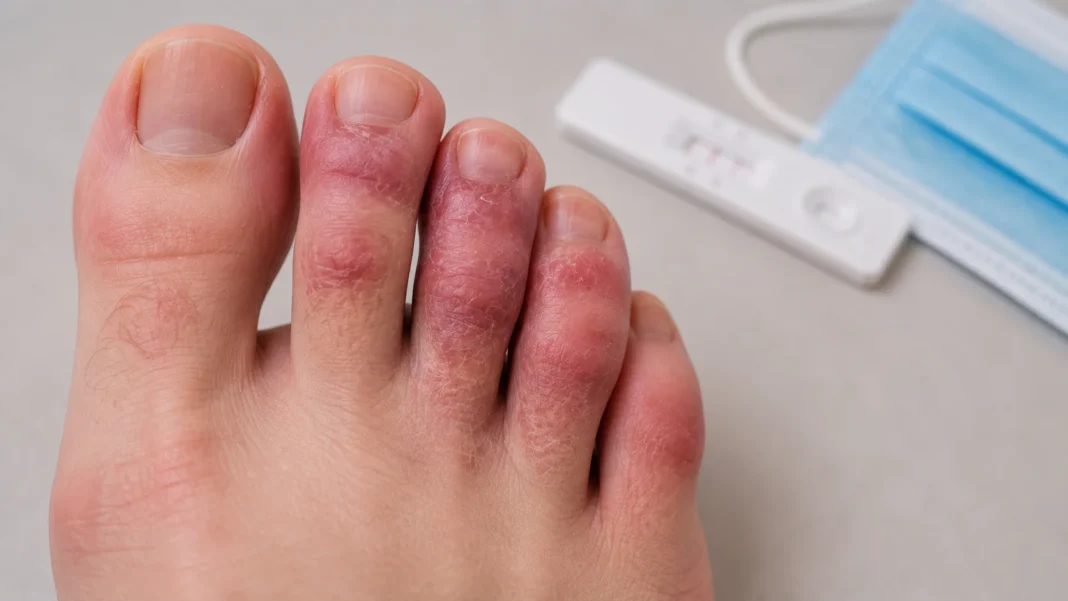
COVID Toes: Symptoms, Causes & Treatment Options
COVID toes are red, purple, swollen, or irritated areas that usually develop on the toes and sometimes the fingers. The condition became widely discussed during the COVID-19 pandemic because doctors began seeing chilblain-like skin changes in people who had recently experienced, or were suspected of having, SARS-CoV-2 infection. These lesions can resemble ordinary chilblains, also known as pernio, which usually occur after exposure to cold and damp conditions. COVID toes may itch, burn, hurt, or feel tender, although some people experience very little discomfort. They have been reported most often in children, teenagers, and younger adults, but people of any age can develop similar skin changes. The relationship between these lesions and COVID-19 is complex and continues to be interpreted carefully.
Having purple or red toes does not automatically mean someone has COVID-19. Many other conditions can cause similar discoloration, including ordinary chilblains, Raynaud’s phenomenon, circulation problems, pressure injuries, autoimmune conditions, infections, and certain blood vessel disorders. Some people who developed chilblain-like lesions during the pandemic repeatedly tested negative for active coronavirus infection and did not develop measurable antibodies. This has led researchers to explore whether a strong early immune response, environmental changes, behavior during lockdowns, or other factors could contribute. Because several conditions can look alike, diagnosis usually depends on the appearance of the skin, recent symptoms, environmental exposure, medical history, and sometimes testing.
In many cases, COVID toes are mild and gradually improve without aggressive treatment. Keeping the feet comfortable, avoiding extreme cold, protecting irritated skin, and using clinician-recommended treatments for itching or inflammation may help. However, severe pain, rapidly worsening discoloration, open sores, signs of infection, or black tissue require medical evaluation because those findings are not typical of uncomplicated chilblain-like lesions. People with diabetes, circulation disease, autoimmune conditions, or weakened immunity may also need earlier assessment. This guide explains COVID toes symptoms, possible causes, treatment options, recovery, and when toe discoloration could signal something more serious.
What Are COVID Toes?
COVID toes is an informal term used to describe chilblain-like skin lesions that became associated with the COVID-19 pandemic. The medical appearance often resembles pernio, a condition in which small blood vessels in the skin react abnormally to cold exposure. Affected toes may become red, purple, pink, or darkened and can look swollen or inflamed. Some lesions appear as isolated spots, while others affect several toes at once. Fingers can occasionally be involved as well. Because the appearance overlaps with other skin and circulation disorders, the term COVID toes describes a pattern rather than one laboratory-confirmed diagnosis.
One unusual feature is that many people who developed these lesions were otherwise healthy and often had mild or no respiratory symptoms. Some reported fever, fatigue, sore throat, headache, or other symptoms before the skin changes appeared, while others never noticed typical COVID symptoms. In certain cases, toe lesions developed after the respiratory illness had already improved. This timing raised the possibility that the skin changes could represent a delayed immune response rather than direct viral damage to the skin. However, not everyone with these lesions had evidence of SARS-CoV-2 infection. The relationship therefore remains less straightforward than the name suggests.
COVID toes are usually considered different from the dangerous blood clots that can occur in severe systemic illness. Chilblain-like lesions typically affect small areas of skin and are often seen in people who are otherwise stable. Severe COVID-related clotting problems, by contrast, generally occur in much sicker patients and can affect larger blood vessels or organ circulation. The appearance can sometimes overlap, which is why severe pain, black discoloration, coldness, numbness, or loss of circulation deserves urgent assessment. Ordinary COVID toes are more often itchy, tender, swollen, and reddish-purple rather than rapidly dying tissue.
The condition became particularly noticeable early in the pandemic, when dermatologists in multiple regions began seeing unusual clusters of chilblain-like lesions. Many affected patients were young and had not experienced the typical cold exposure associated with winter pernio. This pattern generated substantial interest because skin changes can sometimes provide clues about how the immune system responds to infection. Later observations suggested that factors such as staying indoors, walking barefoot on cold floors, and lifestyle changes might also have influenced the rise in chilblain-like symptoms. The explanation may therefore involve more than one factor.
COVID toes should ultimately be understood as a clinical description rather than proof of current coronavirus infection. A person with red or purple toes may have ordinary chilblains, dermatitis, circulation problems, or another skin disorder instead. Testing decisions depend on symptoms, exposure history, and current public health recommendations rather than the toe appearance alone. If the lesions are persistent, painful, recurrent, or associated with other unusual symptoms, a healthcare professional can evaluate the pattern more carefully. The goal is to determine whether the skin changes are harmless inflammation or part of another condition requiring treatment.
COVID Toes Symptoms and Appearance
The most common symptom is discoloration affecting one or more toes. Skin may appear red, pink, purple, bluish, or dark brown depending on skin tone and the stage of inflammation. On darker skin, the color change may look more purple, gray, deep brown, or less obviously red than it does on lighter skin. Swelling can make the toes appear slightly enlarged or puffy. Some people develop raised bumps or patchy areas rather than uniform discoloration. The lesions commonly affect the tips or sides of the toes, although the exact location varies.
Itching is frequently reported and can range from mild irritation to a strong urge to scratch. Burning, tingling, tenderness, or mild pain may occur as well. Symptoms can feel worse when the feet warm up after being cold, similar to ordinary chilblains. Scratching can damage the skin surface and increase the risk of secondary infection. Keeping nails short and using gentle skin care can help protect irritated areas. Persistent severe itching may require a clinician-recommended topical treatment rather than repeated scratching or strong over-the-counter products.
Some lesions develop small blisters, crusting, or superficial skin breakdown. These changes may appear as inflammation progresses or as irritated skin becomes damaged. Mild peeling can occur during healing. Open ulcers are less typical and deserve more attention, especially if they are painful, draining, or slow to heal. People with diabetes or poor circulation should take any foot ulcer seriously because healing may be slower and infection risk may be higher. Skin that becomes black, rapidly worsening, or extremely painful requires urgent evaluation rather than routine home care.
COVID toes can sometimes occur alongside general symptoms associated with viral illness. These may include fever, cough, sore throat, headache, fatigue, muscle aches, or changes in smell or taste, although many people with chilblain-like lesions have no obvious systemic illness. The skin changes can also appear days or weeks after other symptoms. This delayed timing may make it difficult to connect the toe lesions with a previous infection. Because similar lesions can occur for unrelated reasons, the presence or absence of other symptoms remains an important part of evaluation.
Duration varies considerably. Some people improve within a couple of weeks, while others have lesions that persist longer or recur. Swelling and discoloration may gradually fade rather than disappear overnight. Mild residual sensitivity or color changes can remain during recovery. If lesions continue for many weeks, repeatedly return without cold exposure, or are associated with joint pain, unusual fatigue, ulcers, or other systemic symptoms, further evaluation may be appropriate. Persistent pernio-like lesions can occasionally be associated with autoimmune or connective tissue conditions that have nothing to do with COVID-19.
What Causes COVID Toes?
The exact mechanism behind COVID toes has not been fully established, and several explanations have been proposed. One leading theory involves an unusually strong immune response to SARS-CoV-2. Some younger people may produce a rapid interferon response that helps control the virus effectively before high viral levels develop. That strong immune signaling could potentially contribute to inflammation in tiny blood vessels within the skin. This could help explain why some people with chilblain-like lesions had negative PCR tests and no detectable antibodies. Their immune systems may have responded quickly enough that conventional testing did not capture clear evidence of infection.
Small blood vessels in the toes may also become inflamed during certain immune responses. The toes are particularly vulnerable because they are distant from the body’s core and naturally experience greater fluctuations in temperature and circulation. Inflammation around these vessels can produce swelling, redness, purple discoloration, burning, and tenderness. This resembles the vascular response seen in ordinary chilblains. Whether the inflammation is triggered directly by viral infection, indirectly by immune signaling, or by another environmental factor may vary between individuals. This uncertainty is one reason the term COVID toes should be used cautiously.
Cold exposure may contribute in some cases. During periods when people spent more time at home, changes such as walking barefoot indoors, reduced activity, or spending time in cooler environments could have increased ordinary chilblain risk. A person who develops purple toes during winter after repeated cold exposure may therefore have classic pernio rather than a virus-related condition. The appearance of the two can be nearly identical. Temperature history is an important clue when a clinician evaluates the lesions. Avoiding cold and damp conditions may improve both types.
Changes in circulation can also influence skin color, although severe circulation failure is not considered the typical mechanism of uncomplicated COVID toes. Small-vessel constriction and inflammation can make toes appear purple or red without completely blocking blood flow. Severe arterial obstruction usually causes a colder, more painful, pale, blue, or black extremity and represents a very different medical problem. A toe that becomes suddenly numb, extremely painful, or black should not be assumed to be COVID toes. Emergency circulation problems require immediate assessment because tissue can become damaged quickly.
Genetics, immune sensitivity, age, hormones, and underlying health may influence who develops chilblain-like skin changes. Younger people appeared frequently in early reports, possibly because their immune systems can mount strong antiviral responses. However, age alone cannot confirm the diagnosis. Similar lesions can occur in adults with autoimmune disease or recurrent pernio. The most accurate explanation is therefore that COVID toes may result from a combination of immune, vascular, environmental, and individual factors rather than one simple cause.
Who Is Most Likely to Get COVID Toes?
Children, teenagers, and young adults were among the groups most often described with chilblain-like lesions during the pandemic. Many were otherwise healthy and experienced either mild COVID symptoms or no obvious respiratory illness. One possible explanation is that younger immune systems can respond quickly to viral exposure, limiting the infection while producing strong local inflammatory effects. However, younger age does not make COVID toes exclusive to children or adolescents. Adults can develop similar lesions as well. Age should therefore be treated as one clue rather than a diagnostic rule.
People with a personal history of ordinary chilblains may also be more likely to experience similar episodes during cold weather or illness. Their small blood vessels may already react strongly to temperature changes. If someone has repeatedly developed purple, itchy toes every winter for years, a new episode may be ordinary pernio rather than COVID-related. Comparing the current episode with previous ones can be helpful. A sudden first episode occurring outside cold weather may be more unusual and may justify closer evaluation depending on other symptoms.
Individuals with autoimmune or connective tissue diseases can develop chilblain-like lesions for reasons unrelated to COVID-19. Lupus and certain other autoimmune disorders can affect small blood vessels and skin, sometimes producing recurrent lesions on the fingers or toes. These cases may persist longer and can occur together with joint pain, fatigue, rashes, or other systemic symptoms. A person with repeated unexplained episodes should therefore not assume that coronavirus exposure is the only explanation. Medical evaluation can help identify whether autoimmune testing is appropriate.
People with circulation problems may develop blue or purple toes for entirely different reasons. Peripheral artery disease, emboli, vasculitis, severe Raynaud’s phenomenon, and other vascular disorders can change blood flow to the extremities. These conditions are generally more concerning when symptoms include severe pain, numbness, cold skin, open ulcers, or tissue damage. Older adults and people with diabetes, smoking history, high cholesterol, or known vascular disease may have a different risk profile from otherwise healthy young people with mild chilblain-like lesions. The clinical context therefore matters significantly.
Environmental exposure remains relevant as well. People who spend long periods in cold, damp conditions, wear wet socks, or walk barefoot on cold surfaces can develop ordinary chilblains without any infection. Thin footwear and poor insulation may increase susceptibility. The toes are especially vulnerable because peripheral circulation naturally decreases in cold conditions. If lesions improve with warmth and do not recur outside cold weather, classic pernio may be a more likely explanation. A healthcare professional can consider season, temperature exposure, symptoms, and medical history together.
COVID Toes vs. Chilblains, Raynaud’s and Other Conditions
Ordinary chilblains are probably the condition most easily confused with COVID toes. Chilblains develop when small blood vessels react abnormally to cold temperatures, causing red or purple swollen patches that may itch or burn. They often appear several hours after cold exposure and can last for days or weeks. COVID toes look extremely similar, which makes it difficult to distinguish the two based on appearance alone. A recent viral illness, lack of cold exposure, and timing may provide clues, but none is definitive. In many cases, the safest description is simply chilblain-like lesions.
Raynaud’s phenomenon produces a different pattern of color change. Fingers or toes typically become pale or white after exposure to cold or emotional stress, then may turn blue before becoming red as blood flow returns. Episodes often last minutes to hours rather than producing fixed swollen lesions for several days. Tingling, numbness, or throbbing can occur during the color changes. Some people have primary Raynaud’s without another disease, while others have secondary Raynaud’s associated with autoimmune conditions. Persistent sores or severe symptoms deserve medical evaluation.
Acrocyanosis can cause persistent bluish discoloration of the hands or feet, particularly in cold conditions. Unlike painful ischemia, the affected skin may remain relatively comfortable and the color can be symmetrical. The condition is related to small-vessel circulation and can be mistaken for other vascular problems. COVID toes, by comparison, often produce more localized inflamed patches or bumps. A clinician may assess skin temperature, pulses, distribution, and response to warmth when differentiating the conditions. Photographs taken during an episode can sometimes be useful if the color has changed by the time of the appointment.
Contact dermatitis, fungal infections, insect bites, and pressure injuries can also resemble parts of the COVID toes picture. Shoes that rub against the toes may create redness, blisters, or tenderness, while fungal infections can cause peeling and itching. Allergic reactions to footwear materials may produce inflammation across areas contacting the shoe. These conditions usually have different patterns once the skin is examined closely. Reviewing footwear, recent activities, and skin symptoms can help narrow the cause. Not every red toe during or after COVID infection should automatically be labeled COVID toes.
Serious vascular conditions deserve particular distinction. A blood clot or arterial blockage may cause sudden severe pain, pale or blue discoloration, numbness, cold skin, or loss of pulse. Vasculitis can produce purplish spots, ulcers, or systemic symptoms depending on severity. These conditions may threaten tissue or indicate broader illness and require medical assessment. Uncomplicated chilblain-like lesions are generally less dramatic and often occur in otherwise well individuals. Rapidly worsening discoloration should always be taken more seriously than stable mild redness or itching.
How COVID Toes Are Diagnosed
Diagnosis usually begins with a visual examination and a detailed history. A healthcare professional may ask when the lesions started, whether they itch or hurt, whether the feet were exposed to cold, and whether there were recent respiratory or viral symptoms. They may also ask about previous episodes of chilblains, autoimmune disease, medications, circulation problems, and family history. The distribution of lesions can provide clues. Symmetrical involvement of several toes may suggest a different process from one suddenly painful dark toe with reduced circulation.
COVID testing may be considered depending on symptoms, recent exposure, and current clinical circumstances. However, a negative test does not automatically explain or exclude chilblain-like lesions because many reported patients had negative viral tests. Timing matters, since PCR or antigen tests are most useful during particular stages of infection. Antibody tests also have limitations and may not detect every previous infection. The toe appearance therefore cannot be used as a stand-alone test for COVID-19. Clinical context remains necessary.
Blood tests are not always needed for mild lesions that clearly resemble ordinary chilblains and improve over time. Persistent or recurrent cases may prompt evaluation for autoimmune conditions, inflammation, anemia, clotting abnormalities, or other causes depending on the symptoms. Someone with joint pain, mouth ulcers, unusual fatigue, or other systemic signs may require a different workup from a healthy teenager with one mild episode. Testing should be targeted rather than performed automatically in every case. The goal is to rule out meaningful alternative diagnoses.
A skin biopsy is rarely required for straightforward mild lesions. It may be considered when the diagnosis remains uncertain or when doctors need to distinguish among inflammatory, vascular, or autoimmune skin diseases. A small sample of tissue can show changes around blood vessels and other features under a microscope. Biopsy findings can support a diagnosis but may not always identify one specific cause. The decision depends on severity, duration, and how much uncertainty remains after clinical assessment.
Circulation testing may be necessary when symptoms suggest reduced blood flow rather than simple inflammation. A clinician may check pulses, skin temperature, capillary refill, and blood pressure in the limbs. Ultrasound or other vascular imaging can be used if an arterial blockage is suspected. Sudden severe pain or black tissue requires much faster evaluation than ordinary itchy red-purple patches. Proper diagnosis is important because treatments for chilblains and true ischemia are very different.
COVID Toes Treatment Options
Many mild cases improve without specific medical treatment. The main approach is to protect the skin, keep the feet comfortably warm, and avoid repeated cold exposure. Warm socks and appropriate footwear can help, but extreme heat should be avoided because rapidly heating inflamed skin may increase burning or discomfort. Heating pads and very hot water can also cause burns, particularly when sensation is reduced. Gentle warming is safer than intense direct heat. Keeping the feet dry is equally important because dampness can worsen chilblain-type reactions.
Moisturizers can help when the skin becomes dry, cracked, or irritated. A simple fragrance-free moisturizer is often less likely to cause irritation than strongly scented creams. If itching becomes significant, a healthcare professional may recommend a topical corticosteroid or another treatment depending on the appearance of the lesions. These medicines should be used according to instructions because prolonged inappropriate steroid use can thin the skin. Scratching should be minimized to prevent open wounds and secondary infection. Protective socks can help reduce unconscious scratching.
Pain relief may occasionally be needed when toes feel tender or burning. The safest choice depends on age, medical history, kidney function, stomach conditions, medications, and other factors. People should use over-the-counter pain medicines only according to normal safety guidance and should not exceed recommended amounts. Severe pain is not typical enough to simply treat repeatedly at home. If pain is intense, worsening, or associated with numbness or cold skin, medical evaluation is more important than taking stronger pain medication.
For recurrent severe chilblains, doctors sometimes use medications that improve small-vessel circulation, particularly when ordinary warming measures are not enough. These treatments are not necessary for most mild COVID-toes cases and require medical supervision. The choice depends on blood pressure, other medications, and the underlying diagnosis. People should not use circulation drugs or supplements based solely on photos found online. Treating the correct condition matters because a medication helpful for ordinary pernio may not be appropriate for another vascular disorder.
Antibiotics are not routinely needed because COVID toes are not usually caused by a bacterial skin infection. They may become appropriate if scratching, blistering, or skin breakdown leads to secondary infection. Warning signs include spreading redness, increasing warmth, pus, worsening swelling, fever, or increasing tenderness. Antiviral treatment for COVID-19 is also not prescribed solely because chilblain-like lesions are present. Eligibility for antiviral medication depends on active infection, timing, risk factors, and overall illness severity rather than toe appearance alone.
Home Care and Recovery
Keeping feet protected from temperature extremes is one of the most practical home-care measures. Wear warm, dry socks and shoes that allow enough room for swollen or tender toes. Tight footwear can create extra pressure and worsen discomfort. If the feet are cold, warm them gradually rather than placing them directly against a heater. Sudden intense warming can cause throbbing and additional irritation. Maintaining a comfortable indoor temperature may also help people who are prone to chilblains.
Gentle skin care is preferable to aggressive treatment. Wash the feet with mild soap and lukewarm water, then dry thoroughly, especially between the toes. Apply a fragrance-free moisturizer if the skin is dry. Avoid harsh exfoliation, strong acids, or aggressive scrubbing over inflamed areas. These products can damage the skin barrier and make lesions more painful. If blisters are present, avoid deliberately popping them because intact skin helps protect against infection.
Activity can usually continue if walking is comfortable and there are no signs of circulation failure or severe injury. Gentle movement may support normal circulation, but painful exercise should be avoided. People who develop toe soreness during running, hiking, or other activities should consider whether footwear pressure or cold exposure is contributing. Resting briefly may reduce irritation. Significant swelling or pain that prevents normal walking deserves medical assessment. The presence of COVID toes does not require complete bed rest in an otherwise well person.
Recovery is often gradual. The lesions may change from bright red to purple or brown before fading, depending on skin tone and the healing process. Mild peeling can occur as inflammation settles. Some people notice residual sensitivity for a while even after visible changes improve. Photographs taken every few days can help track whether lesions are actually getting better. Constant checking several times per day can make normal slow recovery feel as though nothing is changing.
Recurrent episodes deserve more attention. If similar lesions return every winter, ordinary chilblains may be more likely than a recurring viral manifestation. If they occur repeatedly without cold exposure, last for many weeks, or are accompanied by joint pain, fatigue, mouth ulcers, or other unusual symptoms, discuss the pattern with a healthcare professional. Repeated episodes can sometimes reveal an underlying autoimmune or vascular condition. Long-term management should focus on the actual cause rather than repeatedly labeling every flare COVID toes.
How Long Do COVID Toes Last?
Many chilblain-like lesions improve over several weeks, although the exact duration varies. Mild spots may fade relatively quickly, while more extensive swelling and discoloration can take longer. The skin’s inflammatory response does not resolve instantly even after the trigger is gone. People may notice that itching improves before the color returns to normal. Residual brown or purple discoloration may remain temporarily after pain and swelling have resolved. Gradual improvement is usually more reassuring than a lesion that continues to worsen.
The timing in relation to COVID illness can also vary. Some people develop skin changes while other symptoms are active, but others notice them later. This has supported the theory that at least some cases may represent a delayed immune phenomenon. A person might therefore develop chilblain-like lesions after fever, fatigue, or respiratory symptoms have already disappeared. The delayed timing does not necessarily mean the infection is still active. Testing decisions should be based on current symptoms and exposure rather than assuming toe lesions automatically indicate contagiousness.
Persistent symptoms beyond several weeks are not automatically dangerous, but they deserve closer attention when there is no improvement. Long-lasting lesions may represent ordinary recurrent pernio, autoimmune disease, chronic circulation problems, or another dermatological condition. The likelihood of an alternative diagnosis increases when symptoms repeatedly return or affect the fingers as well as the toes. A clinician may consider further testing when the course does not fit a typical temporary episode. Duration is therefore one useful diagnostic clue.
Some people experience recurrence after apparent recovery. Cold weather may trigger another episode in individuals who are predisposed to chilblains. Recurrent symptoms do not necessarily mean repeated COVID infection. Protecting the feet from cold and damp environments can reduce ordinary pernio flares. If recurrence occurs only during winter, temperature sensitivity may be an important explanation. Episodes happening year-round deserve more investigation.
Scarring is not typical after mild COVID toes. Most people recover without permanent tissue damage when lesions remain superficial and circulation stays intact. Significant ulcers, tissue death, or blackening are not expected features of uncomplicated cases and should prompt urgent evaluation. Skin that heals normally may temporarily look different in color or texture before fully returning to baseline. Protecting recovering skin from friction and injury can support smoother healing.
When Should You Worry About COVID Toes?
Seek urgent medical care if a toe suddenly becomes very painful, numb, cold, blue-black, or difficult to move. These symptoms can suggest severely reduced blood flow rather than uncomplicated chilblains. A true arterial blockage can damage tissue rapidly and requires immediate evaluation. The risk is especially important in people with known vascular disease, diabetes, smoking history, or clotting disorders. Do not wait several days to see whether black tissue improves on its own. Tissue-threatening circulation problems need prompt treatment.
Open sores or ulcers also deserve attention when they are deep, worsening, or slow to heal. People with diabetes may have reduced sensation and may not feel the severity of a foot wound. Infection can develop when broken skin allows bacteria to enter. Increasing redness, pus, swelling, warmth, fever, or red streaks extending from the area are warning signs. A small superficial blister may heal normally, but progressive skin breakdown should not be ignored. Proper wound care can prevent more serious complications.
Seek medical advice when toe lesions occur with significant systemic symptoms. High fever, severe weakness, shortness of breath, chest pain, confusion, or fainting require attention regardless of what the toes look like. These symptoms could indicate active infection, cardiovascular disease, or another serious condition. COVID toes themselves are usually a skin-limited issue and do not explain severe respiratory distress. Emergency symptoms should be treated according to their seriousness rather than attributed to the rash.
Persistent lesions accompanied by joint pain, unexplained fatigue, facial rashes, mouth sores, or other recurring skin problems may suggest an autoimmune condition. Repeated episodes of pernio can occasionally occur with connective tissue disease. This does not mean that everyone with chilblains needs extensive autoimmune testing. The broader symptom pattern helps determine whether additional evaluation is reasonable. Mentioning these associated symptoms to a clinician can guide appropriate testing.
Finally, seek medical evaluation if you are simply uncertain about the diagnosis and the lesions continue to worsen. Many photographs online make different skin conditions look deceptively similar. A clinician can assess circulation, skin temperature, color pattern, swelling, and other features that are difficult to judge from a photo alone. Early evaluation is particularly helpful when pain or skin breakdown is increasing. Most cases are manageable, but identifying the correct condition prevents unnecessary treatments and reduces the chance of overlooking a more serious cause.
Can COVID Toes Be Prevented?
There is no guaranteed method for preventing every chilblain-like lesion associated with illness or immune responses. If a person’s lesions are triggered partly by cold exposure, however, keeping the feet warm and dry can reduce the risk of ordinary pernio. Wear insulated socks in cold weather and change damp footwear promptly. Avoid standing barefoot on cold floors for extended periods if you are prone to chilblains. Protecting the entire body from cold can also help because peripheral blood vessels constrict when core temperature drops. Comfortable warmth is more useful than repeatedly exposing feet to extreme heat.
Regular movement may help support normal peripheral circulation. Sitting still for many hours can leave hands and feet colder, particularly in cool environments. Short walking breaks and gentle activity can improve warmth and reduce prolonged peripheral vasoconstriction. Exercise cannot prevent immune-mediated skin disease, but it supports general cardiovascular health. People with known circulation disorders should follow individualized activity recommendations. Sudden pain or color changes during exercise should be evaluated.
Smoking avoidance is particularly important for vascular health because nicotine causes blood vessels to constrict. People who already experience Raynaud’s phenomenon or chilblain-like symptoms may notice that nicotine worsens peripheral circulation. Smoking also increases long-term cardiovascular risk. Avoiding tobacco therefore offers benefits well beyond toe symptoms. Nicotine-containing products may also affect blood vessels, so people with significant circulation problems should discuss their use with a healthcare professional.
Skin protection can reduce complications even when lesions cannot be completely prevented. Well-fitting shoes reduce rubbing and pressure, while moisturized skin is less likely to crack. Treat athlete’s foot and other skin conditions appropriately because damaged skin provides easier entry for bacteria. People with diabetes should inspect their feet regularly for wounds or color changes. Early recognition of injury is especially important when sensation is reduced. Preventive foot care helps reduce complications from many conditions, not just chilblains.
Preventing COVID infection itself depends on current vaccination, exposure, and public health considerations rather than on any strategy specifically targeting COVID toes. The presence of vaccination does not guarantee that chilblain-like lesions can never occur, and the lesions are not a reliable measure of immunity. People should follow current health recommendations appropriate to their individual risk. If respiratory or systemic symptoms suggest active infection, testing and medical advice may be appropriate regardless of whether toe changes are present. Skin symptoms represent only one part of overall health.
Conclusion
COVID toes describes red, purple, swollen, or irritated lesions that resemble chilblains and became widely recognized during the COVID-19 pandemic. The toes are most commonly affected, although fingers can occasionally develop similar changes. Symptoms may include itching, burning, tenderness, swelling, and changes in skin color. Some people have mild respiratory or viral symptoms before the lesions appear, while others report no obvious illness. Because ordinary chilblains and several vascular or skin conditions can look nearly identical, toe discoloration alone cannot confirm COVID-19.
The underlying cause is still considered complex. A strong antiviral immune response, inflammation around small blood vessels, changes in peripheral circulation, cold exposure, and individual susceptibility may all play roles. Many reported patients with chilblain-like lesions tested negative for active coronavirus infection, making it difficult to prove direct causation in every case. The term COVID toes is therefore useful as a description but should not be interpreted as a definitive diagnosis. Clinical history and physical examination remain important.
Most mild cases improve with conservative care. Keeping the feet comfortably warm and dry, avoiding tight footwear, protecting irritated skin, and using gentle moisturizers can support recovery. Clinician-recommended topical treatments may help with significant inflammation or itching. Antibiotics are unnecessary unless a secondary bacterial infection develops. Strong circulation medications or other therapies should not be started without professional guidance. Mild lesions often fade gradually over several weeks.
More serious symptoms require a different approach. A toe that becomes suddenly cold, numb, severely painful, black, or rapidly worsening may have impaired blood flow and requires urgent medical evaluation. Deep ulcers, pus, spreading redness, or fever can suggest infection. People with diabetes or known circulation problems should be especially careful with foot wounds. Persistent or repeatedly recurring lesions may justify assessment for ordinary chilblains, Raynaud’s phenomenon, autoimmune disease, or another vascular condition.
Ultimately, COVID toes are usually a temporary skin problem rather than a sign of severe COVID-19. The most important step is distinguishing mild chilblain-like inflammation from conditions that threaten circulation or cause persistent skin damage. Monitor how the lesions change, protect the feet, and pay attention to symptoms occurring elsewhere in the body. If discoloration continues, worsens, or becomes painful enough to interfere with walking, medical evaluation can provide a clearer diagnosis. Understanding the full symptom pattern is more reliable than trying to identify the cause from skin color alone.
Frequently Asked Questions
What do COVID toes look like?
COVID toes usually appear as red, purple, pink, or darkened swollen areas on one or more toes. They may look like chilblains and can itch, burn, feel tender, or occasionally develop small blisters.
Do COVID toes mean I currently have COVID-19?
Not necessarily. Similar lesions can occur with ordinary chilblains, circulation problems, autoimmune conditions, and other skin disorders, and many reported patients with COVID-toes-like lesions did not test positive for active infection.
How long do COVID toes usually last?
Many cases improve gradually over several weeks, although duration varies between individuals. Persistent or repeatedly recurring lesions should be evaluated, particularly when they occur without obvious cold exposure.
How are COVID toes treated?
Mild cases are usually managed by keeping the feet warm and dry, avoiding tight footwear, protecting irritated skin, and using gentle moisturizers. A healthcare professional may recommend additional treatment if itching, inflammation, ulcers, or other symptoms are significant.
When should I worry about purple or blue toes?
Seek urgent medical care if a toe becomes suddenly very painful, cold, numb, black, or rapidly more discolored, because severely reduced blood flow can cause similar symptoms. Open wounds, spreading redness, fever, or persistent severe swelling also deserve medical evaluation.