


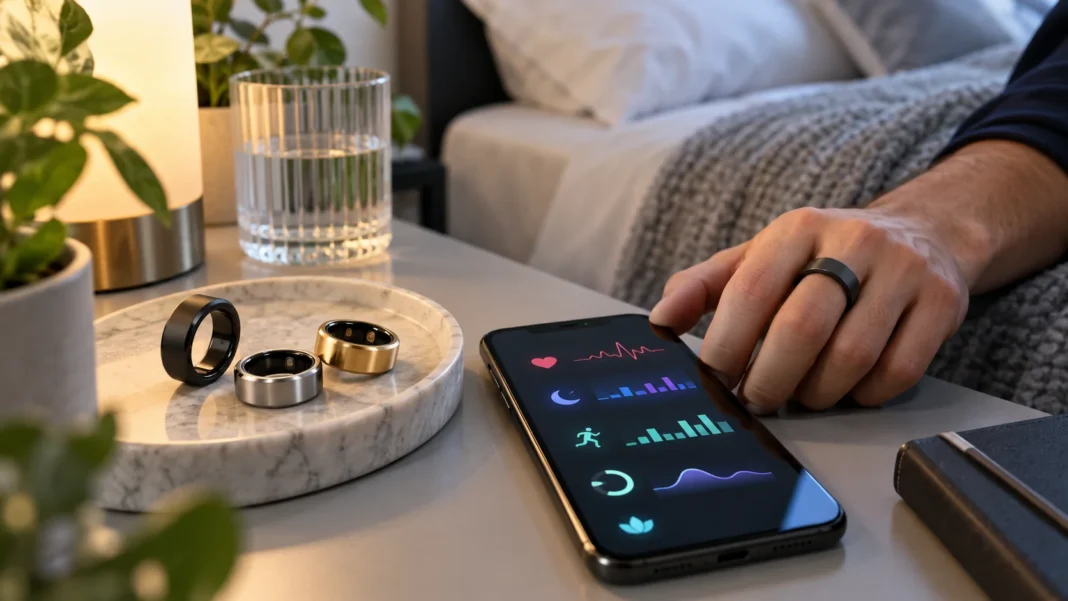
Smart rings have become an increasingly popular alternative to traditional fitness trackers and smartwatches. These small wearable devices can monitor sleep, heart rate, activity, recovery, stress-related trends, and other wellness signals while looking much more like ordinary jewelry. Their compact size also makes them appealing to people who dislike wearing a screen on their wrist throughout the day and night.
The best smart rings for health tracking combine comfortable design, reliable sensors, useful software, long battery life, and insights that are easy to understand. Different models prioritize different areas, from sleep and recovery to everyday movement and fitness. Choosing the right one depends on your smartphone, budget, subscription preferences, and the health metrics you actually want to follow.
What Is a Smart Ring and How Does It Work?
A smart ring is a compact wearable device containing miniature sensors that collect information from your finger. Depending on the model, these sensors may monitor heart rate, heart rate variability, skin temperature, movement, sleep patterns, and blood oxygen trends. The ring then sends this information to a smartphone application where the data is organized into easier-to-understand health and wellness insights.
The finger can be a useful location for passive monitoring because blood vessels sit relatively close to the skin. A properly fitted ring can maintain consistent contact while you sleep, walk, work, or relax. Unlike a smartwatch, there is usually no screen demanding attention, so most interactions happen through the connected mobile application rather than directly on the wearable.
Smart rings are intended mainly for wellness and fitness tracking rather than independently diagnosing medical conditions. They can reveal patterns and encourage healthier habits, but individual readings should be interpreted cautiously. Unexpected or concerning symptoms should be discussed with an appropriate healthcare professional rather than relying entirely on a consumer wearable for answers.
Oura Ring for Detailed Sleep and Recovery Tracking
Oura remains one of the most established names in the smart ring category. Its current platform places strong emphasis on sleep quality, nighttime heart rate, heart rate variability, temperature trends, activity, stress-related insights, and recovery. The companion application turns these measurements into daily scores intended to help users understand how prepared their bodies may be for activity or rest.
Sleep tracking is one of the biggest reasons people choose an Oura Ring. Wearing a lightweight ring throughout the night can feel more comfortable than sleeping with a relatively bulky smartwatch. The software combines different overnight signals to provide information about sleep duration, timing, stages, resting heart rate, and overall recovery patterns rather than showing only a basic sleep total.
Oura works particularly well for people who enjoy detailed wellness insights and long-term trend analysis. However, prospective buyers should consider the ongoing membership associated with access to many advanced insights. Someone who dislikes recurring subscription costs may find another smart ring more appealing even if Oura’s software experience and health analysis fit their needs well.
Samsung Galaxy Ring for Samsung Health Users
The Samsung Galaxy Ring is especially appealing to people already using compatible Samsung Galaxy phones and the Samsung Health ecosystem. It tracks activity, sleep, heart rate, and other wellness signals that can contribute to Samsung’s Energy Score. The goal is to provide a compact wearable that works alongside other Galaxy devices without requiring users to constantly look at another screen.
Sleep is a major part of the Galaxy Ring experience. Samsung Health can organize information related to sleep duration, sleep stages, movement, heart rate, and other overnight measurements. This can help users identify general patterns over time and understand whether changes to bedtime routines, exercise, or everyday habits correspond with differences in their recorded sleep.
The Galaxy Ring makes the most sense for people already invested in Samsung’s ecosystem. Integration with Samsung Health allows information from compatible devices to appear in a familiar environment rather than requiring multiple disconnected applications. Users outside that ecosystem should check phone compatibility carefully before purchasing because software support can affect how useful the ring becomes.
RingConn for Subscription-Free Health Tracking
RingConn has become a notable option for users who want comprehensive smart ring tracking without making a monthly subscription central to the experience. Current RingConn models focus on sleep, recovery, activity, heart-related trends, and everyday wellness monitoring. The brand is also frequently considered by buyers who prioritize long battery life and continuous passive tracking.
A longer-lasting battery can make a meaningful difference with health wearables. Every time a ring is removed for charging, some potential tracking data is lost, particularly if charging happens overnight. Reducing how frequently the device needs power can therefore make it easier to develop consistent habits and collect a more complete picture of everyday wellness trends.
RingConn may be particularly attractive for people who want health data without adding another recurring expense to their technology budget. The trade-off is that software experience, presentation, and advanced coaching can differ between ecosystems. Buyers should therefore evaluate both the physical ring and the companion application rather than comparing hardware specifications alone.
Ultrahuman Ring AIR for Sleep, Movement, and Recovery
The Ultrahuman Ring AIR is designed around continuous sleep, movement, and recovery tracking in a compact form. Its software focuses on helping users connect everyday behaviors with broader wellness patterns rather than concentrating only on step counts. The ring can therefore appeal to people interested in improving routines surrounding sleep timing, activity, exercise, and recovery.
One advantage of this approach is that wellness becomes more than a daily activity target. Movement throughout the day, sleep quality, and recovery can all influence how ready someone feels for exercise or demanding work. Seeing these patterns together can encourage users to look beyond isolated numbers and instead consider how different habits affect one another.
Ultrahuman is particularly interesting for health enthusiasts who enjoy exploring detailed data and experimentation. Its ecosystem extends beyond the ring itself into other wellness-focused tools and services. That broader approach may appeal to users who enjoy quantified health information, although people wanting a very simple tracker may prefer a more straightforward interface with fewer metrics.
Amazfit Helio Ring for Fitness-Focused Users
The Amazfit Helio Ring provides another option for people interested in compact health and recovery tracking. It is particularly relevant to users already familiar with Amazfit wearables and applications. Current comparisons often position it as a more accessible alternative within the smart ring category, especially for users who want basic sleep and recovery information without moving into the highest-priced options.
Fitness enthusiasts may find a ring useful when combined with a traditional sports watch. A watch can handle GPS, live workout information, pace, and detailed training displays, while the ring can focus more heavily on passive monitoring and overnight recovery. This approach can provide useful health trends without requiring a large watch to remain on the wrist while sleeping.
The Helio Ring is best considered as part of a broader wearable setup rather than automatically assuming it will replace every fitness device. People who need live exercise metrics, maps, or notifications will still benefit from a watch. Those primarily interested in discreet sleep and recovery tracking may find the smaller ring format significantly more comfortable.
Best Smart Rings for Sleep Tracking
Sleep is one of the areas where smart rings make the strongest practical case for themselves. Many people dislike sleeping with a large smartwatch because the case or strap becomes noticeable when changing positions. A properly fitted ring is smaller, has no bright screen, and can stay on throughout the night without creating the same level of distraction.
Modern smart rings can estimate sleep duration, stages, resting heart rate, nighttime heart rate variability, movement, and other patterns depending on the model. The most useful information often comes from trends collected over several weeks rather than judging one night’s score. Sleep can naturally vary, so longer-term patterns usually provide more context than isolated measurements.
Oura, Samsung, RingConn, and Ultrahuman all place significant emphasis on sleep and recovery within their wearable ecosystems. The best choice therefore depends partly on which application presents information in a way you find understandable and useful. A sophisticated sleep tracker provides limited value if its data feels confusing or encourages you to obsess over every nightly fluctuation.
Smart Rings for Fitness and Activity Tracking
Smart rings can track everyday movement, steps, heart rate, and activity trends, but they should not automatically be treated as replacements for dedicated sports watches. Their small size limits screen-based features, controls, and certain workout functions. They work best when passive activity monitoring matters more than checking pace, distance, or detailed exercise metrics during a workout.
Runners and cyclists may still want a GPS watch or smartphone when recording routes and precise outdoor performance data. Smart rings generally excel more at observing what happens before and after exercise, including sleep, resting signals, and recovery. Combining these insights can help users understand how training fits into their overall activity and rest patterns.
For casual fitness users, a ring may provide enough information without requiring another display on the wrist. Walking, everyday movement, general workouts, and activity consistency can still be reflected in health data. The important question is whether you need detailed sports information during exercise or simply want broader awareness of your daily movement habits.
Smart Rings for Stress and Recovery Monitoring
Recovery information is another major reason people become interested in smart rings. Rather than focusing exclusively on how much exercise you completed, recovery-oriented systems analyze combinations of sleep, heart rate, heart rate variability, temperature trends, and activity. These measurements can help users notice when their bodies appear different from their established personal baseline.
This does not mean a low recovery score automatically indicates illness or that a high score guarantees peak performance. Travel, poor sleep, alcohol, stress, difficult workouts, changing routines, and many other factors can influence wearable measurements. Smart rings are most helpful when they encourage awareness of patterns rather than turning one algorithmic score into an absolute judgment.
Over time, recovery tracking can help users experiment with healthier routines. You might notice that consistent bedtimes correspond with better sleep data or that intense late workouts affect overnight measurements differently. The value comes from connecting habits with trends and making reasonable adjustments rather than chasing perfect numbers every single day.
How Accurate Are Smart Rings?
Smart ring accuracy varies according to the metric, device, fit, movement, and conditions under which measurements are recorded. Heart-related readings taken during quiet periods may behave differently from readings captured during fast movement. Sleep stages and calorie estimates are also algorithmic interpretations rather than direct laboratory measurements, so users should avoid treating every number as exact.
Consistency can matter as much as absolute precision when using wearable technology for personal trends. Wearing the same ring correctly over several weeks can help establish a useful baseline. If readings suddenly change after alterations to sleep, activity, travel, or routine, those shifts may provide useful context even when individual values are not perfectly precise.
Smart rings should therefore be treated as wellness tools rather than medical diagnostic devices. They can support conversations about health and encourage awareness of habits, but they cannot replace professional evaluation or clinical testing. Anyone experiencing concerning symptoms should prioritize appropriate medical guidance instead of trying to interpret consumer wearable data independently.
How to Choose the Right Smart Ring Size
Fit is extremely important because smart rings depend on consistent contact between sensors and the finger. A ring that is too loose may move throughout the day, while one that is excessively tight can become uncomfortable as fingers naturally change size. Manufacturers commonly provide sizing kits because smart ring sizes do not always correspond perfectly with ordinary jewelry.
Ideally, the ring should feel secure without causing pressure, numbness, or difficulty removing it. Finger size can change with temperature, hydration, exercise, and time of day, so testing a sample size for longer than a few minutes is worthwhile. Sleeping with a sizing sample can be particularly helpful because overnight comfort matters for accurate long-term tracking.
You should also consider which finger the manufacturer recommends and whether your dominant hand affects comfort during daily tasks. Weightlifting, manual work, and gripping equipment may make ring removal sensible during certain activities. Spending time finding the right fit will usually improve both measurement consistency and the likelihood that you continue wearing the device regularly.
Smart Rings vs Smartwatches
Smart rings and smartwatches serve overlapping but different purposes. Rings prioritize passive monitoring, comfort, and minimal interaction, while smartwatches provide screens, notifications, applications, workout displays, timers, calls, and other active features. Someone who wants technology to disappear into the background may therefore prefer a ring over another screen-based wearable.
Battery life can also favor smart rings because their small devices generally avoid power-hungry displays. Many users appreciate being able to wear a health tracker for several days without daily charging. The absence of constant notifications can also make rings feel less distracting, especially for people trying to reduce the amount of technology competing for their attention.
Smartwatches remain stronger for navigation, GPS workouts, messages, live exercise statistics, music controls, and broader application support. Some users therefore combine both devices, wearing a smartwatch during workouts while keeping a ring on for continuous wellness monitoring. The better option depends on whether you prioritize active smart features or discreet health tracking.
How to Choose the Best Smart Ring for Health Tracking
Start by deciding which health information matters most to you. Someone primarily interested in sleep may prioritize comfort and nighttime analysis, while an athlete may care more about recovery trends and integration with other fitness platforms. Avoid choosing a ring simply because it measures the largest number of metrics, since additional data does not automatically make the information more useful.
Next, look closely at subscription costs and software compatibility. Some ecosystems include advanced insights behind ongoing memberships, while others emphasize subscription-free access. Smartphone support also matters because certain rings work much better within particular Android ecosystems, and compatibility limitations can prevent you from accessing features that influenced your purchasing decision.
Finally, consider comfort, battery life, charging method, water resistance, durability, and overall design. A health tracker works best when you actually wear it consistently, including overnight. Choosing a ring that fits comfortably into your everyday routine will usually provide more meaningful long-term information than buying a feature-packed device that frequently ends up sitting on a charger.
Conclusion
The best smart rings for health tracking provide an unobtrusive way to monitor sleep, activity, heart-related trends, recovery, and everyday wellness patterns. Oura, Samsung, RingConn, Ultrahuman, and Amazfit each approach the category differently, giving buyers options based on ecosystem preferences, software style, subscription expectations, and personal health goals.
Smart rings are particularly attractive for people who want fewer screens and greater overnight comfort than many smartwatches provide. They are excellent passive trackers, but they are not complete replacements for sports watches when GPS, live workout metrics, navigation, or notifications matter. Understanding that distinction can prevent unrealistic expectations before buying.
Focus on fit, comfort, software, battery life, useful metrics, and long-term cost rather than choosing solely based on specifications. The most valuable smart ring is one you can wear consistently and whose information helps you recognize meaningful patterns in your habits. Used thoughtfully, it can become a useful companion for improving awareness of sleep, recovery, activity, and everyday wellness.
FAQs
What is the best smart ring for health tracking?
Oura, Samsung Galaxy Ring, RingConn, and Ultrahuman are prominent options for health tracking. The best choice depends on your smartphone, preferred health metrics, budget, subscription preferences, and desired software experience.
Are smart rings accurate for sleep tracking?
Smart rings can provide useful estimates of sleep duration, stages, heart rate, movement, and recovery trends. However, consumer wearables are not identical to clinical sleep testing, so individual readings should be interpreted cautiously.
Can a smart ring replace a smartwatch?
A smart ring can replace a smartwatch for basic passive health tracking, but it lacks many screen-based features. Users needing GPS, notifications, navigation, calls, apps, or live workout information may still prefer a smartwatch.
Do smart rings require a subscription?
It depends on the brand. Some smart ring ecosystems require or strongly rely on subscriptions for advanced insights, while others provide core health tracking without a recurring membership fee.
Can I wear a smart ring all day and night?
Most smart rings are designed for continuous everyday and overnight wear when properly fitted. However, removing the ring may be sensible during activities that could damage it or place excessive pressure on your finger.