


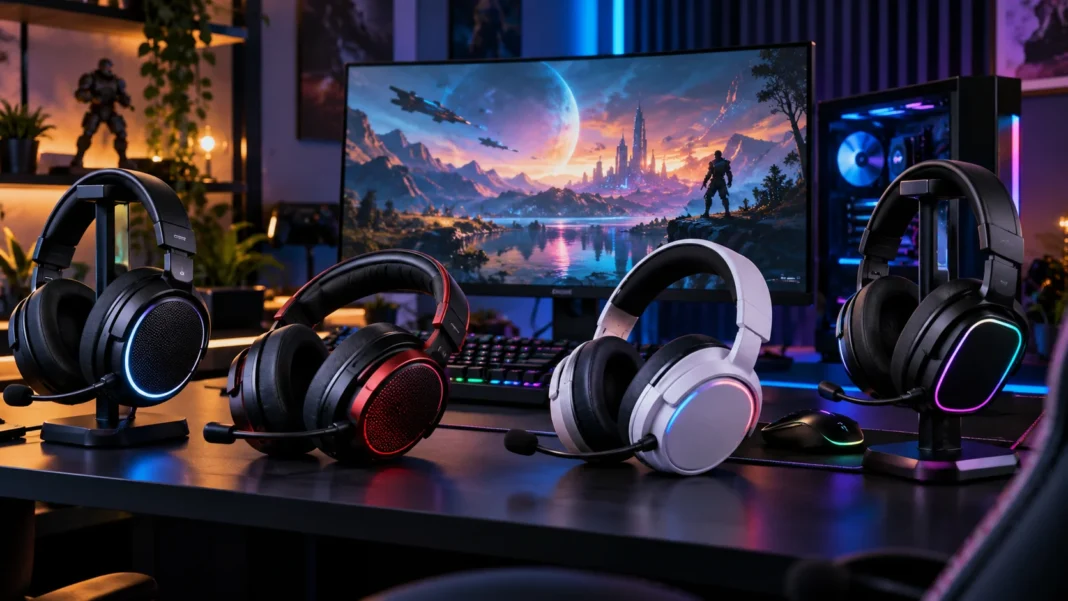
A great gaming headset can completely change how a game feels. Clear directional audio helps you hear approaching footsteps, distant gunfire, environmental details, dialogue, and subtle sound effects that ordinary speakers may miss. The best gaming headsets for immersive sound also combine strong audio quality with comfort, microphone clarity, reliable connectivity, and controls that remain easy to use during long sessions.
Choosing the right headset depends on more than simply finding the loudest or most expensive model. PC, PlayStation, Xbox, Nintendo Switch, and mobile gamers may need different connections and features. Understanding drivers, spatial audio, microphone performance, wireless latency, comfort, battery life, and platform compatibility will help you choose a headset that improves both competitive gameplay and cinematic experiences.
What to Look for in a Gaming Headset
Sound quality should be your first consideration because gaming headsets need to reproduce several different types of audio at once. Explosions, dialogue, music, footsteps, environmental effects, and directional cues should remain clear rather than blending together. A balanced headset can provide strong bass without allowing low frequencies to overpower important midrange and high-frequency details.
Comfort becomes equally important if you regularly play for several hours. Look for padded ear cushions, an adjustable headband, moderate clamping force, and materials that do not become excessively warm. Headset weight also matters because a heavy model may sound excellent initially but become uncomfortable during long multiplayer matches, streaming sessions, or extended single-player campaigns.
Connectivity and compatibility should be checked before purchasing. USB, 3.5 mm, Bluetooth, and dedicated wireless connections serve different platforms and use cases. Some headsets work across several systems, while others offer their full features only on particular consoles or computers, making compatibility one of the most important buying considerations.
Best Wireless Gaming Headsets for Freedom of Movement
Wireless gaming headsets are ideal for players who dislike cables running across their desks or living rooms. A dedicated low-latency wireless connection can provide responsive audio while allowing users to move freely during gameplay. This is especially convenient for console gaming, standing breaks, streaming setups, and players who frequently move between a chair and other parts of the room.
Battery life varies considerably between wireless headsets. Some models require relatively frequent charging, while others are designed to last through multiple gaming sessions before needing power. Long battery life becomes particularly valuable if you regularly forget to charge devices, although quick charging can also help by providing several hours of use after a short connection to power.
Many newer wireless headsets support more than one connection type. This can allow players to hear game audio through a wireless dongle while keeping Bluetooth connected to a smartphone for calls or other audio. Dual-device connectivity is particularly useful for gamers who want flexibility without constantly unplugging receivers or changing audio settings.
Best Wired Gaming Headsets for Reliable Audio
Wired gaming headsets remain a strong choice for players who value simplicity and consistent performance. A physical connection removes concerns about battery life, wireless interference, and charging schedules. Plugging directly into a controller, computer, or compatible audio interface can provide an easy setup that works whenever you are ready to start playing.
A 3.5 mm headset can be particularly versatile because the connection is supported by many controllers, laptops, computers, handheld gaming devices, and other electronics. USB headsets may offer additional software controls, digital audio processing, or virtual surround features. The better option depends on whether you prioritize broad compatibility or advanced computer-based customization.
Cable design deserves attention because poorly positioned or stiff cables can become annoying during gameplay. Braided cables may provide additional durability, while detachable cables can simplify storage and replacement. Players who rarely move away from their desks may find wired headsets offer excellent value without sacrificing the core audio performance needed for immersive gaming.
Best Gaming Headsets for PC Players
PC gaming provides some of the widest headset choices because computers support USB, 3.5 mm, Bluetooth, and dedicated wireless adapters. Many PC-focused headsets also include companion software for adjusting equalizer settings, microphone levels, surround sound, and other audio features. This customization can be useful for players who switch frequently between competitive games, music, video calls, and entertainment.
Directional sound is particularly important in competitive PC games. Being able to distinguish whether footsteps are coming from the left, right, above, below, or behind can improve awareness during shooters and tactical multiplayer titles. A well-tuned headset should create positional clarity without exaggerating bass to the point that explosions cover quieter environmental details.
Your overall computer setup can influence how useful additional gaming accessories become. Players building compact desks may also be interested in mini PCs that reduce hardware clutter while handling suitable work or entertainment tasks. A comfortable headset, well-positioned display, and organized computer setup can make longer gaming sessions considerably more enjoyable.
Best Gaming Headsets for PlayStation
PlayStation gamers should focus on headsets that provide dependable compatibility with their specific console. Some wireless models connect through a USB receiver, while wired headsets can often plug directly into the controller. Checking supported audio features before buying is important because certain headset controls or software functions may not operate identically across PC and console platforms.
Immersive single-player games can benefit greatly from detailed audio reproduction. Environmental sounds, cinematic scores, character dialogue, and distant effects contribute to atmosphere just as much as visuals. A comfortable headset with a wide soundstage can make exploration-heavy adventures, racing games, horror titles, and story-driven experiences feel more engaging than basic television speakers.
Microphone quality still matters even if multiplayer is not your primary focus. Party chats and cooperative gaming are common on consoles, and unclear voice transmission can make communication frustrating. A convenient mute button or flip-to-mute microphone can also help players control when teammates hear them without navigating through console menus during active gameplay.
Best Gaming Headsets for Xbox
Xbox players should pay close attention to wireless compatibility because not every wireless headset connects directly to every console. Wired models using the controller’s headset connection generally provide straightforward compatibility, while certain wireless options are specifically designed for Xbox systems. Checking this before purchasing helps avoid needing unexpected adapters or losing features you expected to use.
Competitive games benefit from clear positional audio, while racing and action titles can sound more exciting with deeper low-frequency response. A strong Xbox gaming headset should balance both types of experience. Excessive bass may sound impressive at first, but balanced tuning often provides better long-term listening because dialogue and important gameplay cues remain easier to distinguish.
Comfort also matters when gaming from a sofa or gaming chair for extended periods. Large ear cushions can provide better isolation, but they should not create excessive pressure around glasses or ears. Wireless controls positioned directly on the earcups are especially convenient because volume and microphone settings can be adjusted without reaching for the console or television remote.
Sound Quality and Drivers Explained
Gaming headset drivers convert electrical signals into the sound you hear. Larger drivers are often advertised as producing stronger or more detailed audio, but driver size alone does not determine quality. Tuning, enclosure design, materials, digital processing, and the overall engineering of the headset can influence sound more significantly than one specification printed on the box.
A balanced sound signature is generally a good choice for varied gaming. Bass should provide impact during explosions and action sequences, while the midrange should keep dialogue and voices understandable. Clear treble can reveal footsteps and smaller environmental details, although overly sharp high frequencies may become tiring during long sessions or at high listening volumes.
Some premium gaming headsets use alternative driver technologies designed to improve detail or responsiveness. These can provide excellent audio, but they may also increase price or weight. Most gamers will benefit more from choosing a well-tuned, comfortable headset than focusing entirely on technical driver terminology that may not translate directly into a better personal listening experience.
Surround Sound and Spatial Audio for Immersion
Surround and spatial audio technologies attempt to create a more three-dimensional listening experience through headphones. Rather than making sound appear only on the left or right, processing can simulate positions around the player. This can increase immersion in open-world games, competitive shooters, horror titles, and cinematic adventures where environmental sound plays an important role.
Virtual surround performance depends on the game, platform, headset, and processing technology being used. Some players love the expanded sense of space, while others prefer traditional stereo because it sounds more natural or provides clearer competitive positioning. Testing both options is worthwhile because personal preference can matter more than marketing terminology.
Spatial audio is most useful when the game itself contains detailed positional sound design. No headset can create information that is missing from the original audio mix. A high-quality stereo headset can therefore still deliver excellent directional awareness, while spatial processing should be viewed as an additional option rather than an absolute requirement for immersive gaming.
Microphone Quality for Multiplayer Gaming
A clear microphone is essential for multiplayer games that depend on coordination. Teammates should be able to understand your instructions without hearing excessive keyboard noise, background conversations, or fan sounds. Microphone positioning, pickup pattern, processing, and software noise reduction can all influence how clearly your voice reaches other players.
Detachable microphones provide flexibility because you can remove them when using the headset primarily for single-player games or music. Retractable and flip-up microphones offer similar convenience without creating another accessory that could be misplaced. A physical mute indicator is also helpful because it confirms your microphone status without requiring you to check software.
Streamers and content creators may eventually prefer a dedicated USB or XLR microphone for higher-quality voice recording. However, a good headset microphone remains perfectly practical for everyday gaming, team communication, and casual streaming. Choosing a headset with clear voice reproduction can eliminate the need for additional desk equipment if professional recording quality is not necessary.
Comfort and Build Quality for Long Gaming Sessions
Comfort should never be treated as a secondary feature. Even outstanding sound becomes difficult to enjoy if the headset creates pressure around your ears or develops uncomfortable hot spots on your head. Lightweight construction, soft padding, breathable ear cushions, and adjustable headbands can make a noticeable difference during sessions lasting several hours.
Gamers who wear glasses should pay particular attention to clamping force and ear cushion softness. Firm cushions can press glasses frames into the sides of the head, causing discomfort over time. Memory foam or softer padding may reduce this pressure, although fit varies between individuals, making personal comfort one of the hardest headset qualities to judge from specifications alone.
Durability matters because gaming headsets are frequently adjusted, removed, placed on desks, transported, and occasionally dropped. Reinforced headbands, replaceable ear cushions, detachable cables, and sturdy hinges can extend usable life. A slightly more durable headset may provide better long-term value than a cheaper model that begins creaking, peeling, or losing connection after regular use.
Open-Back vs Closed-Back Gaming Headsets
Closed-back headsets surround the ears and reduce the amount of outside sound reaching the listener. They are useful for gaming in noisy homes, shared rooms, or environments where isolation improves concentration. Closed designs can also produce stronger bass, although individual tuning varies significantly between different models and manufacturers.
Open-back headsets allow more air and sound to pass through the earcups. This often creates a wider and more natural sense of space that some gamers prefer for immersive single-player experiences and positional audio. However, open designs leak sound outward and allow external noises in, making them less suitable for shared rooms or noisy environments.
Choosing between them depends on where you play. A quiet private gaming room may be ideal for an open-back headset, while a busy household often favors a closed-back model. Neither design is automatically better, so think about environmental noise, privacy, ventilation, soundstage, and how loudly you normally listen before deciding.
How to Choose the Best Gaming Headset
Start with your gaming platform and connection requirements. A headset that works perfectly on PC may offer fewer features on a console, while some wireless console models use platform-specific technology. Decide whether you need PC, PlayStation, Xbox, Switch, mobile, or multi-platform support before comparing sound quality and extra features.
Next, prioritize comfort and sound based on the games you actually play. Competitive players may prefer detailed positional audio and clear footsteps, while single-player gamers might value cinematic bass and a spacious soundstage. Multiplayer users should pay extra attention to microphone quality, whereas solo players may care more about audio performance than voice communication.
Finally, set a budget that reflects the features you will genuinely use. Wireless connectivity, premium materials, advanced software, replaceable batteries, and sophisticated audio technology can increase price quickly. The best gaming headset is not necessarily the most expensive one; it is the model that remains comfortable, sounds enjoyable, and works reliably with your gaming setup.
Conclusion
The best gaming headsets for immersive sound combine detailed audio, comfortable construction, clear communication, and dependable compatibility with your preferred platform. Wireless models provide freedom of movement, while wired headsets offer straightforward reliability without battery concerns. Both designs can deliver excellent gaming experiences when sound quality and comfort are properly balanced.
PC, PlayStation, and Xbox players should check connection support carefully before purchasing. Competitive gamers may prioritize directional accuracy and microphone clarity, while story-driven players might prefer a wider soundstage and richer cinematic presentation. Comfort deserves equal attention because even premium audio features provide little value if the headset becomes uncomfortable after an hour.
Focus on how and where you actually play rather than buying entirely from specifications. Consider platform compatibility, sound signature, microphone quality, battery life, headset weight, and ear cushion design before deciding. A thoughtfully chosen gaming headset can make competitive matches easier to follow while making immersive worlds, music, dialogue, and environmental effects far more engaging.
FAQs
What is the best gaming headset for immersive sound?
The best option combines balanced audio, accurate directional positioning, comfortable ear cushions, and reliable platform compatibility. Your ideal choice depends on whether you prioritize competitive gaming, cinematic experiences, wireless convenience, or multiplayer communication.
Are wireless gaming headsets good for competitive gaming?
Yes. Modern low-latency wireless gaming headsets can provide responsive sound suitable for competitive play. Dedicated wireless connections generally offer lower latency than ordinary Bluetooth when fast audio response matters.
Is surround sound necessary for gaming?
No. High-quality stereo headphones can provide excellent positional audio when a game has good sound design. Surround or spatial processing can increase immersion, but whether it sounds better depends on the game and personal preference.
Are wired gaming headsets better than wireless ones?
Neither is automatically better. Wired headsets avoid charging and wireless interference, while wireless models provide greater freedom of movement. Sound quality and latency depend more on the individual headset than the connection type alone.
How much should I spend on a gaming headset?
You can find capable gaming headsets across several price ranges. Prioritize comfort, sound, microphone quality, compatibility, and durability rather than paying extra for features or software effects you are unlikely to use.