


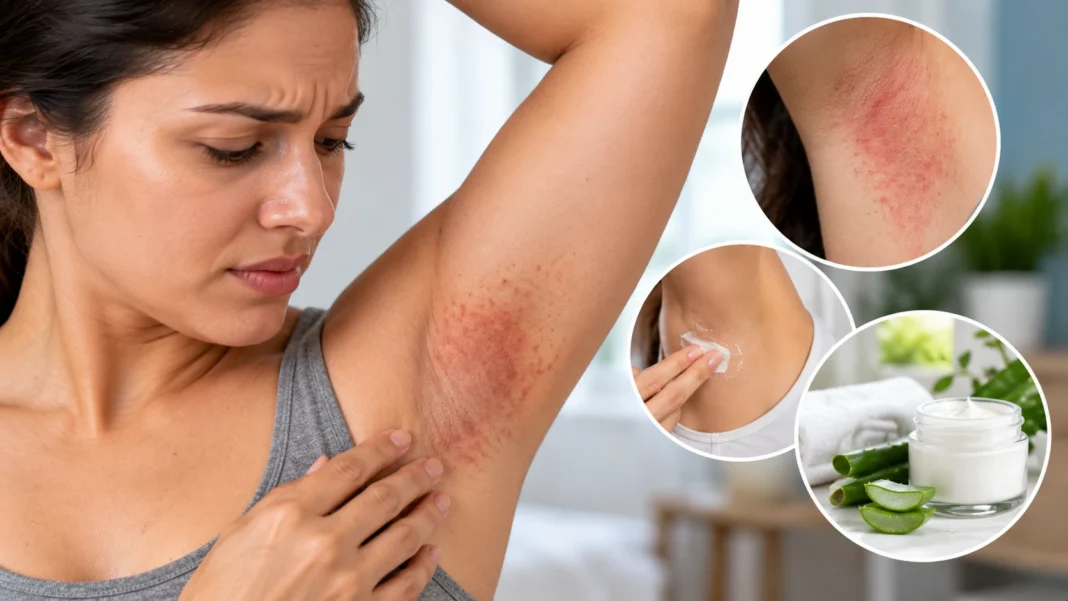
Armpit Rash: Causes, Pictures & Treatment Options
An armpit rash can appear as redness, discoloration, small bumps, smooth irritated patches, pimples, scaling, blisters, or painful lumps beneath one or both arms. Because the armpit is naturally warm, moist, and exposed to frequent friction, several different skin conditions can develop in this area. Sweat, shaving, deodorant, tight clothing, yeast, bacteria, eczema, psoriasis, and inflammation around hair follicles are all possible explanations. Some underarm rashes mainly itch, while others burn, sting, or become painful to touch. The appearance can offer useful clues, but photographs alone cannot reliably determine the cause. Correct treatment depends on understanding whether the problem is primarily irritation, infection, inflammation, or another skin condition.
Armpit rash pictures can also look different across skin tones and at different stages of the same condition. In lighter skin, inflammation may appear pink or bright red, while on darker skin it can look purple, gray, reddish-brown, dark brown, or simply deeper than the surrounding skin. Some rashes develop obvious scaling or tiny satellite bumps, whereas others produce smooth shiny areas without much flaking. A shaving-related rash may surround individual hair follicles, while hidradenitis suppurativa can cause deeper painful nodules beneath the skin. The location, texture, symptoms, timing, and recurrence pattern often matter more than color alone. A rash that develops immediately after switching deodorant deserves a different evaluation from recurring painful armpit boils.
Many mild armpit rashes improve when friction, moisture, shaving, or an irritating product is removed, but persistent and painful rashes deserve professional evaluation. Treatment may involve an antifungal medicine, topical anti-inflammatory treatment, antibiotic therapy, changes in personal-care products, moisture control, or long-term management of a recurring inflammatory condition. Using the wrong product can occasionally worsen the problem, particularly when a steroid cream masks or aggravates certain infections. This guide explains common armpit rash causes, what different rashes may look like, fungal and bacterial conditions, deodorant reactions, shaving irritation, hidradenitis suppurativa, treatment options, and prevention. It also explains when a lump, rash, or spreading infection should be checked by a healthcare professional rather than managed at home.
What Does an Armpit Rash Look and Feel Like?
An armpit rash does not have one standard appearance because the term simply describes irritated or abnormal skin in the underarm area. Mild irritation may produce a flat discolored patch with slight itching, while more severe inflammation can create swelling, cracking, blistering, oozing, or raw skin. Some rashes appear symmetrically in both armpits because the same product or friction affects each side. Others stay confined to one underarm because of a localized infection, blocked follicle, or other problem. Looking closely at whether the rash is smooth, scaly, wet, bumpy, or centered around hair follicles can provide helpful clues. The accompanying sensation is equally important because different conditions tend to produce different combinations of itch, burning, tenderness, and pain.
An itchy armpit rash is often associated with irritation, allergic contact dermatitis, eczema, heat, or fungal overgrowth, although these are not the only possibilities. Itching may become especially strong after sweating because heat and moisture increase friction within the skin fold. The area can feel uncomfortable when clothing rubs against it, and repeated scratching may create small breaks in the skin. Once the surface is damaged, bacteria or yeast can sometimes take advantage of the irritated environment and create a secondary problem. For this reason, a rash that begins as simple itching can change appearance after several days. Avoiding scratching and reducing friction can help protect the skin while the cause is being identified.
A burning or stinging underarm rash can develop after deodorant, antiperspirant, fragranced skincare, shaving, or another irritating exposure. The skin may look smooth but inflamed, or it may develop tiny bumps, dryness, flaking, or small blisters. Irritant reactions often become especially uncomfortable immediately after applying a product to skin that has just been shaved. Sweat can then make damaged skin sting more because salts contact the irritated surface. If symptoms consistently appear after one particular product, stopping it temporarily may help clarify the relationship. However, recurring burning without an obvious trigger should be evaluated rather than blamed indefinitely on sensitive skin.
Painful armpit bumps suggest a somewhat different group of possibilities. Folliculitis may create small tender or pus-filled bumps around individual hairs, while boils can become larger and deeper. Hidradenitis suppurativa can cause recurring painful nodules, abscesses, drainage, tunnels beneath the skin, and eventual scarring in areas such as the armpits. A swollen lymph node can also feel like an underarm lump without producing a surface rash. Because these conditions require different treatment, repeatedly squeezing or draining a painful lump at home is not advisable. A healthcare professional should evaluate deep, recurrent, enlarging, or intensely painful underarm lumps, especially when they are accompanied by fever or spreading skin inflammation.
Color can be useful but should never be the only way an armpit rash is identified. Inflammation may appear bright red on some people while looking dark brown, violet, grayish, or subtly different from normal skin on others. Long-standing inflammation can leave temporary hyperpigmentation after the active rash improves, especially in people with deeper skin tones. Some conditions also create lighter areas after healing or treatment. Texture, border shape, moisture, scaling, bumps, cracks, and pain can therefore provide more information than whether the skin looks “red.” Good dermatologic descriptions account for the diversity of skin appearance rather than assuming every inflammatory condition looks identical on everyone.
Common Causes of Armpit Rash
Contact dermatitis is one of the most common explanations for an itchy or burning rash under the arms. It develops when the skin reacts to an irritating substance or an ingredient that triggers an allergic response. Deodorants, antiperspirants, fragrances, preservatives, body washes, shaving products, laundry detergents, and fabric treatments can all be relevant. The rash may look dry, swollen, bumpy, blistered, or simply inflamed, and itching can be intense. Sometimes a product has been used for months before an allergy becomes noticeable, so a long history of previous tolerance does not completely rule it out. A dermatologist can perform patch testing when allergic contact dermatitis is suspected but the responsible ingredient remains unclear.
Intertrigo is another frequent problem because the armpit is a skin fold where warmth, moisture, and friction naturally occur. The condition begins when opposing skin surfaces rub together, especially when sweat remains trapped between them. Early intertrigo can look like a smooth inflamed patch accompanied by burning, itching, or tenderness. As the skin barrier becomes damaged, yeast or bacteria can overgrow and create a secondary infection. Humid weather, heavy sweating, tight clothing, and deeper skin folds may make the condition more likely. Treatment therefore often includes keeping the area dry and reducing friction in addition to treating any infection that has developed.
Yeast, particularly Candida, can contribute to an underarm rash when the environment remains warm and moist. Candidal intertrigo can create a bright or deeply discolored inflamed patch with small surrounding bumps or pustules sometimes called satellite lesions. The skin may feel sore, itchy, or raw, especially after heavy sweating. People sometimes assume every rash in a skin fold is fungal and begin applying antifungal cream automatically, but several nonfungal conditions can look similar. An incorrect assumption can delay treatment for psoriasis, dermatitis, or bacterial disease. If the rash is recurrent, unclear, or not improving with appropriate self-care, a healthcare professional can examine it and perform testing when necessary.
Folliculitis develops when hair follicles become inflamed, commonly because of infection, friction, shaving, or other irritation. Underarm folliculitis may look like small red, brown, purple, or pus-filled pimples centered around individual hairs. The bumps can itch, burn, or feel tender and may become more noticeable after shaving or wearing tight clothing. Mild cases sometimes settle with gentle skin care and removal of the triggering friction. More extensive, persistent, or recurrent folliculitis may require treatment targeted to the underlying cause, which can include bacteria, yeast, or noninfectious inflammation. Picking at the bumps can increase inflammation and may contribute to dark marks, infection, or scarring.
Other possible causes include inverse psoriasis, eczema, heat rash, erythrasma, fungal infections, medication reactions, and hidradenitis suppurativa. These conditions overlap visually enough that searching for an armpit rash picture may produce several convincing but contradictory matches. The medical history often provides the missing information, including whether similar rashes occur elsewhere, whether the problem recurs, and whether new products were recently introduced. A dermatologist may also consider diabetes, excessive sweating, immune conditions, or medications when a rash repeatedly becomes infected. The best diagnosis comes from combining appearance with symptoms and context. This is why treatment should be chosen according to the cause rather than according to whichever photograph looks most similar.
Fungal and Yeast Armpit Rashes: Signs to Look For
A fungal or yeast-related armpit rash often develops because fungi thrive in warm, moist environments. Sweat can remain trapped in the underarm fold, particularly during hot weather, exercise, or prolonged use of tight synthetic clothing. Friction damages the surface barrier and can make it easier for microorganisms already present on the skin to multiply excessively. The result may be an itchy, burning, or sore patch that becomes more uncomfortable as moisture accumulates. People who experience excessive sweating may notice frequent recurrences unless moisture and friction are addressed as well as the infection. Simply treating the organism without changing the environment may allow the same problem to return repeatedly.
Candida is a common yeast associated with secondary infection in intertrigo. A candidal rash may form a moist, tender area in the fold with small bumps or pustules extending beyond the main patch. These satellite lesions can provide a clue, although they are not present in every case and cannot establish the diagnosis by themselves. On different skin tones, the inflamed area may appear red, deep pink, purple, dark brown, or otherwise discolored. The rash may also become macerated, meaning the surface looks softened or damaged from prolonged moisture. If cracks, drainage, odor, or substantial pain develop, additional infection may be present and professional assessment becomes more important.
Dermatophytes, the fungi responsible for conditions commonly called ringworm, can also infect body skin, though classic ring-shaped borders may be less obvious within the armpit. A fungal rash may have a more defined, scaly edge and gradually enlarge over time. People can accidentally spread dermatophytes from another body area through scratching, towels, clothing, or grooming equipment. Having athlete’s foot or another fungal infection can sometimes provide a clue when a similar rash develops elsewhere. Treatment generally uses antifungal medication rather than antibiotics because antibacterial drugs do not eliminate dermatophyte infections. A clinician may scrape the skin and examine the sample when the diagnosis is uncertain or the rash resists ordinary treatment.
Erythrasma can easily be mistaken for a fungal rash even though it is caused by bacteria. It commonly affects skin folds and may form brownish, reddish-brown, or pink patches with fine scaling. The rash is sometimes mildly itchy but can also produce relatively few symptoms despite being visible. Dermatologists can use a Wood’s lamp examination in certain cases because the responsible bacteria can produce a characteristic fluorescence under specialized light. Treatment is different from routine fungal treatment, which is another reason persistent armpit rashes deserve accurate diagnosis. A rash that repeatedly returns despite antifungal creams may simply not be fungal in the first place.
Preventing recurrent fungal or yeast-related irritation often requires moisture management. Dry the armpits gently after bathing and after periods of heavy sweating rather than leaving damp skin trapped beneath clothing. Breathable fabrics and looser clothing can reduce friction, while changing out of sweaty exercise clothing promptly may also help. Some people with recurrent intertrigo benefit from a clinician-recommended barrier product or other strategy for keeping skin surfaces from rubbing directly together. Avoid excessive scrubbing because damaged skin becomes even more vulnerable to irritation and secondary infection. When fungal infections recur frequently, a healthcare professional may also look for underlying factors that make persistent moisture or infection more likely.
Deodorant Rash, Shaving Irritation, and Heat Rash
Deodorant and antiperspirant reactions are common because underarm skin is repeatedly exposed to fragrances, preservatives, solvents, and other ingredients. An irritant reaction may develop when a strong formula contacts recently shaved or otherwise damaged skin, producing immediate stinging or burning. Allergic contact dermatitis may appear later and can cause intense itching, swelling, dryness, blisters, or oozing. The rash often corresponds closely to the area where the product is applied, which can help distinguish it from a deeper skin condition. If symptoms begin after changing products, discontinue the new product until the skin settles. Repeated reactions may justify testing by a dermatologist to identify a specific allergen.
Fragrance is a frequent problem in sensitive skin, but it is not the only ingredient capable of producing a reaction. Preservatives, propylene glycol, botanicals, essential oils, and other ingredients can also cause irritation or allergy in susceptible people. Products described as natural are not automatically less irritating because plant-derived fragrances and oils can still trigger contact dermatitis. Switching randomly between several products can make identifying the responsible substance difficult. During an active rash, temporarily simplifying the routine may help by reducing the number of possible triggers. Once the skin has healed, products can be reintroduced cautiously or selected according to advice from a healthcare professional.
Shaving can cause redness, tiny cuts, razor burn, ingrown hairs, and inflammation surrounding hair follicles. The risk increases when a dull blade is used repeatedly, shaving is performed against the direction of hair growth, or several passes are made over the same irritated area. Applying fragranced deodorant immediately afterward can make the burning sensation considerably worse. Temporarily stopping shaving gives inflamed skin time to recover and makes it easier to determine whether the razor is contributing. When shaving resumes, use a clean sharp blade and adequate lubrication while avoiding aggressive pressure. Other hair-removal methods can also irritate underarm skin, so switching methods does not guarantee the problem will disappear.
Pseudofolliculitis occurs when shaved or removed hairs curve back into the skin and produce inflammatory bumps. This can be especially noticeable in people with tightly curled hair because the hair is more likely to reenter the skin after cutting. The bumps can look similar to acne or bacterial folliculitis and may leave dark marks after they settle. Repeated picking or squeezing increases the chance of additional inflammation and scarring. Adjusting hair-removal technique can reduce recurrence, while persistent cases may benefit from professional treatment. Laser hair reduction is sometimes considered for recurrent hair-related follicular problems, although suitability, cost, skin tone, and potential side effects should be discussed with an experienced clinician.
Heat rash develops when sweat becomes trapped and cannot move normally through the skin. It may appear as groups of tiny bumps accompanied by prickling, itching, or burning, particularly during hot and humid weather. Tight clothing and heavy sweating can increase discomfort in the armpits because airflow is limited in the fold. Cooling the body, changing into breathable clothing, and keeping the affected area dry often helps mild cases improve. Heat rash does not generally require an aggressive medication routine, and heavily occlusive products can sometimes make sweating more difficult. A persistent rash that becomes painful, infected, or does not improve after cooling should be assessed for another cause.
Folliculitis, Hidradenitis Suppurativa, and Inverse Psoriasis
Folliculitis affects hair follicles and often creates multiple small bumps that resemble pimples. Some bumps may contain visible pus, while others simply look inflamed and feel itchy or tender. Bacteria are a common cause, but yeast, friction, shaving, medications, and other factors can also produce different forms of folliculitis. The underarm is particularly vulnerable because hair follicles are exposed to moisture, occlusion, deodorant, and repeated hair removal. Mild cases may improve with gentle care, but widespread or recurring folliculitis deserves evaluation so treatment targets the correct cause. Antibiotics will not help folliculitis driven by yeast, which demonstrates why distinguishing different forms matters.
A boil is deeper than ordinary superficial folliculitis and forms when infection or inflammation extends farther into the follicle and surrounding tissue. It can become a painful red, purple, or dark lump that gradually enlarges and may eventually drain pus. Several connected boils can create an even larger inflamed area. Large painful lesions should not be repeatedly squeezed because pressure can worsen inflammation and spread infection into nearby tissue. Some abscesses need professional drainage rather than another topical cream. Fever, rapidly increasing pain, or spreading redness around a boil can indicate a more significant infection requiring prompt medical attention.
Hidradenitis suppurativa, often abbreviated HS, is an important cause of recurrent painful armpit lumps. It is a chronic inflammatory condition that commonly develops where skin touches skin, including the armpits, groin, buttocks, and beneath the breasts. Early HS can resemble an ordinary boil or ingrown hair, which is why diagnosis is sometimes delayed for years. Over time, people may develop repeated deep nodules, abscesses, drainage, scars, and interconnected tunnels beneath the skin. HS is not caused simply by poor hygiene, and vigorous scrubbing does not cure it. Early dermatology treatment can help control inflammation and may reduce progression, making recurring armpit boils worth discussing with a clinician.
Inverse psoriasis looks different from the thick, flaky plaques many people associate with psoriasis. It develops in skin folds such as the armpits and often forms smooth, shiny, well-defined patches that can feel sore or raw. Because constant moisture and friction reduce visible scaling, there may be little or none of the silvery buildup seen on elbows or knees. People who have psoriasis on other body areas or characteristic nail changes may have additional clues. Inverse psoriasis can also coexist with infection, complicating the appearance further. Treatment of delicate skin folds needs particular care because strong medications suitable for thicker skin may not be appropriate for prolonged use in the armpit.
Distinguishing these conditions is important because their treatments are very different. Folliculitis may require antibacterial, antifungal, or irritation-reducing strategies depending on the cause. Hidradenitis suppurativa can require long-term medical management using topical treatments, oral medicines, biologic therapies, procedures, or other approaches depending on severity. Inverse psoriasis is treated as an inflammatory immune-mediated skin disease rather than an infection. A person who repeatedly self-treats every underarm lump with antifungal cream could therefore miss a chronic inflammatory condition. Recurrence, scarring, drainage, deep pain, and lumps appearing in several skin-fold areas are especially useful details to tell a dermatologist.
Armpit Rash Treatment Options Based on the Cause
Treatment for an armpit rash should begin with identifying the likely cause because no single cream treats every underarm condition. A fungal infection requires a different approach from allergic dermatitis, psoriasis, or bacterial folliculitis. When the cause is uncertain, applying several medicated products simultaneously can make the rash more irritated and more difficult to diagnose. Simplifying the routine is often a useful first step, particularly after a new deodorant, soap, shaving product, or detergent has been introduced. Gentle cleansing, avoidance of friction, and keeping the area comfortably dry can support healing while the skin is observed. Persistent, worsening, or painful rashes should be examined before continuing repeated trial-and-error treatment.
Contact dermatitis treatment begins with removing the irritating or allergenic trigger whenever it can be identified. A clinician may recommend a mild topical corticosteroid or another anti-inflammatory treatment for a limited period when appropriate. Because armpit skin is thin and frequently occluded within the fold, potent steroid creams should not be used casually for long periods without professional guidance. Overuse can cause unwanted skin changes and can also alter the appearance of certain infections. Fragrance-free, low-irritant personal-care products may be easier to tolerate during recovery. If the reaction repeatedly returns, patch testing can help identify an allergy that may also appear in cosmetics or household products beyond deodorant.
Fungal and yeast infections are generally treated with an appropriate antifungal medicine. Depending on the organism and severity, treatment may be topical or occasionally oral when a clinician determines that broader therapy is needed. Keeping the fold dry and minimizing friction remains important because medication cannot fully correct the environment that encouraged overgrowth. Do not assume that a combination cream containing a strong steroid is safer or more effective simply because it reduces redness quickly. Steroids can temporarily suppress inflammation while allowing certain fungal infections to persist or become harder to recognize. A rash that fails to improve after appropriate treatment should be reassessed rather than treated indefinitely with the same medication.
Bacterial infections may require antibiotic treatment when they are significant, persistent, or spreading. Superficial folliculitis may sometimes improve with conservative care, whereas deeper boils or abscesses can require drainage or prescription therapy. The presence of pus does not mean a person should puncture the lesion themselves because home drainage can introduce additional bacteria and damage surrounding tissue. Hidradenitis suppurativa also should not be treated as a series of unrelated infections simply because lesions occasionally drain. Its management focuses on controlling chronic inflammation and reducing recurrence. A dermatologist can distinguish HS from ordinary boils and discuss treatments appropriate to the stage of disease.
Inverse psoriasis, eczema, and other inflammatory disorders may require prescription topical treatments designed for sensitive skin-fold areas. These can include carefully selected anti-inflammatory medications rather than antifungal or antibacterial products. Treatment choice depends on age, severity, extent of disease, previous response, and whether infection is also present. Moisturizers or barrier products may reduce irritation in certain situations, but very heavy products can feel uncomfortable in a moist armpit fold. Long-term management often works best when the person understands both what calms the condition and what repeatedly triggers flares. A dermatologist can also adjust treatment when a medication works initially but becomes less effective or creates unwanted side effects.
Home Care and Prevention for Underarm Rashes
Gentle hygiene is more helpful than aggressive scrubbing when the armpit is irritated. Wash the area with lukewarm water and a mild cleanser, then pat rather than rub the skin dry. Strong soaps, exfoliating acids, fragranced wipes, alcohol-based products, and rough washcloths can further damage an already inflamed skin barrier. Showering after heavy sweating can remove salt and moisture that might otherwise remain trapped within the fold. However, washing repeatedly throughout the day with harsh cleansers can create additional dryness and irritation. The goal is clean, comfortable skin rather than attempting to sterilize an area that naturally contains normal microorganisms.
Moisture management is especially valuable for people prone to intertrigo or yeast overgrowth. Dry the underarms completely after showering and change out of sweaty shirts soon after exercise. Loose, breathable clothing can reduce both friction and prolonged moisture compared with tight garments that trap sweat against the skin. People with excessive sweating may benefit from discussing antiperspirants or medical hyperhidrosis treatment with a clinician if moisture repeatedly contributes to skin problems. An antiperspirant that causes dermatitis is not a useful solution, however, so product tolerance also matters. The ideal routine keeps the area reasonably dry without causing additional chemical irritation.
Give irritated skin a break from shaving when bumps, burning, or open areas are present. Shaving across active inflammation can create additional cuts and potentially spread bacteria between follicles. When you resume, use a clean sharp razor rather than an old blade that requires repeated passes. Avoid sharing razors, towels, or other personal grooming items because this can transfer microorganisms. Shaving gel or another suitable lubricant can reduce mechanical friction, while gentle technique reduces skin injury. If shaving consistently creates recurrent folliculitis or ingrown hairs, consider discussing alternative hair-removal methods with a dermatologist rather than repeatedly treating the consequences.
Personal-care products should be reintroduced carefully after suspected contact dermatitis. Choose simple fragrance-free formulas where possible and avoid testing several new deodorants at the same time. Applying a small amount to intact skin before broader use may reveal obvious irritation, although this is not a substitute for formal allergy testing. Read ingredient labels if a dermatologist has identified a particular allergen because the same substance can appear in several product categories. Laundry detergent and fabric treatments are sometimes overlooked when underarm irritation follows clothing contact. Keeping a short record of new products and symptom timing can help identify patterns that would otherwise be forgotten.
Prevention also means resisting the urge to self-diagnose every recurrent rash using pictures. If the same problem repeatedly returns despite good hygiene and careful product selection, there may be an underlying condition requiring targeted care. Frequent painful nodules could represent hidradenitis suppurativa, smooth recurrent fold inflammation could be inverse psoriasis, and persistent infection may require testing. Early evaluation can prevent months of ineffective product changes and may reduce complications such as scarring or pigment changes. Photographs taken during a flare can be useful if the rash improves before an appointment. The aim of home care should be supporting healthy skin while recognizing when professional diagnosis would provide more value.
When to See a Doctor for an Armpit Rash
A mild rash related to shaving, sweating, or a new product may improve after the trigger is removed, but medical care is appropriate when symptoms continue or repeatedly return. Make an appointment if the rash lasts more than a week or two despite reasonable self-care, becomes progressively larger, or interferes with sleep and normal activities. Significant pain deserves attention even if the visible rash appears small. A clinician can examine the skin and determine whether infection, dermatitis, psoriasis, HS, or another condition is more likely. Early diagnosis often reduces the amount of unnecessary treatment. This is particularly important when someone has been alternating between steroid and antifungal creams without knowing what they are actually treating.
Seek prompt medical attention when an armpit rash shows signs of spreading infection. Warning signs can include rapidly increasing redness or discoloration, warmth, swelling, severe tenderness, fever, chills, or a general feeling of being unwell. Red streaking away from an infected area also deserves urgent assessment. People with diabetes, significant immune suppression, or other health conditions that increase infection risk should have a lower threshold for contacting a clinician. A large abscess may require professional drainage rather than home treatment. Delaying care for a spreading bacterial infection can allow inflammation to extend into surrounding tissue.
Recurring painful armpit lumps should also be professionally evaluated, particularly when they drain, leave scars, or appear in the groin or other skin folds. These features can suggest hidradenitis suppurativa rather than occasional shaving irritation. People sometimes delay care because they feel embarrassed or believe the condition reflects poor hygiene, but HS is a recognized inflammatory disease. Earlier treatment may help reduce future flares and structural skin damage. Tell the clinician how often lumps occur and whether previous lesions healed completely. Photographs of earlier flares can be helpful because HS lesions may temporarily settle between appointments.
An underarm lump is not always part of a skin rash. Lymph nodes can enlarge because of nearby infection, vaccination, inflammation, and many other causes, while cysts and other growths can also appear in the armpit. A persistent lump that feels different from ordinary surface bumps should therefore not automatically be treated with rash cream. Medical evaluation is especially appropriate when the lump is enlarging, hard, fixed, unexplained, or associated with ongoing fever, night sweats, or unexplained weight loss. Most armpit lumps do not indicate a dangerous disease, but the cause cannot be determined accurately from touch or a photograph alone. A clinician can decide whether examination is sufficient or further testing is needed.
Diagnosis of a difficult armpit rash may involve more than visual inspection. A clinician may take a skin scraping to look for fungus or yeast, obtain a swab or culture when bacterial infection is suspected, use specialized light examination in certain conditions, or perform patch testing for contact allergy. Occasionally, a skin biopsy is used when the diagnosis remains unclear or an inflammatory disorder needs confirmation. These tests help avoid treating every rash with the same medication. Accurate diagnosis is particularly useful when the rash is chronic, recurrent, treatment-resistant, or unusual in appearance. The right treatment usually becomes much easier to choose once the reason for the inflammation is understood.
Frequently Asked Questions About Armpit Rash
What is the most common cause of an armpit rash?
Common causes include contact dermatitis from deodorant or personal-care products, friction and moisture-related intertrigo, yeast overgrowth, shaving irritation, and folliculitis. The exact cause depends on appearance, symptoms, exposures, and whether the rash is recurrent.
What does a fungal armpit rash look like?
A fungal or yeast-related rash can appear as a moist, discolored, itchy or sore patch within the skin fold, sometimes with small surrounding bumps or pustules. Appearance varies by organism and skin tone, so a photograph alone cannot confirm that a rash is fungal.
Can deodorant cause an armpit rash?
Yes. Deodorant and antiperspirant ingredients can cause either irritation or allergic contact dermatitis, leading to itching, burning, dryness, swelling, bumps, or blisters. Temporarily stopping the suspected product can help, but recurring reactions may require dermatologic evaluation or patch testing.
Why do I keep getting painful bumps in my armpits?
Painful bumps can result from folliculitis, ingrown hairs, boils, cysts, or hidradenitis suppurativa. Recurrent deep lumps that drain, scar, or appear in several skin-fold areas should be evaluated by a dermatologist rather than repeatedly squeezed or treated as ordinary razor bumps.
When should I worry about an armpit rash?
Seek medical care for a rash that spreads rapidly, causes severe pain, develops pus or significant swelling, or occurs with fever or chills. Persistent rashes, recurrent painful lumps, unexplained armpit masses, and symptoms that do not improve with basic care also deserve professional evaluation.