


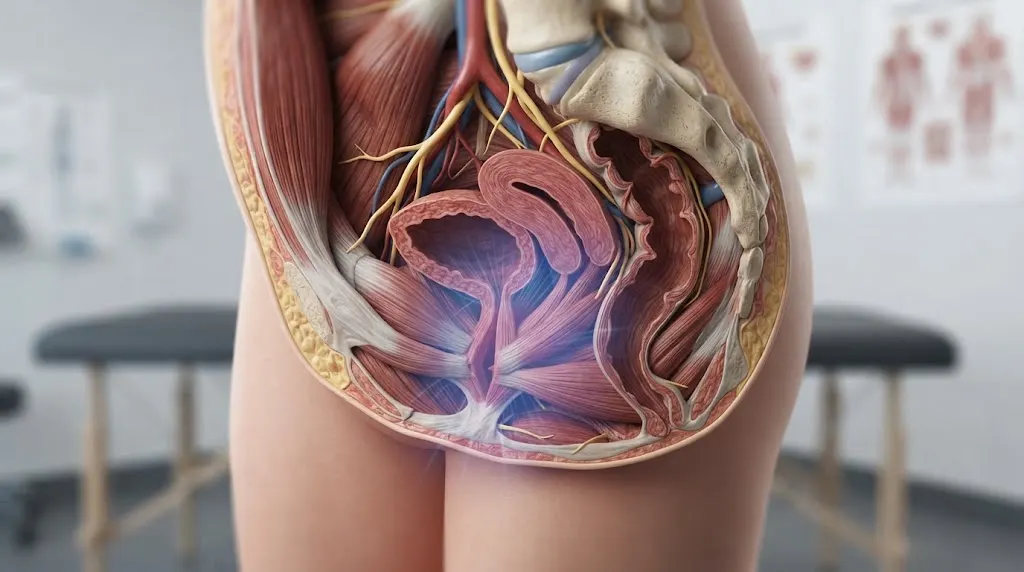
What Is Pelvic Floor Pain?
Pelvic floor pain refers to discomfort involving the muscles, connective tissues, nerves, or nearby organs at the base of the pelvis. The pelvic floor supports the bladder, bowel, and reproductive organs while helping with continence, posture, breathing, and movement. Pain may be felt deep in the pelvis, perineum, lower abdomen, tailbone, rectal area, or around the hips.
Symptoms can affect people of any sex and may range from mild aching to persistent burning, pressure, tightness, or muscle spasms. Some people notice discomfort mainly while sitting, exercising, using the bathroom, or during sexual activity. Others experience pain that seems difficult to pinpoint because several pelvic structures sit close together and can produce overlapping sensations.
Pelvic floor pain is not a single diagnosis. Muscle overactivity, nerve irritation, bladder or bowel conditions, previous injuries, surgery, childbirth, and other pelvic disorders can all contribute. Because causes vary widely, persistent pain is best approached by identifying the pattern of symptoms rather than assuming every pelvic problem is caused by weak muscles.
Common Symptoms of Pelvic Floor Pain
Aching, pressure, burning, heaviness, or a feeling of tightness are common descriptions of pelvic floor discomfort. Pain may remain localized or spread toward the groin, buttocks, tailbone, lower back, hips, or inner thighs. Symptoms sometimes increase after sitting for long periods or after activities that require repeated abdominal or pelvic muscle tension.
Urinary symptoms can occur when the pelvic floor does not relax or coordinate normally. Some people experience urgency, frequent urination, difficulty starting the urine stream, or a feeling that the bladder has not emptied completely. These symptoms can have several causes, so they should not automatically be attributed to pelvic floor muscles without appropriate assessment.
Bowel movements and sexual activity can also trigger symptoms in some people. Straining, constipation, discomfort during penetration, rectal pressure, or pain afterward may occur when muscles are sensitive or excessively tense. The combination of pelvic pain with bladder, bowel, or sexual symptoms can be particularly useful information for a pelvic health clinician.
Tight or Overactive Pelvic Floor Muscles
An overactive pelvic floor stays tense when the muscles should be relaxing. This can create aching, pressure, spasms, or difficulty with bladder and bowel function. Although pelvic floor exercises are often associated with strengthening, repeatedly performing contractions such as Kegels may worsen symptoms when the muscles already have difficulty releasing tension.
Muscle overactivity can develop for several reasons. Stress, chronic pain, prolonged bracing, previous injury, constipation, pelvic surgery, or repeatedly holding urine may contribute in some people. The pelvic floor also works closely with the diaphragm and abdominal muscles, so breathing patterns and constant abdominal gripping can influence how relaxed the area feels.
Treatment for an overactive pelvic floor often focuses on relaxation, breathing, mobility, and improving muscle coordination rather than simply adding more strengthening. A pelvic health physical therapist can assess whether the muscles are actually tight, weak, poorly coordinated, or a combination of these problems. This distinction matters because treatment for weakness and treatment for excessive tension can look very different.
Pelvic Floor Muscle Spasm and Strain
Pelvic floor muscles can become sore or irritated just like other muscles in the body. Repetitive exercise, heavy lifting, prolonged coughing, constipation, or sudden increases in activity may contribute to muscle fatigue or spasm. The discomfort can feel deep and difficult to locate because the pelvic floor is not as easy to feel or observe as a leg or arm muscle.
Muscle spasms may create sudden gripping sensations or persistent tenderness. Some people notice pain when changing position, sitting, or performing movements that increase pressure through the abdomen. The muscles may also tighten protectively when another nearby structure is painful, meaning the pelvic floor tension can sometimes be a response rather than the original cause.
Gentle movement and relaxation may help mild muscular symptoms, while repeated painful contractions should be avoided. If pain continues, assessment can help determine whether there are trigger points, coordination problems, or another condition contributing to the spasm. Treating the surrounding hips, abdomen, and breathing pattern may also be important rather than focusing only on the pelvic floor itself.
Nerve Irritation and Pudendal-Type Pain
Nerves supply sensation and muscle control throughout the pelvis, and irritation can create burning, tingling, numbness, or electric pain. One nerve commonly discussed in relation to pelvic pain is the pudendal nerve, which travels through the pelvis and supplies areas around the perineum. Symptoms may become especially noticeable during prolonged sitting.
Nerve-related pelvic pain can feel different from ordinary muscle soreness. Some people report burning, stabbing, hypersensitivity, or discomfort that improves when standing or lying down. However, several pelvic nerves and lower-spine conditions can produce similar patterns, so self-diagnosing a specific nerve problem based only on symptoms can be misleading.
Aggressive stretching or strengthening may sometimes worsen irritated nerves. Treatment depends on the location and cause of the irritation and may include posture changes, activity modification, pelvic physical therapy, or medical management. Persistent numbness, significant weakness, or rapidly worsening neurological symptoms should be professionally assessed rather than treated only with home exercises.
Bladder, Bowel, and Pelvic Conditions
Pelvic pain can sometimes come from organs rather than muscles. Bladder disorders, urinary infections, constipation, bowel conditions, gynecologic problems, and prostate-related conditions can all create discomfort that overlaps with the pelvic floor. The muscles may then tighten around the painful area, making it difficult to separate the original problem from secondary muscle tension.
Pain related to bladder function may occur with urgency, burning urination, frequency, or pressure. Bowel-related pain can be associated with constipation, diarrhea, abdominal symptoms, or discomfort during bowel movements. People with menstrual or reproductive symptoms may notice that pelvic pain changes at certain times of the month or alongside other pelvic complaints.
Because these patterns can overlap, persistent symptoms should be evaluated rather than managed only through stretching. A healthcare professional may review bladder, bowel, reproductive, or prostate-related symptoms depending on the individual. Pelvic floor treatment can still be useful when muscle tension is present, but the underlying medical condition also needs appropriate attention.
How Hips and Lower-Body Muscles Can Affect Pelvic Pain
The pelvic floor works closely with the hips, glutes, inner thighs, abdominal muscles, and lower back. Weakness, stiffness, or excessive tension in these areas can change how load moves through the pelvis. This does not mean every hip or leg problem causes pelvic pain, but surrounding muscles can influence movement and muscle coordination.
Hip rotators and inner-thigh muscles are especially connected to pelvic stability because they share nearby attachment points and often work during the same activities. Walking, squatting, running, and sitting all require coordinated control through the hips and pelvis. Looking at the entire lower-body chain can therefore be more useful than treating one painful location in isolation.
Understanding nearby anatomy can also help when symptoms occur in several areas. For example, learning about the muscle behind the knee provides useful context for how lower-body muscles cross joints and share movement demands. A whole-body approach can help distinguish local pelvic symptoms from broader musculoskeletal tension.
How Sitting Can Affect Pelvic Floor Pain
Sitting places pressure through the pelvis, buttocks, and perineal region, which can aggravate sensitive muscles or nerves. People with pelvic floor pain may notice symptoms during desk work, driving, cycling, or other activities that involve prolonged sitting. The discomfort may build gradually rather than appearing immediately.
Frequent position changes can reduce continuous pressure. Stand up, walk briefly, or shift how you are sitting instead of trying to maintain one supposedly perfect posture for hours. A supportive chair may help, but very firm surfaces or seats that place direct pressure on a painful area can make symptoms more noticeable.
Cushions can sometimes improve comfort, although the best type depends on where the pain is located. A cushion that reduces pressure around the perineum may help some people, while others prefer general seat padding. If sitting pain is severe or consistently associated with burning or numbness, a professional assessment is more useful than endlessly adjusting chairs.
How to Relieve Pelvic Floor Pain at Home
Start by identifying activities that clearly increase symptoms and reducing them temporarily rather than avoiding all movement. Long sitting periods, heavy lifting, repeated straining, or high-impact exercise may need adjustment during a flare. Gentle walking and comfortable movement can help maintain circulation and mobility without placing excessive demand on irritated tissues.
Warmth may help relax tense muscles and reduce temporary discomfort. A warm bath or comfortable heating pad can be used for short periods if it feels soothing. Avoid excessive heat, and stop if warmth makes symptoms worse or if you have reduced sensation in the area.
Breathing can also influence muscle tension. Slow diaphragmatic breathing allows the abdomen, rib cage, and pelvic floor to move together more naturally. Instead of forcefully pushing the pelvic floor downward, focus on relaxed inhalation and gentle exhalation while allowing the lower abdomen and pelvis to soften.
Pelvic Floor Exercises and Relaxation Techniques
Not everyone with pelvic floor pain needs strengthening exercises. If the muscles are already overactive, repeated Kegels may increase tension and discomfort. Relaxation-focused exercises, breathing, supported stretching, and gentle hip mobility may be more appropriate until the muscles can lengthen and contract normally again.
A simple breathing exercise can be performed lying comfortably with the knees supported. Breathe slowly into the lower ribs and abdomen and imagine the pelvic floor gently relaxing as you inhale. Exhale without squeezing aggressively, and repeat for several minutes while keeping the jaw, shoulders, abdomen, and buttocks relaxed.
Strengthening may still become useful later if weakness or poor endurance is present. A pelvic floor physical therapist can determine when contractions, core exercises, hip strengthening, or other movements should be added. The goal is coordinated function, not keeping the pelvic floor tense or strong at all times.
When to See a Pelvic Floor Physical Therapist
Consider seeing a pelvic health physical therapist when pain affects sitting, exercise, bowel movements, urination, sleep, or sexual activity. These clinicians can assess muscle tension, coordination, breathing, hip mobility, and movement patterns. Treatment is individualized because two people with similar pain locations may have very different underlying problems.
Therapy may include relaxation training, manual techniques, mobility work, education, strengthening, and changes to daily activities. The goal is not simply to stretch a painful area but to improve how the pelvic floor coordinates with the hips, abdomen, and diaphragm. Progress usually occurs gradually rather than through one dramatic treatment session.
Professional guidance can be especially helpful when generic exercises repeatedly worsen symptoms. Continuing to perform more Kegels, deeper stretches, or stronger core exercises without knowing what the muscles need can sometimes increase pain. An individualized assessment helps reduce trial and error and creates a clearer rehabilitation plan.
When Pelvic Floor Pain Needs Medical Attention
Seek medical evaluation when pelvic pain is severe, rapidly worsening, or accompanied by fever, unexplained bleeding, significant abdominal pain, or feeling seriously unwell. These symptoms may indicate infection or another medical condition rather than a simple muscle problem. Sudden severe pain should not be managed only with stretching or relaxation exercises.
New bladder or bowel control problems, major difficulty urinating, significant numbness around the groin, or progressive leg weakness require urgent medical attention. These neurological symptoms can indicate serious nerve involvement. They are different from ordinary pelvic muscle tension and should not be monitored at home while waiting for exercises to help.
Persistent pelvic pain that continues for weeks also deserves evaluation even when no emergency symptoms are present. A doctor or pelvic health clinician can review bladder, bowel, reproductive, musculoskeletal, and neurological factors. Identifying the source early can help prevent months of unnecessary self-treatment based on an incorrect assumption.
Conclusion
Pelvic floor pain can come from overactive muscles, muscle spasms, nerve irritation, bladder or bowel conditions, pelvic disorders, or surrounding musculoskeletal problems. Symptoms may include aching, burning, pressure, urinary changes, bowel discomfort, or pain during sitting and sexual activity. Because several structures can produce similar sensations, the exact cause is not always obvious.
Relief often begins with reducing aggravating activities, changing prolonged sitting habits, using gentle movement, and practicing relaxed breathing. Strengthening is not always appropriate immediately, especially when the pelvic floor is already tight. A balanced plan may include relaxation first and progressive strengthening later when muscle coordination improves.
Seek professional care for persistent symptoms or when pelvic pain significantly affects everyday life. Fever, severe bleeding, major neurological changes, or new bladder and bowel control problems require more urgent assessment. With the right evaluation and individualized treatment, many causes of pelvic floor pain can be managed more effectively and with less trial and error.
FAQs
What does pelvic floor pain feel like?
Pelvic floor pain may feel like aching, pressure, burning, tightness, spasms, or deep discomfort. It can occur in the pelvis, perineum, tailbone, rectal area, lower abdomen, hips, or groin.
Can tight pelvic floor muscles cause pain?
Yes. Overactive pelvic floor muscles can cause pain, pressure, urinary symptoms, bowel difficulty, and discomfort with sitting or sexual activity. Strengthening exercises may worsen symptoms if the muscles already stay too tense.
Are Kegels good for pelvic floor pain?
Not always. Kegels may help weakness but can aggravate pain caused by excessive muscle tension. A pelvic health professional can determine whether strengthening, relaxation, or a combination is appropriate.
Can sitting make pelvic floor pain worse?
Yes. Prolonged sitting can increase pressure on pelvic muscles and nerves, especially when tissues are already sensitive. Regular movement breaks and comfortable seating positions may reduce symptoms.
When should pelvic floor pain be checked by a doctor?
Seek medical care for severe or persistent pain, fever, unusual bleeding, major urinary problems, saddle numbness, progressive weakness, or new bladder or bowel control changes.