


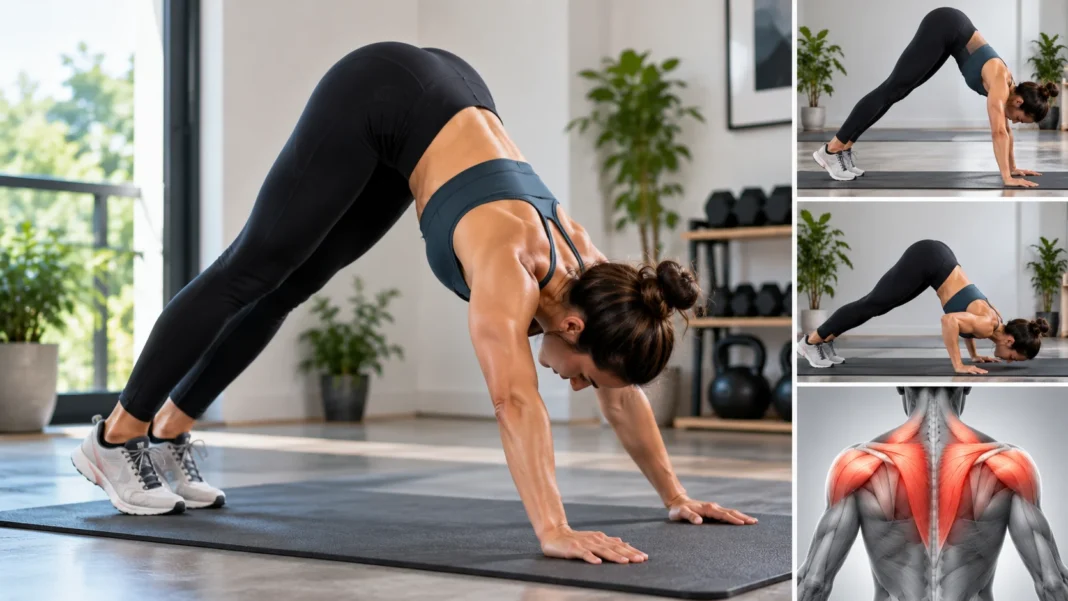
The pike push up is a bodyweight exercise that builds shoulder, upper chest, triceps, and core strength without requiring gym equipment. Its elevated hip position shifts more body weight toward the upper body than a standard push-up, making it especially useful for people working toward stronger overhead pressing movements. It can also serve as a stepping stone toward handstand push-ups.
Although the movement looks simple, technique matters if you want to target the shoulders effectively without placing unnecessary stress on the wrists, neck, or lower back. Learning proper pike push-up form, understanding common mistakes, and progressing gradually can make the exercise much more productive. The following guide explains how to perform it correctly and build it into your routine.
What Is a Pike Push Up?
A pike push up is a bodyweight pressing exercise performed with the hips raised high and the torso angled downward. Instead of lowering the chest toward the floor like a traditional push-up, you lower the head between the hands while keeping the hips elevated. This position makes the movement resemble a partial vertical press.
The exercise primarily emphasizes the shoulders because your body weight shifts forward over the arms. The triceps and upper chest also contribute, while the core and upper back help maintain stability throughout each repetition. Because it requires no weights, the pike push up can be performed at home, outdoors, or almost anywhere with enough floor space.
Pike push-ups are commonly used in calisthenics and bodyweight strength programs as a progression toward more advanced overhead pressing exercises. Beginners can start with a less steep body angle, while stronger individuals can elevate their feet to increase resistance. This makes the exercise easy to scale according to current strength and experience.
Muscles Worked During Pike Push Ups
The deltoids, particularly the front portion of the shoulders, perform much of the pressing work during a pike push up. As the torso becomes more vertical, the movement places even greater emphasis on the shoulders. This is one reason elevated pike push-ups can feel significantly more challenging than regular floor push-ups.
The triceps help straighten the elbows as you press away from the floor, while the upper chest assists the shoulders throughout the movement. Muscles surrounding the shoulder blades also work to stabilize and control the upper body. Your forearms and hands contribute by maintaining a stable base as your weight shifts forward.
The abdominal muscles, lower back, hips, and legs help maintain the pike position rather than allowing the body to collapse. While these muscles are not the primary movers, they provide important stability. Proper core tension helps prevent excessive lower-back arching and keeps the movement focused on the shoulders and arms.
How to Do a Pike Push Up Correctly
Begin in a high plank position with your hands slightly wider than shoulder width. Walk your feet toward your hands while lifting your hips toward the ceiling until your body forms an inverted V shape. Keep your arms straight initially, maintain a long spine, and allow a slight bend in the knees if hamstring flexibility limits your position.
Slowly bend your elbows and lower the top or front of your head toward the floor between your hands. Your elbows should travel at a comfortable angle rather than flaring completely sideways. Keep your hips elevated throughout the lowering phase so the movement continues to resemble an overhead press rather than becoming a normal push-up.
Once your head approaches the floor, press through your palms and extend your elbows to return to the starting position. Maintain control instead of bouncing out of the bottom. Each repetition should feel smooth, with your shoulders doing most of the work while your core keeps the body stable.
Benefits of Pike Push Ups
One major benefit of pike push-ups is that they develop shoulder strength using only body weight. They can be especially valuable for people who train at home without access to dumbbells, barbells, or machines. By adjusting foot position and elevation, you can continue increasing difficulty as your pressing strength improves.
The exercise also introduces the body to a more vertical pressing pattern. Standard push-ups primarily train horizontal pressing, while pike push-ups shift the body toward overhead mechanics. This makes them useful for athletes and calisthenics trainees working toward handstand push-ups, handstands, or stronger overhead pressing ability.
Pike push-ups also challenge coordination and upper-body stability. Your shoulders, triceps, core, and shoulder-blade muscles must work together during every repetition. When performed consistently with other balanced exercises, this can improve overall upper-body control and confidence during more demanding bodyweight movements.
Pike Push Up Form Tips for Better Results
Keep your hips high throughout the exercise because dropping them significantly changes the movement. When the body becomes too horizontal, the exercise turns into something closer to a regular push-up and places less emphasis on the shoulders. Think about keeping your hips pointed toward the ceiling while your head travels downward.
Your hand position should feel stable and comfortable. Spread your fingers and distribute pressure across the palm instead of allowing all your weight to collapse into the wrists. Slightly rotating the hands outward may feel comfortable for some people, but avoid extreme angles that make the wrists or elbows feel strained.
Move slowly enough to maintain control through the full repetition. Rushing often causes the head to move straight downward rather than slightly forward between the hands. A controlled lowering phase also increases time under tension, allowing the shoulders and triceps to work harder without immediately requiring a more advanced variation.
Common Pike Push Up Mistakes
One common mistake is allowing the hips to drop as fatigue increases. This reduces the vertical angle and shifts more work toward the chest, making the exercise less effective for shoulder development. If you cannot maintain the pike position, stop the set or use an easier variation rather than continuing with poor form.
Another mistake is placing the hands too far away from the feet. Excessive distance can make it difficult to position the shoulders properly over the hands during the lowering phase. Bringing the feet slightly closer can increase the vertical angle, although flexibility and individual body proportions will determine the most comfortable setup.
Some people also flare their elbows aggressively to the sides or allow the head to crash toward the floor. Both habits can reduce control and make the exercise uncomfortable. Keep the elbows at a natural angle, lower yourself gradually, and remember that the goal is controlled pressing strength rather than simply completing as many repetitions as possible.
Pike Push Ups and Shoulder Stability
Strong shoulders require more than powerful pressing muscles. The muscles controlling the shoulder blades also need to coordinate effectively as your arms support body weight. During pike push-ups, the scapulae naturally move as you lower and press, so maintaining good control is more useful than trying to keep them rigidly locked in one position.
Upper-back exercises can complement pike push-ups by strengthening muscles involved in scapular positioning and control. Adding movements such as rows, wall slides, and lower trap exercises can help create a more balanced shoulder routine. Combining pressing and pulling exercises is generally more useful than focusing entirely on one movement pattern.
If your shoulders feel unstable, painful, or unusually weak during pike push-ups, do not assume that more repetitions will automatically solve the problem. Reducing difficulty and improving basic shoulder strength may be more appropriate. Persistent pain, clicking with discomfort, or significant weakness should be evaluated before progressing to harder overhead exercises.
How to Make Pike Push Ups Easier
Beginners can make the movement easier by reducing the amount of body weight placed over the hands. Start with your feet farther away and your hips less elevated, creating a gentler pressing angle. This decreases shoulder demand while allowing you to practice the basic movement and become comfortable supporting your weight.
Another option is performing pike push-ups with the hands elevated on a stable bench, box, or sturdy surface. Elevating the hands can reduce the load while still allowing you to practice the same general pressing pattern. Make sure the surface cannot slide or tip before beginning the exercise.
You can also reduce the range of motion temporarily. Instead of lowering your head close to the floor, stop earlier and gradually increase depth as strength improves. Partial repetitions should still be controlled and pain-free, with the long-term goal of developing enough strength to perform a comfortable full-range pike push up.
How to Make Pike Push Ups Harder
Elevating your feet is one of the simplest ways to increase difficulty. Place your feet on a stable box, bench, or step while keeping the hips high. This shifts more body weight toward the arms and creates a more vertical torso angle, making the exercise increasingly similar to an overhead bodyweight press.
As your strength improves, you can gradually use higher foot elevations rather than immediately jumping to a very difficult variation. Small progressions allow your shoulders, elbows, and wrists time to adapt. The goal is to maintain the same controlled technique even as the percentage of body weight supported by the upper body increases.
Advanced trainees may eventually progress from elevated pike push-ups toward wall-supported handstand push-ups. This transition should happen gradually because the strength and balance demands increase substantially. Building strong full-range pike repetitions first creates a safer foundation than attempting advanced variations before your shoulders are prepared.
How Many Pike Push Ups Should You Do?
Beginners may start with two or three sets of five to eight controlled repetitions. The exact number matters less than maintaining proper form through every repetition. Stop the set when your hips begin dropping, your head movement becomes uncontrolled, or your shoulders can no longer produce smooth pressing strength.
Intermediate trainees may perform three or four sets of eight to fifteen repetitions depending on their goals. If fifteen clean repetitions become easy, increasing the difficulty may be more productive than continually adding repetitions. Elevating the feet or slowing the lowering phase can create additional challenge without dramatically increasing workout length.
Training pike push-ups two or three times per week works well for many people, especially when combined with other upper-body exercises. Recovery needs vary based on total training volume and intensity. Allow enough time between harder sessions for the shoulders and triceps to recover before repeating demanding pressing work.
How to Add Pike Push Ups to Your Workout
Pike push-ups can be performed near the beginning of an upper-body workout when shoulder strength is the main priority. After a general warm-up, complete your pike push-up sets before fatigue from other pressing exercises becomes significant. This helps preserve technique and allows you to give the movement your strongest effort.
If you already perform overhead presses or handstand training, pike push-ups may work better as a secondary exercise. Use them after your primary strength movement to add controlled bodyweight volume. They can also fit into home workouts alongside rows, standard push-ups, pull-ups, squats, and core exercises.
Avoid building an entire upper-body program around pressing movements alone. Balance pike push-ups with pulling exercises and shoulder-blade strengthening to support overall joint function. A balanced routine helps develop the back, shoulders, chest, and arms together instead of repeatedly stressing only the front of the upper body.
When to Avoid or Modify Pike Push Ups
Pike push-ups place considerable weight through the wrists and shoulders, so they may not be comfortable during certain injuries. If you have active shoulder, elbow, wrist, or neck pain, modifying the exercise may be necessary. Pain should not be treated as something you must push through simply because the movement is bodyweight-based.
People with limited shoulder mobility may also struggle to maintain a comfortable position. Elevating the hands or reducing the range can make the exercise more manageable while mobility and strength improve. Never force the head toward the floor if doing so produces pinching, sharp pain, numbness, or tingling.
Stop exercising and seek professional advice if you experience persistent joint pain, weakness, instability, or neurological symptoms. A physical therapist or qualified healthcare professional can determine whether pike push-ups are appropriate for your situation. Individual modifications are often more effective than repeatedly trying to copy a standard version that does not feel right.
Conclusion
The pike push up is an effective bodyweight exercise for building shoulder, triceps, upper chest, and core strength. Its inverted V position shifts more resistance toward the shoulders than a standard push-up, making it a valuable progression toward vertical pressing movements. It can be adapted for beginners while remaining challenging for experienced trainees.
Good technique starts with keeping the hips elevated, controlling the elbows, maintaining a stable hand position, and lowering the head smoothly between the hands. Avoid rushing repetitions or continuing after your body position begins to collapse. Clean movement and gradual progression will generally produce better results than chasing high repetition numbers with poor form.
Start with a variation that matches your current strength and progress by increasing range, adding foot elevation, or moving toward harder bodyweight pressing exercises. Balance pike push-ups with pulling and upper-back work for more complete shoulder development. If the movement causes persistent joint pain or neurological symptoms, stop and get appropriate professional guidance.
FAQs
What muscles do pike push ups work?
Pike push-ups primarily work the front shoulders and triceps while also involving the upper chest. The core, upper back, forearms, and shoulder-blade muscles help stabilize the body throughout each repetition.
Are pike push ups good for building shoulders?
Yes. Pike push-ups place more body weight over the shoulders than standard push-ups, making them useful for developing shoulder strength. Elevating the feet can increase the challenge as you become stronger.
Are pike push ups harder than regular push ups?
For many people, yes. The pike position places a greater percentage of body weight over the upper body and emphasizes the shoulders, which may be weaker than the chest muscles used heavily in standard push-ups.
How many pike push ups should a beginner do?
A beginner can start with two or three sets of about five to eight controlled repetitions. Use an easier variation if you cannot maintain elevated hips, stable shoulders, and smooth movement throughout each set.
Can pike push ups help with handstand push ups?
Yes. Pike push-ups develop shoulder and triceps strength in a more vertical pressing position, making them a useful progression toward handstand push-ups. Elevated pike push-ups can bridge the gap as strength improves.