


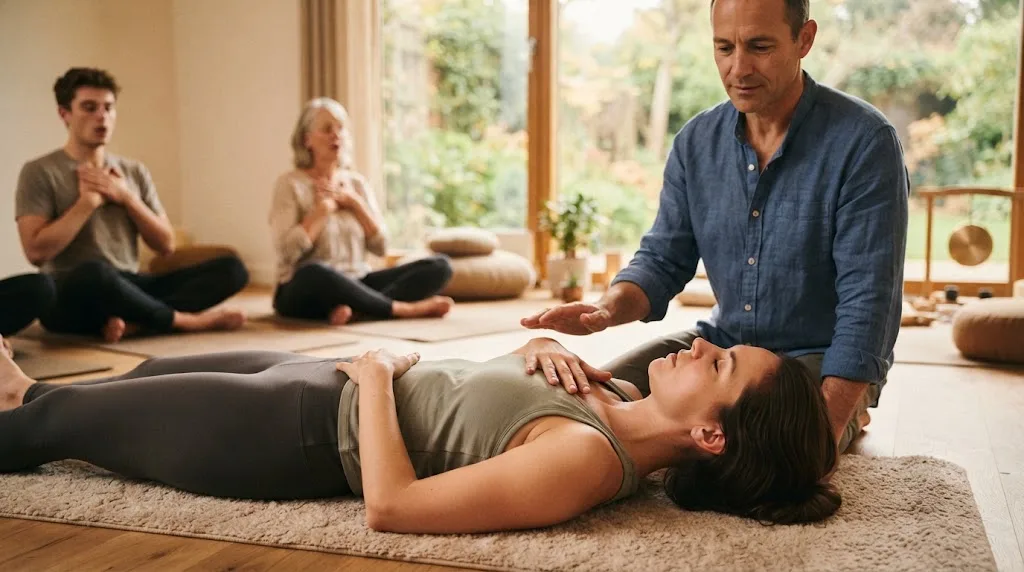
Somatic breathwork is a body-focused breathing practice designed to increase awareness of physical sensations, breathing patterns, and emotional responses. Rather than concentrating only on taking deeper breaths, somatic approaches encourage you to notice how breathing feels throughout the chest, abdomen, shoulders, and other parts of the body.
Many people explore somatic breathing for relaxation, stress management, mindfulness, or greater body awareness. However, breathwork techniques vary significantly in intensity, and stronger practices can sometimes cause dizziness, tingling, emotional discomfort, or lightheadedness. Understanding the potential benefits and safety considerations can help you choose a gentler, more appropriate approach.
What Is Somatic Breathwork?
Somatic breathwork combines conscious breathing with attention to physical sensations inside the body. The word “somatic” relates to experiencing the body from within, so the practice often involves noticing tension, temperature, movement, heartbeat, or changes in breathing. The goal is usually awareness and regulation rather than forcing the breath into one perfect pattern.
A typical session may involve slow breathing, longer exhalations, gentle pauses, or simply observing the natural rhythm of each breath. Some practitioners also incorporate movement, body scans, grounding exercises, or guided attention. Techniques can range from very calm and meditative to more intense patterns involving faster or deeper breathing.
Because the term covers many different methods, somatic breathwork does not refer to one standardized medical treatment. Some practices are rooted in mindfulness and relaxation, while others are promoted as emotional-release experiences. Beginners generally benefit from starting with slow, comfortable breathing rather than experimenting immediately with intense techniques or prolonged breath holding.
How Does Somatic Breathwork Work?
Breathing is unusual because it happens automatically but can also be consciously controlled. When you deliberately slow or change your breathing pattern, you may notice changes in muscle tension, attention, and perceived stress. Somatic breathwork uses this connection between breathing and body awareness to help people notice how physical sensations shift from moment to moment.
Slow, comfortable breathing may encourage a calmer state by reducing rapid, shallow breathing that often accompanies stress or anxiety. A longer, relaxed exhalation can feel particularly settling for some people. The practice also encourages awareness of habits such as lifting the shoulders excessively, clenching the jaw, or holding the breath during stressful situations.
Somatic attention may also help people recognize sensations they normally ignore throughout a busy day. Instead of immediately trying to remove discomfort, the practice encourages noticing where tension appears and how it changes with gentle breathing. This observational approach can support mindfulness, although it should not replace medical or psychological treatment when symptoms require professional care.
Potential Benefits of Somatic Breathwork
One commonly reported benefit is a greater sense of relaxation. Slow breathing combined with focused attention can provide a deliberate pause from work, screens, conversations, and other sources of stimulation. Even a few minutes may help some people feel more settled, particularly when the technique remains gentle rather than becoming another task they feel pressured to perform perfectly.
Somatic breathing can also improve awareness of tension patterns. You may begin noticing that your shoulders rise when you feel stressed, your jaw tightens during concentration, or your breathing becomes shallow when you are nervous. Recognizing these patterns earlier gives you an opportunity to adjust posture, move, rest, or use a calming breathing technique.
Some people also find breathwork useful as part of a mindfulness, yoga, meditation, or relaxation routine. It may help create a transition between a busy activity and rest or sleep. However, benefits vary between individuals, and somatic breathwork should be viewed as a supportive wellness practice rather than a guaranteed treatment for physical or mental health conditions.
Somatic Breathwork vs. Traditional Breathing Exercises
Traditional breathing exercises often provide a specific rhythm or numerical pattern to follow. For example, you might inhale for several seconds and exhale for a slightly longer period. Somatic breathwork can include similar techniques, but it places greater emphasis on noticing how the breath feels and how the rest of the body responds.
The somatic approach may ask you to observe which areas move as you breathe rather than immediately changing them. You might notice expansion around the ribs, abdomen, or back before deliberately adjusting anything. This focus on internal sensation can make the practice feel less performance-oriented than breathing exercises that require strict counting or precise timing.
Neither approach is automatically better. Structured breathing can be useful for people who prefer clear instructions, while somatic techniques may suit those who enjoy mindfulness and body awareness. Many people combine both methods by using a simple breathing rhythm while simultaneously noticing tension, comfort, and changes in physical sensations throughout the exercise.
Simple Somatic Breathwork Techniques for Beginners
One of the simplest approaches is breath observation. Sit or lie in a comfortable position and allow your breathing to remain natural for several cycles. Notice where you feel movement most clearly, such as your abdomen, ribs, chest, or nostrils, without immediately trying to breathe deeper or slower.
Another option is gentle extended-exhale breathing. Inhale comfortably through the nose, then allow the exhalation to last slightly longer without forcing all the air out. For example, you might breathe in for about three or four comfortable counts and exhale for four or five, adjusting the rhythm whenever it starts feeling strained.
A body-scan breathing exercise can also help develop somatic awareness. As you breathe normally, move your attention gradually from your face and shoulders toward your chest, abdomen, hips, and legs. Notice sensations without judging them as good or bad, and allow tense areas to soften naturally rather than deliberately pushing them into relaxation.
How to Start a Somatic Breathwork Practice
Choose a quiet location where you can sit, recline, or lie comfortably without needing to respond to other tasks for several minutes. Beginners do not need a lengthy session to benefit from practicing awareness. Starting with approximately five minutes can make it easier to observe your breathing without becoming frustrated, lightheaded, or overly focused on technique.
Let your breathing remain comfortable before making any deliberate changes. Notice its normal speed and depth first, then experiment gently with slower breaths or slightly longer exhalations. If deeper breathing creates dizziness, tingling, pressure, or discomfort, return to your natural breathing pattern rather than continuing because you think stronger sensations mean better results.
Consistency is usually more practical than intensity. A short session once or twice during the day may be easier to maintain than occasional long breathwork sessions. You might practice after waking, during a work break, before meditation, or in the evening, choosing a time when you can pay attention without rushing through the exercise.
Important Somatic Breathwork Safety Tips
Breathwork should feel controlled and manageable rather than physically overwhelming. Stop or return to normal breathing if you experience significant dizziness, faintness, chest discomfort, severe shortness of breath, or unusual distress. Rapid or excessively deep breathing can change carbon dioxide levels and produce tingling, lightheadedness, or other uncomfortable sensations.
Avoid treating intense physical reactions as evidence that the exercise is necessarily working. Breathwork does not need to cause shaking, dizziness, emotional flooding, or dramatic bodily sensations to be meaningful. Beginners are generally safer using gentle breathing practices and increasing duration gradually only when the exercises remain comfortable.
Your environment matters as well. Avoid strong breathwork while driving, swimming, standing somewhere you could fall, or operating equipment. Practices involving prolonged breath holding or intentional hyperventilation require additional caution, and people with medical conditions should seek appropriate professional advice before attempting demanding breathing techniques.
Who Should Be Extra Careful With Breathwork?
People with heart, lung, neurological, or other significant medical conditions should be cautious with intense breathing practices. Anyone who experiences unexplained chest pain, fainting, severe breathlessness, or recurring dizziness should not assume breathwork is the solution. Discussing symptoms with an appropriate healthcare professional is more important than attempting to control them through breathing exercises.
Pregnancy also requires a gentler approach because comfort and breathing mechanics can change as the body changes. Avoid intense techniques, prolonged breath holding, or practices that cause lightheadedness unless a qualified prenatal healthcare professional has advised otherwise. Physical discomfort such as rib pain during pregnancy can also affect comfortable breathing positions and should not simply be pushed through.
People with a history of panic attacks, trauma, or severe anxiety may also find some intense breathwork experiences emotionally activating. Rapid breathing and strong physical sensations can resemble symptoms that feel frightening to some individuals. Beginning with slow, predictable breathing and working with a qualified mental health professional when necessary can provide a more supportive approach.
What You May Feel During Somatic Breathwork
During gentle practice, you may notice your breathing becoming smoother or slower as you settle into the exercise. Some people become more aware of subtle sensations such as warmth, heaviness, muscle tension, movement around the ribs, or changes in their heartbeat. These observations can occur simply because you are paying closer attention to sensations that are usually ignored.
Emotional responses can also vary. You may feel calm, restless, distracted, sleepy, frustrated, or occasionally emotional without an obvious reason. There is no requirement to experience a dramatic emotional release, and a session that feels ordinary can still provide useful practice in noticing and responding to your body.
Stronger sensations such as marked dizziness, numbness, chest pressure, or feeling close to fainting should not be treated as a goal. These may indicate that the breathing pattern is too intense. Return to normal breathing, change position if necessary, and seek medical attention when symptoms are severe, persistent, or concerning.
Common Somatic Breathwork Mistakes
A common mistake is assuming every breath needs to be extremely deep. Repeatedly taking large breaths can actually become uncomfortable and may lead to overbreathing. A better approach is to prioritize smooth, relaxed breathing that feels natural, allowing depth to increase only when it happens comfortably rather than deliberately filling the lungs to maximum capacity.
Another mistake is forcing a rigid breathing count despite discomfort. A four-second inhale may feel comfortable for one person but too long or too short for another. Counting should serve as a guide rather than a rule, and you can shorten or abandon the pattern whenever breathing begins to feel strained.
People may also become discouraged when their minds wander. Somatic breathwork does not require maintaining perfect concentration for the entire session. When attention moves toward work, worries, or other thoughts, simply notice that shift and gently return your attention to breathing or physical sensations without judging yourself for becoming distracted.
How Often Should You Practice Somatic Breathwork?
There is no universal schedule that everyone needs to follow. Beginners may start with five to ten minutes several times per week and adjust based on comfort and personal goals. People who enjoy the practice may eventually incorporate short sessions into their daily routine, while others may find occasional breathing exercises sufficient.
Short sessions can be especially practical during periods of stress. Taking a few slow breaths before a meeting, after finishing work, or while transitioning into an evening routine can encourage greater awareness without requiring a formal meditation session. Frequency matters less than choosing a method that feels comfortable enough to practice consistently.
More is not automatically better, particularly with intense breathwork. Long or forceful sessions can produce unpleasant physical or emotional reactions in some people. If your practice repeatedly leaves you dizzy, distressed, exhausted, or physically uncomfortable, reduce the intensity and consider speaking with a qualified healthcare or mental health professional.
Conclusion
Somatic breathwork combines conscious breathing with attention to physical sensations, helping people become more aware of how stress, tension, and breathing patterns show up in the body. Gentle techniques may support relaxation, mindfulness, and greater body awareness. The practice does not need to involve intense breathing or dramatic emotional experiences to be useful.
Beginners can start with simple breath observation, comfortable extended exhalations, or body-scan breathing for a few minutes at a time. Breathing should remain smooth and manageable, and any technique that causes substantial dizziness or discomfort should be stopped. Gradual practice is generally more appropriate than immediately experimenting with demanding breathing patterns.
Somatic breathwork can complement healthy relaxation and mindfulness habits, but it should not replace professional care for ongoing physical or psychological symptoms. People who are pregnant or have significant medical conditions should be particularly careful with intense techniques. Paying attention to comfort and safety allows breathing practices to remain supportive rather than unnecessarily stressful.
FAQs
What is somatic breathwork used for?
Somatic breathwork is commonly used to support relaxation, mindfulness, and awareness of physical tension or breathing patterns. It is a wellness practice and should not be considered a replacement for medical or psychological treatment.
Can beginners practice somatic breathwork at home?
Yes. Beginners can start at home with gentle breath observation or slow, comfortable breathing for a few minutes. Avoid intense hyperventilation, prolonged breath holding, or techniques that cause dizziness or significant discomfort.
Can somatic breathwork help with stress?
Slow, comfortable breathing may help some people feel calmer and more aware of stress-related body tension. Responses vary, so breathwork is best used as one supportive strategy alongside other healthy stress-management practices.
Why do I feel dizzy during breathwork?
Dizziness can occur when breathing becomes too rapid or deep, particularly if you begin overbreathing. Stop the exercise, return to your normal breathing pattern, and seek medical advice if dizziness is severe or persistent.
Is somatic breathwork safe during pregnancy?
Gentle breathing may be comfortable during pregnancy, but intense techniques and prolonged breath holding should be approached cautiously. Discuss demanding breathwork practices with a qualified prenatal healthcare professional before using them.