


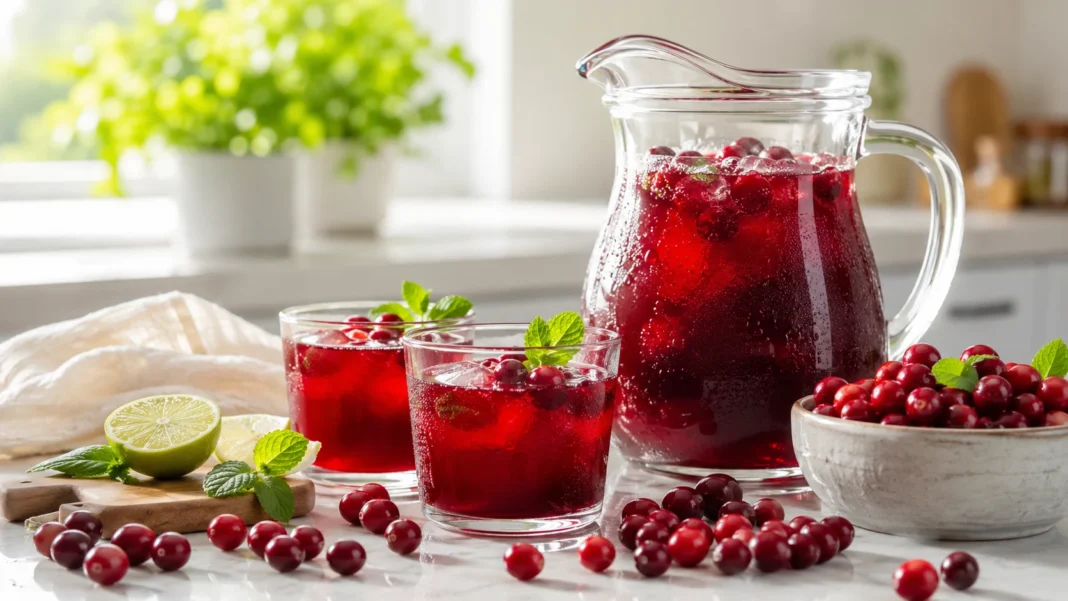
Cranberry Juice Benefits: Nutrition and What It Helps
Cranberry juice is best known for its connection with urinary tract health, but the tart red drink also provides vitamin C, plant polyphenols, and other compounds being studied for their effects on cardiovascular, digestive, and oral health. Some cranberry juice benefits are supported by better evidence than others, and the distinction matters because cranberry drinks are sometimes promoted as treatments for conditions they cannot actually cure. Research suggests cranberry products may help reduce recurrent urinary tract infections in certain people, but cranberry juice should never replace antibiotics or medical evaluation for an active infection. This guide explains cranberry juice nutrition, its potential health benefits, what it may help with, possible side effects, kidney stone concerns, and how to choose a healthier cranberry drink.
What Is Cranberry Juice?
Cranberry juice is made from cranberries, the small red fruit of plants in the Vaccinium genus, particularly the American cranberry Vaccinium macrocarpon. Cranberries are naturally extremely tart, which is why commercially available drinks often contain other fruit juices, added sugar, sweeteners, or water to make them easier to drink. Products labeled cranberry juice cocktail may therefore have a very different nutritional profile from unsweetened 100% cranberry juice. When discussing potential cranberry juice health benefits, the exact beverage matters because concentration, sugar content, and cranberry-derived compounds can vary considerably between brands. Reading the ingredient list and nutrition label is therefore more useful than assuming every red cranberry drink provides the same benefits.
Cranberries naturally contain plant compounds known as polyphenols, including flavonoids and distinctive A-type proanthocyanidins, often abbreviated as PACs. These compounds are one of the main reasons cranberries have attracted scientific interest beyond their basic vitamin and mineral content. PACs can interfere with the ability of certain bacteria to adhere to surfaces, which is the proposed mechanism behind cranberry’s better-known connection with urinary tract infections. Researchers are also investigating cranberry polyphenols for potential effects on vascular function, oral bacteria, oxidative stress, and the gut microbiome. However, discovering a biological mechanism does not automatically prove that drinking cranberry juice prevents or treats disease, so human clinical evidence still matters.
Cranberry juice has a long history as both a food and a traditional health remedy. Cranberries are native to North America, and Indigenous peoples used the fruit for food and other purposes before European settlement. Over time, cranberry became particularly associated with bladder and urinary health, eventually leading to numerous clinical trials involving juice, concentrates, powders, capsules, and other cranberry products. Today, researchers have more evidence about cranberry and urinary tract infection prevention than about most other proposed uses. The National Center for Complementary and Integrative Health notes that there has been substantial research on recurrent UTIs but comparatively little research supporting cranberry for many of the other health conditions for which it is sometimes promoted.
It is also important to distinguish cranberry juice from whole cranberries. Whole cranberries provide meaningful dietary fiber because their skins and solid plant material remain intact, whereas juice contains very little fiber after processing. USDA nutrition information lists about four grams of fiber in a cup of whole raw cranberries, while nutrition data for a cup of unsweetened cranberry juice show only a fraction of a gram. Whole fruit therefore offers advantages for fullness, digestive health, and slower consumption that juice cannot completely reproduce. Cranberry juice can still fit into a healthy diet, but it should generally be viewed as a beverage containing fruit-derived compounds rather than a nutritional replacement for eating whole fruit.
The strongest way to think about cranberry juice is as a food with some potentially useful biological properties rather than as a medicine. It can contribute antioxidants and nutrients, may help certain people reduce recurrent UTIs, and is being investigated for several other effects. At the same time, it does not “detox” the kidneys, cure bladder infections, dissolve every type of kidney stone, or replace medical treatment. Many exaggerated claims arise when early laboratory research is presented as though it were proven clinical benefit. A people-first approach means separating well-supported benefits from promising but preliminary research so that cranberry juice can be used realistically rather than as a substitute for appropriate healthcare.
Cranberry Juice Nutrition
A cup of unsweetened cranberry juice provides primarily carbohydrate, natural fruit sugars, water, and small amounts of vitamins and minerals. Nutrition data from University Hospitals list approximately 116 calories, 31 grams of carbohydrate, about 31 grams of total sugars, 24 milligrams of vitamin C, and roughly 195 milligrams of potassium in one cup of unsweetened juice. It also provides modest vitamin E and vitamin K but very little protein, fat, or dietary fiber. These numbers can vary according to processing and product formulation, so the nutrition label on the bottle you actually purchase should take priority. Fortified cranberry drinks may also contain more vitamin C than naturally occurring cranberry juice.
Vitamin C is one of cranberry juice’s most recognizable micronutrients. This water-soluble vitamin contributes to normal immune function, collagen production, wound healing, antioxidant defenses, and the absorption of non-heme iron from plant foods. Drinking cranberry juice can therefore contribute toward daily vitamin C intake, although it is not uniquely superior to citrus fruits, peppers, berries, kiwifruit, and many other foods. Some commercial cranberry drinks are fortified with additional vitamin C, which can substantially change their nutrient content. Cranberry juice should therefore not be described as an immune-system cure or a treatment for infections simply because it contains vitamin C. Its nutritional value is most meaningful as part of an overall varied diet.
Cranberry juice also provides potassium, although it is not among the most concentrated dietary potassium sources. Potassium is an electrolyte involved in fluid balance, muscle contraction, nerve function, and blood-pressure regulation. A standard serving of cranberry juice can make a modest contribution to daily intake while providing relatively little sodium in unsweetened formulations. People with certain kidney conditions may receive individualized guidance about potassium intake, however, so more is not always better for everyone. This is another reason health claims about fruit juice should not be generalized to people with chronic kidney disease or medically restricted diets. Your healthcare professional’s recommendations should take priority if you have been instructed to limit potassium or other nutrients.
Sugar content deserves particular attention. Even unsweetened 100% fruit juice naturally contains substantial sugar because juicing concentrates the fruit’s carbohydrate while removing most of its fiber. Cranberry juice cocktails can contain additional sweeteners or other fruit juices to offset cranberry’s intense tartness, so two similarly colored products may have very different calorie and sugar totals. People managing diabetes, weight, triglycerides, or overall added-sugar intake should compare labels carefully rather than assuming “cranberry” automatically means low sugar. A smaller serving or a no-added-sugar product may fit better into some diets. Diluting intensely flavored unsweetened cranberry juice with water can also make it more palatable without automatically adding extra sugar.
Juice also affects fullness differently from whole fruit. Chewing whole cranberries and consuming their fiber slows the eating process and provides greater volume from solid food, while a glass of juice can be consumed very quickly. USDA data indicate that raw cranberries provide considerably more fiber than their juiced form, which is typical of fruit juices generally. This does not make cranberry juice unhealthy, but it means portion size matters when the beverage is consumed every day. Someone drinking juice specifically for cranberry’s phytochemicals does not need to treat it as unlimited hydration. Water should remain the main beverage for routine hydration, while cranberry juice can be consumed in a moderate serving as part of meals or snacks.
Can Cranberry Juice Help Prevent UTIs?
Urinary tract infection prevention is the area where cranberry has the strongest clinical evidence. A major Cochrane review updated in 2023 included 50 studies involving 8,857 randomized participants and examined cranberry products for preventing UTIs in people at increased risk. The review supported a preventive benefit in some groups, although effectiveness varies according to population and cranberry formulation. NCCIH summarizes the evidence by noting that cranberry products may reduce the overall risk of symptomatic recurrent UTIs in women who have had previous infections, potentially by roughly one-quarter in some analyses. This is meaningful evidence, but it should be interpreted as a possible reduction in risk rather than a guarantee that someone drinking cranberry juice will remain infection-free.
The proposed mechanism involves cranberry proanthocyanidins. Certain strains of Escherichia coli, the bacteria responsible for many UTIs, use structures that allow them to attach to cells lining the urinary tract. Cranberry PACs appear able to interfere with this adhesion process, making it more difficult for some bacteria to establish themselves on the bladder wall. This does not mean cranberry juice directly “flushes bacteria out” in the way some popular explanations suggest. Hydration may increase urine production, but cranberry’s specific scientific interest centers largely on anti-adhesion effects. Different cranberry products can provide different amounts of PACs, and processing may influence their concentration, which helps explain why study results have not been completely consistent.
The evidence also depends on who is using cranberry. Research has shown more promising results in women with recurrent UTIs and some other susceptible groups, while studies involving older adults in long-term care, pregnant women, people with multiple sclerosis, and certain surgical populations have produced inconsistent or negative findings. Cranberry therefore should not be recommended universally to every person at risk of urinary infection. Age, anatomy, medical history, catheter use, pregnancy, medications, and the reason infections are recurring may all affect the appropriate prevention strategy. Anyone experiencing frequent UTIs should discuss the pattern with a clinician because recurrent infection can sometimes require investigation beyond simply adding a cranberry beverage to the diet.
Most importantly, cranberry juice is not a treatment for an active UTI. Burning with urination, frequent urgent urination, lower abdominal discomfort, blood in the urine, or other UTI symptoms require appropriate evaluation, especially when symptoms are persistent or severe. A bacterial urinary infection may require antibiotics, and delaying treatment can allow infection to spread toward the kidneys. Fever, chills, vomiting, back or flank pain, or feeling seriously ill can indicate a more significant infection and should receive prompt medical attention. NCCIH explicitly advises people not to use cranberry products as a substitute for proven UTI treatment. Prevention and treatment are completely different questions, and confusing them is one of the most potentially harmful cranberry myths.
The U.S. Food and Drug Administration has allowed certain qualified health claims concerning cranberry products and recurrent UTIs in healthy women, but the wording itself demonstrates the limits of the evidence. For qualifying cranberry juice beverages, the evidence must be characterized as limited and inconsistent. This is useful context when advertisements make cranberry sound almost equivalent to medication. A person with recurrent uncomplicated UTIs may reasonably discuss cranberry with a healthcare professional as one potential preventive strategy, particularly if they prefer nonantibiotic approaches. However, cranberry should be one part of a broader prevention discussion that may also include hydration, behavioral factors, hormonal treatment in appropriate postmenopausal patients, or other medical strategies depending on individual circumstances.
Antioxidants and Cranberry Polyphenols
Cranberries contain numerous phytochemicals with antioxidant properties, including anthocyanins, flavonols, phenolic acids, and proanthocyanidins. Antioxidants interact with reactive molecules involved in normal metabolism and oxidative stress, which has led researchers to examine berries in relation to cardiovascular, metabolic, and inflammatory health. Cranberry’s deep red color partly reflects its anthocyanin content, while its bitter and astringent qualities are influenced by other polyphenols. These compounds are biologically interesting, but consumers should be cautious about statements claiming that antioxidants simply “remove toxins” from the body. Human antioxidant biology is considerably more complex. The liver, kidneys, lungs, gastrointestinal tract, and endogenous enzyme systems already perform the body’s normal detoxification and metabolic functions.
Human studies provide some evidence that cranberry beverages can influence biomarkers related to oxidative stress, although the clinical importance remains uncertain. One randomized controlled trial involving people with Helicobacter pylori infection found improvements in several antioxidant-status measurements after consumption of cranberry beverages. Another small randomized crossover study in healthy adults observed short-term changes in antioxidant enzymes and urinary anti-adhesion activity after cranberry beverages. These findings support the idea that cranberry compounds are biologically active after consumption. They do not prove that drinking cranberry juice prevents cancer, slows aging, or protects people from every oxidative-stress-related condition. Biomarker changes are useful research signals but are not automatically equivalent to reductions in disease or longer life.
Polyphenols also undergo substantial metabolism after people consume them. Compounds present in the original berry can be transformed during digestion and by intestinal microorganisms into metabolites that circulate in the bloodstream or appear in urine. Research on cranberry and vascular function has identified several polyphenol-derived metabolites that correlate with changes in endothelial function. This is important scientifically because it suggests effects may result from metabolites produced after digestion rather than the original compounds acting unchanged inside the body. Individual responses may differ according to food intake, gut microbiome composition, genetics, and product formulation. This complexity helps explain why laboratory antioxidant measurements of a beverage cannot accurately predict its complete effect inside a living person.
Whole cranberries and cranberry juice do not necessarily provide the same polyphenol profile or concentration. Processing, dilution, heat, storage, filtration, and blending can influence the final beverage, while juice cocktails may contain a relatively modest percentage of actual cranberry juice. Some clinical trials use specially standardized cranberry preparations that are quite different from whatever bottle is available at the grocery store. This makes it difficult to translate every study into one precise household serving recommendation. When drinking cranberry juice for general nutrition rather than a research protocol, choosing a product with a meaningful cranberry content and little or no added sugar is a practical strategy. It provides cranberry-derived compounds without assuming that a particular bottle reproduces the exact dose used in clinical research.
The most evidence-based conclusion is that cranberry juice can contribute useful plant polyphenols to the diet, but those compounds are not a shortcut around the fundamentals of healthy eating. Fruits, vegetables, legumes, whole grains, nuts, tea, cocoa, herbs, and many other plant foods provide different polyphenols and antioxidants. A varied plant-rich diet therefore exposes the body to a much broader range of compounds than relying heavily on one beverage. Cranberry juice can be one enjoyable component of that pattern, especially if you appreciate its tart flavor. The phrase “high in antioxidants” should be understood as a nutritional characteristic rather than a promise that cranberry juice can prevent or cure a particular chronic disease.
Cranberry Juice and Heart Health
Researchers have investigated cranberry for cardiovascular health because its polyphenols may influence blood-vessel function, oxidative processes, and other cardiovascular risk markers. Several controlled trials have examined outcomes such as endothelial function, arterial stiffness, cholesterol, glucose, and blood pressure. Some individual studies have reported potentially favorable results. For example, a randomized study of whole cranberry powder in healthy men found improvement in flow-mediated dilation, a measure of endothelial function, after both acute and one-month cranberry consumption. Earlier cranberry juice research also reported changes in measures of arterial stiffness in people with coronary artery disease. These findings are scientifically interesting because healthy blood vessels are important to cardiovascular health, but results across studies remain inconsistent.
Blood pressure is a good example of why individual cranberry studies should not be overinterpreted. A 2026 systematic review and meta-analysis examined 12 randomized trials and found that cranberry consumption did not produce statistically significant overall reductions in either systolic or diastolic blood pressure. Some subgroup analyses showed possible benefits under particular study conditions, including certain juice interventions, but the authors’ overall conclusion was that cranberry was not effective as a blood-pressure management strategy. This newer evidence is useful because older reviews occasionally suggested small reductions. Anyone with hypertension should therefore rely on proven approaches such as prescribed medication when needed, sodium management, healthy weight, physical activity, and an evidence-based dietary pattern rather than expecting cranberry juice to lower blood pressure substantially.
A randomized trial in adults with overweight or obesity and elevated blood pressure similarly found no significant effect of cranberry juice on its primary central blood-pressure outcome. Researchers did observe a modest reduction in daytime ambulatory diastolic pressure, but other blood-pressure measurements were not meaningfully changed. Studies such as this illustrate why health headlines can become misleading when one positive secondary result is presented without the broader findings. Cranberry juice may influence certain aspects of vascular biology, but evidence does not support treating it like an antihypertensive drink. This is particularly important because some cranberry cocktails contain considerable sugar, and consuming large quantities purely for heart health could add calories without providing a proven cardiovascular advantage.
Research on cholesterol and glucose has also produced mixed or generally modest findings. Some older meta-analyses suggested possible changes in selected cardiovascular risk factors, but improvements have not appeared consistently across LDL cholesterol, total cholesterol, fasting glucose, insulin, triglycerides, or inflammatory markers. The cardiovascular value of cranberry is therefore more plausibly considered part of an overall fruit- and polyphenol-rich diet than a treatment for high cholesterol or diabetes. People who already have cardiovascular disease or diabetes should not alter prescribed treatment based on cranberry studies without medical advice. Choosing an unsweetened or lower-sugar cranberry beverage is especially relevant when blood glucose or calorie intake matters, since cranberry juice itself remains a carbohydrate-containing drink.
There is still a reasonable way to incorporate cranberry juice into a heart-conscious diet. A moderate portion can replace sugar-sweetened soda or other heavily sweetened beverages, particularly when you choose unsweetened juice or dilute it with water. It can also contribute polyphenols within a dietary pattern rich in vegetables, whole fruits, legumes, whole grains, fish, nuts, and healthy oils. What it should not do is displace more strongly supported interventions. The 2026 blood-pressure evidence reinforces a useful principle: cranberry may have interesting vascular effects, but it is not a clinically established blood-pressure therapy. People benefit most when cranberry is viewed as one food choice within a broader pattern rather than a stand-alone cardiovascular supplement.
Cranberry Juice, Gut Health and Oral Health
Cranberry polyphenols also interact with microorganisms in the digestive tract, which has created growing interest in possible gut-health effects. Many polyphenols are not completely absorbed in the small intestine and therefore reach the colon, where gut bacteria can metabolize them into smaller compounds. A 2026 randomized, double-blind pilot trial studied cranberry juice in 45 adults with overweight or obesity and found clear changes in cranberry-derived polyphenol metabolites after six weeks. However, the study did not find an overall change in gut microbial alpha diversity, although certain subgroup changes were observed. The results suggest cranberry can interact with the gut microbiome but do not establish cranberry juice as a treatment for digestive disorders or a proven way to “balance” gut bacteria.
Earlier controlled feeding research has also suggested that cranberries can influence aspects of gut microbial composition under specific dietary conditions. These studies are useful for understanding mechanisms, but gut microbiome research remains a rapidly developing area where changes in bacterial populations do not automatically translate into measurable health improvements. Two people can also have very different microbiomes while both being healthy, making simplistic ideas about “good” and “bad” gut bacteria unreliable. If digestive health is the goal, dietary fiber remains particularly important, and cranberry juice contains very little of it. Whole cranberries therefore provide an advantage over juice because their fiber reaches the digestive tract along with cranberry phytochemicals.
Cranberry has also been investigated in relation to Helicobacter pylori, a bacterium associated with gastritis and peptic ulcer disease and an important risk factor for stomach cancer. Some trials have found that cranberry beverages may suppress H. pylori activity or contribute to changes in infection markers in subsets of participants. However, cranberry juice is not a replacement for established eradication therapy, which typically requires prescribed antibiotics and acid-suppressing medication when treatment is indicated. Someone with confirmed H. pylori infection should follow medical treatment rather than attempting to clear the infection through cranberry juice. Research in this area is better viewed as investigation into potential supportive dietary effects than evidence for a home cure.
Oral health is another emerging research area because cranberry compounds can interfere with the adhesion and metabolic activity of certain oral bacteria. A small 2026 study involving adults and children found that short-term exposure to pure unsweetened cranberry juice reduced subsequent dental-plaque bacterial regrowth and acid production, whereas a sweetened cranberry juice cocktail did not show the same significant effect. Earlier laboratory research has similarly suggested that cranberry components can reduce adhesion or biofilm formation among some oral bacteria. These findings are intriguing but remain far from proving that drinking cranberry juice prevents cavities or gum disease. The acidity of juice and the sugar in many commercial products also create considerations that need to be balanced against possible antibacterial effects.
For dental health, cranberry juice should never replace brushing with fluoride toothpaste, interdental cleaning, routine dental care, and an appropriate diet. Frequent sipping of acidic beverages can expose teeth to repeated acid contact, and sweetened cranberry cocktails add fermentable sugar that oral bacteria can use. If you enjoy cranberry juice, consuming it with a meal rather than sipping continuously for hours can reduce repeated exposure. Drinking plain water afterward can also help clear residual juice from the mouth. The emerging oral-health evidence is interesting enough to justify further study, especially for isolated cranberry polyphenols or low-sugar formulations, but it is not currently strong enough to classify cranberry juice as a dental treatment.
Cranberry Juice and Kidney Stones
Cranberry’s relationship with kidney stones is more complicated than popular health advice sometimes suggests. Kidney stones are not one single disease because stones can form from different substances, including calcium oxalate, calcium phosphate, and uric acid. A beverage can therefore change urinary chemistry in ways that potentially improve one risk factor while worsening another. This is exactly what has happened in cranberry research. Some older studies suggested potentially favorable changes, while others found increases in urinary calcium, oxalate, or stone-forming supersaturation. Because the evidence is mixed, cranberry juice should not be broadly recommended as a kidney-stone prevention treatment without knowing the person’s stone type, urinary chemistry, medical history, and total diet.
One randomized crossover study involving healthy men reported that cranberry juice decreased urinary oxalate and phosphate while increasing citrate and reducing relative calcium oxalate supersaturation. Those findings suggested a potentially protective effect against calcium oxalate stone formation in that specific experiment. However, another controlled study involving healthy participants and people who had formed calcium oxalate stones produced nearly the opposite concern. Participants consuming one liter of cranberry juice daily had increases in urinary calcium and oxalate, with an approximately 18% increase in calcium oxalate supersaturation. The contrasting findings demonstrate why one small trial should not be used to make universal recommendations for people with a history of kidney stones.
Cranberry juice also tends to make urine more acidic. That characteristic is occasionally promoted as beneficial because some bacteria prefer particular urinary conditions, but changing urine pH has different implications for different stone types. The 2005 controlled study found that cranberry juice lowered urinary pH and produced mixed effects on multiple measures of stone risk. Lower urinary pH may be unfavorable for people susceptible to certain uric acid stones even if other mineral-related measurements move in a different direction. This is why deliberately changing urine acidity through large amounts of juice is not a sensible general strategy. People with recurrent stones often benefit more from a 24-hour urine evaluation that identifies their individual risk factors.
Cranberry supplements can raise similar concerns. One small study examining cranberry tablets found increased urinary oxalate after supplementation, including with cranberry-only formulations and products that also contained vitamin C. High supplemental vitamin C itself can contribute to urinary oxalate in susceptible people, so combination products can complicate the picture further. Someone with a history of calcium oxalate stones should therefore avoid assuming that cranberry capsules are automatically safer than cranberry juice. The concentration of extracts and added ingredients varies substantially between supplement products. Discussing regular cranberry supplementation with a clinician or dietitian familiar with kidney-stone prevention is especially sensible when previous stone analysis or urine testing has identified elevated oxalate.
For most people trying to prevent kidney stones, adequate fluid intake remains much more fundamental than relying on a specific juice. Water usually provides hydration without adding sugar, calories, acids, or concentrated plant compounds that may unpredictably alter urinary chemistry. Some people can still enjoy cranberry juice in moderate amounts as part of their diet, but a history of recurrent stones changes the risk-benefit calculation. Stone prevention may involve fluid targets, sodium reduction, normal dietary calcium, oxalate management, citrate strategies, medication, or other recommendations depending on stone composition. Cranberry’s mixed research means the phrase “good for the urinary tract” should never be automatically translated into “good for kidney stones.” Those are related but medically different issues.
How to Choose and Drink Cranberry Juice
Start by checking how much cranberry the beverage actually contains. “Cranberry juice,” “cranberry juice drink,” and “cranberry juice cocktail” can describe products with very different formulations. Some contain 100% cranberry juice, while others blend cranberry with apple, grape, pear, or other juices, and some include added sugar or noncaloric sweeteners. Pure unsweetened cranberry juice is intensely tart, which is why it may be sold in smaller bottles or marketed as a concentrate-like beverage. There is nothing automatically wrong with blended products, but someone choosing cranberry specifically for its polyphenols or urinary-health research should understand that a heavily diluted cocktail is not nutritionally equivalent to pure juice.
The second step is examining sugar rather than relying on front-of-package language. The nutrition panel shows total carbohydrate, total sugars, added sugars, calories, and serving size. Even juice with no added sugar still contains natural fruit sugar, while a cocktail may contain considerably more sweetener. If you have diabetes or are deliberately reducing sugar intake, compare several brands and consider smaller portions. A low-calorie cranberry beverage can reduce sugar, although it may use noncaloric sweeteners and may contain less actual cranberry juice. The healthiest choice therefore depends on your reason for drinking it. Someone interested mainly in flavor may choose differently from someone specifically seeking a high-cranberry-content beverage.
Serving size matters because research has not established that continually increasing cranberry juice intake produces greater health benefits. Drinking several large glasses every day can add substantial carbohydrate and may cause digestive discomfort without improving urinary protection. NCCIH notes that cranberry is generally considered safe by mouth but that very large amounts can cause stomach upset and diarrhea. Some clinical studies have used several hundred milliliters daily, but these controlled research doses should not automatically become personal recommendations for every consumer. For general nutrition, a modest serving is usually more practical, while people considering regular cranberry specifically for recurrent UTIs can discuss product type and amount with their healthcare professional.
Dilution is useful when pure cranberry juice tastes excessively sour. Adding sparkling or still water can reduce intensity while preserving the cranberry content of the portion you poured. Unsweetened juice can also be combined with food rather than consumed alone, which some people find gentler on the stomach. Avoid assuming that adding large amounts of honey, syrup, or sugar creates a healthier drink simply because cranberry is the base. If sweetness is needed, experimenting with a smaller amount or combining cranberry with naturally sweeter fruit can make the drink easier to tolerate. A beverage you can enjoy in moderate quantities is more realistic than forcing yourself to drink an unpleasantly concentrated product because of exaggerated health promises.
Timing is less important than consistency when cranberry is being considered for UTI prevention, and there is no strong evidence that everyone must drink cranberry juice specifically in the morning, at night, or on an empty stomach. People with reflux or sensitive stomachs may prefer consuming it alongside food because acidic beverages can feel uncomfortable when taken alone. For ordinary hydration, water should still make up most fluid intake. Cranberry juice works better as one purposeful beverage within the day than as a replacement for water. If recurrent UTIs are the reason for daily use, healthcare guidance can also help determine whether cranberry is appropriate alongside any other preventive strategies instead of relying on a self-designed juice routine.
Cranberry Juice Side Effects and Who Should Be Careful
Cranberry juice is generally safe for most adults when consumed as a normal food or beverage, but excessive amounts can cause gastrointestinal problems. NCCIH notes that large cranberry intakes may cause stomach upset and diarrhea, particularly in children. The acidity can also bother people who experience reflux, heartburn, gastritis, or sensitive stomachs, although individual tolerance varies. Starting with a smaller serving and drinking it with food can be more comfortable than consuming a large quantity of concentrated juice at once. Persistent abdominal symptoms after cranberry juice are a reason to reduce or stop intake rather than assuming discomfort means the product is somehow “detoxifying” the body.
People taking warfarin deserve additional caution. NCCIH states that evidence about an interaction between cranberry and warfarin is conflicting, but because warfarin has a narrow therapeutic range, potential changes in its effect can be clinically important. Someone using warfarin should discuss substantial or regular cranberry consumption with the healthcare professional managing their anticoagulation rather than suddenly beginning a concentrated cranberry routine. This does not mean every person taking warfarin must permanently avoid all cranberry foods, but consistency and medical monitoring may matter. Other medications can have their own dietary considerations, so discussing supplements or unusually high cranberry intake is prudent when managing multiple prescriptions.
People with diabetes should focus mainly on carbohydrate and sugar content. Cranberry juice has not been established as a treatment for high blood glucose, and controlled cranberry studies have not consistently demonstrated meaningful improvements in glucose regulation. Unsweetened 100% juice can still contain around 30 grams of naturally occurring sugar per cup according to one nutrition database, which can affect blood glucose despite the absence of added sugar. Smaller portions, lower-sugar formulations, or whole cranberries may therefore be easier to incorporate into an individualized meal plan. Anyone using insulin or glucose-lowering medication should count cranberry juice as a carbohydrate-containing beverage rather than treating it like plain water.
People with recurrent kidney stones should also seek individualized guidance before using cranberry juice or concentrated cranberry supplements specifically for “kidney health.” Research has produced conflicting effects on urinary oxalate, calcium, citrate, urine acidity, and stone supersaturation. Someone who knows they form calcium oxalate or uric acid stones may therefore receive advice different from a person with no stone history. Large-volume cranberry intake is particularly difficult to justify as a self-treatment when more established stone-prevention strategies exist. The same caution applies to cranberry tablets that contain added vitamin C, since supplemental vitamin C can further influence oxalate metabolism. A dietitian or urologist can interpret cranberry within the context of a person’s 24-hour urine results.
Pregnant and breastfeeding individuals should distinguish ordinary food amounts from concentrated or supplemental use. NCCIH notes that studies suggest cranberry in amounts normally found in food is likely safe during pregnancy or breastfeeding, but evidence about larger medicinal amounts is not conclusive. Pregnancy can also increase the clinical importance of urinary infections, meaning symptoms should be medically assessed rather than treated with cranberry juice at home. Children can drink cranberry beverages as part of an age-appropriate diet, but large amounts may cause gastrointestinal upset and sugary versions can add unnecessary calories. In every group, the safest approach is straightforward: enjoy cranberry as food, use preventive claims cautiously, and seek healthcare when symptoms suggest an actual infection or medical condition.
Frequently Asked Questions About Cranberry Juice
What is cranberry juice good for?
Cranberry juice is best supported as a possible aid in reducing recurrent urinary tract infections in certain people, particularly some women with a history of UTIs. It also provides vitamin C and cranberry polyphenols, but evidence for heart, gut, oral, and other benefits is less established.
Does cranberry juice cure a UTI?
No. Cranberry products may help reduce the risk of future UTIs in some people, but they are not recommended as treatment for an existing urinary tract infection. UTI symptoms should be evaluated medically, particularly when fever, back pain, vomiting, pregnancy, or worsening symptoms are present.
Is it healthy to drink cranberry juice every day?
A moderate amount can fit into a healthy diet for many people, especially when the product has little or no added sugar. Large quantities can add substantial sugar and calories, cause stomach upset, and may not be appropriate for people with certain kidney stones or medication concerns.
Is cranberry juice good for your kidneys?
Cranberry is more strongly associated with urinary tract infection prevention than with general kidney health. Studies examining kidney stone risk have produced conflicting findings, so people with recurrent stones should not use cranberry juice as a prevention treatment without individualized advice.
Which cranberry juice is healthiest?
Look for a product with meaningful cranberry content and little or no added sugar, then compare calories, total sugars, ingredients, and serving size on the nutrition label. Unsweetened 100% cranberry juice provides the most direct cranberry content but is extremely tart and still contains naturally occurring fruit sugar.