


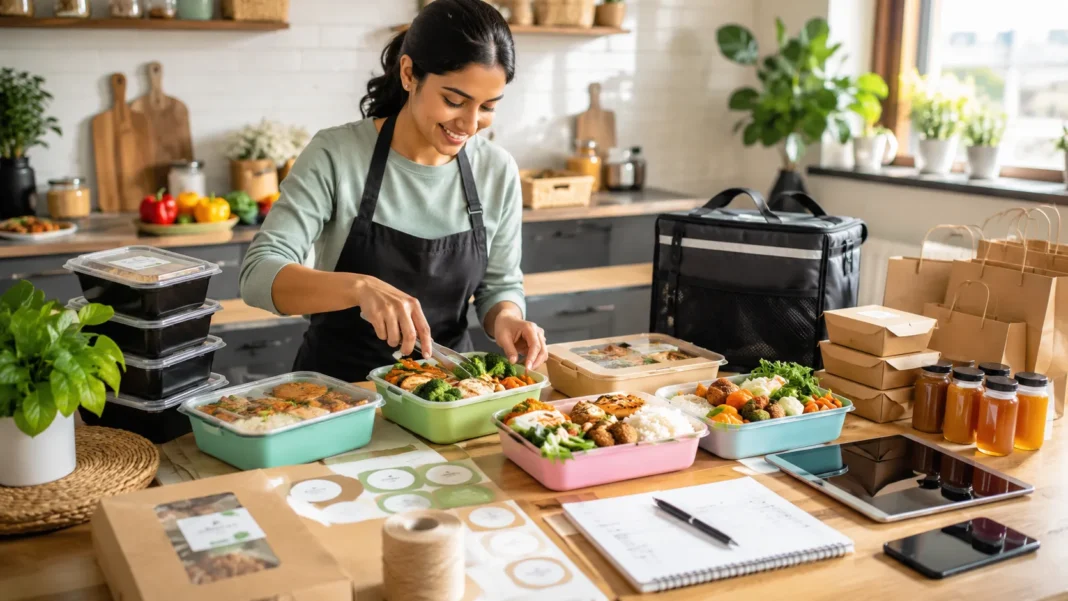
How to Start a Lunch Box Business
Starting a lunch box business can be a practical way to turn cooking skills into recurring income because many people want convenient meals without preparing food every day. Office workers, students, busy families, healthcare employees, factory staff, and professionals working from home can all become potential customers. Unlike restaurants that depend heavily on walk-in traffic, a lunch box service can operate around advance orders, subscriptions, scheduled deliveries, and predictable production, making it possible to start relatively small and expand as demand grows.
Learning how to start a lunch box business involves much more than preparing tasty meals and delivering them in containers. You need to understand your target customers, local food-business rules, ingredient costs, portion sizes, packaging, food safety, delivery logistics, menu planning, pricing, customer acquisition, and cash flow. A business can sell many meals and still struggle financially if portions are inconsistent, delivery routes are inefficient, or menu prices fail to cover the true cost of production.
One of the strongest advantages of a lunch delivery business is the possibility of repeat purchases. Someone who enjoys a restaurant may visit occasionally, but an office worker who needs lunch five days a week could become a regular subscriber. Weekly meal plans, corporate contracts, and prepaid packages can therefore create more predictable revenue than depending entirely on one-time orders. Consistency becomes extremely important because repeat customers expect the same quality, portion size, freshness, and delivery reliability every day.
This guide explains how to build a lunch box service from the ground up. It covers choosing a profitable niche, researching demand, planning a menu, understanding startup costs, pricing meals, buying equipment, packaging food safely, creating delivery routes, marketing the business, securing corporate customers, and improving profitability. Requirements for food licensing, inspections, taxes, and home-based food operations vary by location, so always confirm the current rules that apply where you plan to operate.
Decide What Type of Lunch Box Business You Want to Start
The first step is choosing a clear lunch box business model because different customers have different expectations. You might offer affordable everyday meals for office workers, healthy meal boxes for fitness-conscious customers, premium executive lunches, homemade-style food, school lunches, corporate catering boxes, vegetarian meals, or cuisine-specific menus. Trying to serve every possible audience from the beginning can make production and marketing unnecessarily complicated.
An office lunch delivery service can be particularly attractive because customers normally need food within predictable weekday hours. Businesses may place group orders for employees, meetings, training sessions, or events, while individual workers can subscribe independently. Concentrating several deliveries within office districts can also make transportation more efficient than serving isolated residential addresses across a large city.
Subscription-based lunch boxes create another useful model. Customers can purchase three-day, five-day, weekly, or monthly meal plans and receive food according to a fixed schedule. Advance orders make ingredient purchasing easier and reduce uncertainty about how much food needs to be prepared. Prepaid subscriptions can also improve cash flow because part of the revenue is collected before the meals are produced.
Choose a model that matches your kitchen capacity, cooking skills, transportation resources, and local demand. A solo operator working from an approved small kitchen may begin with 20 or 30 meals per day, while a commercial kitchen with employees can handle considerably larger volumes. Starting with a manageable system gives you time to improve recipes and logistics before accepting more customers than you can serve reliably.
Research Your Target Market Before Cooking at Scale
Market research can prevent you from investing money in meals customers do not actually want. Start by identifying where potential buyers work, study, or live and what lunch options already exist nearby. Examine restaurants, cafeterias, delivery services, home cooks, meal-prep companies, and food-delivery applications to understand typical prices, portions, cuisines, delivery fees, and customer complaints.
Speak with potential customers directly instead of relying only on assumptions. Ask office workers how much they usually spend on lunch, whether they prefer daily ordering or subscriptions, what time they expect delivery, and what frustrates them about existing options. Customers may value reliability, portion size, healthier food, homemade taste, or affordability differently than you initially expect.
Corporate customers deserve separate research because their buying process may differ from individual orders. Office managers, HR departments, administrators, and event coordinators may care about punctual delivery, invoices, bulk pricing, dietary options, and easy ordering more than elaborate individual customization. Understanding these requirements can help you design a business that becomes convenient for companies to use repeatedly.
Test demand before expanding. Offer a limited menu for several days or run a small preorder campaign within one neighborhood or office area. Track which meals sell, what customers are willing to pay, and how efficiently you can prepare and deliver the orders. Real purchases provide far more useful information than compliments from friends who have never paid for the food.
Choose a Profitable Lunch Box Niche
A niche helps customers understand why they should choose your lunch service instead of one of many alternatives. You could specialize in healthy protein meals, traditional homemade lunches, calorie-conscious dishes, vegetarian food, premium corporate boxes, budget meals, high-protein lunches, regional cuisine, or another clearly defined offering. A focused concept makes both menu development and marketing easier.
The best niche usually connects customer demand with something your kitchen can produce efficiently. Healthy food may sound attractive, but customers must actually be willing to buy it regularly at a profitable price. Likewise, complicated gourmet meals can generate strong interest while becoming difficult to prepare consistently during a busy morning production period.
Do not choose a niche solely because it appears trendy online. Look at local customer behavior and purchasing power. An affordable homemade lunch service may perform better near factories or large office districts, while premium wellness meals might work better around gyms, business centers, or higher-income residential areas.
Once you establish a strong customer base, the menu can expand carefully. A general lunch service might later introduce high-protein options, premium boxes, or corporate platters. Begin with a clear promise and add categories according to actual demand rather than launching too many concepts simultaneously.
Create a Lunch Box Business Plan
A practical business plan helps you determine how the lunch box operation will make money. It should explain your target customers, menu concept, production location, pricing, delivery system, marketing channels, startup expenses, monthly costs, and expected sales volume. The plan does not need to be unnecessarily complicated, but your important assumptions should be written down.
Estimate how many meals you need to sell each day to cover costs. Include ingredients, packaging, labor, utilities, delivery, marketing, software, permits, kitchen expenses, and other overhead. If your daily break-even level is 45 meals, knowing that figure helps you set realistic sales targets and evaluate whether your current customer base can support the business.
Include several scenarios rather than assuming perfect growth. Calculate what happens if you sell 25, 50, or 100 lunch boxes per day. Higher volume can reduce some unit costs, but it can also require employees, larger equipment, additional delivery drivers, and more kitchen space. Growth does not automatically increase profit unless operations remain efficient.
Review the plan after several weeks of real sales. Your most popular meals, average order value, delivery cost, food waste, and customer acquisition may differ from your initial estimates. Updating the plan helps you make decisions using real operating information rather than continuing with assumptions that no longer reflect the business.
Calculate Your Lunch Box Startup Costs
Startup costs depend greatly on whether you begin from an approved home kitchen, shared commercial kitchen, or dedicated food facility. Expenses may include cooking equipment, refrigeration, storage containers, knives, scales, preparation tables, insulated delivery bags, packaging, ingredients, permits, insurance, branding, website setup, payment equipment, and transportation.
Separate essential purchases from items that can wait. Reliable refrigeration, food-safe storage, accurate scales, suitable cooking equipment, and safe transportation are more important than expensive décor or custom uniforms during the early stage. Customers will judge you primarily by food quality, presentation, hygiene, and delivery reliability.
Include working capital in the startup budget. You may need to purchase ingredients and packaging before receiving payment from corporate customers, particularly when businesses pay through invoices. Vehicle fuel, wages, utilities, and emergency equipment repairs can also create cash demands before the operation becomes consistently profitable.
Avoid spending your full budget before testing demand. Start with enough equipment to handle the expected initial volume and expand after orders justify the investment. A smaller kitchen operating close to capacity with reliable customers is healthier than an expensive facility sitting mostly unused.
Understand Food Business Licenses and Regulations
Food businesses must follow rules designed to protect customers, and the exact requirements depend on your country, state, province, or municipality. You may need business registration, food-handler training, kitchen approval, health permits, tax registration, inspections, or other authorization before legally selling prepared meals.
Home-based lunch businesses require particularly careful research because some jurisdictions restrict which types of food can be produced from residential kitchens. Meals containing cooked meats, dairy products, rice, sauces, and other temperature-controlled ingredients may be subject to stricter rules than shelf-stable baked goods.
Do not assume that selling through social media eliminates licensing obligations. Regulations generally relate to the production and sale of food rather than whether customers order through a storefront, website, messaging application, or social network. Research requirements before accepting commercial orders.
Keep permits, training records, inspections, and renewal dates organized after launching. Food compliance is an ongoing business responsibility. If you are unsure which rules apply, contact the relevant local authority or qualified professional rather than copying another food business that may operate under different regulations.
Choose the Right Kitchen Setup
Your kitchen must support the number of meals you plan to produce without creating unsafe or chaotic working conditions. Consider preparation space, refrigeration, freezer capacity, cooking equipment, washing facilities, ventilation, dry storage, packaging areas, and how people move around the workspace.
Production should flow logically from ingredient storage through preparation, cooking, portioning, packing, and dispatch. If staff repeatedly cross paths carrying hot food or raw ingredients, the layout can slow production and increase safety risks. A simple workflow becomes especially valuable when dozens of boxes must leave within a narrow delivery window.
Refrigeration capacity deserves careful attention because a lunch service may store substantial quantities of ingredients and prepared components. Overloading refrigerators can make organization and temperature control more difficult. Plan storage according to realistic production volume rather than assuming everything will somehow fit.
Keep expansion in mind when selecting equipment. A larger rice cooker, commercial mixer, additional stove capacity, or larger refrigerator may become necessary as sales increase. Upgrade according to actual bottlenecks rather than purchasing every commercial appliance before you understand how the operation works.
Build a Focused Lunch Menu
A lunch menu should provide enough variety to keep repeat customers interested without making kitchen operations excessively complicated. Start with a focused selection of meals built around ingredients and preparation methods that overlap where practical. Shared ingredients can reduce inventory complexity and food waste.
Consider creating a rotating weekly menu rather than offering dozens of dishes every day. Monday might feature one chicken option, one vegetarian meal, and one premium choice, while Tuesday introduces different combinations. Rotation keeps the customer experience fresh while allowing the kitchen to prepare larger batches efficiently.
Each lunch box should feel complete. Depending on your concept, that might include a protein, carbohydrate, vegetables, salad, bread, sauce, dessert, or beverage. Portion balance affects customer satisfaction just as much as flavor because customers expect the meal to sustain them through the afternoon.
Use sales data to adjust the menu. Remove dishes that consistently receive poor feedback, create excessive waste, or require disproportionate preparation time. Expand successful meals through variations rather than continually adding unrelated items. A menu should evolve according to profitability and customer behavior.
Standardize Every Recipe
Recipe standardization ensures every customer receives the same portion, flavor, and quality regardless of who prepared the food. Record exact ingredient weights, cooking methods, preparation times, temperatures, portion sizes, and yields for each meal rather than allowing staff to estimate by eye.
Standardized recipes are also necessary for accurate costing. If one cook uses 120 grams of chicken and another uses 180 grams, the financial performance of the meal becomes impossible to predict. A small difference multiplied across hundreds of orders can meaningfully reduce monthly profit.
Use scales, measuring tools, and portioning equipment to improve consistency. This does not make the food less homemade; it makes the business more professional. Customers subscribing to a weekly plan expect Wednesday’s meal to contain roughly the same value as the meal they purchased previously.
Update recipe records whenever ingredients or suppliers change. One replacement sauce or different cut of meat can affect cost, cooking time, allergens, and final yield. Written recipes create a reliable operational reference as the team grows.
Calculate the True Cost of Each Lunch Box
Ingredient cost is only the beginning of lunch box pricing. You also need to account for containers, bags, cutlery, napkins, labor, electricity or gas, kitchen rent, delivery, payment fees, cleaning products, marketing, food waste, and administrative expenses.
Calculate the ingredient cost using exact recipe quantities. If a batch of chicken curry costs a certain amount and produces 20 standardized portions, determine the food cost per portion. Repeat the calculation for rice, salad, sauce, packaging, and every component included in the box.
Delivery cost should not be ignored. A profitable meal can become unprofitable when one driver travels a long distance to deliver a single low-value order. Grouping deliveries and establishing minimum order values or delivery zones can protect margins.
Review costs frequently because food prices fluctuate. Meat, vegetables, cooking oil, packaging, and fuel can change considerably over time. A lunch box priced profitably six months ago may gradually become unsustainable if costs increase while your selling price remains unchanged.
Set Profitable Lunch Box Prices
Pricing should cover the full cost of producing and delivering the meal while leaving enough margin to support the business. Copying competitors blindly can be dangerous because their ingredient costs, kitchen expenses, delivery model, and portion sizes may differ significantly from yours.
Customers also judge value according to quality and convenience, not only the lowest price. Fresh ingredients, reliable delivery, attractive packaging, generous portions, nutritional information, or premium proteins may support higher prices when the benefits are communicated clearly.
Consider different price tiers. A basic everyday lunch might target value-conscious customers, while a premium box includes higher-cost ingredients or additional sides. Corporate group packages can have separate pricing based on volume and delivery efficiency.
Avoid frequent discounting simply to generate orders. Customers who purchase only because of large discounts may disappear as soon as full prices return. Build a business around sustainable value and use promotions strategically for sampling, referrals, or customer acquisition.
Offer Weekly and Monthly Lunch Subscriptions
Subscriptions can transform a lunch business because they reduce uncertainty about future demand. Customers might pay for five lunches per week, 20 meals per month, or another defined package, allowing you to forecast production more accurately.
Prepaid plans improve purchasing efficiency because you know how many portions are required before ordering ingredients. They can also reduce marketing pressure because one customer produces multiple sales instead of requiring repeated acquisition for every meal.
Make subscription rules easy to understand. Explain delivery days, menu selection, pause policies, cancellation, missed deliveries, and whether unused meals carry forward. Unclear rules can create disputes and additional customer-service work.
Provide enough menu variety to prevent subscription fatigue. Customers eating your food several times per week will notice repetition faster than one-time buyers. Rotating proteins, vegetables, sauces, and cuisines can maintain interest without making production excessively complex.
Design Attractive and Practical Packaging
Lunch box packaging needs to protect food, maintain presentation, support temperature management, and survive transportation. Attractive branding is useful, but functionality should come first. A beautiful container that leaks curry into the delivery bag damages the customer experience.
Choose boxes appropriate to your menu. Compartment containers can prevent sauces from making other items soggy, while vented packaging may be necessary for certain hot foods. Test several products with actual meals before placing a large packaging order.
Consider how containers stack inside delivery bags. Packaging that takes unnecessary space can reduce the number of orders a driver carries per trip. Standardized box dimensions can improve both kitchen organization and vehicle capacity.
Branding can remain simple during the early stage. A clean label with your business name, contact details, meal name, and relevant handling information may look professional without expensive custom-printed packaging. Upgrade branding after volume makes larger packaging orders financially sensible.
Include Clear Food Labels
Labels help customers identify meals quickly and can support food safety, especially when several boxes look similar. Include the meal name and any information required by applicable local regulations.
Dietary labels can also improve the experience. Vegetarian, vegan, spicy, high-protein, or other useful identifiers help customers select meals more confidently. Use a consistent labeling system rather than changing symbols or terminology every week.
Allergen information requires particularly careful management. Recipes may contain or come into contact with ingredients that cause serious reactions. Staff should never guess when a customer asks about allergens; accurate recipe and ingredient information should be available.
If meals require refrigeration, reheating, or consumption within a specific period, provide appropriate instructions. Food safety should continue after the lunch box leaves your kitchen, and clear communication helps customers handle meals correctly.
Make Food Safety a Daily System
Food safety must be built into everyday operations rather than treated as something that matters only during inspections. Ingredient receiving, storage, preparation, cooking, holding, cooling, packing, transportation, and reheating can all affect whether food remains safe.
Control time and temperature carefully, particularly for potentially hazardous foods such as meat, poultry, seafood, cooked rice, dairy-based dishes, and other items requiring temperature control. Use suitable food thermometers and follow the current food-safety requirements that apply in your jurisdiction.
Prevent cross-contamination by separating raw and ready-to-eat foods, maintaining clean surfaces, washing hands correctly, and using appropriate utensils and storage containers. Cleaning schedules should identify what is cleaned, how often, and by whom.
Train every person handling food. A business becomes vulnerable when only the owner understands safe procedures. Consistent food safety protects customers, reduces waste, and protects the reputation you are working to build.
Manage Allergens Responsibly
Lunch box businesses often prepare many dishes inside one kitchen, which can create allergen cross-contact risks. Common allergens may include milk, eggs, wheat, peanuts, tree nuts, soy, sesame, fish, or shellfish depending on local definitions and recipes.
Maintain accurate ingredient records for every menu item, including packaged sauces, seasonings, dressings, and other components. Ingredients can change when suppliers change brands, so labels should be checked instead of relying entirely on memory.
Do not advertise meals as allergen-free unless your operation can genuinely support that claim under applicable standards. A dish that does not intentionally contain nuts, for example, may still be prepared in an environment where nut cross-contact is possible.
Train staff to escalate allergy questions rather than guessing. A customer with a serious food allergy deserves clear and accurate information. Responsible communication can prevent potentially dangerous misunderstandings.
Develop an Efficient Morning Production Schedule
Lunch delivery has a narrow operating window because customers normally expect food around midday. This means production must be carefully scheduled so meals are cooked, portioned, packed, sorted, and dispatched without unnecessary delays.
Prepare components in advance where food safety and quality allow. Vegetables can sometimes be washed or cut earlier, sauces can be prepared according to safe procedures, and dry ingredients can be measured before the busiest cooking period. Advance preparation reduces morning pressure.
Create production sheets showing how many portions of each meal are required. Cooking based on written order totals prevents employees from repeatedly checking phones or messages while working. The same sheet can guide portioning and packing.
Build a buffer into the schedule. Equipment problems, ingredient delays, staff absences, or a meal taking longer than expected can affect the entire delivery route. Starting production at the latest theoretically possible time leaves no room for normal operational problems.
Set an Order Cutoff Time
Order cutoffs make production more predictable because the kitchen needs a final quantity before ingredients are prepared. Accepting last-minute orders indefinitely can create shortages, delivery delays, and rushed food preparation.
Choose a cutoff that fits your model. Some lunch services close same-day orders in the morning, while subscription businesses collect orders the previous evening or even several days ahead. The earlier you know demand, the easier it becomes to plan purchasing.
Communicate the cutoff clearly on your website, social profiles, menus, and ordering system. Customers are less frustrated by reasonable restrictions when they understand them before attempting to order.
You can still maintain a small quantity of extra meals when demand patterns justify it, but treat those as limited availability rather than allowing unlimited late orders. Operational discipline often improves customer experience because the orders you accept arrive on time.
Create Efficient Delivery Zones
Delivery can quickly become the biggest operational challenge in a lunch box business. Serving addresses scattered across an entire city can consume so much fuel and driver time that otherwise profitable orders produce little margin.
Begin with a focused geographic area. Office clusters, universities, hospitals, business districts, or residential communities with concentrated demand can support several deliveries within short distances.
Establish zones and delivery fees according to actual transport costs. You might offer free delivery above a minimum order value within a core zone and charge more for distant areas. The pricing structure should encourage efficient orders rather than subsidizing expensive individual trips.
Expand zones only when customer density justifies it. Receiving one inquiry from a distant neighborhood does not necessarily mean launching service there immediately. A smaller reliable delivery area usually creates a stronger business foundation.
Plan Delivery Routes Carefully
Route planning affects whether customers receive lunch while it is still fresh and within the promised delivery period. Group orders according to location and create logical sequences rather than allowing drivers to decide the route randomly each day.
Corporate buildings may require extra time for parking, reception, security, elevators, or internal handoff. Record delivery notes for regular customers so drivers know exactly where orders should be left instead of calling for directions every day.
Use appropriate insulated bags and containers to support temperature management during transportation. Never rely only on speed when food safety requires controlled conditions. The delivery process is an extension of your kitchen operations.
Track late deliveries and identify recurring causes. One office complex might consistently take longer than expected, requiring the route sequence to change. Small improvements across dozens of daily stops can substantially increase capacity.
Hire Delivery Drivers at the Right Time
Many owners begin by handling delivery themselves, but this eventually becomes inefficient if it pulls them away from cooking, customer service, and business management. Hiring delivery support can increase capacity when order volume becomes consistent enough to justify the expense.
Drivers need more than transportation. They represent your brand directly to customers and should handle food carefully, communicate professionally, follow delivery instructions, and understand what to do when nobody is available to receive an order.
Define delivery procedures before hiring. Establish rules for failed deliveries, customer phone calls, cash handling if applicable, insulated-bag use, route updates, and reporting damaged packages.
Monitor delivery cost per order as the team expands. A driver should enable enough additional sales or efficiency to justify wages, fuel, insurance, and vehicle expenses. Hiring without understanding route economics can reduce profitability even as revenue grows.
Build a Professional Lunch Box Brand
Your brand should communicate what customers can expect from your meals. A healthy lunch service might use a fresh, simple identity, while a premium corporate lunch company may need more refined presentation. The brand should reflect the real product rather than creating expectations the food cannot support.
Choose a memorable business name that is easy to pronounce, spell, and search online. Check relevant business registration, domain, and social-media availability before investing significantly in logos or packaging.
Use a consistent visual identity across labels, menus, delivery bags, website pages, and social profiles. Consistency helps customers recognize the business quickly and can make a small startup appear more organized.
Remember that branding includes service quality. Punctual delivery, clean packaging, responsive communication, and consistent meals shape customer perception more powerfully than a logo. A strong brand is the promise created by marketing and confirmed by the real experience.
Take High-Quality Photos of Your Lunch Boxes
Food is highly visual, and customers often decide whether a meal looks worth purchasing before reading the description. Photograph your actual lunch boxes so buyers can see realistic portion size, presentation, ingredients, and packaging.
Use good natural lighting or a consistent lighting setup. Keep backgrounds simple and present food neatly without editing it so heavily that the delivered meal looks completely different.
Photograph several menu categories and update images when the menu changes significantly. Customers subscribing to weekly plans may respond positively to seeing new meals rather than the same three photographs repeatedly.
Images can be reused across your website, ordering platform, social media, printed menus, and advertisements. Creating a high-quality photography library provides ongoing marketing value beyond one post.
Create a Simple Lunch Box Website
A professional website gives customers one reliable place to view menus, prices, delivery zones, ordering instructions, subscription plans, and contact information. Even if many initial orders arrive through messaging apps, a website makes the business easier to discover through search.
Keep the website focused on conversion. Display your current menu, clear photographs, delivery information, order deadlines, and an obvious “Order Now” button. Customers should not need to send a message simply to discover basic pricing.
Make mobile usability a priority because many customers will order during work breaks or while commuting. Forms, menus, payment buttons, and delivery selections should be easy to use on a small screen.
Add useful local search information naturally. Explain which areas you serve and what type of meals you provide. A good website can eventually attract customers searching for terms such as office lunch delivery, homemade lunch boxes, healthy meal delivery, or corporate lunches in your area.
Accept Orders Through a Reliable System
Orders may initially arrive through phone calls or messaging applications, but manually managing large volumes becomes increasingly risky. Details can be missed, duplicate orders can occur, and staff may struggle to determine whether customers have paid.
An online ordering system can standardize meal selection, quantity, delivery address, date, payment, and special instructions. This reduces administrative work and gives customers immediate confirmation.
If you continue accepting messaging orders, use a standardized format. Ask customers to provide name, meal, quantity, delivery location, phone number, and preferred date in the same structure each time.
Do not spread orders across too many channels without centralizing them. Website orders, social-media messages, phone calls, and chat applications should ultimately enter one production list so the kitchen has an accurate final count.
Make Payment Easy
Customers are more likely to purchase regularly when payment is convenient. Depending on your location, you might accept card payments, bank transfers, digital wallets, online checkout, cash, or other established payment methods.
Subscriptions work particularly well with advance payment because the customer commits to several meals and the business receives money before production. This can reduce cancellations and improve cash flow.
Corporate clients may require invoices and payment terms instead of immediate payment. Establish these terms clearly and monitor outstanding balances so growing corporate sales do not create cash-flow problems.
Record every transaction properly from the beginning. Sales records help you understand revenue, taxes, profitability, customer behavior, and unpaid accounts. Informal payment tracking becomes increasingly difficult as the business grows.
Market Your Lunch Box Business on Social Media
Social platforms can be effective for a lunch service because new meals, kitchen preparation, customer orders, and daily menus provide naturally visual content. Post consistently enough that potential customers remember the business when lunchtime approaches.
Do more than upload static menu graphics. Show food preparation, packaging, ingredient freshness, delivery runs, customer testimonials, weekly menu previews, and behind-the-scenes moments. Real operational content can make a small food brand feel more trustworthy.
Use geographic targeting where practical because lunch delivery is fundamentally local. Thousands of followers outside your delivery zone provide less commercial value than a smaller audience containing office workers and residents you can actually serve.
Always provide a simple next step. People interested in a meal should immediately know where to order, when orders close, and whether their location qualifies for delivery. Marketing becomes much more effective when attention connects directly to purchasing.
Use Local SEO to Find Nearby Customers
Local search can bring customers who are already looking for lunch solutions. Create a strong local business presence with accurate contact information, operating hours, website details, service areas, and photographs.
Optimize relevant pages for natural local search intent. A page explaining office lunch delivery within your city can attract more qualified traffic than a generic page discussing food without mentioning where the service operates.
Encourage satisfied customers to leave genuine reviews. Reviews can increase trust for people who have never tried your meals, particularly when feedback mentions delivery reliability, taste, cleanliness, portion size, or customer service.
Keep local information synchronized across your website and business profiles. Incorrect phone numbers, old delivery hours, or outdated service areas create unnecessary confusion and can cost orders.
Approach Offices Directly
Corporate sales can be one of the most effective growth channels for a lunch box business because one relationship may produce dozens of recurring meals. Identify offices near your delivery routes and learn who manages employee food, events, or administration.
Create a simple corporate menu or introduction explaining available meals, bulk order options, delivery times, dietary choices, and how ordering works. Avoid sending an unnecessarily complicated proposal before the company has expressed interest.
Sampling can be effective when done strategically. Providing several high-quality lunch boxes to an office decision-maker can allow them to experience the product before arranging larger orders. Make sure samples represent the same quality customers will receive normally.
Follow up professionally but avoid constant pressure. Corporate relationships often take longer to develop than individual customer orders. Once an office begins ordering, consistent service becomes the strongest tool for keeping the account.
Offer Corporate Lunch Plans
Corporate plans can simplify ordering for both your business and the employer. A company might order lunch every Friday, provide employee meals several times per week, or use prepaid meal credits employees can redeem.
Fixed recurring schedules make production and delivery easier because the location and expected volume become predictable. Concentrated orders also reduce delivery cost per meal compared with serving the same number of customers across many addresses.
Provide sufficient variety for employees with different preferences while avoiding unlimited customization. A structured choice of standard, vegetarian, and perhaps premium meals may be easier to manage than allowing every person to build a completely unique box.
Invoice and account administration should be professional. Companies expect accurate documentation, clear payment terms, and reliable communication. Administrative quality can influence whether a corporate client continues ordering just as much as food quality.
Partner With Gyms and Fitness Centers
Healthy meal boxes can pair naturally with fitness businesses. Gym members may already be interested in protein intake, calorie control, meal planning, or convenient food after training, creating an audience with relevant purchasing intent.
Develop specific meals only when you can support the claims accurately. If you publish calorie or protein numbers, use reliable recipe calculations and consistent portion sizes. Do not advertise nutritional values casually if ingredients and portions change every day.
Partnership structures might include referral discounts, pickup refrigerators, member meal plans, or joint promotions. Choose a model that is operationally simple enough to manage alongside normal deliveries.
Measure whether the partnership creates paying customers rather than simply social-media exposure. A smaller gym generating 25 recurring subscribers may provide much greater business value than a large audience that rarely places orders.
Encourage Customer Referrals
Lunch businesses can grow strongly through word of mouth because coworkers see what other people are eating. One satisfied customer inside an office can introduce your meals to several colleagues without requiring paid advertising.
Create a simple referral offer if your margins allow it. Existing customers might receive a discount or free add-on after a friend completes their first qualifying order. Keep the rules easy to understand and financially sustainable.
Group referrals can be even more valuable. Encourage customers to coordinate office orders by offering appropriate bulk benefits or reducing delivery charges when several meals go to the same location.
Do not rely on incentives alone. Customers recommend food when it consistently tastes good and arrives on time. Excellent service is the foundation of referral marketing, while incentives simply make sharing easier.
Use Email or Messaging Marketing Carefully
Regular customers may appreciate receiving the upcoming weekly menu through email or an approved messaging channel. This keeps the brand visible and allows customers to order before the deadline.
Keep messages useful rather than sending constant promotions. A weekly menu, ordering deadline, holiday schedule, or new subscription option provides a clear reason for contacting customers.
Segment communications where practical. Corporate clients may need different information from individual subscribers, while vegetarian customers may be more interested in relevant menu updates than general promotions.
Respect customer preferences and applicable marketing rules. Provide a simple way for people to stop receiving promotional messages. Useful communication builds loyalty; excessive messaging creates irritation.
Track Food Waste Every Day
Food waste directly reduces profit because ingredients, labor, and energy have already been consumed. Record leftovers, spoiled ingredients, returned meals, and production that remained unsold so recurring problems become visible.
Compare waste with daily order quantities. If one side dish repeatedly remains unused, reduce its production or portion size based on customer feedback and cost analysis.
Advance ordering and subscriptions can reduce waste significantly because production follows known demand rather than guessing how many customers might appear. This is one of the operational advantages of a lunch box model compared with some traditional food businesses.
Look for safe ways to use ingredients across several dishes. Vegetables, sauces, proteins, or grains can sometimes appear in different menu combinations, reducing the chance that one specialized ingredient expires before being used.
Control Portion Sizes
Portion consistency affects both customer trust and profitability. Customers notice when today’s lunch appears significantly smaller than yesterday’s, while oversized portions gradually increase food cost without generating additional revenue.
Use scales, ladles, scoops, and standardized containers to portion meals accurately. Written portion standards make training easier and prevent employees from deciding serving size independently.
Listen to customer feedback before reducing portions solely to lower costs. A lunch service that becomes known for inadequate meals may lose subscribers quickly. Portion control means providing the intended value consistently, not simply serving less food.
Review portion sizes alongside nutritional balance and price. A lower-cost carbohydrate component cannot always compensate for insufficient protein or vegetables if customers purchased the meal based on a specific quality expectation.
Track Important Lunch Box Business Metrics
Daily revenue alone does not tell you whether the business is healthy. Monitor number of meals sold, average order value, food cost, packaging cost, delivery cost, labor, waste, repeat purchase rate, subscription retention, and gross margin.
Calculate profitability by menu item. One premium meal may generate high revenue while providing weak margins because the ingredients and labor are expensive. Another simple meal may create lower revenue but stronger profit and faster production.
Measure delivery efficiency as well. Track how many orders each driver completes and how much transportation costs per order or route. Improving delivery density can significantly increase profitability without raising menu prices.
Review metrics regularly rather than waiting for a financial problem. Monthly comparisons can reveal trends early and support better decisions about pricing, menu changes, marketing, and hiring.
Improve Customer Retention
A lunch box business becomes much more stable when customers order repeatedly. Acquiring new customers constantly is expensive compared with keeping someone who already likes the food and understands the service.
Consistency is the foundation of retention. Meals should arrive within the promised window, packaging should remain clean, portions should be dependable, and customer concerns should receive timely responses.
Introduce enough variety that regular customers do not become bored. Rotating weekly menus, occasional seasonal dishes, and limited specials can keep the experience interesting without creating a massive permanent menu.
Ask customers why they cancel subscriptions or stop ordering. Their feedback may reveal problems with price, delivery timing, variety, portion size, or quality. Retention improves when businesses investigate actual reasons rather than assuming customers simply lost interest.
Handle Complaints Professionally
Food businesses will occasionally receive complaints even when operations are well managed. A meal may arrive late, an item might be missing, or a customer may simply dislike a dish. Your response can determine whether the person leaves permanently or gives the business another chance.
Listen carefully before defending the company. Confirm what happened and gather enough information to determine whether the problem was related to preparation, packaging, delivery, or customer expectations.
Create consistent policies for refunds, replacements, credits, or other resolutions. Employees should understand what they can offer instead of escalating every small issue to the owner.
Track repeated complaints. One isolated comment may be subjective, but ten customers reporting leaking containers or overly salty food indicate an operational problem. Complaints can become valuable quality-control information when they are recorded and analyzed.
Hire Kitchen Staff as Orders Increase
Hiring becomes necessary when order volume exceeds what you can produce safely and consistently alone. Assistants may handle preparation, cooking, portioning, packing, cleaning, or administrative work depending on the largest bottleneck.
Define each role clearly before recruiting. A preparation assistant requires different skills from a chef responsible for final flavor and quality. Clear responsibilities reduce duplication and confusion during busy production periods.
Train everyone using standardized recipes and food-safety procedures. Experienced cooks still need to understand your specific portion sizes, packaging system, allergen controls, and production schedule.
Monitor labor efficiency after hiring. Additional employees should increase production capacity or quality enough to justify their total cost. Too many employees can destroy margins, while understaffing can create mistakes and burnout.
Expand Your Menu Carefully
Customers may regularly ask for breakfast, dinner, snacks, desserts, beverages, or additional cuisines once they trust your lunch service. These opportunities can increase revenue, but each new product also introduces ingredients, packaging, production steps, and operational complexity.
Test new categories as limited offers before making them permanent. A Friday dessert add-on or temporary breakfast plan can reveal demand without requiring an immediate large investment.
Calculate profitability independently. A product that increases revenue may still consume too much labor or delivery capacity to provide worthwhile profit.
Expand when the existing lunch operation is stable. Adding several new categories while struggling with late deliveries or inconsistent food quality can magnify existing problems rather than solving them.
Add Breakfast or Dinner Meal Plans
Once your lunch service has reliable subscribers, additional meal periods can increase the value of each customer. Someone already receiving lunch may prefer purchasing breakfast or dinner from the same trusted provider instead of finding another business.
Breakfast can work especially well with office deliveries if customers arrive early and want convenient food. Dinner plans may appeal more strongly to busy households or professionals returning home after work.
Additional meals require careful production planning. Breakfast delivery happens earlier than lunch, while dinner extends operations later into the day. Make sure the added revenue justifies the longer working hours and additional staffing.
Consider packaged combinations rather than completely independent menus. A daily plan containing breakfast and lunch or lunch and dinner can simplify customer purchasing and potentially increase average order value.
Grow Through Multiple Delivery Hubs
A successful lunch box company may eventually reach the practical limit of one kitchen’s delivery radius. Expanding farther from the production location can cause food quality and delivery punctuality to decline.
Instead of stretching routes indefinitely, growing businesses may consider additional kitchens, licensed production partners, or strategically located distribution hubs where appropriate. This can place food closer to customers while preserving delivery times.
Expansion should happen only after recipes, packaging, order management, training, and food safety have been standardized. A second location multiplies both strengths and weaknesses. Informal processes that work while the owner personally supervises everything may fail at a larger scale.
Use real customer demand to choose expansion areas. A neighborhood generating substantial rejected orders or corporate inquiries provides stronger evidence than selecting a new location because it appears attractive on a map.
Common Lunch Box Business Mistakes to Avoid
One major mistake is underpricing meals. New owners may calculate ingredients while forgetting packaging, labor, transportation, kitchen costs, payment fees, and food waste. High sales cannot rescue a business that loses money on every box.
Offering too many menu choices is another common error. Large menus increase ingredient inventory and make morning production harder. A focused rotating menu usually provides enough variety while keeping operations manageable.
Unreliable delivery can destroy customer trust even when the food is excellent. People ordering lunch often have limited break times, so a meal arriving an hour late may be almost useless. Design delivery capacity conservatively rather than accepting every possible order.
Finally, avoid growing before systems are ready. Increasing from 30 lunches to 200 without standardized recipes, staff training, order management, and delivery procedures can create chaos. Sustainable growth happens when operating systems expand alongside sales.
How to Make a Lunch Box Business More Profitable
Profitability improves when you increase revenue while controlling food, packaging, labor, and delivery costs. Begin by identifying which menu items generate the strongest combination of customer demand and contribution margin.
Increase delivery density by targeting offices, apartment communities, universities, and other places where several meals can be dropped at one location. A 20-box corporate delivery is usually much more efficient than 20 separate addresses.
Subscriptions can improve both revenue predictability and ingredient purchasing. Regular customers also cost less to retain than continuously acquiring new buyers through advertising, making customer loyalty a major financial advantage.
Review pricing and costs regularly. Small operational improvements such as reducing food waste, renegotiating packaging costs, improving routes, or replacing a low-margin menu item can produce meaningful profit when multiplied across thousands of annual orders.
How to Scale a Lunch Box Business Successfully
Scaling should begin only after the core business produces consistent quality and healthy unit economics. You should understand exactly what one meal costs, how long production takes, and how many deliveries one driver can complete before expanding aggressively.
Document recipes, cleaning procedures, delivery processes, supplier contacts, customer-service policies, and order workflows. Written systems allow other people to perform tasks correctly without relying entirely on the owner’s memory.
Technology can support growth through online ordering, route planning, customer databases, inventory tracking, accounting software, and automated subscription management. Introduce tools when they remove a real bottleneck rather than adopting complicated software simply because larger companies use it.
Expand gradually and track whether profit grows alongside revenue. A company producing 1,000 meals per day is not necessarily healthier than one producing 200 if the larger operation has weak margins, excessive waste, and inconsistent service. Sustainable scale means becoming more efficient as the business becomes larger.
Final Thoughts
Learning how to start a lunch box business successfully requires combining good cooking with disciplined business operations. Customers may initially try your service because the food looks delicious or the price seems attractive, but they continue ordering because quality, portions, hygiene, ordering, and delivery remain dependable.
Begin with a focused target market, manageable delivery zone, and simple rotating menu. Calculate every meal carefully, standardize recipes, and test demand before investing heavily in equipment or staff. Strong foundations make later expansion much easier.
Subscriptions, office deliveries, and corporate lunch plans can become particularly valuable because they increase repeat revenue and delivery efficiency. Concentrating customers in predictable locations allows the kitchen to plan production more accurately while reducing transportation costs.
Most importantly, grow according to actual demand and financial performance. Track food cost, waste, customer retention, delivery efficiency, and profit rather than focusing only on the number of boxes sold. A well-managed lunch box business can develop from a small local service into a scalable meal-delivery brand when convenience and operational discipline are combined with consistently enjoyable food.
Frequently Asked Questions
How much money do I need to start a lunch box business?
Startup costs vary according to your kitchen, equipment, local permits, packaging, and delivery method. A small operation can begin relatively lean, while a commercial kitchen and dedicated delivery team require substantially more capital.
Can I start a lunch box business from home?
Possibly, but it depends on local food-business regulations and the types of meals you prepare. Some jurisdictions restrict potentially hazardous foods in residential kitchens, so confirm licensing and kitchen requirements before selling.
Is a lunch box business profitable?
It can be profitable when meals are priced correctly, food waste is controlled, delivery routes are efficient, and customers order repeatedly. Subscriptions and concentrated corporate deliveries can improve unit economics considerably.
How do I get customers for a lunch box business?
Target nearby offices, residential communities, gyms, universities, and other concentrated customer groups. Use social media, local SEO, sampling, referrals, corporate outreach, reviews, and subscription offers to build recurring demand.
What food is best for a lunch box business?
Choose meals that travel well, remain appetizing after transportation, can be prepared consistently in batches, and provide healthy margins. The best menu depends on local tastes, your niche, customer budgets, and applicable food-safety requirements.