


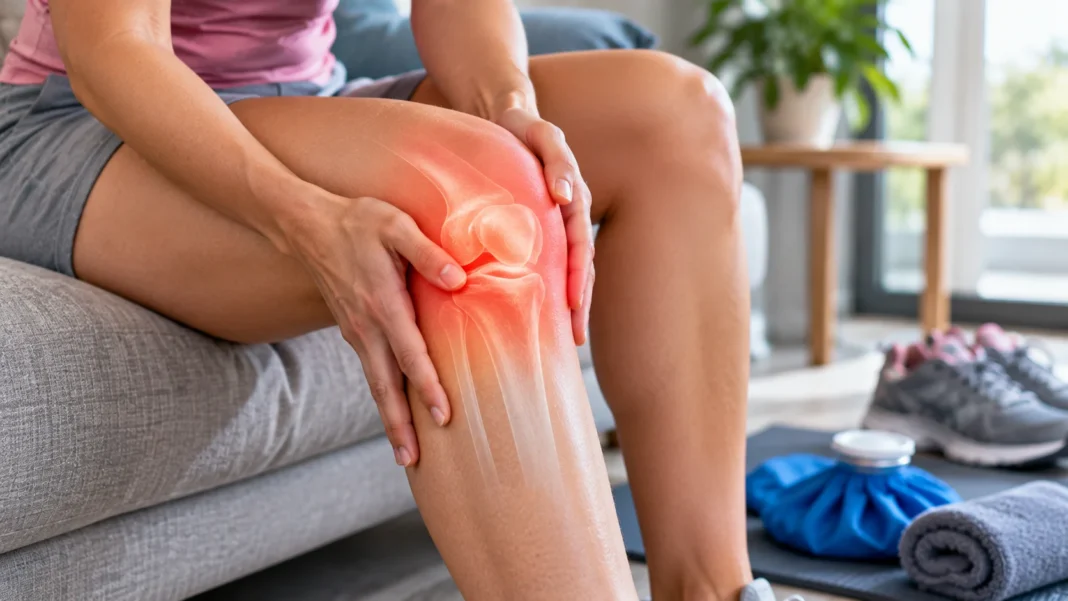
Knee effusion happens when excess fluid collects inside or around the knee joint, causing swelling, stiffness, or a feeling of fullness. It is sometimes called “water on the knee,” although the fluid may come from inflammation, injury, bleeding, or another underlying problem. The swelling can develop gradually or appear suddenly after an injury.
A swollen knee is not a diagnosis by itself. Arthritis, ligament injuries, meniscus problems, infections, gout, and overuse can all cause fluid buildup. Understanding the symptoms, common causes, treatment options, and warning signs can help you decide whether simple home care may be enough or whether medical evaluation is needed.
What Is Knee Effusion?
Knee effusion refers to an abnormal accumulation of fluid within or around the knee joint. A healthy knee already contains a small amount of lubricating synovial fluid that helps the joint move smoothly. When the knee becomes irritated, injured, or inflamed, the body may produce additional fluid that leads to visible or noticeable swelling.
The amount of swelling can vary considerably. Mild effusion may simply make the knee feel tight or slightly larger than the other side, while more significant swelling can limit bending and straightening. Some people notice puffiness around the kneecap, while others mainly feel pressure or heaviness deep inside the joint.
Knee effusion can affect people of any age because the underlying causes are so varied. Athletes may develop swelling after sports injuries, while older adults may experience it because of arthritis. The most important step is identifying why fluid has accumulated, particularly when swelling is severe, painful, recurrent, or accompanied by other concerning symptoms.
Common Symptoms of Knee Effusion
Visible swelling is the most obvious symptom of knee effusion. One knee may look noticeably larger than the other, particularly around the kneecap or sides of the joint. The skin may feel stretched or tight, and the knee can become difficult to bend fully when fluid occupies additional space inside the joint.
Pain may or may not occur depending on the cause. Some people experience a dull ache, while others develop sharper pain when standing, walking, squatting, or using stairs. The knee may also feel stiff after sitting or resting, and significant swelling can make everyday movements feel awkward even when pain itself is relatively mild.
Additional symptoms can include warmth, redness, clicking, instability, or difficulty putting weight through the leg. These details are important because they may suggest different underlying problems. Fever, severe warmth, rapidly increasing swelling, or intense pain deserves greater attention than mild swelling following a familiar increase in physical activity.
What Causes Fluid on the Knee?
Injury is a common cause of knee effusion. Ligament sprains, meniscus tears, cartilage injuries, fractures, and significant impact can trigger inflammation or bleeding within the joint. Swelling that develops rapidly after twisting the knee or experiencing a direct blow may indicate more than simple muscle soreness.
Overuse can also irritate structures around the knee. Running, jumping, kneeling, or repeatedly increasing exercise volume may stress tendons and joint tissues. Conditions such as quadriceps tendonitis can cause pain around the knee, although not every tendon problem produces true joint effusion.
Medical conditions may create swelling even without a recent injury. Osteoarthritis, rheumatoid arthritis, gout, pseudogout, bursitis, and infection are among the possibilities. Because several conditions can produce similar swelling, persistent knee effusion should be evaluated based on the full pattern of pain, stiffness, redness, medical history, and activity level.
Knee Injuries That Can Cause Effusion
Ligament injuries can cause significant knee swelling, especially when they involve structures such as the anterior cruciate ligament. A sudden twisting movement, awkward landing, or rapid direction change may trigger pain followed by swelling. Some people also report a popping sensation or a feeling that the knee cannot support them properly.
Meniscus injuries are another possible cause. The menisci are cartilage structures that help distribute load inside the knee, and they can become injured during twisting or deep bending movements. Swelling may develop gradually rather than immediately, and symptoms can include clicking, catching, joint-line pain, or difficulty fully straightening the knee.
Fractures and cartilage injuries may also create fluid accumulation. Significant trauma, inability to bear weight, severe tenderness, or deformity requires prompt assessment. Even when the knee still moves, continued swelling after an injury can indicate internal damage that should not automatically be treated as a minor strain.
Arthritis and Inflammatory Causes
Osteoarthritis can cause intermittent knee effusion when cartilage and other joint tissues become irritated. Symptoms often include stiffness, aching, reduced movement, and pain that worsens with certain activities. Swelling may come and go depending on activity levels and the degree of inflammation inside the joint.
Inflammatory arthritis can produce more persistent swelling. Conditions such as rheumatoid arthritis involve immune-related inflammation that may affect multiple joints and cause warmth, stiffness, and pain. Morning stiffness lasting for an extended period or swelling in several joints may suggest that the problem extends beyond a simple mechanical knee issue.
Crystal-related arthritis, including gout, can also cause sudden swelling and severe pain. The knee may become extremely tender, warm, and difficult to move. Because gout and joint infection can sometimes look similar at first, intense unexplained swelling should be professionally evaluated rather than managed only with home remedies.
How Knee Effusion Is Diagnosed
Diagnosis usually begins with questions about when the swelling started and what happened beforehand. A clinician may ask about recent injuries, sports, previous knee problems, fever, other swollen joints, and existing health conditions. Whether the swelling developed suddenly or gradually can provide valuable clues about the likely cause.
A physical examination may assess the amount of swelling, tenderness, warmth, movement, stability, and ability to bear weight. The clinician may also compare both knees and perform specific tests for ligaments or menisci. These findings can help determine whether imaging or other investigations are needed.
X-rays, ultrasound, or MRI may occasionally be used depending on the suspected cause. In some cases, fluid may be removed from the knee with a needle and analyzed for infection, crystals, or blood. Testing is especially useful when the cause of the swelling is unclear or serious conditions need to be ruled out.
How to Treat Mild Knee Effusion at Home
Mild swelling related to overuse or a minor injury may improve when aggravating activities are temporarily reduced. Avoid repeatedly performing movements that noticeably increase pain or swelling. Complete inactivity is not always necessary, but walking, exercise, and daily activity should remain within a level the knee can comfortably tolerate.
Cold packs may provide temporary relief during the early stages of swelling. Applying cold for short periods with a cloth between the skin and ice can help manage discomfort. Elevating the leg and using gentle compression may also reduce the feeling of fullness for some people, provided the compression is not excessively tight.
Over-the-counter pain medicines may help certain people, but they are not appropriate for everyone. Medication choices can depend on medical history, kidney health, stomach problems, blood-thinning medicines, and other factors. If you are uncertain about what is safe, discussing medication with a healthcare professional or pharmacist is a better approach.
Exercises and Movement During Recovery
Gentle movement can help prevent unnecessary stiffness when the knee can tolerate it. Slowly bending and straightening the knee within a comfortable range may be useful during recovery. Exercises should not be forced through sharp pain, and significant swelling often means high-impact training should be reduced temporarily.
As symptoms improve, strengthening the muscles around the knee can support joint function. Controlled exercises for the quadriceps, hamstrings, calves, and hips may gradually restore strength and confidence. The exact program should match the cause of the swelling because rehabilitation after a ligament injury differs from exercise used for arthritis or simple overuse.
Returning to running, jumping, or heavy lower-body training should be gradual. The knee should tolerate everyday walking, basic strengthening, and normal range of motion before demanding activities are increased significantly. If swelling repeatedly returns after exercise, the workload may be progressing too quickly or the underlying problem may need further evaluation.
When Knee Swelling May Be More Serious
A hot, red, extremely painful knee accompanied by fever can indicate a joint infection and requires urgent medical evaluation. Joint infections can damage cartilage if treatment is delayed. Do not assume sudden severe swelling is simply arthritis or overuse when systemic symptoms such as fever, chills, or feeling very unwell are also present.
Sudden swelling after a major injury also deserves prompt attention, particularly when you cannot bear weight or the knee feels unstable. Rapid swelling can sometimes indicate bleeding inside the joint after ligament, bone, or other internal damage. Severe pain, obvious deformity, or loss of normal movement increases the need for urgent assessment.
Other concerning signs include persistent numbness, major calf swelling, unexplained redness, or symptoms that progressively worsen rather than improve. Recurrent effusion without a clear reason also deserves investigation. The goal is not simply to remove the fluid but to identify and treat whatever is causing the knee to repeatedly become swollen.
When Should You See a Doctor?
Consider making an appointment if knee swelling lasts for several days without clear improvement or repeatedly returns. Persistent stiffness, pain, reduced range of motion, or difficulty with walking and stairs can suggest that the underlying issue needs more than simple home care. Medical assessment is also useful when you are unsure whether swelling comes from the joint or surrounding tissues.
Seek faster medical attention if swelling follows a significant injury or prevents you from putting weight through the leg. Severe pain, rapid swelling, instability, locking, or an inability to fully straighten the knee may indicate structural damage. Early assessment can help determine whether imaging, bracing, physical therapy, or another treatment is appropriate.
Urgent care is especially important when swelling occurs with fever, marked redness, intense warmth, or severe unexplained pain. These symptoms can indicate infection or another inflammatory problem requiring prompt treatment. When symptoms feel dramatically different from your usual joint discomfort, it is safer to get evaluated rather than waiting for the swelling to disappear.
Conclusion
Knee effusion means excess fluid has accumulated in or around the knee joint. It can develop because of injury, arthritis, overuse, infection, gout, or other conditions. The swelling may cause stiffness, heaviness, reduced movement, or pain, but the severity of symptoms depends largely on what triggered the fluid buildup.
Mild swelling may improve with temporary activity modification, cold therapy, elevation, gentle compression, and gradual return to movement. Rehabilitation often includes strengthening the muscles around the knee once symptoms settle. However, treating swelling alone is not enough when the underlying cause continues to irritate the joint.
Seek medical care when swelling is severe, persistent, recurrent, or associated with significant injury, fever, redness, instability, or inability to bear weight. An accurate diagnosis makes it easier to choose the right treatment. Early attention is particularly important when symptoms suggest infection or major internal knee damage.
FAQs
Can knee effusion go away on its own?
Mild knee effusion caused by temporary overuse or irritation may improve with rest and activity modification. Persistent, recurrent, or severe swelling should be evaluated to identify the underlying cause.
How long does knee effusion take to heal?
Recovery time depends entirely on the cause. Minor irritation may improve within days, while ligament injuries, arthritis, infections, or significant internal damage may require several weeks or longer.
Is walking good for a swollen knee?
Gentle walking may be acceptable when it does not significantly increase pain or swelling. If you limp, cannot bear weight comfortably, or symptoms worsen afterward, reduce activity and consider medical advice.
Should I massage a knee with effusion?
Gentle massage around nearby muscles may feel comfortable, but aggressive pressure directly over a swollen joint is not usually necessary. The priority is identifying why the fluid accumulated and treating that cause.
When is knee swelling an emergency?
Seek urgent care for a hot, red, very painful knee with fever, severe swelling after trauma, inability to bear weight, obvious deformity, or rapidly worsening symptoms.