


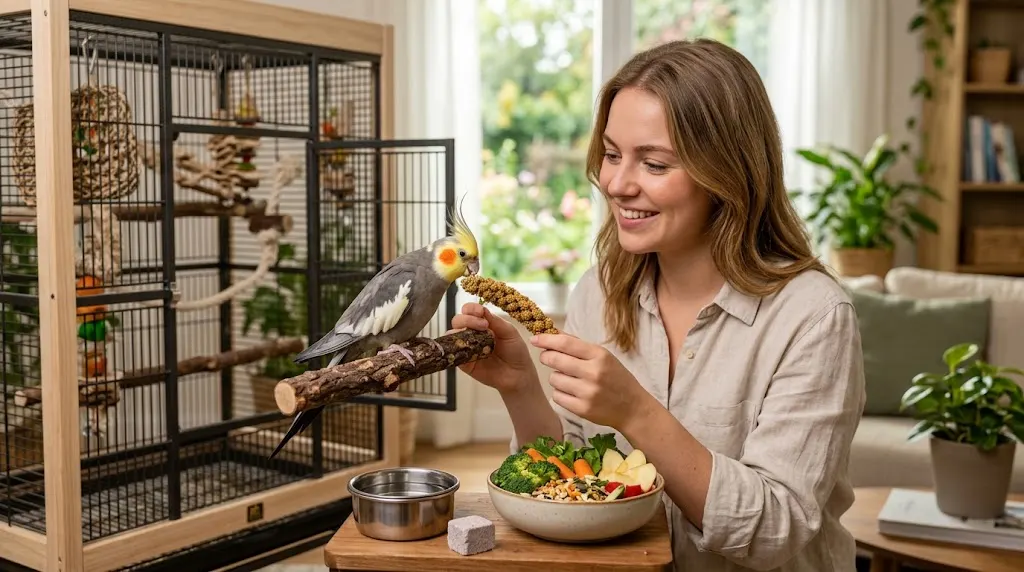
Cockatiel Care Guide: Diet, Lifespan & Personality
Cockatiels are among the most popular companion birds because they combine an affectionate personality with a relatively manageable size and an expressive appearance. Their distinctive crest, orange cheek patches, whistles, and curious behavior make them immediately recognizable, but bringing one home involves much more than buying a cage and a bag of seeds. Cockatiels are intelligent, social animals that need balanced nutrition, regular interaction, safe exercise, good sleep, and appropriate veterinary care throughout their lives. When these needs are met, they can become engaging companions that develop strong routines with their families. Understanding cockatiel care before adopting one helps prevent many common health and behavioral problems. It also allows owners to create a home where their bird can remain active and secure.
A healthy cockatiel may share your home for well over a decade, and some individuals live much longer when genetics, nutrition, veterinary care, and living conditions work in their favor. That makes cockatiel ownership a meaningful long-term commitment rather than a short-lived hobby. Daily life includes preparing food, replacing water, cleaning the enclosure, providing supervised exercise, interacting with the bird, and noticing subtle changes in behavior that could indicate illness. Owners also need to protect cockatiels from household dangers such as toxic fumes, open windows, ceiling fans, unsafe foods, and other pets. This cockatiel care guide explains diet, lifespan, personality, cage setup, training, grooming, health, and enrichment so both beginners and experienced bird lovers can make informed decisions.
What Are Cockatiels Like as Pets?
Cockatiels are small parrots native to Australia, where their wild relatives live in open environments and travel in social groups while searching for food and water. As companion birds, they retain many behaviors connected to that active and social lifestyle. They communicate through whistles, calls, crest movements, body position, and subtle changes in feather posture that owners gradually learn to recognize. Many cockatiels become strongly attached to familiar people and enjoy sitting nearby while daily household activities take place. They are generally less physically demanding than much larger parrots, yet they still need substantial attention. Their manageable size should therefore never be mistaken for minimal emotional or environmental needs.
A cockatiel’s personality can range from outgoing and adventurous to cautious and observant, so not every bird behaves exactly like popular videos suggest. Some individuals eagerly step onto a hand and seek head scratches, while others prefer to interact from a perch without being touched extensively. Early experiences, socialization, age, environment, and individual temperament all influence how comfortable a bird becomes around people. Owners who allow trust to develop gradually usually create stronger relationships than those who force physical contact. Cockatiels also tend to appreciate predictable routines because knowing when food, exercise, and bedtime occur can reduce uncertainty. Respecting the bird’s individual boundaries is one of the most important parts of building trust.
Vocal behavior is another major part of cockatiel personality. Many males become enthusiastic whistlers and may imitate melodies, household sounds, or simple patterns that receive attention from their owners. Females can also whistle and vocalize, although individual differences are more important than relying completely on sex-based expectations. Cockatiels are not usually considered the strongest talking parrots, but some learn words or short phrases with repetition. Their contact calls can become loud when they want attention or cannot see a familiar person. Prospective owners should expect regular noise rather than assuming a small bird will remain quiet. A healthy cockatiel normally uses sound as part of everyday communication.
The movable crest gives cockatiels an especially useful form of body language. A crest raised high may signal alertness, excitement, curiosity, or surprise depending on the surrounding situation. A relaxed crest held at a moderate angle often accompanies a comfortable bird, while a crest pressed tightly backward can occur with fear, defensiveness, or intense stimulation. Feathers, eyes, posture, and vocalizations should always be considered together rather than interpreting one signal by itself. Learning these patterns allows owners to recognize when their bird wants interaction and when it needs personal space. Understanding cockatiel body language can reduce unnecessary bites because people become better at noticing warnings before crossing a bird’s comfort threshold.
Cockatiels can work well for first-time bird owners who are genuinely prepared for the responsibilities involved. They are intelligent enough to learn step-up behavior, target training, recall foundations, and household routines without requiring the space demanded by much larger parrots. At the same time, they produce feather dust, scatter food, chew objects, vocalize, and need daily interaction for many years. They are not decorative pets intended to remain permanently inside a cage. Families should consider work schedules, travel habits, housing rules, household allergies, other pets, and future lifestyle changes before adopting. A cockatiel thrives when people treat it as a social companion with complex needs rather than as a low-maintenance ornament.
How to Create a Safe and Comfortable Cockatiel Cage
A cockatiel cage should provide enough horizontal and vertical room for the bird to climb, stretch, move between perches, and spread its wings without repeatedly hitting surrounding objects. Bigger is generally preferable when bar spacing remains suitable for a cockatiel and the cage design does not create escape or injury risks. Width is especially valuable because cockatiels naturally move laterally and benefit from room to flap and explore. The cage should have a secure door, bird-safe construction, and enough access points to make cleaning and food replacement practical. Avoid filling the enclosure so completely with toys that movement becomes difficult. A spacious cage works best when usable open space remains between perches and enrichment items.
Place the cage in an area where the cockatiel can participate in normal family activity without being exposed to constant chaos. Birds often appreciate being able to see familiar people, but positioning the cage directly in a busy doorway can make rest difficult. Keep it away from kitchens, smoking areas, strong fragrances, aerosol products, fireplaces, and other sources of fumes because birds have extremely sensitive respiratory systems. Drafty windows and heating or cooling vents can also create uncomfortable temperature fluctuations. At least part of the cage may feel more secure when positioned near a wall rather than completely exposed from every direction. Location should balance social contact, safety, predictable lighting, and opportunities for quiet sleep.
Perches should vary in diameter, texture, and position so the bird’s feet are not forced into exactly the same grip throughout the day. Natural bird-safe branches can provide useful variation when they have been obtained and prepared appropriately. Smooth dowels alone offer limited foot stimulation, while abrasive perch covers should not be relied upon as a substitute for proper nail care. Arrange perches so droppings do not constantly fall into food and water dishes. A comfortable sleeping perch can be positioned in a quieter upper section of the cage because many cockatiels prefer resting high. Rope products should be inspected frequently for frayed fibers that could trap toes or be swallowed.
Every cockatiel cage should contain enrichment, but toys need to match the bird’s size and behavior. Shreddable materials, bird-safe wood, foraging toys, paper items, swings, and appropriate climbing opportunities can encourage natural chewing and exploration. Rotate some toys periodically instead of changing the entire cage at once, because cautious birds may need time to accept unfamiliar objects. Examine bells, chains, clips, strings, and small components for potential entrapment or ingestion hazards before leaving them unattended. Mirrors may cause excessive attachment or hormonal behavior in some birds, so they are not necessary for companionship. Toys should encourage activity and problem-solving rather than simply filling empty space inside the enclosure.
Daily cage maintenance is essential because food debris, droppings, feathers, and moisture accumulate quickly around companion birds. Replace cage liners regularly so changes in droppings remain easy to notice, and wash food and water containers thoroughly every day. Remove spoiled fresh food before it sits for extended periods, particularly in warm environments. Deeper cleaning should include cage surfaces, perches, grates, and toys according to how quickly they become dirty. Use bird-safe cleaning practices and rinse away residues thoroughly before returning the cockatiel to the enclosure. Good hygiene reduces exposure to microorganisms while also making it easier to identify changes in eating, drinking, or droppings that may signal a health problem.
What Should a Cockatiel Eat Every Day?
A balanced cockatiel diet should provide more nutritional variety than the traditional seed-only feeding approach once commonly used for pet birds. Seeds are highly appealing to cockatiels, but many popular seed mixes are rich in fat while lacking the balanced vitamins, minerals, and other nutrients needed for long-term health. A quality formulated cockatiel pellet is commonly used as the nutritional foundation of the daily diet, with vegetables and smaller amounts of other healthy foods providing additional variety. Seeds can remain useful as treats, training rewards, or a controlled part of the diet rather than becoming the entire menu. This approach helps reduce selective eating. Nutrition is one of the most powerful tools owners have for supporting long-term cockatiel health.
Vegetables should be offered regularly because they introduce different textures, nutrients, and opportunities for natural exploration. Dark leafy greens, broccoli, carrots, bell pepper, peas, squash, sweet potato, and other bird-safe vegetables can create useful variety when prepared appropriately. Some cockatiels immediately investigate fresh produce, while birds raised primarily on seeds may ignore unfamiliar foods for days or weeks. Repeated exposure is often necessary before deciding that a bird truly dislikes something. Try different shapes, such as finely chopped vegetables, larger leafy pieces, or foods clipped near a favorite perch. Remove moist foods after a reasonable period so they do not spoil. Patience is particularly important when improving the diet of an adult seed-dependent bird.
Fruit can be included in smaller amounts because many fruits contain considerable natural sugar and water compared with vegetables. Berries, melon, mango, papaya, apple flesh, and other bird-safe fruits can provide variety, but fruit should not replace the more nutritionally balanced parts of the diet. Seeds and pits should be removed from fruits when they may pose toxicity or choking concerns. Avocado should never be treated as an ordinary fruit option for parrots because it can be dangerous to birds. Owners should also avoid assuming that something safe for humans is automatically safe for cockatiels. When uncertain about a particular food, checking with an avian veterinarian is much safer than experimenting.
Several common household foods and drinks should stay completely away from a cockatiel. Chocolate, caffeine, alcohol, avocado, and certain other human foods can cause serious poisoning and have no place in a bird’s diet. Highly salty snacks, heavily processed foods, fried items, sugary desserts, and foods containing excessive seasoning are also inappropriate as routine treats. Fresh drinking water should be available at all times and replaced at least daily, or more often when it becomes contaminated with food or droppings. Water dishes need proper washing rather than simply being topped up. Vitamin supplements should not automatically be added to water or food when a cockatiel already eats a balanced formulated diet unless an avian veterinarian recommends them.
Changing a cockatiel from an all-seed diet to pellets should happen carefully because simply removing familiar food can result in inadequate intake if the bird does not recognize pellets as edible. Introduce the new food gradually while observing what the cockatiel actually consumes rather than assuming an emptied bowl proves success. Weighing a bird regularly on an accurate gram scale can be particularly valuable during dietary transitions because small changes may become important quickly. Food conversion may take days, weeks, or even longer depending on the individual. Never attempt to starve a bird into accepting a healthier diet. An avian veterinarian can provide personalized guidance when a cockatiel is overweight, underweight, chronically seed-dependent, laying eggs, or managing a medical condition.
Cockatiel Lifespan and How to Support a Longer Life
Cockatiels commonly live for many years, which is one reason adoption should be considered a long-term commitment. Individual lifespan varies considerably according to genetics, previous care, nutrition, accidents, reproductive health, environmental safety, and access to veterinary medicine. Many companion cockatiels reach their teens, while well-cared-for individuals can live into their twenties. No owner can guarantee a particular lifespan, but everyday husbandry decisions strongly influence the bird’s chances of remaining healthy. A balanced diet, safe housing, exercise, good sleep, mental stimulation, and preventive healthcare all matter. Planning for these needs from the beginning is more effective than attempting to correct years of poor care later.
Annual examinations with an avian veterinarian are valuable because birds often hide illness until disease has become relatively advanced. This instinct makes sense for prey animals in the wild, where appearing weak could attract attention, but it complicates health monitoring in the home. A veterinarian familiar with birds can assess body condition, weight, feathers, feet, beak, breathing, diet, and other aspects that owners may overlook. New birds also benefit from an initial health evaluation rather than waiting for obvious symptoms to appear. Routine weight measurements at home can help establish what is normal for an individual cockatiel. Sudden unexplained weight loss may be an important early reason to seek professional advice.
Owners should learn subtle warning signs because a sick cockatiel may initially show only small changes. Reduced appetite, persistent fluffing, sleeping much more than usual, unusual quietness, changes in droppings, labored breathing, tail bobbing, discharge, vomiting, weakness, or difficulty remaining on a perch can all deserve attention. Sitting on the cage floor unexpectedly is particularly concerning when accompanied by other signs of illness. Because birds can deteriorate quickly, waiting several days to see whether serious symptoms disappear may be risky. Emergency problems require veterinary attention rather than home remedies found online. Familiarity with your bird’s normal activity, appetite, vocal behavior, and droppings makes abnormal changes easier to recognize.
Female cockatiels deserve particular attention because they can lay eggs even without a male present. Frequent egg production consumes calcium and other resources and may contribute to serious complications such as egg binding. Environmental conditions that encourage reproductive behavior can include excessive daylight, nest-like hiding places, certain forms of petting, abundant high-calorie foods, and strong attachment to particular objects. Owners should not automatically treat repeated egg laying as harmless simply because the eggs are infertile. A veterinarian can help evaluate chronic laying and provide guidance tailored to the bird. Signs of difficulty passing an egg, weakness, straining, abdominal enlargement, or sitting low should be treated as urgent concerns.
Accident prevention can influence lifespan just as strongly as diet. Open windows, uncovered mirrors, ceiling fans, hot cooking surfaces, standing water, electrical cords, toxic plants, heavy doors, and unsupervised dogs or cats can all create serious household risks. Nonstick cookware and other heated products that release certain fumes are particularly dangerous around birds, as are smoke, aerosols, strong air fresheners, and some cleaning vapors. Cockatiels should have a clearly bird-safe environment whenever they are outside the cage. Family members need to know when the bird is flying freely so nobody casually opens a door or switches on a fan. Consistent prevention protects a cockatiel from emergencies that can happen within seconds.
Cockatiel Personality, Behavior and Body Language
Cockatiels are social birds that often form strong relationships with the people who provide safe and predictable interaction. Some become confident shoulder companions, while others prefer sitting nearby on a stand and communicating through whistles rather than accepting constant touch. Building trust works best when the bird is allowed to choose participation rather than being chased around the cage or grabbed. Offering a finger or handheld perch for step-up training can establish a useful foundation for everyday handling. Small food rewards and calm praise help reinforce desired behavior. When owners respect a cockatiel’s boundaries, the bird is more likely to approach voluntarily and develop confidence around human hands.
The crest is one of the most visible clues to a cockatiel’s emotional state, but interpretation depends on context. A tall upright crest frequently accompanies surprise, strong interest, or heightened alertness. A moderately relaxed crest often appears when the bird feels comfortable, while flattened feathers and defensive body language may indicate fear or irritation. Cockatiels may also hiss, lean away, open the beak, or prepare to bite when they want more distance. Ignoring these warnings and continuing to touch the bird can teach it that subtle communication does not work. Respecting early signals often prevents biting because the bird does not need to escalate its response.
Affectionate behavior may include sitting close to a familiar person, preening hair, lowering the head for scratches, softly grinding the beak while relaxed, or calling when someone leaves the room. Most cockatiels enjoy gentle scratches around the head, cheeks, and neck once trust has developed. Repeated stroking over the back, wings, abdomen, or near the tail can be interpreted as courtship behavior and may encourage hormonal responses. This is particularly relevant for birds that become excessively attached to one person. Healthy companionship should include independent play and interaction with appropriate toys rather than constant physical contact. Encouraging balanced behavior can prevent a cockatiel from becoming unable to cope when its favorite person is temporarily absent.
Biting usually communicates something rather than appearing without a reason. A cockatiel may bite because it is frightened, defending territory, overstimulated, hormonal, tired, or trying to stop an interaction that continued after earlier warnings. Punishing the bird physically or shouting can damage trust without teaching a useful alternative behavior. Instead, consider what happened immediately before the bite and whether the bird’s body language was overlooked. Training should focus on voluntary step-ups, target behavior, and calm handling in situations where the bird feels secure. Owners who learn triggers often discover that supposedly unpredictable biting follows recognizable patterns. Prevention and communication are more effective than trying to dominate a small parrot.
Cockatiels also have individual preferences that can change throughout life. A bird that was exceptionally cuddly as a juvenile may become more independent after maturity, while a previously cautious rescue bird may become increasingly social after months of consistent treatment. Seasonal hormones can temporarily influence territorial behavior, vocalization, courtship displays, and tolerance of handling. Molting may make some birds quieter or more sensitive because growing new feathers requires energy and emerging pin feathers can be uncomfortable. Owners should allow personality to develop naturally instead of expecting a permanent version of the bird they first brought home. Flexibility helps relationships remain positive as behavior changes with age and circumstances.
Exercise, Toys and Training for a Happy Cockatiel
Daily physical activity is essential because a cage, even a generously sized one, cannot provide every opportunity a cockatiel needs for movement. Supervised time outside the enclosure allows the bird to fly, climb, stretch, investigate safe objects, and interact more naturally with its surroundings. Flight is valuable exercise when it can occur safely in an appropriate indoor environment. Before releasing the bird, close windows and exterior doors, cover obvious hazards, turn off ceiling fans, and secure other pets. A play stand or designated bird-safe area gives the cockatiel an appropriate destination outside the cage. Consistent exercise supports both physical condition and mental engagement.
Foraging is particularly useful because wild parrots spend significant time searching for and processing food rather than eating everything from an exposed bowl. Owners can recreate a simplified version of this challenge by hiding small amounts of food inside bird-safe paper, cardboard, foraging toys, or other suitable materials. Begin with easy puzzles so the cockatiel can see the reward and understand the activity. As confidence develops, gradually increase complexity without making access frustrating. Portions used for enrichment should remain part of the normal diet rather than adding unlimited calorie-dense treats. Foraging turns feeding into an activity and can occupy the bird independently when people are busy nearby.
Training provides mental stimulation while also making daily care easier. Teaching a reliable step-up allows the bird to move between the cage, carrier, perch, and owner without being grabbed. Target training, in which the cockatiel learns to approach or touch a designated object for a reward, can later support recall, stationing, and cooperative handling. Training sessions work best when they are brief, positive, and stopped before the bird loses interest. Tiny pieces of a favorite seed can serve as useful rewards when accounted for within the diet. Punishment-based methods are unnecessary and may create fear. Cooperative training gives cockatiels more control while allowing owners to guide behavior effectively.
Toy rotation helps maintain novelty because an object that was exciting for weeks can eventually become part of the background. Cockatiels often enjoy chewing soft wood, shredding paper, exploring woven materials, ringing appropriate bells, and climbing between different structures. Introduce new toys gradually if your bird is nervous, because immediately placing a large unfamiliar object beside a favorite sleeping perch can cause stress. Inspect enrichment regularly for sharp edges, broken clips, loose threads, or spaces where a head, foot, or toe could become trapped. Homemade toys can be excellent when all materials are confirmed to be bird-safe. Enrichment should stimulate natural behavior without introducing avoidable injury hazards.
Social enrichment is just as important as physical toys because cockatiels evolved as flock-oriented birds. A single cockatiel living with people generally needs dependable daily interaction rather than being left alone for long periods every day. Talking, whistling, training, shared quiet time, and supervised exploration can all provide social engagement without requiring constant touching. Music and household sounds may interest some birds, but leaving a television running does not replace genuine interaction. Owners with demanding schedules should realistically consider whether they can provide enough attention before adopting. A second bird may provide avian companionship in some households, but introducing another cockatiel requires appropriate quarantine, veterinary guidance, space, and careful introductions rather than simply placing two unfamiliar birds together.
Grooming, Bathing and Sleep Needs
Regular bathing helps cockatiels maintain healthy feathers and can reduce some loose dust and debris associated with normal preening. Different birds prefer different bathing methods, so owners may need to experiment with a shallow bird-safe dish, gentle misting, or exposure to fine droplets in an appropriate setting. Water should be comfortably lukewarm rather than hot or very cold, and the bird should never be forced into a bath. Avoid shampoos, soaps, perfumes, or human grooming products unless an avian veterinarian specifically recommends something. Most cockatiels can manage feather cleaning themselves when provided safe bathing opportunities. Allow the bird to dry naturally in a warm, draft-free environment.
Cockatiel nails gradually grow and may occasionally require trimming when they become long enough to interfere with normal perching or handling. Cutting nails incorrectly can cause significant bleeding because each nail contains living tissue that extends partway through it. New owners should have an avian veterinarian or an experienced qualified professional demonstrate the correct technique before attempting trimming independently. Appropriate natural perches can support normal foot use, but abrasive sandpaper covers are not a safe substitute for nail maintenance. They can irritate the bottoms of the feet while failing to control nail length effectively. Feet should also be inspected periodically for redness, pressure sores, swelling, or changes in grip.
A healthy cockatiel’s beak normally remains functional through routine eating, chewing, climbing, and interaction with appropriate materials. Owners should not file or cut the beak simply because they believe regular trimming is part of routine grooming. Abnormal overgrowth, unusual shape, cracking, discoloration, or difficulty eating may indicate an underlying medical or nutritional problem requiring veterinary assessment. Providing bird-safe chewing materials helps encourage natural use without attempting to mechanically shorten the beak. Similar caution applies to feathers. Damaged feathers normally replace themselves during subsequent molts, while persistent feather loss or self-plucking warrants investigation rather than cosmetic treatment.
Sleep is one of the most underestimated parts of cockatiel care. Most cockatiels benefit from a long, predictable period of darkness and quiet each night, often around ten to twelve hours depending on the individual and household routine. A room filled with television noise, conversations, and bright lights late into the night may prevent proper rest even when the bird appears to sit quietly. Some owners use a dedicated sleeping location or cage cover, provided ventilation remains adequate and the bird is comfortable with the arrangement. Consistent sleep can support behavior and may help reduce excessive hormonal stimulation. Bedtime should be treated as a genuine biological need rather than an optional convenience.
Night frights can occur when a cockatiel becomes suddenly startled in darkness and begins flapping or crashing around the enclosure. Shadows, unexpected sounds, movement outside a window, or unfamiliar environmental changes can sometimes trigger these episodes. A small dim night-light may help certain birds orient themselves, especially if night frights occur repeatedly. Keep the area immediately around sleeping perches free from objects that could easily injure the bird during panic. If episodes become frequent or severe, discuss them with an avian veterinarian to rule out medical factors and review the sleeping environment. Remaining calm during an episode is important because sudden grabbing can create additional fear or injury.
Common Cockatiel Health Problems and Warning Signs
Nutritional problems remain an important concern in cockatiels, particularly when birds are maintained primarily on seeds for extended periods. A nutritionally incomplete diet can contribute to deficiencies, obesity, liver problems, poor feather quality, and reduced overall resilience. Owners sometimes believe a bird is eating a balanced mix because several foods are offered, when the cockatiel is actually selecting only its favorite high-fat seeds and leaving everything else. Watching what disappears from the bowl helps identify selective eating. Regular weighing can reveal gradual changes that may otherwise remain hidden beneath feathers. Improving nutrition should be done safely and gradually, especially when a bird has followed the same diet for years.
Respiratory problems deserve rapid attention because healthy cockatiels should breathe quietly while resting. Open-mouth breathing, noticeable effort, repeated tail bobbing with each breath, unusual respiratory sounds, or persistent nasal discharge can indicate a significant problem. Household air quality is particularly important because birds are vulnerable to smoke and fumes that humans may tolerate without immediate symptoms. Keep cockatiels away from tobacco smoke, aerosols, heavily scented products, and overheated nonstick coatings or appliances that may release toxic fumes. Moving the cage farther away is not necessarily adequate protection when hazardous fumes can circulate throughout the home. Suspected toxic exposure should be treated as an emergency.
Feather changes can reflect normal molting, environmental factors, behavioral problems, or underlying disease. During a normal molt, old feathers are replaced progressively and new pin feathers emerge, sometimes making the bird look temporarily untidy. Persistent bald areas, bleeding feathers, severe itching, damaged plumage, or deliberate feather removal are different concerns. Feather plucking can involve medical causes, stress, inadequate enrichment, hormonal influences, or several factors at once, making simple home solutions unreliable. An avian veterinarian should evaluate unexplained feather destruction before it is assumed to be purely behavioral. Owners should also inspect the environment for hazards that could physically damage feathers.
Changes in droppings can provide useful health information because owners see them every day during cage cleaning. Diet can naturally influence color, moisture, and volume, particularly after the bird eats watery fruits or vegetables, so one unusual dropping does not always indicate disease. Persistent diarrhea-like changes, blood, dramatic color changes, reduced output, or major differences accompanied by lethargy or poor appetite deserve veterinary attention. Clean cage liners make observation much easier than deep bedding that hides droppings. Never diagnose a cockatiel solely from online photographs because many unrelated illnesses can produce similar changes. The bird’s behavior, examination findings, history, and diagnostic testing may all be necessary.
Emergencies often become obvious through combinations of symptoms rather than one isolated sign. A cockatiel that stops eating, becomes weak, sits fluffed on the cage floor, struggles to breathe, experiences uncontrolled bleeding, suffers trauma, or cannot pass an egg needs prompt professional care. Establishing contact with an avian veterinarian before an emergency occurs prevents frantic searching when time matters. Owners should also know where the nearest after-hours facility capable of treating birds is located because not every emergency clinic sees avian patients. A small transport carrier should be readily available for veterinary trips. Preparation cannot prevent every illness, but it can significantly improve the response when something goes wrong.
Is a Cockatiel the Right Bird for You?
A cockatiel can be an excellent companion for someone who wants an interactive bird and is prepared to provide daily attention for many years. They are typically easier to house than very large parrots, yet their emotional and physical requirements remain substantial. Owners should expect regular cage cleaning, food preparation, scattered seed hulls, feathers, dust, toys, veterinary expenses, and daily supervised activity. The bird may whistle when you are working, call when you leave a room, and demand interaction at inconvenient times. These behaviors are part of living with a social parrot rather than signs of a defective pet. Enjoying the reality of bird ownership matters more than simply liking their appearance.
People who spend most days away from home should think carefully about how a single cockatiel will receive enough social interaction and exercise. A bird cannot compensate for chronic isolation simply because toys are left in the cage. At the same time, ownership does not require entertaining the cockatiel every waking minute. Healthy birds can learn to forage, play independently, rest, and occupy themselves when they have been given an appropriate environment. The goal is balance between meaningful interaction and independence. Work schedules, commuting, holidays, and future family changes should all be considered before adoption because the bird’s needs continue regardless of how busy life becomes.
Household compatibility deserves equal consideration. Cockatiels release feather dust that may bother people with allergies or respiratory sensitivities, and their calls may be inappropriate in homes with strict noise restrictions. Cats and dogs can pose serious dangers even when they appear gentle, because a brief instinctive reaction can injure a bird. Children can enjoy cockatiels when adults supervise interactions and teach respectful handling. Kitchens require particular attention because cooking hazards and fumes make them poor locations for cages or unsupervised flight. Before bringing a bird home, examine the entire household from the perspective of an animal that can fly, chew, squeeze into spaces, and investigate unfamiliar objects.
Adoption or rescue can be an excellent route for people who are flexible about age, color mutation, and previous history. Adult cockatiels sometimes need new homes because their owners’ circumstances change rather than because anything is wrong with the bird. Meeting a bird before adoption can also provide useful information about temperament and handling preferences. If purchasing from a breeder, choose someone who prioritizes health, appropriate weaning, clean conditions, and responsible socialization rather than producing birds as quickly as possible. Avoid purchasing an unweaned baby with the expectation that hand-feeding it yourself will create a stronger bond. Improper hand-feeding can be dangerous and should not be treated as a beginner bonding technique.
Ultimately, successful cockatiel care depends less on finding a “perfect” bird and more on creating consistently good conditions once the bird arrives. A balanced pellet-centered diet, fresh foods, clean water, spacious housing, safe exercise, enrichment, social interaction, sufficient sleep, and avian veterinary care form the foundation of a healthy life. Owners who learn normal behavior can identify potential illness earlier and respond before problems become severe. Patience is equally important because trust, dietary transitions, training, and adjustment to a new home take time. Cockatiels offer affection, humor, whistles, and companionship in return for thoughtful daily care. For the right household, that long-term relationship can be the most rewarding part of sharing life with a small parrot.
Frequently Asked Questions About Cockatiel Care
How long do cockatiels live?
Many pet cockatiels live around 10 to 15 years, while well-cared-for individuals can reach their twenties. Genetics, nutrition, veterinary care, accidents, reproductive health, exercise, and overall living conditions all influence lifespan.
What is the best food for a cockatiel?
A quality formulated cockatiel pellet should generally form the foundation of a balanced diet, supported by appropriate vegetables and smaller portions of other bird-safe foods. Seeds are better treated as a limited food or training reward rather than the bird’s entire diet.
Are cockatiels good pets for beginners?
Cockatiels can be good first birds for responsible beginners because they are social, intelligent, trainable, and smaller than many parrots. They still require daily interaction, exercise, cleaning, enrichment, careful nutrition, and access to an avian veterinarian.
Do cockatiels like to be held?
Many cockatiels enjoy sitting on a person’s hand, shoulder, or nearby perch, but they often prefer perching and head scratches over being enclosed tightly in someone’s hands. Individual personality matters, so physical interaction should always be voluntary and based on the bird’s body language.
Can a cockatiel live alone?
A single cockatiel can live successfully when it receives dependable social interaction, exercise, training, and enrichment from its human household. Birds left alone for extended periods every day may struggle with boredom or isolation, so prospective owners should realistically consider their schedule before adopting.