


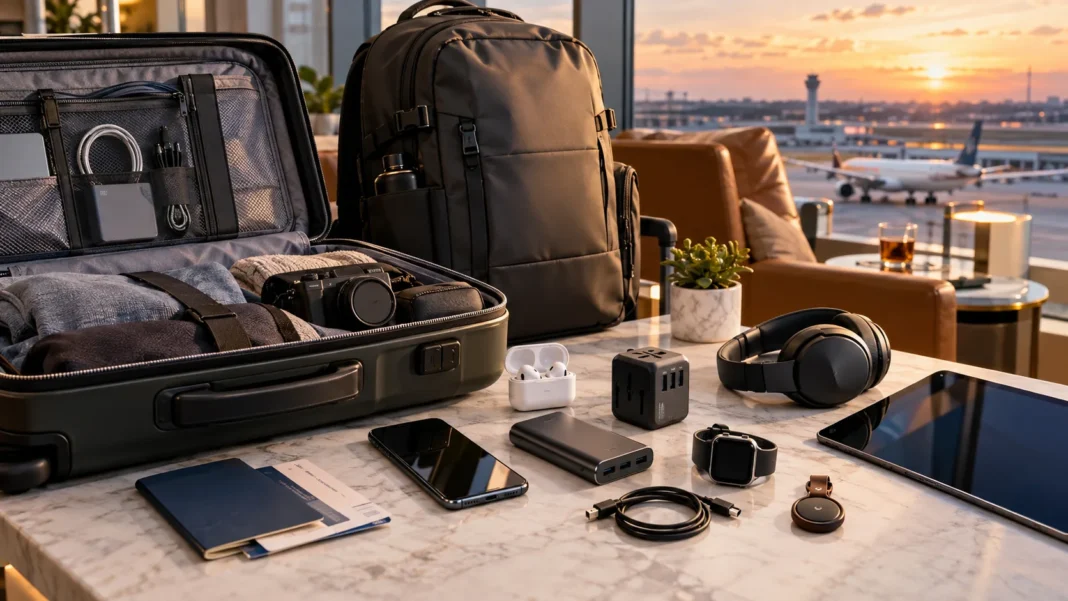
Travel technology in 2026 is all about carrying less while staying connected, charged, organized, and secure. The most useful travel gadgets now combine multiple functions, take up minimal space, and reduce common problems such as dead batteries, lost luggage, unreliable internet, or tangled charging cables. For frequent travelers, the right accessories can make flights, hotel stays, road trips, and international journeys noticeably easier.
You do not need to pack every new gadget you see online. The best travel tech should solve a real problem without adding unnecessary weight to your luggage. From compact power banks and universal adapters to smart trackers, wireless earbuds, and portable connectivity tools, this guide covers practical technology worth considering for your 2026 travel setup.
Why Travel Tech Matters More in 2026
Modern travelers depend heavily on smartphones for boarding passes, hotel confirmations, transportation, navigation, translation, payments, and photography. When your phone loses power or connectivity, several parts of the trip can suddenly become more difficult. Reliable travel technology helps keep essential devices available throughout long airport waits, train journeys, sightseeing days, and unexpected delays.
Travel gadgets are also becoming smaller and more multifunctional. Instead of carrying separate chargers, adapters, cables, and battery packs for every device, travelers can increasingly use compact accessories that handle multiple tasks. This helps reduce luggage weight and keeps hotel desks, airport seats, and backpacks from becoming cluttered with unnecessary equipment.
Security is another major reason travel technology has become valuable. Tracking devices can help locate bags, while privacy accessories and secure charging habits can protect personal information. The best 2026 travel gadgets are therefore not simply entertaining electronics; they support communication, organization, convenience, and peace of mind throughout the journey.
Compact Power Banks for All-Day Charging
A portable power bank remains one of the most important travel gadgets because smartphones consume significant battery power during trips. Navigation, photography, mobile data, translation apps, and video recording can drain a battery much faster than normal daily use. A compact power bank gives you extra energy without forcing you to search constantly for wall outlets.
Capacity should match your travel habits. Smaller battery packs are easier to carry during sightseeing and may provide enough power for one emergency recharge, while larger models can charge phones several times or support tablets and other devices. Fast-charging support is particularly useful because it allows you to recover more battery during short airport stops or meal breaks.
Look for a power bank that offers a useful balance between capacity, weight, charging speed, and port selection. USB-C has become especially valuable because many modern phones, tablets, headphones, and laptops can share compatible cables. Travelers should also check airline rules regarding battery capacity and carry-on requirements before flying with larger power banks.
Universal Travel Adapters for International Trips
A universal travel adapter can reduce the number of separate plug converters you need when visiting multiple countries. Instead of carrying several individual adapters, one compact unit may support commonly used plug configurations across different regions. This is particularly useful for international trips where hotels, airports, and coworking spaces may use different electrical outlet standards.
Modern travel adapters often include USB-A and USB-C ports alongside a traditional AC outlet. This allows several devices to charge simultaneously without requiring multiple wall chargers. A traveler might power a laptop while charging a phone, smartwatch, and wireless earbuds from the same compact adapter, helping simplify the overall packing setup.
Remember that a travel adapter changes plug compatibility but does not necessarily convert electrical voltage. Check whether your devices support the local voltage before connecting them, especially when using equipment beyond standard phone and laptop chargers. Choosing a well-built adapter with appropriate safety features can make international charging considerably more convenient.
Small GaN Chargers for Faster Charging
Gallium nitride, or GaN, chargers have become increasingly popular because they can deliver substantial power from relatively small bodies. Travelers can use one compact charger for phones, tablets, headphones, and even certain laptops instead of carrying several bulky adapters. This makes GaN technology particularly useful when trying to reduce the size of a tech pouch.
Multi-port GaN chargers offer even greater convenience. A charger with two or three USB-C outputs can power several devices from a single outlet, which is helpful in hotels where accessible sockets may be limited. Higher-powered models can also support laptops while simultaneously charging smaller accessories, although charging speed may be divided between connected devices.
Cable quality matters alongside the charger itself. Using a high-powered adapter with an unsuitable cable can limit charging speed or create compatibility issues. Travelers should pair chargers with appropriately rated USB-C cables and consider carrying one spare cable in a separate part of their luggage in case the primary one becomes damaged or misplaced.
Smart Trackers for Bags and Important Items
Small tracking devices can help travelers keep track of checked luggage, backpacks, keys, wallets, or camera bags. These trackers connect with compatible smartphones and may show an item’s recent or approximate location through a mobile application. They can be especially reassuring when luggage is delayed or when you are moving through crowded transportation hubs.
A tracker does not replace proper luggage identification, but it can provide additional information when something goes missing. Placing one discreetly inside checked baggage may help you determine whether the suitcase reached your destination or remained somewhere else. Travelers can also attach trackers to smaller personal items that are easy to leave behind in hotel rooms or vehicles.
Compatibility should be checked before buying because tracking networks can differ between smartphone ecosystems. Battery life and replacement options are also important, particularly for frequent travelers. Choose trackers that are simple to maintain and configure before departure rather than waiting until you are already at the airport to begin setting everything up.
Noise-Canceling Earbuds for Flights and Trains
Noise-canceling earbuds can make long journeys considerably more comfortable by reducing the constant sound of aircraft engines, trains, conversations, and busy terminals. Compact earbuds take up less room than full-size headphones while still providing music, podcasts, films, and calls. They are particularly useful when luggage space is limited.
Battery life should comfortably cover your typical journey. A charging case extends listening time and makes it easier to recharge earbuds between flights or transportation connections. Transparency or awareness modes are also useful because they allow you to hear airport announcements, conversations, or surrounding traffic without completely removing the earbuds.
Comfort becomes important during several hours of continuous wear. Different ear-tip sizes can help improve both fit and noise isolation, while lightweight designs may reduce pressure during long flights. Travelers should also download entertainment before departure because streaming may not always be available or reliable once the journey begins.
Portable Wi-Fi and eSIM Tools
Reliable internet access can simplify navigation, hotel communication, ride-hailing, translation, and emergency contact when traveling internationally. Portable Wi-Fi hotspots can connect multiple devices to one mobile data connection, making them useful for families, groups, or remote professionals. They can also provide a more consistent option than repeatedly relying on public Wi-Fi.
eSIM technology provides another convenient solution for compatible smartphones. Instead of buying and physically replacing a local SIM card, travelers can activate supported data plans digitally before or during the trip. This can make switching between networks easier while allowing users to keep their main physical SIM available for important calls or messages.
The better option depends on how many devices and travelers need internet access. Solo travelers may find an eSIM simpler, while groups can benefit from sharing one portable hotspot. In either case, check coverage, data allowances, roaming policies, and expected network speeds before departure so connectivity does not become an unexpected expense.
Useful Phone Accessories for Travel
Your smartphone often functions as a camera, navigation device, boarding pass, wallet, translator, and entertainment system during travel. A few well-chosen accessories can make these functions easier without taking much space. Compact stands, protective cases, charging cables, magnetic mounts, and small grips can all improve everyday convenience on the road.
Travelers building a lightweight mobile setup may want to explore practical phone accessories that improve charging, protection, and usability. Choosing accessories that serve multiple purposes helps prevent your bag from filling with equipment you rarely use. The goal should be to make your phone more useful rather than create another collection of gadgets to manage.
A small phone stand can be particularly helpful on flights, trains, and hotel desks. It allows comfortable video viewing, calls, or navigation without holding the device continuously. Protective cases and screen protection also become more valuable during trips because phones are exposed to unfamiliar surfaces, crowded spaces, outdoor activities, and frequent handling throughout the day.
Digital Luggage Scales and Smart Travel Tools
A small digital luggage scale can help travelers avoid unexpected baggage fees. Instead of guessing whether a suitcase is overweight, you can check the weight before leaving the hotel or heading toward the airport. This is particularly useful after shopping or when transferring between airlines that have different baggage limits.
Compact travel tools can also include electronic locks, digital organizers, and smart tags for luggage identification. Not every traveler needs advanced connected luggage, but simple tools that solve specific problems can be useful. The best options are lightweight, reliable, and easy to operate without requiring constant charging or complicated applications.
Avoid buying luggage technology simply because it looks futuristic. Built-in batteries and electronic components can sometimes create additional travel restrictions or maintenance requirements. In many cases, a traditional suitcase combined with a tracker, digital scale, and reliable lock provides more flexibility than investing in heavily integrated smart luggage.
Tech Organizers for Cables and Accessories
A good travel tech organizer can prevent cables, memory cards, chargers, adapters, and earbuds from becoming scattered throughout your backpack. Small zippered compartments and elastic loops keep items separated and easier to find. This can save time when you need a specific cable quickly at an airport, hotel, or coworking space.
Organization also helps prevent accessories from becoming damaged. Loose connectors can bend, cables can tangle around other items, and small adapters can disappear at the bottom of luggage. A dedicated pouch creates one place for your essential technology, making packing and unpacking considerably more predictable throughout the trip.
Keep the organizer compact rather than using it as an excuse to carry every spare accessory you own. Pack only the cables and adapters that match your actual devices, plus one useful backup where necessary. A streamlined tech pouch should simplify travel, not become a heavy collection of electronics that remains untouched for most of the journey.
Privacy and Security Gadgets for Travelers
Travel often involves connecting to unfamiliar networks, charging devices in public places, and carrying valuable personal information through busy locations. A privacy screen for a laptop or phone can reduce casual viewing when working in airports, trains, or cafés. This is particularly helpful for business travelers handling confidential documents or client information.
Travelers should also be cautious about unknown USB charging ports. Using your own charger with a trusted wall outlet or portable battery gives you greater control over how your device connects. Simple charging accessories that block data connections may provide another layer of protection when you have limited options and need to use public charging facilities.
Security is not only about hardware. Strong device passwords, multi-factor authentication, encrypted backups, and the ability to remotely locate or lock lost devices are equally important. Set these protections up before traveling so that losing a phone or laptop creates fewer risks than it would if the device contained completely unprotected personal information.
How to Choose Travel Tech Gadgets for 2026
Start by identifying the problems you regularly face while traveling. If your phone constantly runs out of battery, prioritize a power bank and compact charger. If international connectivity causes stress, focus on eSIM support or portable Wi-Fi rather than buying accessories that do not solve an actual need.
Weight and size should influence every travel-tech decision. A gadget can be useful at home but frustrating when you must carry it through airports, train stations, or city streets. Look for multifunction accessories that replace several separate items, but avoid complicated devices whose additional features offer little practical value during real trips.
Compatibility is the final major consideration. Check ports, charging standards, operating-system support, wireless connections, battery requirements, and regional restrictions before purchasing. The best travel technology should integrate naturally with the devices you already own and require as little additional equipment, maintenance, and troubleshooting as possible while you are away.
Conclusion
The best travel tech gadgets for 2026 focus on convenience, connectivity, charging, organization, and security. Compact power banks, GaN chargers, universal adapters, trackers, noise-canceling earbuds, and portable internet tools can solve many of the most common problems travelers encounter. The right combination depends on your destination and personal travel habits.
Avoid packing technology simply because it is new or popular. Every gadget adds weight, requires space, and may need its own charging or maintenance routine. A smaller collection of reliable, multipurpose accessories usually creates a better experience than carrying a bag filled with electronics you rarely use.
Build your travel setup around essential tasks such as keeping devices powered, accessing the internet, locating belongings, and organizing cables. Test everything before departure and pack backups only where they provide genuine value. With a thoughtful selection of travel tech, you can spend less time managing devices and more time enjoying the actual journey.
FAQs
What are the most useful travel tech gadgets in 2026?
Power banks, GaN chargers, universal travel adapters, smart trackers, noise-canceling earbuds, eSIM services, and compact cable organizers are among the most practical options for modern travelers.
Do I need a power bank when traveling?
A power bank is highly useful because navigation, photography, mobile data, and travel apps can drain your phone quickly. Choose a capacity that matches your normal travel day without adding excessive weight.
Are smart luggage trackers worth using?
Trackers can provide useful location information when luggage is delayed or misplaced. They work best as an additional tool alongside proper luggage labels, secure bags, and normal airline tracking procedures.
Is an eSIM better than portable Wi-Fi?
An eSIM is often simpler for one compatible phone, while portable Wi-Fi can be more practical when several travelers or devices need to share one internet connection.
How can I reduce the amount of travel tech I carry?
Choose multipurpose chargers, use devices that share USB-C cables, and remove accessories you rarely use. A small, organized tech pouch with essential items is usually more practical than carrying numerous backups.