


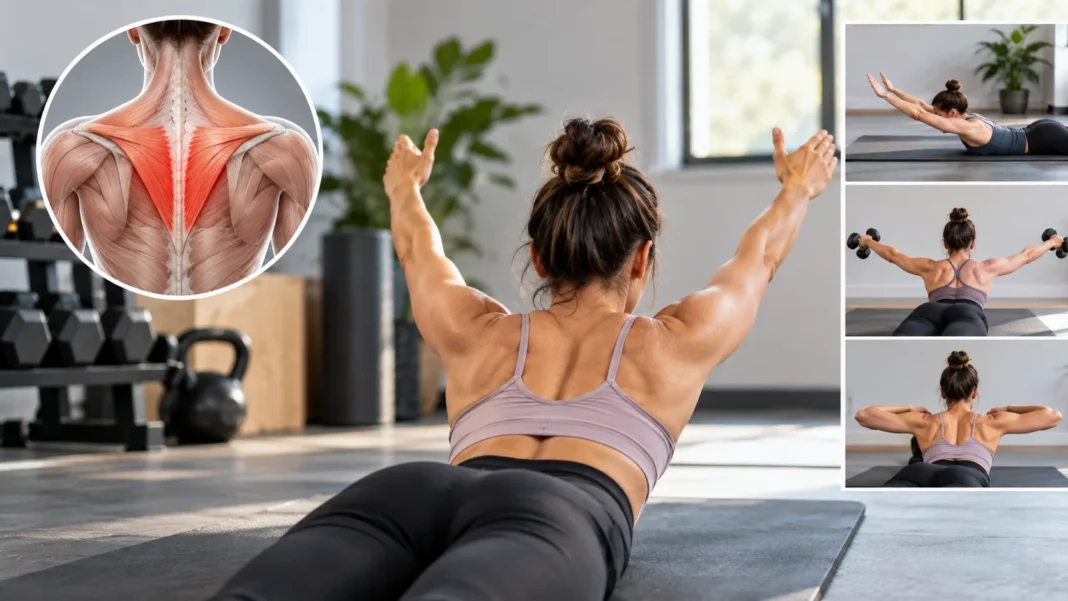
The lower trapezius muscles play an important role in shoulder stability, posture, and controlled movement of the shoulder blades. When these muscles are weak or poorly coordinated, the upper traps and neck may take on more work than they should. That imbalance can contribute to shoulder tension, poor movement mechanics, and difficulty performing overhead exercises comfortably.
Lower trap exercises are designed to strengthen the lower portion of the trapezius while improving scapular control. Movements such as prone Y raises, wall slides, and cable Y raises can help train these muscles without relying on heavy weights. Proper form matters more than resistance because small changes in shoulder position can shift the work toward other muscles.
What Are the Lower Traps?
The trapezius is a large muscle extending from the back of the neck down through the upper and mid-back. It is commonly divided into upper, middle, and lower sections because each portion contributes differently to shoulder blade movement. The lower trapezius helps control the scapula during reaching, lifting, pulling, and overhead movement.
Lower trap fibers help rotate the shoulder blade upward while also assisting with controlled downward movement and positioning. This action is important whenever you raise your arms overhead because the shoulder blade needs to move smoothly along the rib cage. Good lower trap function also helps prevent the shoulders from constantly shrugging upward during exercise.
Many people focus heavily on the upper traps through shrugs and pulling exercises but pay less attention to lower trap control. The goal is not to isolate one muscle completely, because several shoulder muscles work together. Instead, lower trap training improves coordination between the trapezius, serratus anterior, rotator cuff, and surrounding upper-back muscles.
Why Strengthening the Lower Traps Matters
Strong lower traps help stabilize the shoulder blades during both everyday movement and exercise. When the scapula remains controlled, the shoulder joint can move through a more efficient range. This can make activities such as reaching overhead, lifting objects, rowing, pressing, and carrying feel smoother and more stable.
Weakness or poor activation does not automatically cause pain, but it can contribute to less efficient movement patterns in some people. The upper traps may dominate during shoulder elevation, while the shoulder blades may tilt or move unpredictably. Strengthening the lower traps can therefore support better shoulder mechanics as part of a balanced training program.
Lower trap exercises may also be valuable for athletes, office workers, and anyone performing repetitive upper-body movements. They can improve posture awareness without encouraging rigid positioning throughout the day. The biggest benefit comes from building endurance and control so the shoulder blades respond naturally during different movements rather than being consciously held in place.
Prone Y Raises for Lower Trap Strength
Prone Y raises are one of the most popular lower trap exercises because they require very little equipment. Lie face down on a bench or mat with your arms extended diagonally overhead to create a Y shape. Keep your thumbs pointing upward and gently draw your shoulder blades downward before lifting the arms.
Raise your arms only as high as you can without shrugging the shoulders toward your ears or excessively arching your lower back. The movement should feel controlled and relatively small rather than dramatic. Pause briefly near the top before lowering your arms slowly back toward the floor or bench.
Start without weights because the leverage created by straight arms already makes the exercise challenging. Once you can maintain clean form, very light dumbbells may be added gradually. If you feel most of the effort in your neck or upper traps, reduce the range and focus on shoulder blade control before adding resistance.
Wall Slides for Scapular Control
Wall slides train the lower traps along with the serratus anterior and other muscles that support upward rotation of the shoulder blade. Stand with your back or forearms against a wall and begin with the arms bent. Slowly slide your arms upward while keeping the movement comfortable and avoiding excessive shoulder shrugging.
Focus on allowing the shoulder blades to rotate naturally rather than forcing them down throughout the entire movement. Keeping the ribs relatively controlled can help prevent the lower back from excessively arching as the arms rise. Move only as high as you can without pain or major compensation through the neck and torso.
Wall slides work especially well as part of a warm-up before overhead training. They can also help people develop awareness of how their shoulder blades move during arm elevation. A resistance band around the wrists may eventually increase the challenge, but good movement quality should be established before adding extra resistance.
Cable Y Raises for Controlled Resistance
Cable Y raises provide continuous resistance through the movement and allow you to adjust the load very precisely. Set the cable handles low and stand facing the machine with one handle in each hand. Raise the arms upward and outward into a Y shape while keeping the shoulders away from the ears.
Use a light resistance because this exercise targets movement quality rather than maximum strength. Heavy weight often causes the elbows to bend, shoulders to shrug, or lower back to extend excessively. Keep the motion smooth and stop when your arms reach the highest position you can control comfortably.
Cable Y raises can be useful once basic bodyweight movements feel easy. They allow progressive overload without requiring large jumps in resistance. Perform each repetition slowly enough to feel the shoulder blades moving rather than using momentum to swing the arms through the exercise.
Incline Bench Y Raises
Incline bench Y raises are similar to prone Y raises but use a bench set at a slight angle. Rest your chest against the bench and allow the arms to hang naturally before lifting them diagonally overhead. The bench supports your torso, making it easier to focus on the shoulder blades rather than stabilizing the entire body.
Keep the weights extremely light, especially when first learning the movement. Lift through a comfortable range while maintaining straight or slightly bent elbows and relaxed neck muscles. If the shoulders begin shrugging upward, reduce the weight or stop the arms slightly lower instead of forcing the movement higher.
This variation works well for people who find floor-based prone raises uncomfortable or difficult to control. It can also fit easily into a gym routine alongside rows, pull-downs, and rotator cuff exercises. Two or three controlled sets are usually more useful than performing many repetitions with poor form and unnecessary fatigue.
Face Pulls With Lower Trap Focus
Face pulls are commonly used to train the rear shoulders and upper back, but they can also support lower trap function when performed with controlled scapular movement. Attach a rope to a cable station around face level. Pull the rope toward your face while allowing the elbows to move outward comfortably.
Avoid turning the movement into an exaggerated shrug or aggressively squeezing the shoulder blades together. Keep the neck relaxed and allow the shoulder blades to move naturally as the arms travel backward. Using too much weight often causes the torso to lean excessively, reducing the exercise’s value for controlled upper-back training.
Face pulls work best as part of a broader shoulder-strengthening routine rather than as the only lower trap exercise. Pairing them with Y raises or wall slides can provide a more complete approach. Use moderate repetitions and enough resistance to create effort without losing smooth shoulder blade control.
Lower Trap Exercises and Neck Tension
Poor shoulder blade control can sometimes increase workload around the neck and upper traps, especially during long periods of sitting or repetitive upper-body training. Lower trap exercises may help redistribute effort by improving the way the shoulder blades move. However, strengthening alone will not solve every form of neck tension or headache.
If you frequently experience neck-related headaches, posture changes and appropriate cervical exercises may also need attention. Understanding approaches for a cervicogenic headache can help explain how neck movement, muscle tension, and daily habits may influence certain headache patterns. Persistent headaches should still be properly evaluated before assuming the shoulders are responsible.
During lower trap training, avoid tightening your neck or pushing your head forward. Keep the jaw relaxed and use loads that allow the cervical muscles to remain relatively quiet. If exercises consistently reproduce headache symptoms, dizziness, tingling, or significant neck pain, stop and seek professional guidance before continuing.
Common Lower Trap Exercise Mistakes
Shrugging the shoulders is one of the most common mistakes during lower trap exercises. When the shoulders rise toward the ears, the upper trapezius may dominate the movement. Lower the resistance and reduce the range until you can move the arms without repeatedly compensating through the neck and upper shoulders.
Another mistake is using too much weight too soon. The lower traps do not need heavy resistance to be trained effectively, particularly during Y-shaped movements with long lever arms. Choosing lighter loads allows better control, slower repetitions, and more consistent positioning throughout the entire exercise.
Excessive lower-back arching can also appear during overhead movements and wall slides. This usually happens when someone tries to reach higher than their shoulder mobility currently allows. Keeping the ribs controlled and accepting a slightly smaller range is more useful than forcing the arms upward while creating movement elsewhere.
How Often Should You Train the Lower Traps?
Lower trap exercises can usually be performed two to four times per week depending on your overall training program and recovery. Because many of these exercises use light resistance, they can fit into warm-ups, rehabilitation routines, or upper-body strength sessions. The exact frequency should reflect your goals and how your shoulders respond.
Beginners might start with two or three exercises performed for two sets each. Repetition ranges of roughly eight to fifteen controlled repetitions often work well, although endurance-focused movements may use more. The final repetitions should feel challenging without causing your form to collapse or your neck muscles to take over.
Progress gradually by improving movement control before increasing resistance. You can add repetitions, slow the lowering phase, increase range, or use slightly more weight once the exercise feels easy. Training quality matters more than chasing rapid progression, especially because the lower traps primarily contribute to coordinated shoulder blade movement.
Tips for Better Lower Trap Activation
Before performing lower trap exercises, spend a few minutes warming up your shoulders and upper back. Gentle arm circles, thoracic movement, and wall slides can help prepare the area for training. Starting cold with challenging resistance may make it harder to feel controlled shoulder blade movement.
Think about reaching your arms long rather than simply squeezing your shoulder blades as hard as possible. Excessive squeezing can shift attention toward the middle traps and rhomboids rather than supporting natural upward rotation. A smooth combination of reaching, rotating, and controlling the scapula usually produces better mechanics.
Breathing can also affect exercise quality. Avoid holding your breath and creating unnecessary tension through the neck, jaw, and shoulders. Slow breathing paired with controlled repetitions can make it easier to recognize when you are compensating and adjust the movement before poor habits become part of the exercise.
When Lower Trap Exercises May Need Modification
Shoulder discomfort does not always mean you need to stop exercising completely, but movements that cause sharp or worsening pain should be modified. Reducing range, resistance, or exercise difficulty may allow you to train more comfortably. Pain that persists despite these changes deserves assessment rather than repeatedly being pushed through.
People recovering from shoulder surgery, significant injuries, or recent neck problems should follow individualized rehabilitation guidance. Some lower trap exercises may be appropriate during recovery, but timing and progression depend on the specific condition. Copying an exercise routine without considering the underlying diagnosis can sometimes delay progress.
Seek professional evaluation if you develop persistent weakness, numbness, tingling, instability, or significant loss of shoulder motion. A physical therapist can assess scapular mechanics, shoulder strength, mobility, and exercise technique. Personalized modifications can make lower trap training safer and more effective when standard exercises do not feel right.
Conclusion
Lower trap exercises can improve shoulder blade control, upper-back strength, and movement quality during everyday activities and training. Prone Y raises, wall slides, cable Y raises, incline raises, and face pulls are all useful options when performed correctly. These exercises work best with light resistance and careful attention to shoulder position.
Good form matters more than lifting heavy weights. Keep the neck relaxed, avoid shrugging, control your ribs, and use a range of motion you can maintain without compensation. Gradual progress allows the lower traps to build strength and endurance while reducing the tendency for larger surrounding muscles to dominate every movement.
A balanced shoulder program should include more than lower trap exercises alone. Rotator cuff strength, serratus anterior function, upper-back mobility, and overall pulling and pushing strength also matter. If pain, weakness, headaches, or neurological symptoms continue despite careful training, professional assessment can help identify what needs to be addressed.
FAQs
What is the best exercise for the lower traps?
Prone Y raises are one of the most effective and accessible lower trap exercises. Wall slides and cable Y raises are also useful because they train controlled shoulder blade movement through different ranges.
How do I know if my lower traps are weak?
Possible signs include difficulty controlling the shoulder blades, excessive shrugging during overhead movement, or rapid upper-trap fatigue. However, these signs are not diagnostic, so persistent problems are best assessed professionally.
Can I train lower traps every day?
Light activation work may be tolerated frequently, but harder strengthening sessions usually benefit from recovery time. Two to four sessions per week is enough for many people when volume and resistance are appropriate.
Do lower trap exercises improve posture?
They can support better shoulder blade control and upper-back endurance, which may influence posture. However, posture also depends on movement habits, mobility, strength, work setup, and how long you remain in one position.
Should lower trap exercises hurt?
No. Mild muscular effort or fatigue is expected, but sharp pain, numbness, tingling, dizziness, or worsening neck pain is not. Reduce the exercise difficulty or seek professional guidance if these symptoms occur.