


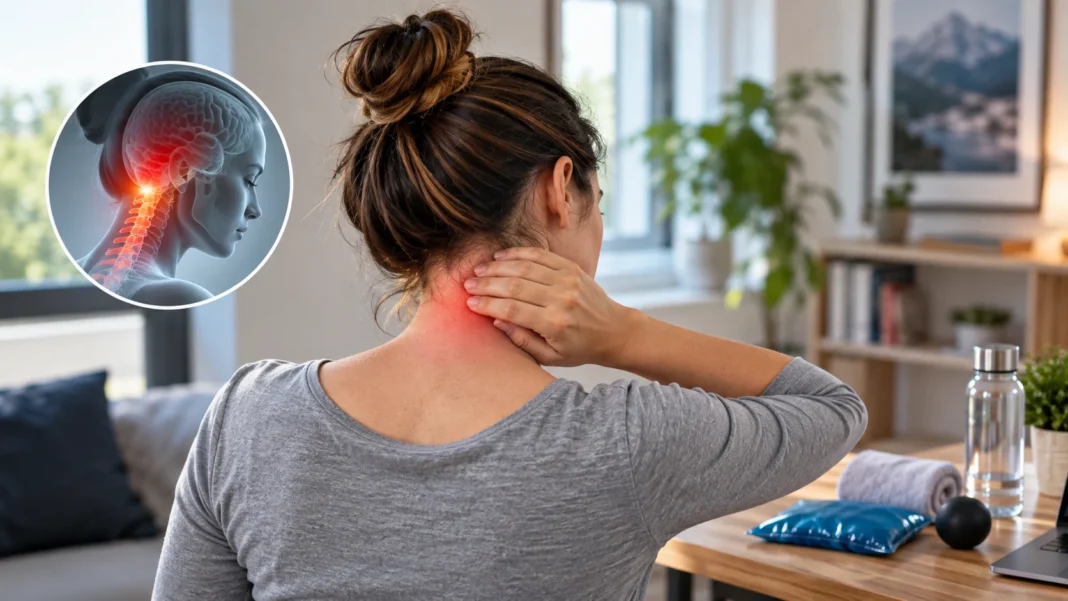
Cervicogenic headaches often begin with a problem in the neck and create pain that is felt in the head. Unlike a typical tension headache, the discomfort may start around the upper neck or back of the skull and spread toward one side of the head, forehead, or area around the eye. Neck stiffness and pain with certain movements may occur at the same time.
Cervicogenic headache treatment at home usually focuses on reducing neck irritation, improving comfortable movement, and addressing daily habits that place repeated stress on the cervical spine. Gentle exercises, posture changes, heat or cold therapy, and better sleep positioning may help some people. Persistent, severe, or unusual headaches should still be evaluated to confirm that the neck is actually the source.
What Is a Cervicogenic Headache?
A cervicogenic headache is a headache in which pain is referred from structures in the neck rather than beginning primarily inside the head. Joints, muscles, ligaments, or nerves in the upper cervical region may contribute to symptoms. Because neck and head nerves share overlapping pathways, the brain can interpret discomfort from the neck as headache pain.
The pain is often one-sided and may begin around the base of the skull before moving toward the temple, forehead, or behind the eye. Turning or extending the neck can sometimes increase symptoms, while limited range of motion is also common. Some people notice tenderness around the upper neck or worsening discomfort after prolonged sitting.
These features can overlap with migraine, tension headache, and other headache disorders, so self-diagnosis is not always reliable. A clinician may consider headache pattern, neck movement, physical examination findings, and medical history when identifying the likely cause. Getting the diagnosis right matters because treatment for cervicogenic headaches focuses heavily on the neck.
Common Causes and Triggers of Cervicogenic Headaches
Poorly tolerated neck positions can contribute to cervicogenic headaches, especially when the head remains forward for long periods. Working at a laptop, looking down at a phone, driving, or sitting without adequate back support can increase strain around the cervical muscles and joints. Symptoms may gradually become noticeable after several hours rather than starting suddenly.
Previous neck injuries can also play a role, including whiplash or other trauma that affects cervical structures. Age-related joint changes, muscle tightness, reduced neck mobility, and weakness around the upper back may contribute in some people. The exact source can vary, which is why one home treatment does not work equally well for everyone.
Stress may indirectly worsen symptoms by increasing muscle tension around the neck, shoulders, and jaw. Poor sleep, prolonged inactivity, and repeatedly holding the body in one position can have similar effects. Keeping track of activities that trigger headaches can make it easier to recognize patterns and adjust daily habits before symptoms become intense.
Use Heat or Cold for Neck-Related Headache Pain
Heat may help when stiffness and muscular tightness are prominent. A warm shower, heating pad, or warm pack applied to the neck for a short period can encourage relaxation and make gentle movement feel easier. Heat should feel comfortably warm rather than hot enough to irritate or burn the skin.
Cold therapy may feel better when the area seems irritated after activity or when headache pain becomes sharper. A wrapped cold pack can be placed around the upper neck for short intervals while protecting the skin. Some people prefer cold, while others respond better to warmth, so comfort can guide which option is more useful.
Neither heat nor cold corrects the underlying cause by itself, but both can be supportive parts of home symptom management. Avoid falling asleep with heating devices or placing ice directly against bare skin. If either method increases pain, numbness, dizziness, or other unusual symptoms, discontinue it and consider professional guidance.
Try Gentle Neck Mobility Exercises
Gentle neck movement can help reduce stiffness when symptoms are related to restricted motion or prolonged positioning. Slow rotations from side to side, small chin movements, and comfortable side bending may be useful when performed within a pain-free range. Movements should remain controlled rather than fast, forceful, or pushed toward the maximum possible stretch.
A simple chin tuck involves sitting upright and gently drawing the chin backward without looking down. The goal is to create a small lengthening sensation through the back of the neck rather than forcing the head into an exaggerated position. Holding briefly and repeating a few comfortable repetitions can help build awareness of neutral neck alignment.
Stop an exercise if it causes sharp pain, significant dizziness, visual changes, numbness, weakness, or a sudden increase in headache intensity. Neck exercises should not involve aggressive twisting or self-manipulation. When headaches consistently worsen during mobility work, a physical therapist can identify safer movements based on the specific cervical problem.
Improve Posture Without Trying to Sit Perfectly
Posture can influence cervicogenic headaches, but the goal is not to maintain one rigid position all day. Even an apparently ideal posture can become uncomfortable when held for several hours. Changing positions frequently is usually more practical than constantly trying to keep the shoulders pulled back and the neck perfectly straight.
When working at a desk, position the screen so you do not repeatedly tilt your head downward or crane the neck forward. Keep frequently used items within easy reach and support the lower back when possible. A separate keyboard and monitor can be helpful for people who spend many hours working on a laptop.
Short movement breaks can also reduce prolonged loading through the neck and shoulders. Stand up, walk briefly, roll the shoulders gently, or change tasks when possible. If you are adding more movement to your routine for other wellness goals, resources such as these constipation exercises may provide separate ideas for gentle physical activity.
Strengthen the Upper Back and Shoulder Muscles
Muscles around the shoulder blades and upper back help support the neck during everyday activities. When these muscles fatigue easily, the head and neck may spend more time in positions that increase strain. Gradual strengthening can therefore be useful as part of a broader cervicogenic headache treatment plan.
Simple exercises may include gentle shoulder-blade squeezes, light rowing movements with resistance, or controlled wall exercises. Focus on smooth movement rather than using heavy resistance or forcing the shoulders aggressively backward. Starting with a small number of repetitions can reduce the chance of creating additional muscle soreness.
Strength work usually needs consistency before noticeable changes occur. It is not intended to eliminate a headache immediately during a painful episode. If strengthening repeatedly produces headaches, arm tingling, weakness, or significant neck pain, stop and seek guidance from a healthcare professional before continuing.
Adjust Your Sleep Position and Pillow
Sleep positioning can influence how the neck feels in the morning. A pillow that pushes the head too far forward, sideways, or backward may place the cervical spine in an uncomfortable position for several hours. The best pillow is generally one that keeps the neck supported without creating an obvious bend compared with the rest of the spine.
Side sleepers may need enough pillow height to fill the space between the shoulder and head. Back sleepers often do well with support that follows the natural curve of the neck without lifting the head excessively. Stomach sleeping can require prolonged neck rotation, which may aggravate symptoms in some people with cervical discomfort.
Pillow choice remains highly individual, so there is no single model or height that works for everyone. If you consistently wake with neck pain and headaches, experiment cautiously with small positioning changes rather than making several changes at once. Persistent morning headaches also deserve evaluation because sleep disorders and other conditions can produce similar symptoms.
Massage and Relaxation for Tight Neck Muscles
Gentle self-massage may help when tight muscles around the neck and shoulders contribute to discomfort. Light pressure can be applied to tender areas around the upper shoulders rather than directly pressing hard into the cervical spine. A warm shower before massage may make the muscles feel more relaxed and easier to work with.
Deep or aggressive pressure is not automatically better. Excessive pressure around the upper neck can aggravate sensitive tissues, and forceful techniques should be avoided when the cause of symptoms is unclear. The goal is to reduce tension and promote comfort rather than create intense pain in an attempt to “release” the muscles.
Relaxation strategies may also help reduce involuntary muscle tension. Slow breathing, progressive muscle relaxation, and brief breaks away from screens can be useful when stress seems to increase neck tightness. These techniques do not mean the headache is psychological; they simply help address a common factor that can amplify muscular discomfort.
Use Over-the-Counter Pain Relief Carefully
Some people use nonprescription pain medicines during occasional cervicogenic headache episodes. Options may include acetaminophen or certain anti-inflammatory medicines, depending on individual health circumstances. These medicines can reduce pain temporarily, but they do not correct neck mobility, posture, muscle weakness, or other factors that may be driving recurring symptoms.
Over-the-counter medicines are not suitable for everyone. Kidney disease, stomach ulcers, liver problems, pregnancy, blood-thinning medicines, allergies, or other medical conditions can affect which products are appropriate. A pharmacist or healthcare professional can help determine what is safer based on your medical history and current medications.
Frequent reliance on headache medicines can also become problematic because some people develop medication-overuse headaches. If you need pain relievers repeatedly or headaches are becoming more frequent, seek medical advice instead of simply increasing medication use. A better long-term plan usually focuses on identifying and managing the source of recurring symptoms.
Avoid Forceful Neck Cracking and Aggressive Stretching
When the neck feels stiff, it can be tempting to twist until it cracks or use aggressive stretching to create immediate relief. Forceful movements are not necessary for treating cervicogenic headaches and can sometimes worsen irritated joints, muscles, or nerves. Gentle movement should be favored over rapid or high-force neck manipulation performed on yourself.
A stretch should create mild tension rather than sharp pain, dizziness, or neurological symptoms. Holding the neck at the end of its range and pulling harder does not necessarily improve flexibility faster. Gradual mobility developed through regular comfortable movement is generally more sensible than trying to force an immediate increase in range.
Be particularly cautious after recent neck trauma or when headaches are new and unusually severe. Do not manipulate the neck in an attempt to treat unexplained neurological symptoms. New weakness, numbness, coordination problems, severe dizziness, or sudden intense headache requires medical assessment rather than more stretching or manipulation.
Build a Daily Routine for Cervicogenic Headache Relief
A simple daily routine can be more useful than trying many exercises only when pain becomes severe. Begin with comfortable movement, such as a short walk, followed by several gentle neck mobility exercises. Add a small amount of upper-back strengthening if these activities do not increase symptoms.
During work or study periods, change position regularly and avoid spending several uninterrupted hours looking downward. Small movement breaks throughout the day can reduce accumulated strain. Heat may be used when stiffness becomes noticeable, while relaxation techniques can be added during periods when stress and shoulder tension appear to increase.
Keep the routine manageable enough that you can perform it consistently. Adding too many exercises at once makes it difficult to identify which activities help and which ones irritate symptoms. A physical therapist can modify the program when home strategies produce only temporary relief or when headaches continue returning despite regular self-care.
When to Get Medical Help for a Headache
A headache should not automatically be assumed to come from the neck simply because neck pain is also present. Seek prompt medical attention for a sudden extremely severe headache, particularly if it reaches maximum intensity quickly. New headache after significant head or neck trauma should also be evaluated rather than treated only with home exercises.
Urgent assessment is important when headache occurs with weakness, numbness, confusion, difficulty speaking, fainting, major vision changes, seizures, severe dizziness, fever with marked neck stiffness, or difficulty walking. These symptoms can indicate conditions very different from a routine cervicogenic headache and should not be managed through stretching or posture changes alone.
You should also arrange routine medical evaluation when headaches become progressively more frequent, regularly interrupt sleep, or do not improve with reasonable home measures. A clinician can determine whether the pain pattern truly fits a cervicogenic headache. Correct diagnosis can lead to more targeted physical therapy, medication, imaging, or specialist care when necessary.
Conclusion
Cervicogenic headache treatment at home usually focuses on reducing neck irritation while improving movement, strength, positioning, and daily habits. Heat or cold, gentle mobility exercises, upper-back strengthening, comfortable sleep support, and regular movement breaks may help when symptoms are genuinely coming from the cervical spine. These strategies should remain gradual and comfortable.
Avoid forceful neck cracking, aggressive stretching, and repeatedly pushing through movements that increase headache intensity. A successful home routine does not need to be complicated; consistency and symptom awareness are more important than doing many exercises. Tracking which positions and activities trigger pain can also help you make practical adjustments throughout the day.
Home care has limits because headaches can have many different causes. Persistent, worsening, or unusual symptoms should be assessed rather than repeatedly self-treated. Sudden severe headache or symptoms such as weakness, speech changes, confusion, fever with significant neck stiffness, or major vision changes require prompt medical attention.
FAQs
Can cervicogenic headaches be treated at home?
Mild cervicogenic headaches may improve with gentle neck movement, posture changes, heat or cold, sleep adjustments, and gradual strengthening. Recurring headaches should be professionally assessed to confirm the diagnosis and underlying cause.
What is the best exercise for cervicogenic headaches?
There is no single best exercise for everyone. Gentle chin tucks, comfortable neck mobility, and upper-back strengthening are commonly used, but exercises should be stopped if they significantly increase pain, dizziness, numbness, or weakness.
Is heat or ice better for a cervicogenic headache?
Either may help depending on the symptoms. Heat can feel useful for stiffness and muscle tension, while cold may soothe irritated areas after activity. Choose whichever feels comfortable and protect the skin during application.
Can poor posture cause cervicogenic headaches?
Prolonged or poorly tolerated neck positions can contribute to symptoms in some people. However, posture is rarely the only factor, so regular movement and changing positions are generally more useful than trying to maintain perfect posture.
How long does a cervicogenic headache last?
Duration varies depending on the underlying neck problem and individual triggers. Some episodes settle within hours, while recurring symptoms may continue for days or return repeatedly until contributing cervical issues are properly addressed.