


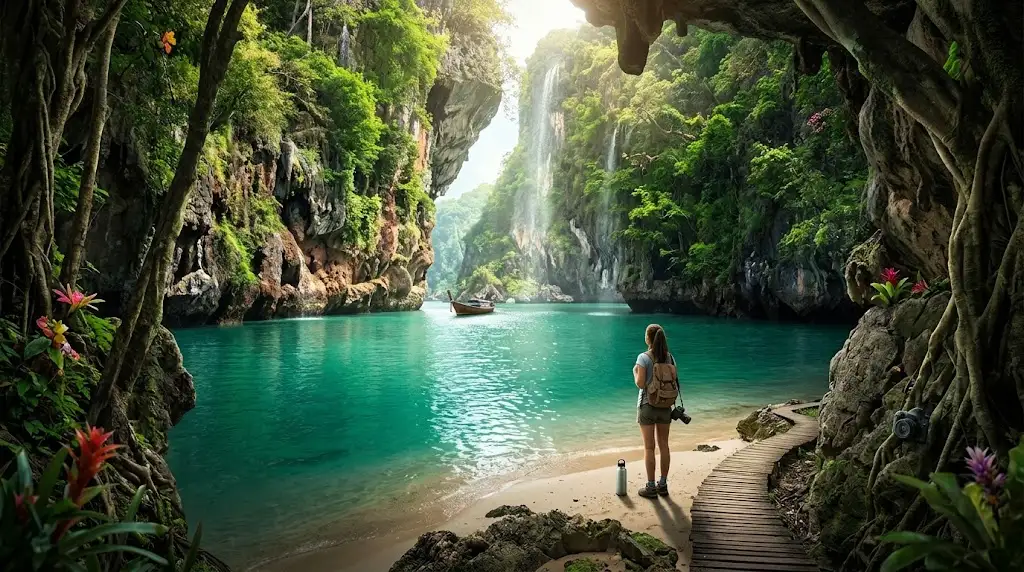
Hidden Gems Every Traveler Should Discover
Some of the most rewarding trips begin in places that never appeared on your original bucket list. Famous destinations have earned their popularity for good reasons, but extraordinary travel is not limited to cities, beaches, and landmarks already filling social media feeds. Hidden gems every traveler should discover can include remote mountain valleys, overlooked historic towns, little-visited islands, regional food capitals, quiet coastlines, and cultural centers that receive far fewer international visitors than their better-known neighbors. These places often encourage slower travel because there is less pressure to race between headline attractions. Instead, travelers have more time to notice local food, architecture, landscapes, traditions, and everyday life.
Hidden destinations are becoming particularly relevant as travelers look beyond overcrowded tourism hotspots. Condé Nast Traveler’s 2026 destination coverage highlights places such as Brazil’s Minas Gerais, northern Chilean Patagonia, Potosí in Bolivia, Fès in Morocco, and Gabon partly because they offer compelling experiences outside the most familiar global travel circuits. National Geographic has similarly spotlighted lesser-known tropical islands where nature and local culture remain central to the experience. A hidden gem does not necessarily mean an undiscovered place; people live there, domestic travelers may know it well, and tourism may already exist. The term is more useful for destinations that remain overlooked by mainstream international itineraries and reward visitors willing to explore differently.
1. Explore Japan’s Quieter Hokuriku Region
Japan attracts travelers with Tokyo, Kyoto, Osaka, Mount Fuji, and increasingly crowded cultural landmarks, but the Hokuriku region provides another side of the country. Stretching along the Sea of Japan, the region includes destinations in Ishikawa, Fukui, and neighboring areas where traditional crafts, hot-spring towns, temples, seafood, and mountain landscapes can shape a slower itinerary. Condé Nast Traveler recently highlighted Hokuriku as an appealing alternative for visitors seeking quiet after Japan’s busier tourism centers. Rather than rushing between famous landmarks, travelers can spend time in artisan communities, traditional inns, gardens, and smaller towns where cultural experiences feel more integrated into everyday surroundings.
Hot-spring towns are one of the region’s strongest attractions. Yamanaka Onsen, for example, combines traditional ryokan stays with riverside scenery, crafts, bathing culture, and a calm atmosphere that contrasts sharply with major urban destinations. Staying overnight rather than visiting briefly allows travelers to experience Japanese hospitality through meals, bathing rituals, tatami rooms, and slower mornings. This kind of trip works particularly well for couples or solo travelers who appreciate quiet environments. Accommodation can become an attraction rather than merely somewhere to sleep. Travelers unfamiliar with onsen etiquette should learn basic customs beforehand, making the experience more comfortable for both visitors and local guests.
Traditional craftsmanship adds another reason to slow down. Hokuriku has strong connections with lacquerware, ceramics, paper, textiles, and other crafts preserved through regional workshops. Recent travel coverage has emphasized how visitors can encounter working artisans rather than seeing craft traditions only behind museum glass. A workshop or studio visit can provide valuable context about how objects are made and why certain techniques matter culturally. These experiences also support smaller local businesses rather than concentrating tourism spending only in heavily visited landmark districts. Travelers interested in design, architecture, or handmade objects may find Hokuriku every bit as compelling as Japan’s most famous historic cities.
Eiheiji, an important Zen Buddhist temple complex in Fukui, offers another distinctive cultural experience. The atmosphere emphasizes discipline, architecture, forest surroundings, and Buddhist practice rather than conventional sightseeing. Visitors should approach religious places respectfully rather than treating them solely as photography locations. Quiet observation can become more meaningful than trying to collect every viewpoint. This principle applies broadly to hidden-gem travel: the reward often comes from noticing the rhythm of a place rather than constantly asking what the next attraction is. Hokuriku’s slower pace makes that style of travel especially natural.
Hokuriku works particularly well as part of a longer Japanese journey. Travelers can combine major cities with several quieter nights rather than choosing between famous and less-known Japan entirely. Rail connections make certain areas accessible, though rural exploration may require additional planning. Winter brings snow and a very different atmosphere, while other seasons create opportunities for gardens, hiking, and regional food. Check current transportation and local conditions before visiting, especially after weather or infrastructure disruptions. For travelers who already know Japan’s headline cities—or simply want something calmer—Hokuriku demonstrates how rewarding it can be to travel one region beyond the obvious route.
2. Discover Minas Gerais, Brazil
International visitors to Brazil often focus on Rio de Janeiro, São Paulo, the Amazon, or famous coastal destinations, but Minas Gerais offers a very different combination of culture, food, art, and historic landscapes. Condé Nast Traveler’s 2026 destination list describes the state as one of Brazil’s overlooked treasures for international travelers, highlighting its culinary traditions, hospitality, architecture, and changing capital, Belo Horizonte. For travelers who enjoy destinations where eating and local culture matter as much as conventional sightseeing, Minas Gerais can become an entire trip. The region offers enough variety that it should not be treated merely as a brief detour from Rio.
Belo Horizonte is an especially interesting starting point because its food culture extends far beyond formal restaurants. The city is known for botecos, relaxed neighborhood bars where conversation and food are closely connected. Contemporary chefs are also reworking regional traditions, helping the city develop a culinary scene with both everyday and creative dining. Food-focused travelers can move between markets, casual bars, modern restaurants, bakeries, and regional specialties without building the trip around expensive tasting menus. This creates a more approachable style of culinary travel. Asking local residents what to eat can be more rewarding than arriving with a rigid restaurant checklist.
Art and architecture add another layer. Inhotim, the renowned contemporary art and botanical complex outside Belo Horizonte, gives visitors a reason to combine cultural exploration with outdoor landscapes. The broader state also contains colonial-era towns with churches, plazas, cobbled streets, and architecture connected to Brazil’s mining history. Rather than moving quickly through several towns, choose a few places and stay long enough to experience evenings after day visitors leave. Historic destinations often feel considerably different once streets become quieter. Slower travel also creates time to notice cafés, workshops, local food, and smaller details hidden behind the headline architecture.
The state’s cuisine deserves serious attention. Minas Gerais is associated with cheeses, breads, hearty dishes, sweets, and ingredients rooted in regional agricultural traditions. Travelers can discover how food varies between cities and countryside rather than assuming Brazilian cuisine means one national menu. Markets are especially valuable because they reveal cheeses, produce, preserved foods, and everyday snacks residents actually purchase. Culinary traditions become easier to understand when visitors see the ingredients before ordering finished dishes. Food can also become a bridge into local conversation, particularly in places where tourism is not the only reason businesses exist.
Minas Gerais is a good example of what makes a hidden gem valuable. It is not empty, unknown, or waiting to be “discovered” by outsiders; millions of people live there and Brazilian travelers understand its importance. It simply receives less attention on many international itineraries than Brazil’s better-known destinations. That relative lack of global tourism can encourage more regional exploration and reduce pressure to reproduce familiar photographs. Travelers interested in food, art, history, and city culture may find the state particularly rewarding. Instead of asking what it lacks compared with Rio, approach it for what it does uniquely well.
3. Venture Into Northern Patagonia, Chile
Patagonia is hardly unknown, but most international attention concentrates on its famous southern landscapes, particularly Torres del Paine. Northern Patagonia in Chile offers a different environment of temperate rainforest, turquoise rivers, lakes, fjords, remote valleys, and mountain scenery. Condé Nast Traveler’s 2026 recommendations describe this greener part of Patagonia as less trodden than the iconic south and highlight growing access to remote wilderness areas. Adventure travelers who want Patagonia without building the entire trip around the most internationally recognizable trails may find this region especially compelling. Its beauty feels more dispersed, requiring time rather than a single famous viewpoint.
The landscape itself changes expectations of what Patagonia looks like. Instead of only windswept plains and exposed granite towers, visitors encounter thick forests, wetlands, waterways, and mountain environments shaped by substantial rainfall. Rivers and lakes can become central to the itinerary through kayaking, rafting, fishing where responsibly managed, or scenic exploration. Hikers can move through greener ecosystems that feel very different from the southern trekking photographs usually associated with Patagonia. Weather remains unpredictable, so waterproof clothing and flexible schedules are essential. A rainy day is part of the ecosystem rather than necessarily a failed travel day.
Remote accommodation is becoming part of the region’s appeal. Lodges and small properties can function as bases for outdoor exploration while allowing travelers to remain in landscapes far from major cities. Recent travel coverage has noted new adventure lodges and wilderness stays helping visitors reach previously difficult areas. This kind of tourism can be rewarding when accommodation operates responsibly and supports conservation or local communities. Travelers should research environmental practices rather than choosing a property solely because it looks isolated and luxurious. Remote places are especially vulnerable to poorly managed development.
A northern Patagonian road trip can be extraordinary, but it requires realistic planning. Distances may appear manageable on maps while road conditions and ferry connections make journeys much longer in practice. Build buffer time into the itinerary and avoid changing accommodation every night. Two or three bases provide more freedom to hike, paddle, or wait for better weather. Carry offline navigation, fuel appropriately, and understand which roads suit your vehicle. The goal should be immersion rather than collecting as many valleys as possible. Patagonia generally becomes more rewarding the slower travelers move.
Northern Patagonia illustrates another useful definition of a hidden gem: sometimes the overlooked place sits beside something already famous. Travelers do not always need to search for an entirely unknown country; moving to a neighboring region can create a dramatically different experience. People who have already dreamed about Patagonia can keep that ambition while choosing a quieter interpretation of it. Forests, fjords, rivers, wildlife, and remote lodges create a trip distinct from the southern trekking circuit. For adventure travelers who value wilderness more than recognizable landmarks, that may be exactly the attraction.
4. Wander Through Fès, Morocco
Marrakech receives enormous international attention, but Fès offers travelers a different way into Moroccan history and urban culture. Condé Nast Traveler’s 2026 destination coverage describes Fès as Marrakech’s more understated sibling and notes renewed attention following major restoration work in the historic medina. The city rewards travelers interested in architecture, craftsmanship, markets, food, and historic urban environments rather than resort-style sightseeing. Its streets can feel intensely layered, with workshops, homes, religious sites, markets, fountains, and small businesses sharing the same historic fabric. The experience is less about individual monuments than moving through a living city.
The medina is one of the most compelling reasons to visit. Narrow lanes, changing light, carved doors, courtyards, shops, and working craftspeople create an environment that can be difficult to understand from a map alone. First-time visitors may benefit from a knowledgeable licensed guide for an introductory walk. A strong guide can explain architecture, religious customs, crafts, and neighborhood organization rather than simply moving visitors from one store to another. After learning the basic layout, independent wandering becomes more rewarding. Getting slightly lost can be part of the experience, but travelers should still keep reliable navigation and accommodation details available offline.
Craft traditions make Fès particularly interesting for travelers who enjoy seeing how objects are produced. Leatherwork, metalwork, ceramics, textiles, woodwork, and other crafts remain visible throughout parts of the old city. Approach workshops as functioning workplaces, not open-air displays created for tourists. Ask before photographing people and understand that demonstrations may be connected to shops selling finished products. Buying directly from reputable craftspeople can create a meaningful souvenir while supporting local work. Travelers do not need to purchase something from every place they visit, and polite boundaries can make interactions more comfortable.
Moroccan food provides another reason to stay several days. Tagines, breads, soups, couscous, pastries, olives, preserved ingredients, tea, and regional preparations reveal far more diversity than one restaurant meal can capture. Markets help explain spices and produce, though inexperienced travelers may appreciate a food tour that provides cultural context and helps identify dishes. Leave room for simple local meals rather than booking only highly styled restaurants. A busy everyday establishment can provide as much insight into the city’s food culture as a luxury riad dinner. Variety is part of the reward.
Fès should be approached with curiosity and patience. Historic urban environments can feel chaotic when travelers expect every street to function according to modern tourism infrastructure. Walking slowly, dressing respectfully, understanding local customs, and allowing extra time for navigation make the experience easier. Stay in or near the historic center if you want to experience quiet early mornings before streets become busy. Most importantly, avoid comparing every moment with Marrakech. Fès has a different rhythm, and that difference is exactly why it deserves inclusion on a hidden-gem itinerary.
5. Explore Potosí and Southwest Bolivia
Bolivia’s Salar de Uyuni is famous worldwide, but the broader Potosí region contains landscapes that deserve far more attention than a single salt-flat photograph. Condé Nast Traveler’s 2026 recommendations highlight the region’s lagoons, hot springs, volcanoes, and striking geology as reasons to look beyond the familiar Uyuni experience. Travelers willing to spend several days exploring southwest Bolivia can encounter high-altitude deserts, colorful lakes, vast plains, volcanic formations, and wildlife in environments that sometimes feel almost extraterrestrial. The remoteness is part of the experience, but it also means preparation matters considerably more than on a conventional city break.
High altitude is one of the most important practical considerations. Many destinations in this region sit at elevations that can affect travelers regardless of fitness. Build time to acclimatize and avoid scheduling strenuous activity immediately after arriving from low elevation. Symptoms such as headache, nausea, fatigue, or shortness of breath should be taken seriously rather than treated as inconveniences to ignore. Travelers with medical concerns should seek professional advice before the trip. An ambitious itinerary becomes meaningless if altitude makes the experience miserable. Moving slowly is part of responsible planning.
Multi-day 4×4 journeys are a common way to explore remote landscapes. Vehicle quality, driver experience, accommodation standards, route choice, and emergency preparation can vary significantly between operators, so selecting only by the cheapest price is not wise. Read recent reviews and ask what is included before booking. Remote areas may have basic accommodation and limited connectivity, which should be understood as part of the trip rather than discovered unexpectedly. Carry warm clothing because temperatures can drop sharply. Sun protection remains important too because altitude increases exposure despite cool air.
Landscape photography can become almost overwhelming in this region. Lagoons may contain striking mineral colors, volcanoes rise behind open plains, and salt or desert surfaces create enormous horizons. Wildlife such as flamingos adds another visual element in certain areas and seasons. Travelers should remain within designated areas and follow guide instructions rather than walking closer to wildlife or fragile environments for photographs. Remote landscapes can appear indestructible because they are vast, but ecological systems may still be sensitive. Responsible observation helps keep tourism from becoming the main threat to what visitors came to see.
Southwest Bolivia appeals particularly to travelers who want a destination that feels genuinely different from everyday environments. Comfort may be simpler, journeys longer, and weather more demanding than on a conventional holiday, but those challenges contribute to the sense of scale. Combine the famous salt flats with surrounding landscapes rather than treating them as the only goal. The journey across the region creates context for why Uyuni itself is so extraordinary. Some hidden gems are not single destinations at all; they are the overlooked spaces connecting famous ones.
6. Discover Svaneti in the Georgian Caucasus
Georgia’s Svaneti region combines dramatic Caucasus mountains with villages known for medieval stone defensive towers, creating one of Europe’s and Asia’s most distinctive mountain landscapes. The region around Mestia and Upper Svaneti attracts hikers, but it remains considerably less familiar internationally than the Alps or Dolomites. Traditional villages sit beneath snow-streaked peaks, while trails move through meadows, valleys, forests, and settlements that retain strong cultural identities. For travelers who enjoy mountain scenery alongside human history, Svaneti provides more than beautiful hiking. The landscape and architecture continually interact, making villages as interesting as the trails connecting them.
Hiking between villages is one of the most rewarding ways to experience the region. Routes can pass traditional houses, towers, rivers, grazing areas, and mountain viewpoints rather than moving exclusively through wilderness. This gives hikers a sense that people have lived within these difficult landscapes for generations. Difficulty varies, so travelers should research route length, elevation, weather, and accommodation before departing. Hiring local guides can add cultural context and simplify navigation on less familiar routes. Mountain weather can change quickly, making flexibility and proper layers important even during summer.
Mestia serves as a practical base because it offers accommodation, restaurants, transportation, and access to surrounding areas. From there, travelers can explore farther into villages where tourism infrastructure becomes simpler. Do not expect every remote stay to provide the same facilities as a major European mountain resort. That difference is part of the appeal for many visitors, but expectations should remain realistic. Carry enough cash where card use may be limited and confirm transport arrangements in advance. A slower itinerary creates room for weather changes and local conversations.
Food adds a strong cultural element to the journey. Georgian cuisine is known for breads, cheeses, dumplings, vegetables, meats, and distinctive regional dishes, while mountain communities can have traditions shaped by local ingredients and climate. Guesthouse meals may become some of the most memorable parts of the trip because they combine food with hospitality after long days outdoors. Approach meals with curiosity rather than expecting standardized international menus. Sharing food can also become one of the easiest ways to connect with hosts, especially when language differences limit longer conversations.
Svaneti deserves attention because it offers the combination many travelers seek when they say they want somewhere “off the beaten path”: extraordinary scenery, meaningful cultural heritage, active travel, and enough infrastructure to visit without the experience feeling fully industrialized. That balance may change as tourism grows. Travelers can contribute positively by staying locally, respecting village life, hiring regional guides, and minimizing environmental impact. Hidden gems remain attractive precisely because their communities and landscapes have not been reshaped entirely around visitors. Responsible travel helps protect that character.
7. Slow Down in Albarracín, Spain
Spain’s international tourism tends to concentrate around Barcelona, Madrid, Seville, Mediterranean beaches, and famous island destinations, leaving numerous smaller historic towns comparatively overlooked. Albarracín, in Aragón, offers an entirely different pace. The town sits within a rugged landscape and is known for narrow streets, earthy-colored historic buildings, defensive walls, and an old center that feels dramatically separated from Spain’s major cities. Travelers who enjoy architecture and small-town wandering can experience much of its appeal without a complicated attraction schedule. The simple act of walking becomes the main activity.
Albarracín is especially suited to a short road trip or a slower regional itinerary. Instead of arriving, photographing the most scenic street, and immediately leaving, stay long enough to see the town under different light. Early mornings and evenings can feel particularly atmospheric once day-trip traffic decreases. Walk sections of the historic defenses where access and conditions allow, explore viewpoints, and notice how the surrounding cliffs shape the settlement. Small towns reveal themselves through details, and rushing removes much of what makes them attractive. A quiet café can become as memorable as a landmark.
The surrounding landscape provides opportunities to extend the trip beyond architecture. Hiking, scenic drives, and rural exploration can turn Albarracín into a base rather than a single sightseeing stop. Travelers who enjoy combining outdoor experiences with historic places may find this especially rewarding. Check seasonal conditions because summers can be warm and winters considerably colder than travelers associate with Spain’s coast. Appropriate timing can improve both walking and photography. Traveling in shoulder seasons may also reduce crowd levels while keeping local services available.
Food should remain part of the experience. Rather than searching for international dining, use the trip to try regional dishes and products from Aragón. Smaller towns may have fewer restaurant options than major cities, making opening hours and reservations more relevant during quieter periods. Ask accommodation hosts where they would eat rather than depending entirely on tourist rankings. Local recommendations can reveal restaurants whose online presence is minimal. Hidden-gem travel often requires becoming slightly less dependent on highly reviewed global platforms.
Albarracín demonstrates that travelers do not always need a remote country or difficult expedition to find somewhere that feels different. A small historic town between famous destinations can create just as much sense of discovery. Pairing it with other towns and landscapes in Aragón can produce a trip far removed from Spain’s standard international route. This approach also spreads tourism spending beyond places already dealing with heavy visitor pressure. Sometimes the easiest way to find a hidden gem is simply to zoom farther into the map.
8. Look Beyond Famous Islands to Malapascua, Philippines
Travelers dreaming about tropical islands often begin with globally famous names, but smaller islands can provide equally extraordinary water, marine life, and beaches with a more focused experience. National Geographic’s 2026 coverage of lesser-known tropical islands highlights Malapascua in the Philippines among destinations that offer an alternative to heavily promoted island escapes. The island is particularly known among divers because of opportunities to encounter thresher sharks, while clear water, beaches, snorkeling, and a small-island atmosphere make it appealing beyond diving. It is a destination where the surrounding sea determines much of the daily rhythm.
Diving is the major reason many international travelers arrive, so choosing responsible operators matters. Marine wildlife encounters should occur on animals’ terms rather than through chasing, touching, feeding, or crowding them. Ask dive centers about group sizes, safety standards, conservation practices, and appropriate certification requirements. Beginners interested in diving can consider professionally supervised training rather than assuming snorkeling experience is enough for deeper water. Strong operators improve both safety and environmental responsibility. Wildlife encounters become more meaningful when travelers understand that observation does not require interference.
Non-divers can still enjoy the island. Beaches, swimming, snorkeling, slow meals, coastal walks, and boat excursions can create a simple itinerary. The small scale encourages travelers to stop trying to maximize every day. This is particularly appealing after time in large cities or heavily developed resort regions. However, travelers should research infrastructure honestly because smaller islands may have fewer services, variable internet, and more complicated transportation. Simplicity is attractive only when expectations match reality. Anyone who requires extensive nightlife or luxury shopping may prefer another destination.
Getting there is part of the planning. Smaller islands often involve several transportation stages, making them less suitable for very short vacations. Build enough time that the transfer does not consume most of the trip and avoid scheduling tight international connections immediately after island transport. Weather can influence boats, especially seasonally, so buffer time is valuable. Bring appropriate cash, medication, and essential supplies rather than assuming everything available in a large city will be easy to purchase. Remote-island travel rewards preparation.
Malapascua represents a broader strategy for finding hidden gems: when a country has one globally famous island destination, investigate its smaller neighbors. Indonesia, the Philippines, Greece, Croatia, and other island-rich countries contain numerous alternatives beyond the headline names. National Geographic’s recent lesser-known-island coverage reflects growing traveler interest in this approach. The objective should not be finding somewhere “before everyone else ruins it.” Instead, visit responsibly, respect local communities, and appreciate the opportunity to experience a smaller-scale destination without demanding that it transform to match a large resort.
9. How to Find Your Own Hidden Travel Gems
Start by researching regions rather than only cities. Search around a famous destination and look at neighboring valleys, islands, towns, or provinces that receive less international attention. A traveler planning Japan might discover Hokuriku, someone researching Patagonia could move north, and a visitor interested in Brazil might look beyond Rio toward Minas Gerais. This method is effective because transportation infrastructure often already exists while tourism remains less concentrated. Maps are useful inspiration tools when you stop using them simply for navigation. Zoom outward, then inward, and ask what lies between famous points.
Local tourism organizations can provide information that major global travel platforms overlook. Regional websites often list hiking routes, seasonal festivals, markets, craft traditions, villages, and attractions that receive little international coverage. Read local newspapers or destination publications where language access allows. Translation tools make regional research easier than it used to be. Social media can provide ideas too, but treat viral videos carefully because a location described as “secret” may already receive enormous crowds. Cross-check appealing recommendations with maps, recent traveler reports, and official access information.
Ask people specific questions rather than requesting generic recommendations. “Where should I go?” often produces famous answers, while “Which town do people from this region visit for a quiet weekend?” or “Where would you go for hiking without the biggest crowds?” can reveal more interesting options. Hotel employees, guides, restaurant workers, local friends, and residents may all have useful suggestions. Respect that not every person wants to advertise a favorite place widely. Recommendations are invitations to travel thoughtfully, not permission to broadcast sensitive locations irresponsibly.
Transportation can help determine whether a hidden gem is genuinely practical. An inexpensive, quiet destination requiring three flights and an unreliable overnight boat may not fit a four-day trip. Look for places slightly beyond major transport hubs rather than assuming remoteness automatically improves the experience. Train branches, regional buses, ferries, and rental cars can open up numerous destinations without extreme logistics. The best hidden gem often sits one additional connection beyond somewhere everyone already visits. That extra effort filters out some crowds while remaining manageable.
Finally, redefine what you are searching for. A hidden gem does not have to mean empty beaches or villages without other tourists. It may simply be somewhere with a distinct identity that has not become a standard international checklist destination. Food neighborhoods, industrial heritage areas, small islands, mountain regions, artistic cities, and rural communities can all qualify. What matters is whether the place gives you something different from the familiar travel circuit. The goal should be discovery for yourself, not claiming that you discovered the place for everyone else.
Final Thoughts on Hidden Gems Every Traveler Should Discover
The most rewarding hidden gems are places with strong identities rather than destinations that are merely less crowded. Hokuriku offers a quieter interpretation of Japanese culture, Minas Gerais brings together Brazilian food and art, and northern Patagonia provides greener wilderness beyond the region’s most famous southern landscapes. Fès offers a layered historic city experience, while southwest Bolivia rewards travelers prepared for high-altitude remoteness. Svaneti connects Caucasus mountains with distinctive village architecture, Albarracín offers small-town Spain beyond major tourism corridors, and Malapascua demonstrates how smaller islands can create exceptional marine experiences. None needs to compete directly with a famous neighbor to justify visiting.
Current travel trends make these alternatives increasingly relevant. Condé Nast Traveler’s 2026 destination recommendations explicitly emphasize under-the-radar places such as Minas Gerais, Fès, Potosí, and northern Patagonia, while National Geographic continues to spotlight lesser-known island experiences. The appeal is not simply avoiding crowds. Travelers increasingly value food, local culture, nature, crafts, and experiences that encourage longer stays rather than rapid sightseeing. Hidden gems can support that travel style when visitors behave responsibly.
However, describing places as hidden should never imply that they were unknown before tourists arrived. Communities have histories, economies, cultural traditions, and their own relationships with the landscapes visitors find beautiful. Travel with humility. Support locally owned accommodation and guides where possible, respect photography boundaries, follow environmental rules, and learn basic cultural expectations. Avoid posting precise locations of environmentally fragile places when increased traffic could create damage. Discovery should not become exploitation.
Give hidden destinations more time than famous ones. When there is no enormous attraction checklist, travelers sometimes assume one night is enough. In reality, less commercialized destinations often become more rewarding slowly. Markets operate on particular days, weather changes landscapes, local recommendations emerge after conversations, and small towns feel different once day visitors disappear. Build flexibility into the itinerary instead of evaluating the destination based on how many headline attractions fit into an afternoon. The lack of constant stimulation can be exactly what makes the trip memorable.
Ultimately, hidden-gem travel is a mindset rather than a fixed list. Travel one town farther, choose the regional dish you have never heard of, spend the night instead of taking the day tour, and follow the road that most itineraries skip when conditions make it sensible. Famous places can still be extraordinary, but they do not represent the entire world worth seeing. The next destination you remember for years may not be the one everyone told you to visit. It may be the quieter place you almost overlooked.
Frequently Asked Questions
What are some hidden gems worth traveling to?
Hokuriku in Japan, Minas Gerais in Brazil, northern Patagonia in Chile, Fès in Morocco, southwest Bolivia, Svaneti in Georgia, Albarracín in Spain, and Malapascua in the Philippines are strong options for travelers seeking alternatives to more familiar destinations.
How do I find hidden gems when traveling?
Research regions surrounding famous attractions, explore regional tourism websites, ask residents specific questions, use maps to identify nearby towns, and look for destinations connected by secondary train, bus, ferry, or road routes.
Are hidden travel destinations always cheaper?
No. Some remote destinations can actually cost more because transportation, guides, or limited accommodation increase prices. Their main advantage is often a different atmosphere, local character, or less concentrated tourism rather than guaranteed savings.
What makes a place a hidden gem?
A hidden gem is usually a destination with distinctive scenery, culture, food, history, or activities that receives less mainstream international tourism than comparable famous places. It does not need to be completely unknown or tourist-free.
How can I visit lesser-known destinations responsibly?
Support local businesses, respect communities and religious sites, avoid damaging natural environments, follow photography rules, minimize waste, and avoid sharing sensitive locations in ways that could encourage harmful overcrowding.