


Constipation can make you feel heavy, bloated, uncomfortable, and frustrated, especially when bowel movements become difficult or less frequent than usual. Although diet and hydration often receive most of the attention, physical movement can also support normal bowel function. Certain gentle exercises may encourage intestinal movement, reduce prolonged sitting, and make it easier for some people to establish a more regular routine.
Exercise is not a guaranteed cure for constipation, and the right approach depends on what is causing the problem. Walking, gentle stretching, abdominal movement, and breathing exercises may help when constipation is linked to inactivity or changes in routine. Learning how to perform these exercises correctly can help you stay active without creating unnecessary strain or discomfort.
How Exercise May Help With Constipation
Regular movement can support the natural activity of the digestive system. Walking, stretching, and other forms of exercise encourage the body to stay active rather than remaining seated for long periods. For some people, this increased physical movement may help stimulate bowel activity and make stools easier to pass as part of a broader constipation-management routine.
Exercise may also indirectly improve digestion by supporting sleep, stress management, and daily habits. Stress can affect bowel patterns in some people, while physical activity can provide a healthy way to reduce tension. A consistent exercise routine may therefore help create more predictable eating, sleeping, and bathroom habits even when its effect on constipation is not immediate.
The key is to choose movements that feel comfortable. Extremely intense exercise is not necessary to support digestive health, especially when you are already bloated or uncomfortable. Gentle, regular movement is often more practical than forcing yourself through a hard workout simply because you want a bowel movement as quickly as possible.
Walking for Constipation Relief
Walking is one of the simplest exercises to try when constipation is linked to inactivity. A comfortable walk encourages movement throughout the body without placing excessive strain on the abdomen. Even a short walk after meals may help some people feel less sluggish while also reducing the amount of time spent sitting throughout the day.
Start with 10 to 20 minutes at a comfortable pace if you are not used to exercising regularly. You can gradually extend the duration as your endurance improves. There is no need to walk extremely fast, and the goal should be steady movement rather than turning every walk into a demanding cardiovascular workout.
If walking causes joint discomfort, shorten the distance or choose a flatter surface. People dealing with weak knees may need gentler routes, supportive footwear, or alternative low-impact movement. The best exercise for constipation is one you can perform consistently without making another physical problem worse.
Knee-to-Chest Stretch for Gentle Abdominal Movement
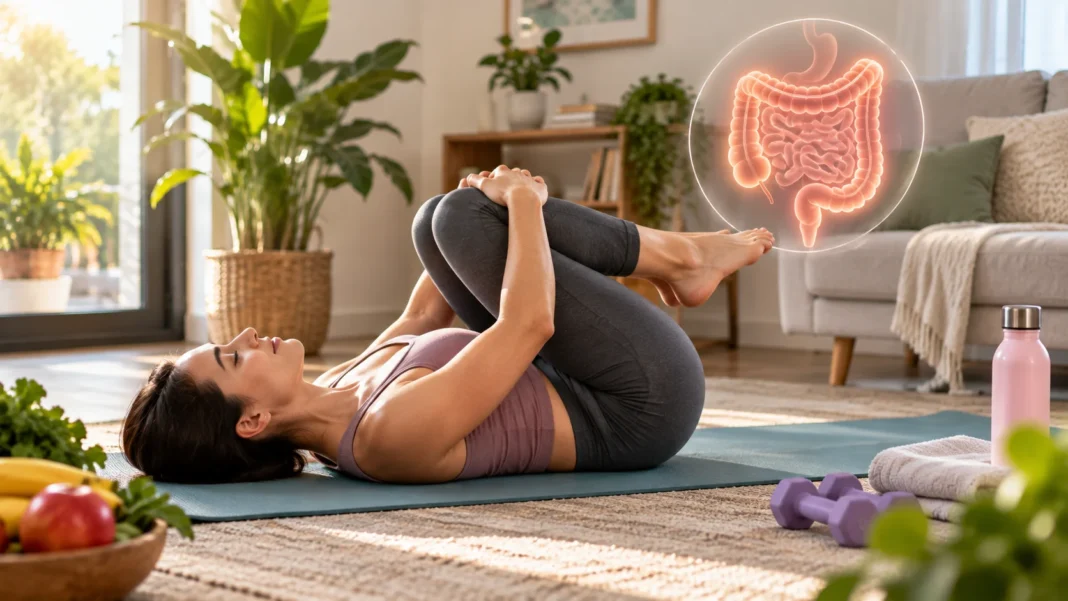
The knee-to-chest stretch is a gentle floor exercise that can create mild movement through the hips and abdomen. Lie on your back with both legs extended or knees comfortably bent. Bring one knee toward your chest and hold it lightly with your hands without pulling so hard that your hip, back, or abdomen becomes painful.
Hold the position for several slow breaths, then return the leg to the floor and repeat on the other side. You can also bring both knees toward the chest if that feels comfortable. The movement should feel relaxing and controlled rather than like an intense abdominal stretch.
This exercise may be especially useful in the morning or after sitting for a long time. Slow breathing during the stretch can help reduce unnecessary abdominal tension. Avoid forcing the knees tightly into the stomach, particularly if you have recent abdominal surgery, severe abdominal pain, or another condition that makes compression uncomfortable.
Cat-Cow Stretch for the Spine and Abdomen
Cat-cow is a gentle yoga-style movement that alternates between rounding and extending the spine. Begin on your hands and knees with your hands roughly under your shoulders and knees under your hips. Slowly round your back while letting your head drop slightly, then reverse the movement by gently lifting your chest and allowing the abdomen to lower.
Move between the two positions slowly rather than rushing through repetitions. Breathing can help create a steady rhythm, with an inhale during one phase and an exhale during the other. Perform several comfortable repetitions while keeping the movement smooth and avoiding any range that causes sharp back, wrist, or abdominal pain.
Although cat-cow does not directly “push” stool through the intestines, it can add gentle trunk movement to a sedentary day. It may also help people who feel stiff from prolonged sitting. Consider using it as part of a short mobility routine rather than depending on it as the only strategy for constipation relief.
Gentle Seated Twists
A gentle seated twist can move the trunk without requiring complex equipment. Sit upright in a stable chair with both feet on the floor. Slowly rotate your upper body toward one side while keeping the movement comfortable, then return to the center before repeating in the opposite direction.
Keep the twist gentle rather than trying to rotate as far as possible. Your hips should remain relatively stable while the upper body turns naturally. Holding each side for a few slow breaths may feel relaxing, especially after long periods at a desk or in another seated position.
Twisting exercises are sometimes included in routines for digestive comfort because they encourage general torso mobility. However, strong compression or aggressive twisting is unnecessary and may feel worse when the abdomen is already tender or bloated. Stop if you experience sharp pain, dizziness, or increasing discomfort rather than assuming more intensity will produce better results.
Pelvic Tilts and Core Control
Pelvic tilts are small movements that help you become more aware of the relationship between the pelvis, lower back, and abdominal muscles. Lie on your back with your knees bent and feet flat on the floor. Gently flatten your lower back toward the floor by tilting the pelvis, then release without lifting the hips.
Repeat the movement slowly for several repetitions while breathing normally. The exercise should feel subtle rather than forceful, and you do not need to brace your abdomen as hard as possible. Gentle core control may help reduce unnecessary tension and keep the body moving when bloating or constipation makes more demanding exercise uncomfortable.
Pelvic tilts are also useful because they can be combined with other gentle exercises such as bridges or knee-to-chest stretches. The aim is not to create extreme abdominal pressure. Instead, focus on smooth movement and relaxed breathing so that the exercise supports mobility without increasing strain around the abdomen or pelvic floor.
Deep Breathing and Pelvic Floor Relaxation
Constipation is not always caused by slow digestion alone. Some people have difficulty relaxing the muscles involved in passing stool, especially when they habitually strain. Slow diaphragmatic breathing may help reduce overall tension and encourage more coordinated relaxation around the abdomen and pelvic floor.
Sit or lie comfortably and place one hand over your lower ribs or abdomen. Breathe in slowly and allow your belly and rib cage to expand gently, then breathe out without pulling the stomach inward aggressively. Repeat for several minutes while keeping your jaw, shoulders, and pelvic muscles as relaxed as possible.
This type of breathing can also be used before going to the bathroom. It should not involve holding your breath or pushing hard against a closed airway. Excessive straining can make bowel movements more uncomfortable, so learning to stay relaxed may be useful alongside fiber, fluids, movement, and healthy toilet habits.
Light Squats and Lower-Body Movement
Light squats can provide a simple way to increase whole-body movement when you are otherwise sedentary. Stand with your feet comfortably apart, bend your hips and knees, and lower only as far as you can control. Keep your weight balanced and return to standing without bouncing or holding your breath.
Beginners can use a chair for support by practicing controlled sit-to-stand repetitions instead of deep squats. This option can be easier on the knees and provides a clear stopping point. Start with a small number of repetitions and increase gradually rather than performing a large set when your body is not accustomed to the movement.
Squats are not necessary for constipation relief, but they can be part of a general activity routine that reduces prolonged sitting. If knee, hip, or back pain makes squatting uncomfortable, choose walking, gentle mobility exercises, or another low-impact option instead. Consistency matters more than selecting one supposedly perfect exercise.
Best Time to Exercise for Constipation
There is no single perfect time of day to exercise for constipation. Some people prefer movement in the morning because the digestive system may already be more active after waking and eating breakfast. Others notice that a short walk after meals fits more naturally into their routine and helps them avoid sitting immediately afterward.
Try experimenting with different times while keeping the routine simple enough to maintain. A 15-minute morning walk or gentle mobility session may be more sustainable than planning an hour-long workout you rarely complete. Bowel habits often respond better to consistency across several days than to one intense exercise session performed only when constipation becomes uncomfortable.
Avoid exercising intensely immediately after a very large meal if that causes nausea, cramping, or reflux. Light walking is usually easier to tolerate than running or strenuous abdominal work. Pay attention to your own response and choose a schedule that improves overall activity without creating additional digestive discomfort.
Other Habits That Make Exercise More Effective
Physical activity works best when it is combined with other habits that support healthy bowel movements. Drinking enough fluids and eating fiber-rich foods such as vegetables, fruit, whole grains, and legumes may help many people. Increasing fiber too quickly, however, can sometimes increase bloating, so gradual changes may be easier to tolerate.
Try not to ignore the urge to have a bowel movement when it appears. Repeatedly delaying bathroom trips can make stool harder to pass for some people. Creating a regular routine, such as allowing unhurried bathroom time after breakfast, may help take advantage of the body’s natural digestive patterns.
Toilet posture can also influence comfort. Some people find it easier to pass stool when their feet are supported on a small stool so the knees sit slightly higher than the hips. Avoid prolonged forceful straining, and give yourself time rather than trying to force a bowel movement because you feel rushed.
When Exercise Is Not Enough for Constipation
Occasional constipation can often improve with movement, fluids, dietary changes, and regular bathroom habits. However, constipation that continues for several weeks or repeatedly interferes with normal life deserves medical attention. A healthcare professional can help identify whether medication, diet, bowel disorders, pelvic floor problems, or another condition is contributing.
Some medicines and health conditions can slow bowel movements, so exercise may only address part of the problem. If constipation began after starting a new medication, do not stop the medicine on your own. Instead, ask the prescribing clinician whether constipation is a possible side effect and what adjustments or treatments may be appropriate.
Seek prompt medical care for constipation accompanied by severe abdominal pain, repeated vomiting, major abdominal swelling, blood in the stool, unexplained weight loss, fever, or inability to pass gas. Sudden major changes in bowel habits also deserve attention, particularly when symptoms are persistent or unusual for you.
Conclusion
Exercises for constipation can be simple and gentle. Walking, knee-to-chest stretches, cat-cow movements, seated twists, pelvic tilts, and slow breathing can increase daily movement and may help support normal bowel activity. You do not need an intense workout or complicated routine to start becoming more active.
The most useful approach is consistency combined with other healthy bowel habits. Regular movement, adequate fluids, appropriate fiber intake, relaxed bathroom posture, and responding to the urge to go can work together. Avoid forceful stretches or excessive abdominal pressure because harder exercise does not necessarily produce faster constipation relief.
Persistent or severe constipation should not be managed with exercise alone. If symptoms repeatedly return or occur alongside abdominal pain, vomiting, blood in the stool, fever, or unexplained weight loss, medical evaluation is important. Exercise can be a useful part of constipation management, but understanding the underlying cause remains the priority.
FAQs
What is the best exercise for constipation?
Walking is one of the easiest exercises to try because it increases overall movement without requiring equipment. Gentle stretching, pelvic tilts, and relaxed breathing can also be added to a simple routine.
How long should I walk for constipation relief?
A comfortable 10 to 30-minute walk may be a reasonable starting point for many people. The exact duration matters less than staying consistently active and avoiding long periods of uninterrupted sitting.
Can exercise make you poop immediately?
Exercise may stimulate bowel activity in some people, but it does not guarantee an immediate bowel movement. Its benefits are often more noticeable when regular activity is combined with fluids, fiber, and consistent bathroom habits.
Are abdominal exercises good for constipation?
Gentle core movements may support general mobility, but intense abdominal exercises are not necessary for constipation relief. Avoid exercises that cause pain, excessive pressure, or significant discomfort when you are already bloated.
When should constipation be checked by a doctor?
Seek medical advice for persistent constipation or symptoms accompanied by blood in the stool, unexplained weight loss, severe abdominal pain, vomiting, fever, or a major unexplained change in bowel habits.