


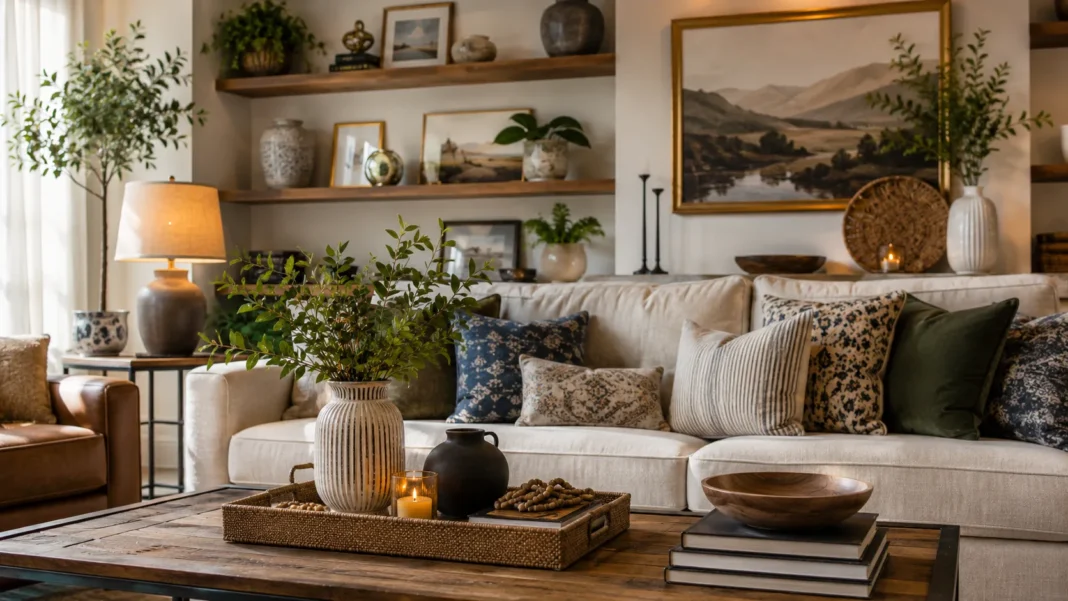
How to Mix Home Accessories Without Creating Clutter
Home accessories give a room personality, warmth, and character, but too many competing objects can quickly make even a beautiful space feel busy. Learning how to mix home accessories without creating clutter is about choosing pieces carefully, creating visual relationships between them, and leaving enough open space for every item to be appreciated. Good decorating is not about having fewer possessions at all costs; it is about displaying the right things in the right places.
Accessories can include cushions, throws, lamps, artwork, books, trays, plants, candles, ceramics, baskets, mirrors, and decorative objects. Each one can contribute color, texture, shape, or meaning to a room. Problems usually begin when every surface contains several unrelated accessories, too many colors compete for attention, or objects have similar visual weight with no clear focal point. A more intentional arrangement creates interest without overwhelming the eye.
The easiest way to create balance is to think of accessories as part of a larger composition rather than individual purchases. A vase should relate to the books beside it, the colors in nearby artwork, and the materials used elsewhere in the room. Repetition connects different pieces, while variation keeps the space interesting. This balance between consistency and contrast is what makes a layered interior feel collected instead of cluttered.
You also need to consider how you actually use your home. A perfectly styled coffee table is not successful if you constantly have to move everything before putting down a drink. Likewise, shelves packed with decorative objects may look impressive initially but become frustrating to clean and maintain. The best home accessory styling ideas combine personality, visual balance, and everyday practicality.
Start With a Clear and Edited Space
Before adding or rearranging accessories, clear the surfaces you want to decorate. Remove objects from coffee tables, consoles, shelves, side tables, and countertops so you can evaluate the room without visual distractions. Starting from an empty surface makes it much easier to identify which accessories genuinely improve the space and which ones are simply taking up room.
Sort your accessories into simple categories such as books, ceramics, framed photos, candles, plants, textiles, and decorative objects. You may notice that you own several pieces serving the same visual purpose. Instead of displaying all of them at once, choose the strongest examples and store or rotate the rest. Editing is one of the most effective ways to prevent a room from feeling overcrowded.
Look at the room from a distance before returning anything. Pay attention to furniture placement, architectural features, existing colors, and empty areas. Some spaces may need height, others may need softness, and some may already contain enough visual interest. Understanding what the room lacks helps you choose accessories with a purpose rather than adding decoration simply because a surface looks available.
Do not assume every empty area needs to be filled. Negative space is a valuable design element because it gives the eye somewhere to rest. An empty portion of a console table or shelf can make the objects beside it look more intentional. Beginning with a clean, edited space creates the foundation for clutter-free home decor that still feels warm and personal.
Choose a Consistent Color Palette
A limited color palette helps different accessories feel connected even when their shapes and styles vary. Begin with the major colors already present in your walls, furniture, rugs, and curtains. Then select one or two supporting tones that can repeat through smaller accessories. This approach creates visual continuity and makes the room appear more organized.
Neutral colors such as cream, beige, gray, white, black, and natural wood are useful foundations because they allow stronger accent colors to stand out. You might combine a neutral sofa with rust-colored cushions, a terracotta vase, and artwork containing similar warm tones. Repeating the accent subtly across the room creates a relationship between separate decorative pieces.
You do not need to match every accessory exactly. In fact, perfect matching can make a room feel overly staged. Instead, use variations within the same color family. A soft olive cushion, deeper green plant leaves, and muted sage artwork can work together without looking identical. This creates a layered appearance while maintaining overall harmony.
When introducing a bold color, use it selectively. One bright vase or patterned cushion can become a focal point when surrounded by calmer elements. If every accessory contains a different vivid color, the room may quickly become visually noisy. Controlled repetition is one of the simplest ways to mix home decor accessories successfully.
Mix Different Textures for a Layered Look
Texture creates visual interest without requiring additional colors or decorative objects. A room can remain relatively neutral while still feeling rich when it combines materials such as wood, linen, glass, metal, stone, ceramic, wool, and woven fibers. Mixing textures is particularly useful if you prefer calm interiors but do not want them to feel flat.
For example, pair a smooth ceramic vase with a rough woven basket, a soft linen throw, and a polished metal lamp. Each material catches light differently and contributes its own character. Because the colors can remain similar, the overall result feels layered rather than busy.
Natural materials often work especially well together. Wood grain, handmade ceramics, woven baskets, and stone surfaces introduce subtle variations that make a space feel collected and comfortable. These textures are visually interesting without requiring heavily patterned accessories.
Avoid introducing too many competing textures in one small area. A coffee table does not need glass, brass, wood, marble, woven fiber, ceramic, and mirrored objects all at once. Choose two or three main textures for each grouping and repeat them elsewhere in the room to create cohesion.
Vary the Height of Decorative Accessories
Accessories arranged at exactly the same height can make a surface look flat and repetitive. Creating gradual height variation adds movement and gives the eye a natural path through the arrangement. Books, lamps, vases, plants, candles, and framed artwork can all help establish different levels.
Start with one taller object, add something of medium height, and complete the grouping with a lower piece. For example, a tall vase, medium candle, and small decorative bowl can form a balanced composition. The differences should be noticeable but not so extreme that the pieces feel disconnected.
Books are useful for adjusting height without purchasing additional decor. A small sculpture or candle placed on top of a stack of two books becomes more visible and creates a layered look. Horizontal book stacks also contrast nicely with tall vertical objects.
Distribute height around the room rather than placing every tall accessory in one area. A large plant in one corner can be visually balanced by a floor lamp, tall artwork, or substantial vase elsewhere. This prevents one side of the space from appearing visually heavier than the other.
Use the Rule of Three for Easy Groupings
Grouping accessories in odd numbers, particularly groups of three, often creates a relaxed and visually pleasing arrangement. Three objects can feel more natural than two matching pieces because the eye moves between them rather than dividing the composition into equal halves.
Choose items that vary in shape, height, or material while sharing some common feature. A ceramic vase, small stack of books, and wooden object may all have different forms but connect through warm neutral colors. This creates enough contrast to remain interesting while maintaining cohesion.
The rule of three should be used as a guide rather than a strict formula. A large tray filled with several smaller objects may visually function as one element, while a stack of books may also read as a single group. What matters is the overall visual composition rather than the exact number of individual pieces.
Not every surface needs three accessories. Small side tables may look best with a lamp and one additional object, while larger consoles can support multiple visual groups. Use the principle when you need help creating balance, but allow the size and function of the furniture to guide the final arrangement.
Balance Large and Small Accessories
Scale plays a major role in whether a room feels balanced or cluttered. Too many small decorative objects can create visual noise because the eye must process each piece separately. One or two larger accessories often make a stronger statement while creating a cleaner overall appearance.
A substantial vase, large artwork, or medium-sized plant can anchor a display. Smaller pieces can then support the main element without competing for attention. This combination helps establish hierarchy, allowing the eye to recognize what is important first.
Avoid placing tiny objects on very large furniture where they may look insignificant. Likewise, an oversized vase on a narrow side table can feel unstable or disproportionate. Accessories should relate to the scale of the furniture and surrounding room.
If you already own many small collectibles, group them together rather than scattering them throughout the space. A dedicated shelf, tray, or cabinet can turn a collection into one intentional display. Containment makes multiple objects feel more organized and reduces the appearance of clutter.
Repeat Materials Throughout the Room
Repeating materials creates visual connections between accessories that may otherwise appear unrelated. If your room includes brass hardware, for example, you might repeat that finish in a lamp, picture frame, or small decorative object. The repetition helps the space feel intentional.
Wood is another useful material to repeat. A wooden coffee table can connect with picture frames, decorative bowls, or lamp bases elsewhere in the room. The exact wood tone does not need to match perfectly, but similar warmth helps create harmony.
Use repetition subtly rather than making every accessory identical. A room filled with matching brass objects can feel overly coordinated. Instead, combine the repeated material with contrasting textures such as ceramic, linen, stone, or greenery.
This technique is especially useful in open-plan spaces where several functional areas need to feel connected. Repeating two or three materials across the living and dining areas creates continuity without requiring the furniture or accessories to match completely.
Let One Accessory Become the Focal Point
Every surface does not need several equally noticeable objects. Choosing one strong focal accessory allows supporting pieces to remain quieter and makes the arrangement easier to understand visually. A large vase, sculptural lamp, distinctive artwork, or beautiful plant can serve this purpose.
Once you have selected the focal point, choose surrounding accessories that complement rather than compete with it. If the main object is colorful, nearby pieces can remain neutral. If the focal point has a dramatic shape, smaller accessories can have simpler silhouettes.
A focal point also helps prevent overdecorating. When you know which item should attract attention, it becomes easier to remove objects that distract from it. This creates a clearer composition and gives important pieces more breathing room.
Rotate focal accessories occasionally rather than continuously adding new ones. A seasonal arrangement, favorite artwork, or meaningful object can temporarily become the center of attention. Rotation keeps your decor feeling fresh without increasing the total number of visible accessories.
Leave Negative Space Around Decor
Negative space is the empty area surrounding furniture and accessories, and it is essential for creating a calm interior. Without it, even beautiful objects can begin to look cluttered because everything competes for attention. Giving decor room to breathe makes individual pieces more noticeable.
You do not need to decorate the entire length of a console table or every level of a bookcase. Leaving a portion empty often creates better balance than filling it with another vase, candle, or stack of books. The same principle applies to coffee tables, counters, and mantels.
Negative space can also improve functionality. Clear areas provide room for drinks, keys, books, or everyday activities. A decorated surface should still work for the purpose it was designed to serve.
If a room feels visually heavy, try removing accessories before buying new storage or furniture. Often, creating more open space immediately improves the composition. A clutter-free interior usually depends as much on what you leave out as what you choose to display.
Combine Functional and Decorative Accessories
Accessories are easier to justify when they contribute both beauty and usefulness. Decorative trays, baskets, bowls, lamps, books, mirrors, and storage boxes can all improve the appearance of a room while serving practical purposes.
A woven basket beside a sofa can hold throws while adding natural texture. A ceramic bowl on an entry table can store keys, and a decorative tray on a coffee table can organize remotes and coasters. These objects reduce clutter rather than adding to it.
Functional accessories should still connect with your overall decorating style. Choose containers, lighting, and storage pieces that complement the room’s colors and materials. Everyday items become part of the design when they are selected thoughtfully.
Avoid buying purely decorative items for every empty surface. When several accessories already perform useful roles, you need fewer additional ornaments. This approach is particularly effective in small homes where storage and display space are limited.
Use Decorative Trays to Contain Small Objects
Trays are one of the easiest ways to make several small accessories appear organized. By placing candles, coasters, remotes, or decorative objects inside a tray, you create a clear visual boundary that makes the group read as one composition.
Choose a tray that complements the surface beneath it. A wooden tray can warm up a stone coffee table, while a metal or mirrored tray may add contrast to a wooden console. Woven trays work particularly well in relaxed or natural interiors.
Keep the tray proportional to the furniture. An oversized tray can make a small coffee table difficult to use, while a very small tray may not provide enough visual structure. Leave open space around the tray whenever possible.
Trays also make everyday maintenance easier. The entire arrangement can be moved at once when cleaning or when more table space is needed. This combination of function and decoration makes trays particularly useful for organized home styling.
Mix Patterns Without Overwhelming the Room
Patterns can add energy and personality, but they should be introduced carefully when several accessories are already present. Start with one dominant pattern and support it with simpler designs. This helps prevent the room from becoming visually chaotic.
Vary pattern scale for better balance. A large botanical print on cushions can work with a smaller geometric pattern on a throw or rug. When every pattern has the same scale, the designs tend to compete rather than complement one another.
Connecting patterns through color also helps. Two completely different designs can work together when they share one or two similar tones. This creates continuity while still allowing the patterns to bring variety.
Give patterned accessories some solid-colored neighbors. A patterned cushion often looks stronger beside plain cushions, and a patterned rug can become the focal point when surrounding accessories remain relatively restrained. Contrast between busy and quiet areas creates balance.
Layer Cushions Without Overfilling the Sofa
Cushions are one of the easiest ways to change a room, but they can quickly become excessive. A sofa should still have enough space for people to sit comfortably without moving a pile of decorative pillows every time.
Mix two or three cushion sizes to create a layered effect. Larger cushions can sit toward the outside of the sofa, with smaller ones placed slightly forward. This creates depth without requiring excessive quantities.
Combine solid colors with one or two patterns and introduce texture through linen, velvet, boucle, wool, or woven fabrics. Different materials add interest even when the color palette remains relatively restrained.
Avoid buying a matching cushion for every possible accent color in the room. Select a few tones that connect with artwork, rugs, or other furnishings. Repetition creates a more polished arrangement and prevents the sofa from becoming visually overloaded.
Style Shelves With Fewer, Stronger Pieces
Shelves often become cluttered because they provide so many opportunities for display. Instead of treating every inch as storage for decorative objects, use a mixture of books, meaningful pieces, plants, and negative space.
Start with larger items such as artwork, vases, or baskets before adding smaller accessories. These anchor pieces establish visual structure and make it easier to see where additional objects are genuinely needed.
Alternate between busy and quiet sections. One shelf may contain a stack of books and a plant, while the shelf above might hold a single framed print. Variation prevents the entire shelving unit from looking overly dense.
Step back regularly while styling. Shelves that look balanced from close range can appear uneven from across the room. Viewing the entire unit helps you identify crowded areas and distribute visual weight more effectively.
Style Coffee Tables Without Sacrificing Function
Coffee tables naturally attract accessories, but they also need to remain useful. Start by identifying how much open surface you regularly require for drinks, snacks, laptops, or books. Decorate only the remaining area.
A simple grouping of a tray, books, and a plant or vase is often enough. Varying height and texture provides visual interest without covering the entire tabletop. The arrangement should be easy to move when necessary.
Keep tall objects low enough that they do not block conversation or sightlines across the room. Large flower arrangements may look beautiful but can become inconvenient when people are seated opposite each other.
If your coffee table is small, use one or two multifunctional accessories instead of several decorative items. A beautiful bowl or tray can add character while providing storage. Simplicity generally works best on surfaces that are used frequently.
Keep Console Tables Visually Balanced
Console tables offer more room for decoration, but their long narrow shape can encourage overstyling. Begin with one tall anchor piece such as a lamp, plant, or vase and balance it with smaller accessories on the other side.
Artwork or a mirror above the console can provide visual weight without occupying tabletop space. This allows you to keep the surface relatively simple while still creating a complete composition.
Avoid arranging accessories in one straight row. Layer some pieces slightly forward and others toward the back to create depth. A framed photograph, book stack, and decorative bowl can overlap subtly without appearing crowded.
Leave a visible section of the tabletop empty. The open area allows the composition to breathe and provides practical space for keys, bags, or other everyday items when needed.
Mix Old and New Accessories
A home often feels more personal when it contains a combination of contemporary accessories and older meaningful pieces. Vintage objects, inherited items, travel finds, and modern decor can coexist when they share colors, materials, or visual themes.
For example, an antique brass object can work beside a modern ceramic vase if brass or warm metallic tones appear elsewhere in the room. The contrast creates character while repetition prevents the items from feeling unrelated.
Do not force every vintage piece into the same space. Select objects with shapes, materials, or stories that genuinely contribute to the room. Too many unrelated antiques can create visual clutter even when each item is attractive individually.
Mixing old and new also prevents a home from looking as though everything was purchased at once. The result feels collected gradually, which can make an interior appear more authentic and relaxed.
Use Plants as Part of the Accessory Mix
Plants introduce natural color and organic shapes that can balance hard decorative objects. A leafy plant can soften shelves filled with books, add height to an empty corner, or provide freshness on a side table.
Choose plant sizes according to the surrounding furniture. A tall floor plant works well beside a sofa, while a small plant suits a shelf or table. Matching scale prevents the greenery from feeling either insignificant or overwhelming.
Planters should also contribute to the room’s style. Ceramic, terracotta, woven, and stone-look containers can introduce texture while connecting the plants with nearby accessories.
Avoid placing small plants on every available surface. Greenery has greater impact when it is distributed thoughtfully. One large plant and a few smaller specimens often create a cleaner look than many individual pots scattered around the room.
Use Artwork to Reduce the Need for Extra Accessories
Wall art can provide color, personality, and visual interest without occupying tables or shelves. If a room already contains strong artwork, you may need fewer decorative accessories elsewhere.
Choose artwork that connects with the room’s color palette without matching every furnishing exactly. Repeating one or two colors from the artwork in cushions, ceramics, or throws can create cohesion.
Large artwork can be particularly helpful in minimalist spaces because one piece may provide enough character for an entire wall. Several tiny decorative objects would create more visual clutter while having less impact.
Consider the relationship between artwork and nearby accessories. A colorful painting may pair best with simple objects below it, while restrained artwork can support stronger decorative pieces. Allow one element to lead rather than making everything equally noticeable.
Create Balance Between Hard and Soft Materials
Rooms can feel uncomfortable when every accessory is hard, shiny, or angular. Soft materials such as textiles, woven fibers, upholstery, and plants provide contrast and make interiors feel more inviting.
If your space contains a glass coffee table and metal lighting, introduce a wool throw, linen cushions, wooden bowl, or woven basket. These softer textures reduce the visual hardness of the materials already present.
The opposite is also true. A room filled with soft upholstery and fabric may benefit from ceramic, stone, metal, or glass accessories to provide definition and structure.
Aim for contrast rather than strict matching. The interaction between different materials is what makes a layered interior visually interesting. A balanced room usually contains a mixture of smooth, rough, soft, and structured elements.
Avoid Matching Every Accessory
Matching sets can make decorating easy, but using too many identical pieces can make a room feel impersonal. Instead of purchasing a coordinated collection of vases, frames, and decorative objects, combine pieces that share subtle relationships.
Accessories may connect through color, material, shape, or style without being exactly the same. For instance, three ceramic objects in different shapes but similar neutral tones can feel coordinated without looking like a set.
Introduce occasional contrast to keep the room interesting. A dark metal object can provide definition among light ceramics, while a handmade piece can soften a very polished modern arrangement.
The goal is to create harmony rather than uniformity. A room feels richer when accessories appear to have been collected thoughtfully over time instead of purchased as one complete package.
Rotate Seasonal Accessories Instead of Adding More
Seasonal decorating can easily create clutter when new accessories are simply added to existing displays. Instead, remove some everyday decor before introducing seasonal pieces.
For spring, you might replace darker accessories with fresh greenery, lighter textiles, or simple floral arrangements. Autumn can bring warmer colors, textured throws, and earthy ceramics without requiring dozens of themed ornaments.
Winter may introduce candles, metallic details, deeper colors, or natural branches. Summer can emphasize lighter fabrics, woven materials, and fresh greenery. A few strategic changes are enough to shift the mood of a room.
Store the removed accessories rather than trying to display everything simultaneously. Rotating pieces throughout the year keeps your home feeling fresh and allows you to appreciate items more when they return.
Keep Everyday Clutter Separate From Decor
Even beautifully styled rooms can feel messy when everyday objects accumulate around decorative accessories. Mail, chargers, remote controls, toys, receipts, and keys often create more visual clutter than the decor itself.
Provide designated storage for these items. Decorative boxes, baskets, trays, and drawers can keep everyday necessities accessible while preventing them from spreading across visible surfaces.
Create simple habits around high-clutter areas. An entryway tray for keys, a basket for throws, and a drawer for charging cables can make maintaining a tidy room much easier.
Good decorating cannot compensate for a lack of practical storage. When everyday items have clear places to go, decorative accessories remain visible and intentional rather than becoming mixed into household clutter.
Know When to Stop Decorating
Knowing when a room is finished is one of the hardest parts of decorating. Accessories are easy to buy, which can lead to constantly adding new items long after the room already feels complete.
Step back and look at the entire space instead of focusing on individual surfaces. If the room already contains color, texture, meaningful objects, and a clear focal point, additional accessories may not improve it.
Try temporarily removing one piece from an arrangement. If the grouping immediately looks calmer or more balanced, the removed item probably was not necessary. Editing is often more powerful than adding.
Your home does not need to resemble a showroom. The goal is to create an environment that feels comfortable, personal, and functional. Once accessories enhance the room without interfering with daily life, the styling has achieved its purpose.
Common Mistakes When Mixing Home Accessories
One common mistake is using too many small objects. Numerous tiny pieces create multiple focal points and can make surfaces difficult to clean. Replace some of them with one larger accessory that provides stronger visual impact.
Another mistake is introducing too many unrelated colors, materials, and patterns. Variety is important, but every room needs some repetition. Repeating several tones or finishes helps diverse accessories feel connected.
Overdecorating functional surfaces is another frequent problem. Kitchen counters, dining tables, coffee tables, and bedside tables should still provide enough room for everyday activities. Decoration should never make the furniture inconvenient to use.
Finally, avoid placing accessories simply because a space looks empty. Some blank areas are necessary for balance. A well-styled home includes both decorated zones and quieter spaces where the eye can rest.
Final Thoughts on Mixing Home Accessories Without Clutter
Learning how to mix home accessories without creating clutter comes down to thoughtful selection, repetition, variation, and restraint. Accessories should contribute color, texture, function, personality, or meaning rather than simply occupying empty surfaces.
Begin with an edited room and build arrangements gradually. Repeat a limited color palette, mix different textures, vary accessory heights, and use larger anchor pieces alongside smaller supporting objects. These techniques create depth without overwhelming the space.
Leave negative space and protect the functional purpose of furniture. Trays, baskets, bowls, and decorative storage can help keep everyday items organized while still contributing to your interior style.
Most importantly, decorate with pieces you genuinely enjoy. A balanced home does not require perfect matching or strict design formulas. When accessories relate to each other, have enough breathing room, and support everyday living, the result feels collected, welcoming, and intentionally styled.
Frequently Asked Questions
How do you mix home accessories without making a room look cluttered?
Use a limited color palette, vary accessory sizes, group smaller objects together, and leave negative space. Choose fewer pieces with stronger visual impact instead of filling every surface.
How many decorative accessories should be in a room?
There is no fixed number because it depends on room size and furniture. Focus on balanced groupings and remove items whenever surfaces begin to feel crowded or difficult to use.
Should home accessories match?
Home accessories do not need to match exactly. They should share certain colors, materials, textures, or styles so they feel connected while still providing enough variation to create interest.
How do you arrange decorative objects together?
Group objects of different heights and shapes while repeating one common element such as color or material. Groups of three often work well, but always consider the scale and function of the surface.
How can I make my home look decorated but not cluttered?
Choose meaningful and functional accessories, use hidden storage for everyday items, repeat colors throughout the room, and deliberately leave some surfaces and spaces partially empty.