


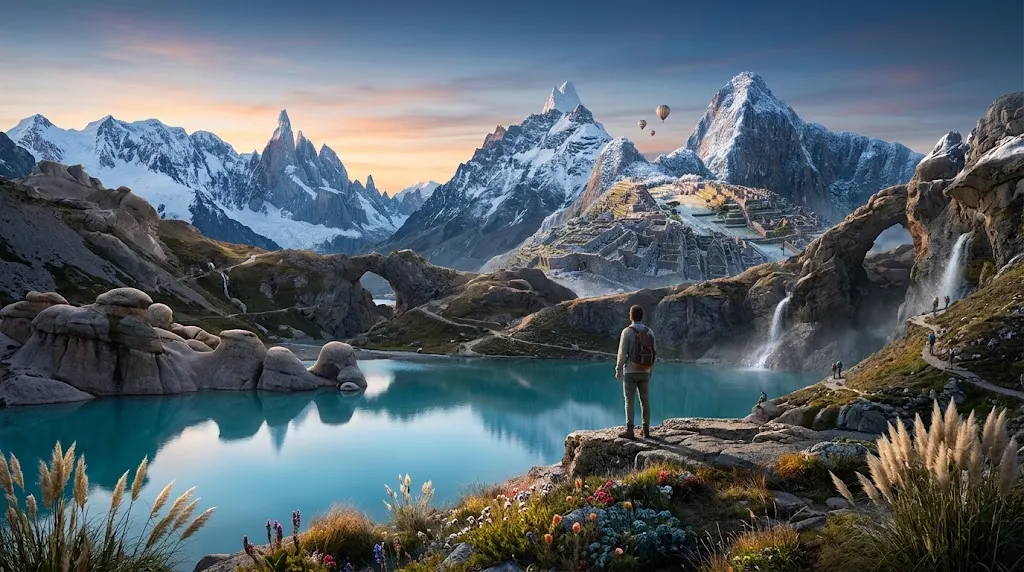
Dream Destinations That Feel Almost Unreal
Some landscapes are so unusual that arriving in person can feel like walking into a digitally created world. Endless salt flats reflect clouds like a giant mirror, hot-air balloons float above strangely shaped rock towers, turquoise lagoons appear in the middle of deserts, and sharp mountains rise almost vertically from quiet Arctic fishing villages. The dream destinations that feel almost unreal are places where geology, weather, water, light, and human culture combine to create scenery that seems difficult to believe even when you are standing inside it. These destinations appeal to photographers and adventure travelers, but you do not need an expensive camera or extreme outdoor skills to appreciate them. Sometimes simply watching sunrise, driving a scenic road, or sitting quietly at a viewpoint provides the strongest experience.
The world’s most dreamlike destinations also prove that remarkable scenery is not limited to one type of environment. Bolivia offers enormous reflective salt flats, Türkiye has surreal volcanic valleys, Norway combines Arctic mountains with deep fjords, and Brazil hides seasonal blue lagoons between sweeping white dunes. China provides towering sandstone pillars that appear almost imaginary, while Chile’s Atacama Desert combines salt landscapes, volcanoes, stars, and high-altitude lagoons. Italy’s Dolomites remain one of Europe’s great mountain spectacles and were again highlighted in National Geographic’s 2026 global travel recommendations. Whether you prefer mountains, deserts, islands, or extraordinary geological formations, these destinations can make an ordinary vacation feel like a journey onto another planet.
1. Salar de Uyuni, Bolivia
Salar de Uyuni is perhaps one of the clearest examples of a real landscape that looks almost impossible. Bolivia’s enormous salt flat stretches across such a vast area that the horizon can appear completely empty, creating an unusual sense of scale. During dry conditions, the ground forms geometric salt patterns stretching toward distant volcanoes and mountains. After suitable rainfall, a shallow layer of water can transform sections of the surface into an enormous natural mirror. Clouds, mountains, vehicles, and travelers seem to float between two identical skies. The resulting landscape has become one of South America’s most recognizable travel images, yet its scale is much harder to appreciate until you are actually standing on the salt.
The famous mirror effect depends on seasonal and weather conditions, so travelers should understand that it is never guaranteed. During wetter periods, shallow water may create spectacular reflections, but excessive flooding can also make certain areas inaccessible. The dry season provides a completely different experience, with bright white salt stretching toward the horizon beneath intense blue skies. Neither version should be considered inferior. Travelers primarily interested in photography may favor reflective conditions, while people who want wider vehicle access may appreciate drier months. Choosing the season therefore depends on which version of this extraordinary landscape you want to experience.
Multi-day trips around Uyuni can reveal landscapes that are every bit as unusual as the salt flat itself. Travelers may encounter high-altitude lagoons, volcanoes, geothermal areas, deserts, unusual rock formations, and flamingos depending on the route and season. The dramatic variety is one reason southwest Bolivia deserves more than a quick salt-flat photo stop. Long 4×4 journeys can be physically tiring, however, and accommodations may become relatively basic in remote areas. Choose an experienced operator, understand exactly what the trip includes, and carry suitable clothing for temperature changes. Remoteness is part of the appeal, but it also requires preparation.
Altitude deserves particular attention. Uyuni itself sits at high elevation, while some surrounding routes travel considerably higher. Visitors arriving directly from sea level may experience headaches, tiredness, nausea, or shortness of breath as their bodies adjust. Building acclimatization time into a broader Bolivia itinerary can make the trip considerably more comfortable. Travelers with relevant medical concerns should seek appropriate professional advice before visiting high-altitude destinations. A once-in-a-lifetime landscape is far easier to appreciate when your schedule gives your body time to adapt rather than demanding intense travel immediately after arrival.
Salar de Uyuni feels unreal because it removes many of the visual reference points people normally use to understand distance. A traveler standing several hundred meters away can appear strangely close or impossibly small, and reflected skies can make the horizon almost disappear entirely. Photographers frequently use perspective creatively here, but you do not need elaborate poses to enjoy the experience. Spend some time simply looking in every direction. The silence, scale, bright light, and changing reflections provide an experience far beyond the famous photographs. It is one of those rare destinations where the landscape itself seems to alter your sense of space.
2. Cappadocia, Türkiye
Cappadocia can look like a fantasy landscape even before the first hot-air balloon appears. Wind and water erosion shaped the region’s soft volcanic rock into valleys, cones, ridges, and distinctive formations commonly called fairy chimneys. Human communities then added another remarkable layer by carving homes, religious spaces, storage areas, and underground settlements directly into the landscape. The result feels partly natural and partly imagined, with rock formations and human history intertwined across wide valleys. Sunrise makes the scenery especially dramatic because warm light gradually reveals shapes that looked like dark silhouettes only minutes earlier. When dozens of balloons begin floating above them, Cappadocia can feel almost deliberately designed to look surreal.
A hot-air balloon flight has become the signature experience, but travelers should avoid treating it as the only reason to visit. Flights depend on weather and safety conditions, meaning cancellations are possible even during otherwise pleasant trips. Building several mornings into the itinerary can improve your chances if ballooning is a priority. Watching balloons from the ground can also be extraordinary, especially from elevated viewpoints overlooking the valleys. The spectacle looks completely different from below because you can see the entire fleet moving through the landscape. Some travelers ultimately find the ground-level sunrise just as memorable as the flight itself.
Hiking reveals Cappadocia at a much more intimate scale. Paths wind through valleys where rock walls, cave openings, small agricultural plots, and unusual formations surround the route. Instead of viewing the landscape from high above, you begin noticing textures and details that disappear in panoramic photographs. Choose routes appropriate to weather and fitness, and carry sufficient water during warmer periods. A guide can add historical context, although many established routes can also be explored independently when conditions are suitable. Spending several hours walking provides an important contrast to the fast-moving sightseeing associated with balloons and road tours.
The region’s underground cities and rock-cut sites help explain why Cappadocia is more than an attractive geological curiosity. Communities adapted volcanic rock for shelter, worship, storage, and protection over long periods of history. Exploring these spaces can feel completely different from standing in the open valleys because passages and rooms reveal the landscape from inside rather than above. Visitors uncomfortable with narrow or enclosed spaces should research particular sites beforehand. Respect restrictions around fragile structures and religious heritage. These places have significance beyond their visual appeal and deserve to be experienced with cultural awareness.
Cappadocia feels almost unreal because no single perspective fully explains it. From the air, the landscape resembles a collection of sculpted towers and valleys; from a hiking path, those same formations become enormous walls surrounding you. Underground, the region reveals yet another human-made dimension. Sunrise balloons provide the iconic image, but rock hotels, village streets, cave architecture, and open valleys give the destination its depth. Staying several nights rather than rushing through on a short tour allows you to experience how strongly atmosphere changes between early morning, midday, sunset, and quiet evenings.
3. Lofoten Islands, Norway
Norway’s Lofoten Islands appear almost too dramatic for their relatively small coastal communities. Sharp mountains rise abruptly from deep blue water, tiny fishing villages sit beneath enormous cliffs, white-sand beaches appear beside Arctic peaks, and narrow roads connect islands through bridges and tunnels. Summer light can remain visible late into the night, while colder months may bring snow and opportunities to see the northern lights. This combination creates scenery that feels almost contradictory. Tropical-looking beaches sit beneath mountains associated with winter expeditions, while brightly painted houses provide tiny points of color against enormous landscapes. It is difficult to drive very far without wanting to stop.
Road travel is one of the best ways to experience Lofoten because the scenery unfolds continually between villages. However, short map distances can take much longer than expected once scenic stops, narrow roads, weather, and traffic are considered. Avoid planning a route around maximum daily mileage. Staying several nights in one or two bases allows you to explore nearby beaches and trails without constant packing. Traditional fishermen’s cabins, known as rorbuer, can become part of the experience when used as accommodation. A quiet evening beside the water may become more memorable than another famous viewpoint.
Hiking provides the elevated perspectives responsible for many of Lofoten’s most dramatic photographs. From higher trails, turquoise bays, villages, mountains, and surrounding islands can appear together in a single view. Conditions should be taken seriously because rain, wind, fog, and slippery terrain can make relatively short routes difficult. Do not choose hikes only because their summit photographs have become popular online. Research elevation, exposure, current weather, and route conditions before leaving. Travelers uncomfortable with demanding trails can still find extraordinary coastal views from roads, beaches, and lower walks throughout the islands.
Season dramatically changes the experience. Summer brings long daylight and greener landscapes, while winter creates snow-covered peaks, darker skies, and the possibility of aurora viewing. Shoulder periods may provide fewer visitors but more unpredictable weather. There is no single perfect season because midnight sun and northern lights cannot be experienced on the same trip. Decide which atmosphere matters most to you before choosing dates. Photographers may be particularly drawn to transitional seasons when changing weather produces dramatic light. Whatever the month, waterproof layers and flexible planning are valuable.
Lofoten feels unreal because the scale of the mountains seems disproportionate to the tiny villages beneath them. A fishing boat or cluster of houses can appear almost miniature beside cliffs rising directly from the sea. Cloud, sunlight, rain, and mist can transform the same fjord repeatedly within a single day, adding a sense that the scenery is constantly being redesigned. The islands reward travelers who enjoy weather rather than demanding permanent blue skies. One dramatic shaft of sunlight through storm clouds can create a stronger memory than an entire day of perfect sunshine.
4. Zhangjiajie, China
Zhangjiajie’s towering sandstone formations create one of the world’s strangest mountain landscapes. Thousands of narrow pillars and peaks rise above forests, with mist frequently drifting between them and creating layers that seem to continue indefinitely into the distance. The formations can look more like an imaginary painted landscape than ordinary geology, particularly when clouds hide their lower sections. Elevated viewpoints, mountain paths, cable cars, and glass structures provide multiple ways to see the scenery. When fog moves rapidly through the pillars, the landscape can appear and disappear within minutes, giving the mountains an almost dreamlike quality.
The scenery is especially compelling because height and mist alter perspective. Nearby pillars can appear enormous and sharply detailed, while distant formations gradually become pale silhouettes. On clear days, visitors may see much farther across the park, but misty conditions can create the atmosphere many people find most memorable. Avoid considering cloudy weather automatically disappointing. Some landscapes become more interesting when visibility is imperfect. Zhangjiajie’s vertical formations are particularly suited to shifting fog because the mountains seem to float when their bases disappear.
Walking beyond the busiest viewing platforms can make the experience more rewarding. Popular attractions naturally concentrate large visitor numbers, especially during holidays and peak domestic travel periods. Early starts and thoughtful route planning may help travelers experience some sections under calmer conditions. Comfortable shoes remain essential because even when cable cars and lifts reduce elevation changes, large scenic areas still involve significant walking. Group nearby attractions rather than trying to cross repeatedly between distant parts of the region. A slower pace lets your eyes adjust to the unusual scale instead of treating every viewpoint as another quick photograph.
The wider region offers additional experiences including forests, valleys, caves, rivers, and dramatic mountain infrastructure. Travelers should research transportation carefully because famous viewpoints may belong to different scenic zones requiring separate travel time. One of the easiest ways to make the trip frustrating is assuming every photograph comes from one compact attraction. Several days allow weather flexibility and reduce pressure to complete everything immediately. If mist hides one viewpoint, another part of the area may offer a completely different experience. Dreamlike destinations are often more enjoyable when the itinerary does not depend on one perfect moment.
Zhangjiajie feels unreal because its mountains challenge conventional ideas of what peaks should look like. Instead of broad ridgelines, many formations rise like enormous stone towers covered in vegetation. When mist fills the spaces between them, the landscape appears suspended in layers rather than connected to the ground. The experience becomes especially powerful when you stop comparing it with photographs and simply watch the clouds move. Places that look fantastical online can sometimes disappoint in reality; Zhangjiajie can do the opposite when conditions create the atmosphere for which the region is famous.
5. Lençóis Maranhenses, Brazil
Lençóis Maranhenses National Park creates one of the world’s most unexpected landscapes: vast white dunes interrupted by seasonal freshwater lagoons. From above, the combination can resemble an abstract painting, with blue and green pools appearing between waves of pale sand. The scenery becomes particularly remarkable because most people associate large dune fields with dry deserts, yet seasonal rainfall creates temporary bodies of water throughout this environment. The exact appearance changes through the year as lagoons fill and later shrink. Choosing the right season is therefore central to seeing the landscape in its most recognizable form.
Exploring the dunes on foot makes their scale much clearer. A lagoon that looked close from a viewpoint may require crossing several ridges, each revealing another sequence of sand and water beyond it. Walking on loose sand can be physically demanding, especially under strong sun, so travelers should carry water and protect themselves from heat. Guided excursions are commonly used to reach suitable sections of the park and navigate access routes. Visitors should follow protected-area instructions carefully because fragile environments can suffer when tourism expands without responsible behavior. Dreamlike scenery still requires ordinary environmental respect.
Swimming can become part of the experience when conditions and regulations allow. Reaching a clear lagoon after walking across warm dunes creates a contrast that makes the landscape feel even more unusual. Lagoon depth, size, and water availability depend on rainfall and seasonal timing, so photographs from one month may not represent conditions during another. Research recent information rather than relying entirely on general yearly averages. Natural destinations are dynamic, and their unpredictability is part of what makes them remarkable. Travelers who plan around ecological cycles are more likely to understand what they are actually seeing.
The surrounding region deserves enough time that the national park does not become an exhausting in-and-out excursion. Local communities and gateway towns provide accommodation, food, guides, and transportation into different sections of the dunes. Staying several nights can make sunrise or sunset excursions easier and provide flexibility if weather changes. Light can be particularly beautiful early or late because shadows emphasize dune shapes. Midday sun may flatten those textures visually while increasing heat. Photography and comfort therefore often benefit from similar scheduling.
Lençóis Maranhenses feels almost unreal because water and sand appear together in a pattern most travelers do not expect. The landscape contains few conventional landmarks, creating an enormous repeating sequence of curves and pools. From higher dunes, visitors may see lagoon after lagoon extending toward the horizon. The effect is especially striking when wind leaves smooth surfaces without footprints. For people who think they have already seen every possible version of a beach or desert, this Brazilian landscape offers something genuinely different.
6. The Atacama Desert, Chile
The Atacama Desert can make travelers feel as though they have arrived on another planet. Salt flats, volcanoes, high-altitude lagoons, geothermal fields, red rock, dry valleys, and enormous open skies create a landscape with very little resemblance to ordinary inhabited environments. Around San Pedro de Atacama, travelers can reach multiple types of scenery through day trips while using one small town as a base. The visual diversity is surprising because desert is often imagined as one repetitive landscape. In reality, elevation and geology create dramatically different environments within the broader region.
Valleys shaped by wind, salt, and rock can become especially striking around sunrise or sunset. Low-angle light deepens shadows and makes geological formations appear sharper, while colors shift from pale brown toward orange and red. Some landscapes have traditionally been compared with the Moon or Mars because of their barren appearance. Rather than trying to visit every named valley, choose several experiences that emphasize different geology. Racing between viewpoints can make unusual scenery begin to feel repetitive. Spending longer in fewer places preserves the sense of discovery.
High-altitude lagoons provide one of the strongest contrasts. Brilliant water may appear beneath volcanoes in landscapes otherwise dominated by dry ground and sparse vegetation. Flamingos and other wildlife can add another unexpected element in certain locations. Reaching higher areas requires awareness of altitude and cold, particularly when trips begin early in the morning. Travelers should follow guide instructions and take symptoms seriously. Desert heat is not the only environmental factor here; elevation can create freezing conditions even within a region famous for dryness and sun.
Stargazing is one of the Atacama’s defining experiences. Dry conditions, altitude, and low light pollution in appropriate areas can create remarkably clear skies. Astronomy tours may provide telescopes and explanation that transform a beautiful night sky into something much more understandable. Moon phases can affect how many stars are visible, so travelers strongly focused on astrophotography or stargazing may want to consider lunar conditions when scheduling. Warm clothing remains essential at night. Temperatures can fall dramatically once the sun disappears.
The Atacama feels unreal because every day can reveal a landscape that appears unrelated to the one visited before. Salt crust, steaming geothermal areas, volcanoes, lagoons, rock valleys, and extraordinary night skies create the sensation of traveling across several planets without moving very far geographically. The environment can also be harsh, which makes preparation essential. Rather than trying to conquer the desert, travel at its pace. The combination of silence, distance, and clear horizons often becomes as memorable as any named attraction.
7. The Dolomites, Italy
The Dolomites look almost illustrated because pale limestone towers rise sharply above green meadows, forests, lakes, and villages. Some peaks appear like enormous castles or stone walls rather than conventional mountains, especially when warm sunset light turns their surfaces pink and orange. National Geographic included the Dolomite Mountains in its Best of the World 2026 selections, drawing renewed attention to their picturesque landscapes alongside the region’s role in the 2026 Winter Olympics. Even without a major event, however, the scenery is strong enough to justify an entire trip. Few European mountain regions combine dramatic geology with such accessible villages and transportation.
Summer hiking provides one of the best ways to experience the peaks. Trails can cross alpine meadows, lead beneath vertical rock walls, and connect mountain huts where travelers stop for meals or overnight stays. Not every route requires serious mountaineering. Cable cars and moderate walks make spectacular viewpoints accessible to people with different fitness levels. Choose routes carefully because distance alone does not describe mountain difficulty; elevation and exposure matter too. Weather can change quickly at altitude, making layers and rain protection important even on a warm morning.
Road trips offer another perspective. High mountain passes connect valleys through spectacular scenery, turning transportation into part of the vacation. Yet the most rewarding trips resist the temptation to drive constantly. Choose one or two bases and explore them slowly rather than attempting every famous pass and lake in several days. Early mornings can make busy locations more enjoyable during peak summer. Parking and road restrictions should be researched before departure because popular scenic areas may require advance planning.
The villages and food keep the scenery from feeling like a wilderness expedition. Alpine architecture, mountain huts, bakeries, and regional dishes provide comfortable places to pause between outdoor activities. Cultural influences overlap across the region, creating a travel experience with both Italian and Alpine characteristics. A long lunch overlooking peaks can become just as memorable as a summit viewpoint. Dream destinations feel more complete when scenery and culture reinforce each other rather than existing separately. The Dolomites achieve that balance particularly well.
The region feels almost unreal because its vertical rock formations look exaggerated compared with the soft meadows beneath them. Sunrise and sunset intensify the effect by changing pale stone into warm shades for brief periods. Winter replaces green valleys with snow and transforms the same peaks into an entirely different landscape. There is no single best version. Travelers who return in another season may feel as though they have visited a new destination. That ability to transform while remaining instantly recognizable is part of what makes the Dolomites so compelling.
8. The Maldives
The Maldives represents a different kind of dream landscape built around water rather than mountains or desert. Tiny coral islands sit within vast areas of the Indian Ocean, where lagoons can shift from pale turquoise to deep blue within a relatively short distance. From the air, island shapes and reef systems appear almost unreal against the surrounding sea. At water level, white sand, palms, reefs, and open horizons create the type of scenery commonly associated with idealized tropical travel. The destination can be luxurious, but natural beauty remains the central reason travelers dream about visiting.
Choosing an island influences the entire experience. Some resorts occupy private islands and emphasize seclusion, while inhabited local islands provide guesthouses, communities, cafés, and a different perspective on Maldivian life. Budget, preferred atmosphere, transfer method, and activities should guide the decision. Travelers should not assume every island provides identical beaches or reef access. Research house reefs, swimming conditions, transport, and local rules before booking. A beautiful aerial photograph says little about whether an island fits your actual travel style.
Snorkeling and diving reveal much of what makes the destination special. Coral, reef fish, rays, turtles, and other marine life can transform a beach vacation into a wildlife experience. Responsible behavior matters because coral ecosystems are fragile. Never stand on living coral, touch marine animals, or participate in activities that manipulate wildlife for photographs. Choose responsible operators and follow current environmental guidelines. The underwater landscape deserves the same respect travelers would show a protected national park.
Weather and season can significantly influence a Maldives trip. Sunshine is possible across much of the year, but rainfall, wind, visibility, and sea conditions vary. Prices also change substantially according to demand. Travelers who dream specifically about diving may prioritize different months from those focused primarily on beaches. Transfer schedules should also be considered because some islands require seaplanes or boats that operate under particular conditions. Planning logistics carefully protects the relaxed atmosphere once you arrive.
The Maldives feels unreal because islands can appear impossibly small against the scale of the ocean. From certain viewpoints, a narrow strip of sand may be the only visible land between enormous areas of blue. Sunrise and sunset provide minimal visual clutter—just sky, water, and shifting color. That simplicity is precisely what attracts many visitors. The dream does not need to involve staying in the most expensive overwater villa. A quiet beach, clear lagoon, and reef full of life can deliver the same sense that the ordinary world has temporarily disappeared.
9. How to Choose the Dream Destination That Fits You
A dream destination should begin with your interests rather than the number of times you have seen it on social media. If unusual geology excites you, Salar de Uyuni, Cappadocia, or Zhangjiajie may be stronger choices than a tropical island. Ocean lovers might prioritize the Maldives, while hikers may dream about the Dolomites or Lofoten. Desert travelers can find extraordinary experiences in Atacama, while photographers may choose destinations based on reflections, stars, or unusual light. There is no universal ranking because people respond differently to landscape.
Think about the activity required to experience each place. Some dream destinations are surprisingly accessible, while others involve hiking, high altitude, difficult transfers, long 4×4 journeys, or challenging weather. Do not select an extreme experience merely because the final photograph looks spectacular. A viewpoint you can enjoy comfortably may produce a better memory than a trail you spend hours regretting. Travelers with mobility limitations can still find destinations with scenic drives, boats, lifts, and accessible viewpoints. Beauty does not require suffering.
Budget should influence planning realistically. A Maldives resort and a road trip through a mountain region involve completely different cost structures, even when both appear on luxury travel feeds. International flights may represent only one portion of the expense. Transfers, tours, permits, guides, accommodation, equipment, and seasonal prices should all be researched before booking. Spending longer in fewer places can sometimes provide better overall value. A dream trip should feel exciting before, during, and after it—not financially frightening once you return home.
Season is equally important because several destinations on this list change dramatically throughout the year. Bolivia’s mirror effect depends on water, Lofoten’s midnight sun and northern lights belong to different seasons, and Brazil’s dune lagoons vary according to rainfall. Mountain trails may close under snow, while tropical seas become rougher during certain months. Research the exact experience you want rather than simply asking for the destination’s “best season.” Different travelers can have different ideal months for the same place.
Finally, leave enough time to absorb the destination. Dream trips can become surprisingly disappointing when travelers rush through them because they are trying to combine too many bucket-list places at once. Spend several mornings watching changing light, revisit a favorite beach, or give weather enough time to improve. Extraordinary landscapes often change hour by hour. A slow itinerary allows the place to produce experiences you could never have scheduled in advance. The destination should be more than evidence that you were there.
Final Thoughts on Dream Destinations That Feel Almost Unreal
The world’s most dreamlike destinations demonstrate how strange and varied Earth can be. Salar de Uyuni can become a mirror large enough to erase the horizon, while Cappadocia fills volcanic valleys with unusual rock towers and balloons. Lofoten places tiny Arctic villages beneath enormous mountains, and Zhangjiajie surrounds travelers with sandstone pillars rising through mist. Lençóis Maranhenses creates blue lagoons between white dunes, while the Atacama combines volcanoes, salt, stars, and desert silence. The Dolomites and Maldives offer completely different versions of beauty, proving there is no single formula for a dream landscape.
Current travel recommendations continue to emphasize destinations that combine extraordinary scenery with meaningful experiences rather than simple sightseeing. National Geographic’s 2026 selections, for example, highlight the Dolomites alongside a diverse range of destinations chosen for nature, culture, road trips, and adventure. Condé Nast Traveler’s 2026 global recommendations similarly mix familiar places with regions undergoing renewal or offering unusual ways to experience landscapes and local culture. Dream travel is increasingly about how you experience a place, not simply whether its name appears on a famous bucket list.
Photography may inspire these journeys, but avoid spending the entire trip trying to reproduce an image you saw online. Reflection conditions change, hot-air balloon flights can be canceled, mountain clouds appear unexpectedly, and tropical weather rarely follows a perfect schedule. These variations are not failures. They are evidence that the places are real landscapes rather than permanent sets created for visitors. Some of the strongest memories may come from weather or light that looked nothing like the photograph that originally convinced you to travel.
Responsible behavior becomes particularly important in destinations that receive attention because of fragile natural beauty. Follow trail and access rules, protect coral, respect local communities, avoid disturbing wildlife, and use legitimate guides or operators when required. Do not climb into restricted areas simply to create a unique photograph. Tourism can support conservation and local livelihoods when visitors behave thoughtfully, but excessive pressure can damage exactly what makes dream destinations extraordinary. A once-in-a-lifetime view does not justify leaving permanent damage.
Ultimately, the best dream destination is the one that produces genuine curiosity before you arrive and a lasting memory after you leave. Maybe that means standing beneath balloons in Cappadocia, watching your reflection merge with the sky in Bolivia, hiking above an Arctic fjord, or swimming in water so clear that the horizon seems to disappear. You do not need to visit every surreal place on Earth. Choose the landscapes that speak most strongly to you, travel at the right season, give them enough time, and let reality surprise you. Sometimes the real world can look stranger and more beautiful than anything imagination could invent.
Frequently Asked Questions
What are the most unreal-looking destinations in the world?
Salar de Uyuni, Cappadocia, Zhangjiajie, Lençóis Maranhenses, the Atacama Desert, Lofoten Islands, the Dolomites, and the Maldives are excellent examples of landscapes that can look almost imaginary.
Where can I see a natural mirror landscape?
Salar de Uyuni in Bolivia is famous for its mirror effect when suitable seasonal rainfall leaves a thin layer of water across sections of the salt flat. Conditions vary, so the reflection cannot be guaranteed on every visit.
Which dream destinations are best for photographers?
Salar de Uyuni, Cappadocia, Lofoten, Zhangjiajie, the Dolomites, Atacama, and Lençóis Maranhenses provide particularly distinctive opportunities involving reflections, unusual geology, dramatic light, stars, mountains, and seasonal landscapes.
What dream destination is best for a beach vacation?
The Maldives is one of the strongest choices for clear lagoons, white-sand beaches, snorkeling, diving, and a remote-island atmosphere. Other tropical islands may offer similar experiences at different budgets and with different cultural environments.
How do I plan a once-in-a-lifetime dream trip?
Choose the experience you care about most, research the correct season, calculate the complete budget, understand physical and transportation requirements, and leave enough flexibility for weather. Staying longer in fewer places usually creates a more meaningful trip.